
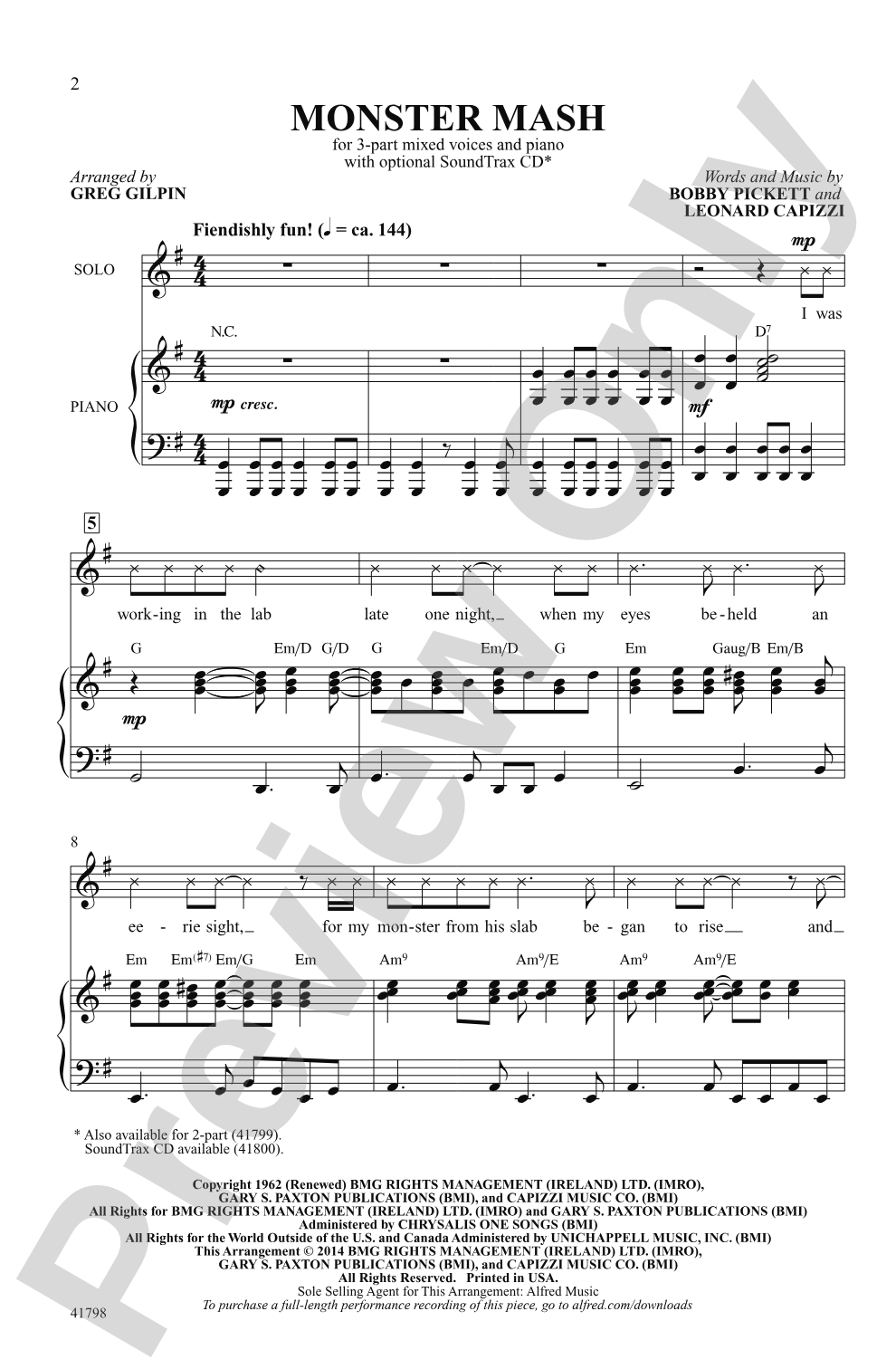
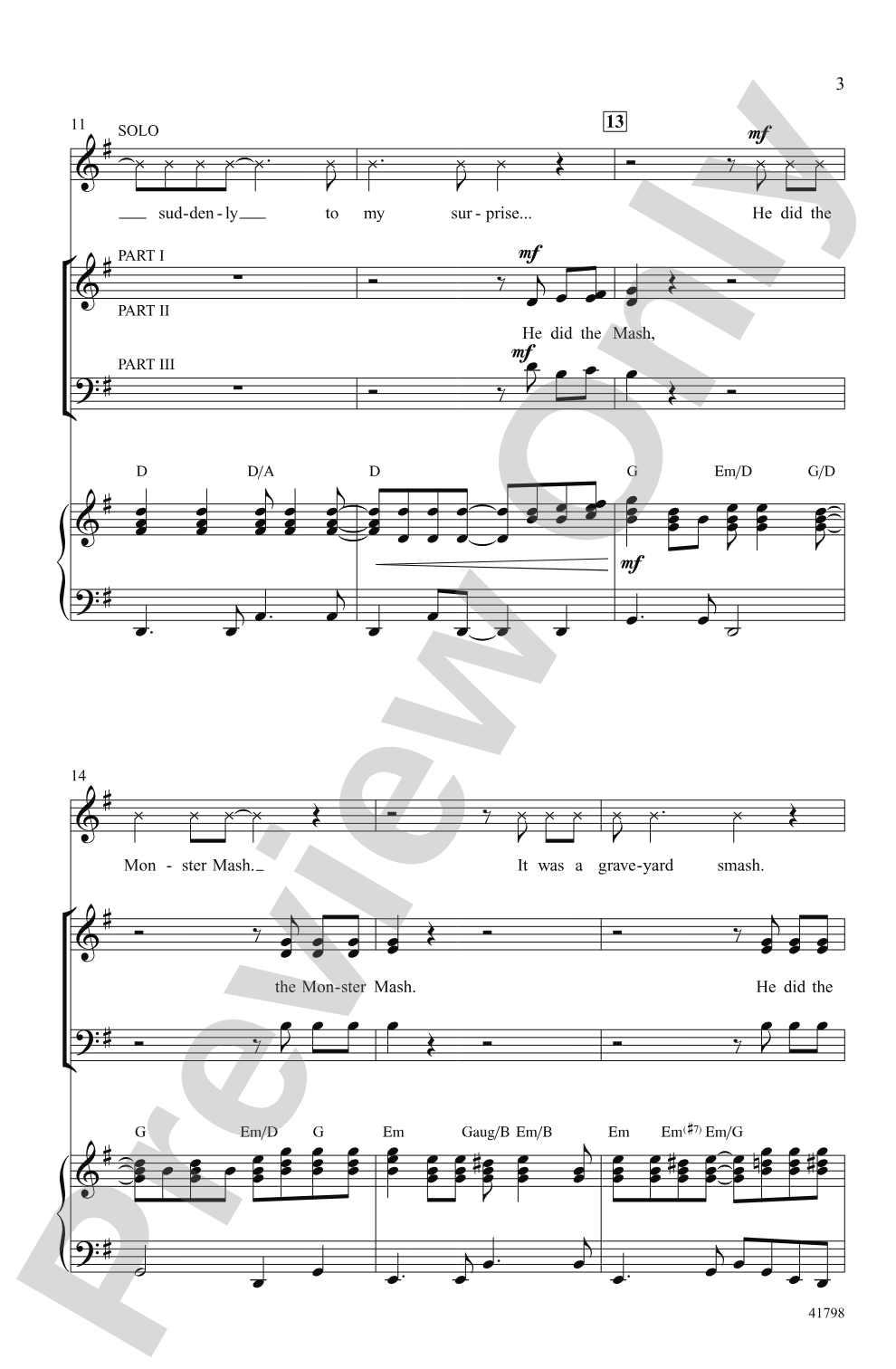
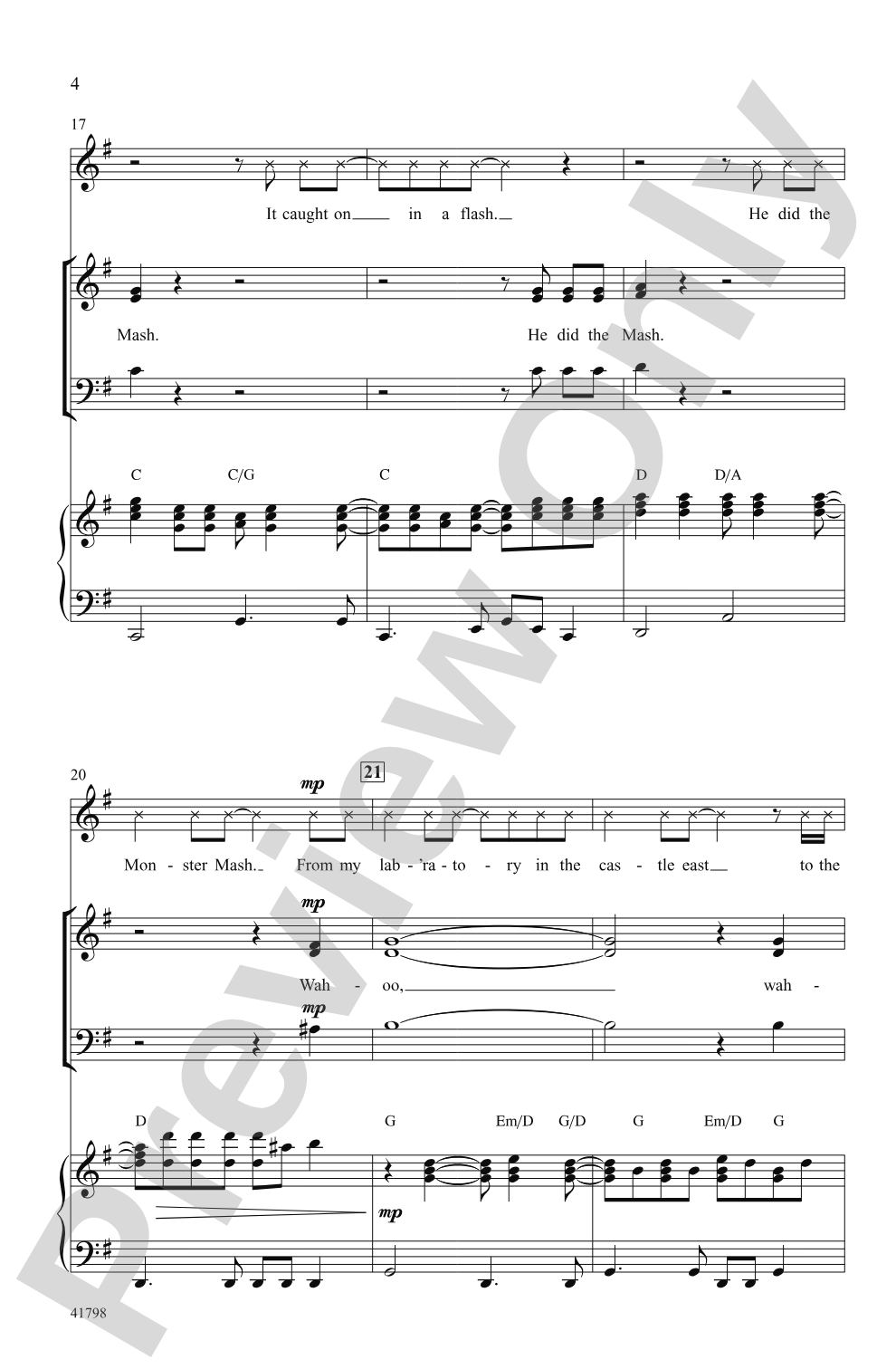

Monster Mash: 3-Part Mixed Choral Octavo
Words and music by Bobby Pickett and Leonard Capizzi / arr. Greg Gilpin
Item: 00-PO-0001963

$2.25
Minimum order quantity: 20 copies
One moment…
Description
Triadic harmonies and several spoken solos are perfect for younger groups in this fun novelty song. Compare dance moves with Frankenstein, Wolfman, and Dracula, and maybe add a few of your own!


Don't just read it, hear it, play along with it, and watch your students grow with it. In MakeMusic Cloud, Monster Mash: 3-Part Mixed Choral Octavo comes alive with professional accompaniment, adjustable tempo, and built-in practice tools that turn solo practice into real progress.
Open in the Player
Jump straight in and assign it today.
Start Your Free Trial
Open this title and explore the full library in minutes.
Sample Audio
1
Audio File
--:--
0:00
0:00
Sample Video
No sample videos found.
Additional Details
Series:
Alfred Pop Choral Series
Publisher:
Alfred Music
Page Count:
16
SKU:
00-PO-0001963
More about this title
About the Composer: Bobby Pickett
Bobby Pickett wrote "Monster Mash" in 1962, creating one of the most enduring novelty songs in American pop music. The track became a Halloween staple and cultural phenomenon, reaching number one on the Billboard Hot 100 and earning a Grammy Hall of Fame induction. His gift for infectious hooks and playful storytelling made him a fixture in novelty music during the 1960s.
Pickett's work demonstrates how a simple, memorable concept paired with strong melodic writing can transcend its genre. For music educators, "Monster Mash" represents an opportunity to engage students with repertoire they already know and love, while teaching fundamental choral skills through material that feels inherently fun rather than didactic.
Why we love this
Greg Gilpin's arrangement strips the novelty down to its essentials: triadic harmonies that young singers can learn quickly, dialogue opportunities that break up the vocal texture, and permission to move around and interact with the material. The spoken solos turn what could be a straight novelty into genuine ensemble theater, and the 3-part voicing allows middle school and younger high school groups to sound full without requiring advanced sight-reading.
What to expect
The arrangement captures the original's campy energy without overcomplicating it. The straightforward harmonies sit comfortably in the voices, leaving room for personality and character work. There's genuine fun in the dialogue sections, and the familiar melody ensures audiences immediately connect with what they're hearing.
Who it's for
This arrangement works well for middle school choirs, younger high school groups, and community choirs looking to program something accessible without sacrificing musicality. The triadic harmonies and manageable range make it suitable for singers still developing foundational blend and intonation skills. It's also a strong choice for mixed ensembles where your upper and lower voices aren't equally developed, since the part-writing allows flexibility in doubling.
How to get the most out of it
- Assign the spoken character parts strategically. These work best when distributed to singers with clear diction and willingness to ham it up; they create momentum and keep younger singers engaged between vocal phrases.
- Lean into the comedic timing. Rhythmic precision matters here, but so does the space between ideas. Let the humor breathe rather than rushing to the next section.
- Use the recorded accompaniment to lock the groove during early rehearsals. The original recording establishes the pocket students are aiming for, which accelerates their ability to internalize the feel.
- Balance the dance moves with the singing. If you're choreographing, keep movement simple enough that students can maintain vocal control and blend, especially in the harmonized sections.
How to use it
Perfect for a Halloween concert or fall variety show where you want an audience-friendly moment that doesn't require advance familiarity with classical repertoire. It pairs naturally with other secular pieces and can serve as a successful opener or closer, depending on your programming arc. Many directors also use it as a morale booster in October rehearsals before tackling more demanding material.
Skills your students will build
- Singing in three-part harmony with triadic voice leading
- Maintaining ensemble blend while performing character-driven dialogue
- Coordinating movement and singing simultaneously
- Balancing rhythmic precision with comedic phrasing
- Building confidence with familiar, high-recognition repertoire