

Monkey See, Monkey Do: Jazz Ensemble Conductor Score & Parts
By Rick Stitzel
Grade: 1.5
Item: 35-PK00337691
$40.00
Pickup currently not available
Buy Extra Parts (Digital PDF Download)
Parts Added to Cart!
Description
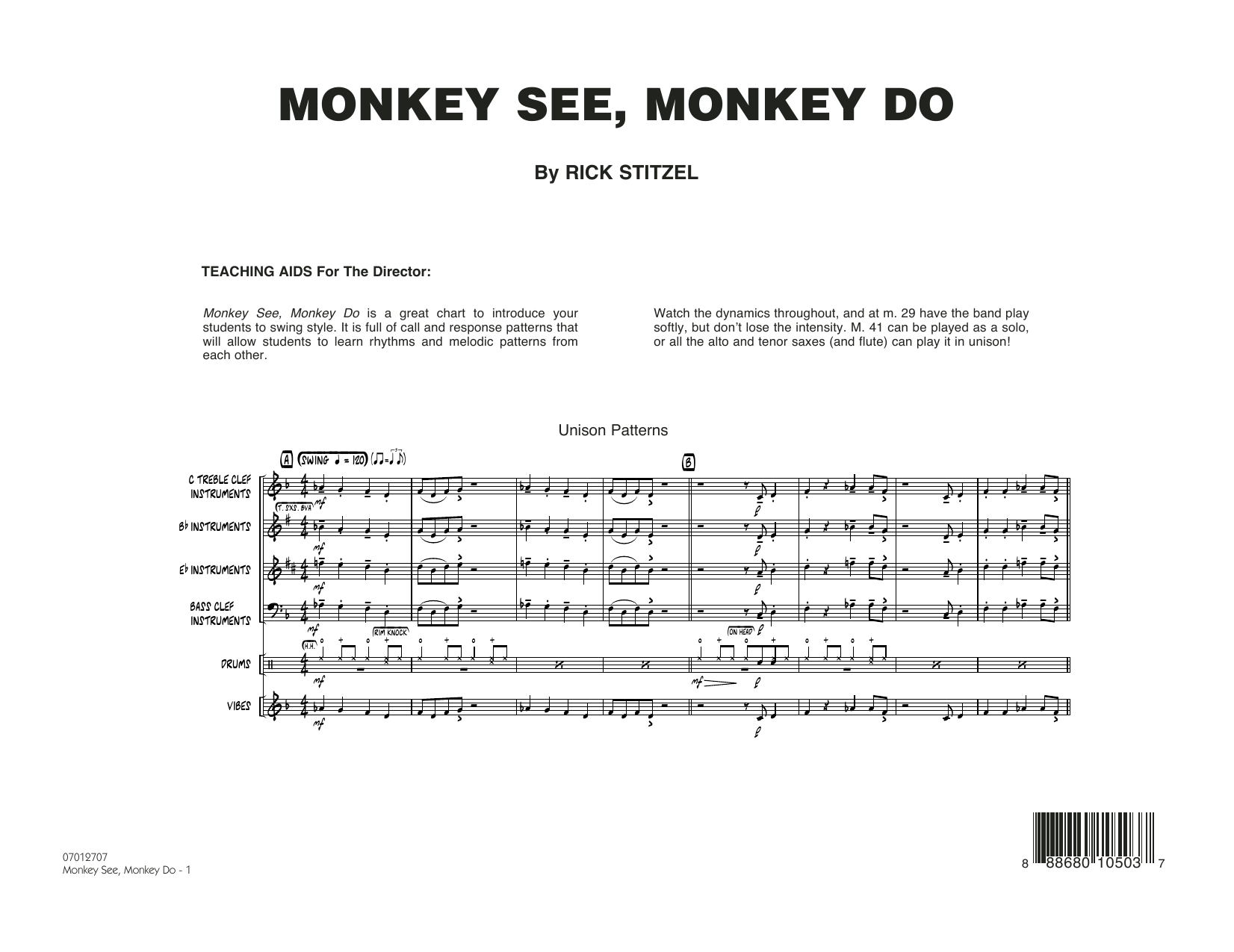
Based on the blues in F and featuring a catchy riff traded around the band, here is the perfect swing chart for beginning jazzers! Rick carefully uses tutti rhythms for ease in learning, and the sample solo can be played by any sax, or by the entire section.


Monkey See, Monkey Do: Jazz Ensemble Conductor Score & Parts isn't in MakeMusic Cloud just yet...but it could be. Let us know you'd like to see it, and you'll help shape what comes next. In the meantime, start a free trial and dive into thousands of interactive titles your students can play along with today.
Request This Title
Tell us you want it.
Start Your Free Trial
Explore everything that's ready to play right now.
Sample Audio
No sample audio found.
Sample Video
No sample videos found.
Additional Details
Publisher:
Hal Leonard
SKU:
35-PK00337691
More about this title
About the Composer: Rick Stitzel
Rick Stitzel has built a reputation as a composer and arranger who understands the pedagogical needs of developing jazz ensembles. His approach prioritizes clarity and accessibility without sacrificing genuine swing feel, making his work a staple in middle school and early high school jazz programs.
Why we love this
Stitzel strips away unnecessary complexity while keeping the groove irresistible. The traded riff keeps every section engaged and accountable, and his decision to make the solo section flexible means you can feature whatever talent walks into rehearsal on any given day.
What to expect
Playful and infectious. The riff sticks immediately, and the blues-in-F groove carries a relaxed confidence that lets young players breathe. There's no pretense here, just straight-ahead swing.
Who it's for
Beginning jazz ensembles and programs introducing swing rhythms for the first time. This works equally well for a standalone jazz class or as an early-season piece for a more developed ensemble building comfort with blues changes.
How to get the most out of it
- Lock the rhythm section first. Get your bass and drums comfortable with the blues pocket before layering in the horns; everything else sits on their foundation.
- Trade the riff deliberately. Even at this level, clarity in who plays when prevents the chart from turning muddy. Mark entrances clearly in your parts.
- Encourage the soloist to sit in the pocket rather than rush ahead. Beginning players often speed up over unfamiliar chord changes; steady time from the rhythm section keeps soloists grounded.
- Shape the tutti passages with dynamic contrast. The score gives you an opportunity to teach how repetition and volume work together to build excitement.
How to use it
Open a jazz concert with this or use it early in the year as your students' first experience trading solos. Its approachable melody and manageable range make it ideal for building ensemble confidence before tackling more sophisticated changes.
Skills your students will build
- Swing eighth-note articulation and feel
- Blues harmonic structure and chord progression
- Ensemble riff playing with rhythmic precision
- Solo improvisation over 12-bar blues form
- Listening and reacting in real time during section trades
- Reading and responding to conductor cues in ensemble contexts