Monkey Bars Sheet Music Preview

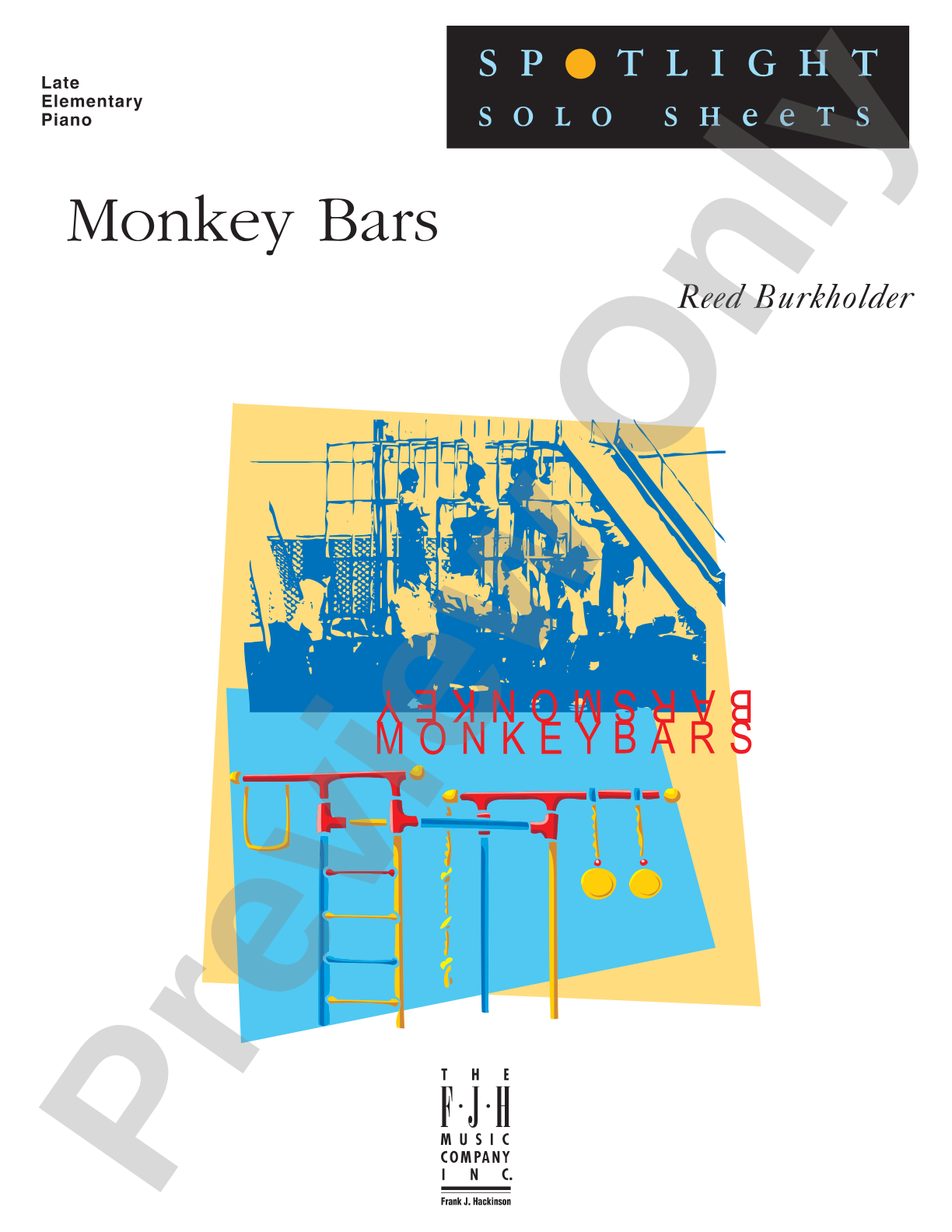
Monkey Bars: Piano

By Reed Burkholder

Item: 98-DS4130

Digital Download
$2.50
Description
Youngsters will grab on to the stop-and-go motion of Monkey Bars, where one hand often rests while the other plays on! This piece, written in Classical style, reinforces dynamic changes and articulations as the student moves from measure to measure, rung to rung. A delightful recital choice.

Monkey Bars: Piano isn't in MakeMusic Cloud just yet...but it could be. Let us know you'd like to see it, and you'll help shape what comes next. In the meantime, start a free trial and dive into thousands of interactive titles your students can play along with today.

Sample Audio
No sample audio found.
Sample Video
Additional Details
Series: Spotlight Solo Sheets
Publisher: The FJH Music Company, Inc.
SKU: 98-DS4130

More about this title

Why we love this

Reed Burkholder captures something genuine here: the physical joy of climbing, translated into music. The alternating hand independence creates engaging technical work without feeling like a drill, and students light up when they realize one hand gets to rest while the other does the heavy lifting. It's the kind of piece that makes young pianists feel clever.

What to expect

Playful and purposeful. The alternating motion creates a rhythmic momentum that feels like actual climbing, with moments of balance and rest built into the structure. Classical elegance meets kinetic energy, turning a familiar playground experience into something musical that stays in memory.

Who it's for

Elementary to early intermediate pianists who have solid technique in one hand and are ready to develop independence between hands. This piece works beautifully for students who respond to concrete, playable imagery and benefit from a clear physical metaphor to guide their interpretation.

How to get the most out of it

  • Exaggerate the stop-and-go phrasing by clearly separating the resting hand from the active one. Silence matters as much as sound.
  • Shape each dynamic change deliberately as you move between rungs. Think of the markings as architectural features, not ornaments.
  • Practice hands separately to lock in the independence, then unite them with the understanding that the resting hand must stay completely still.

How to use it

Schedule this for a recital when you need a standalone character piece that appeals to younger audiences without losing musical substance. It pairs well alongside other narrative-driven solos and gives students a confidence boost before tackling more technically demanding repertoire.

Skills your students will build

  • Hand independence and alternating passage work
  • Reading and executing dynamic markings and articulation changes
  • Phrasing in Classical style
  • Sustaining musical shape through contrasting textures
  • Building finger agility in single-hand passages

You May Also Like