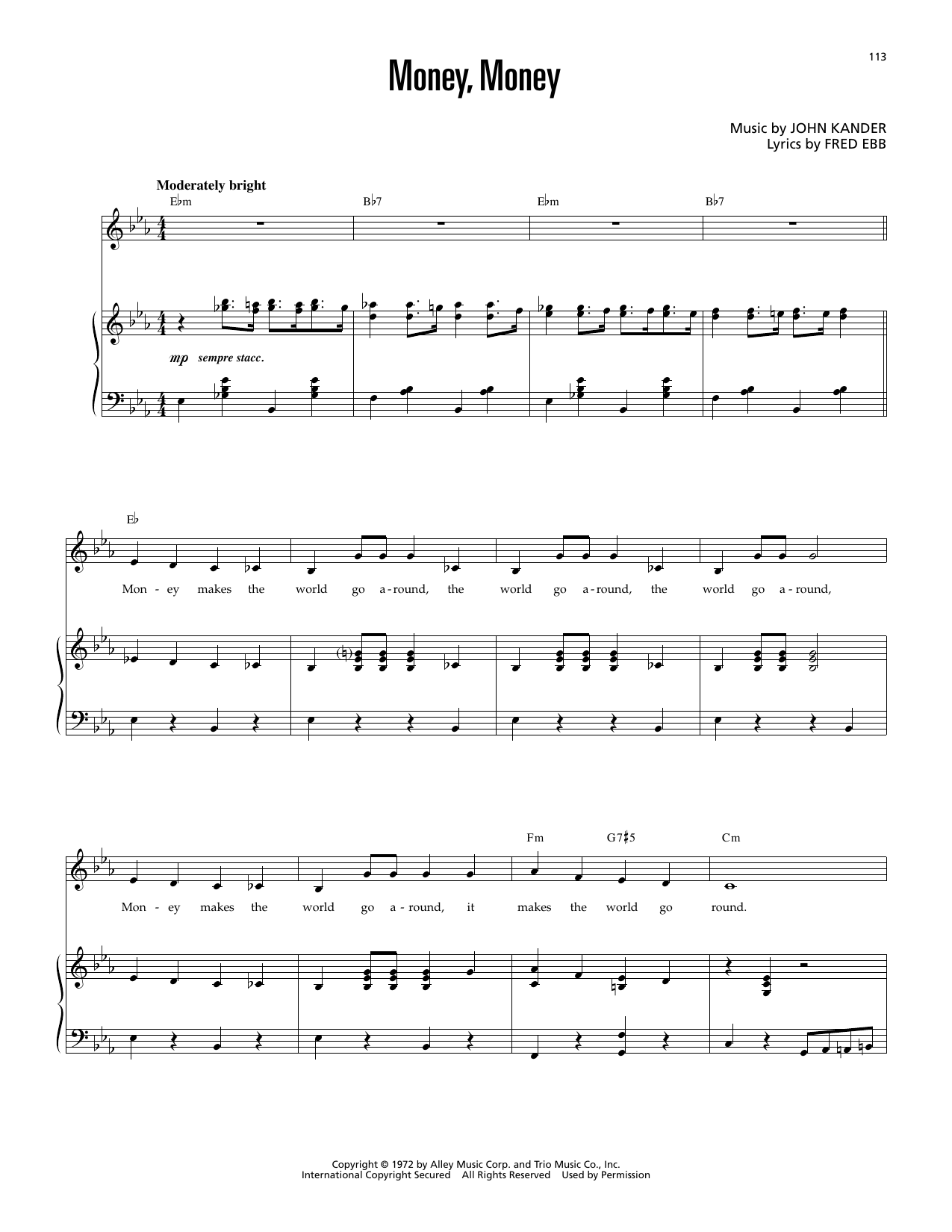
John Kander composed the music for Cabaret while Fred Ebb wrote the lyrics, creating one of Broadway's most influential scores in 1966. Kander's theatrical instincts shaped every number to serve the show's dark, satirical narrative about Berlin's decadence during the Weimar Republic's final days. His melodies balance accessibility with sophistication, making them equally effective in concert halls and intimate venues.
Why we love this
This number demands vocal control and rhythmic precision while remaining deeply rewarding to perform. The material sits comfortably for most voices, and the piano accompaniment features the kind of sophisticated yet playable writing that keeps rehearsals engaging rather than tedious.
What to expect
Bright, biting, and deceptively playful, this number glitters with urban sophistication while maintaining an undercurrent of moral decay. The music seduces even as the lyrics expose the hollowness of materialism, creating that classic Kander-Ebb tension between surface charm and darker commentary.
Who it's for
Vocalists preparing audition material or concert performances, and pianists working with singers in lessons or rehearsals. Solo recitalists and music theater programs will find this a solid addition to contemporary American songbook repertoire.
How to get the most out of it
Shape the vocal line with clear phrasing; the text's satirical edge requires articulation that's sharp without becoming brittle
Balance the piano's rhythmic drive with the vocalist's need to land key words for lyrical impact rather than strictly metronomic adherence
Let the accompaniment's jazz inflections breathe; resist the urge to lock everything into mechanical precision, which flattens the show's cynical humor
How to use it
Include this in a showcase exploring American musical theater, or pair it with other Kander and Ebb numbers for a focused program. It works equally well as a standalone audition selection or as part of a broader cabaret-style recital.
Skills your students will build
Phrasing satirical text with rhythmic precision
Managing the interplay between vocal line and jazz-influenced accompaniment
Interpreting character through song while maintaining musical control