
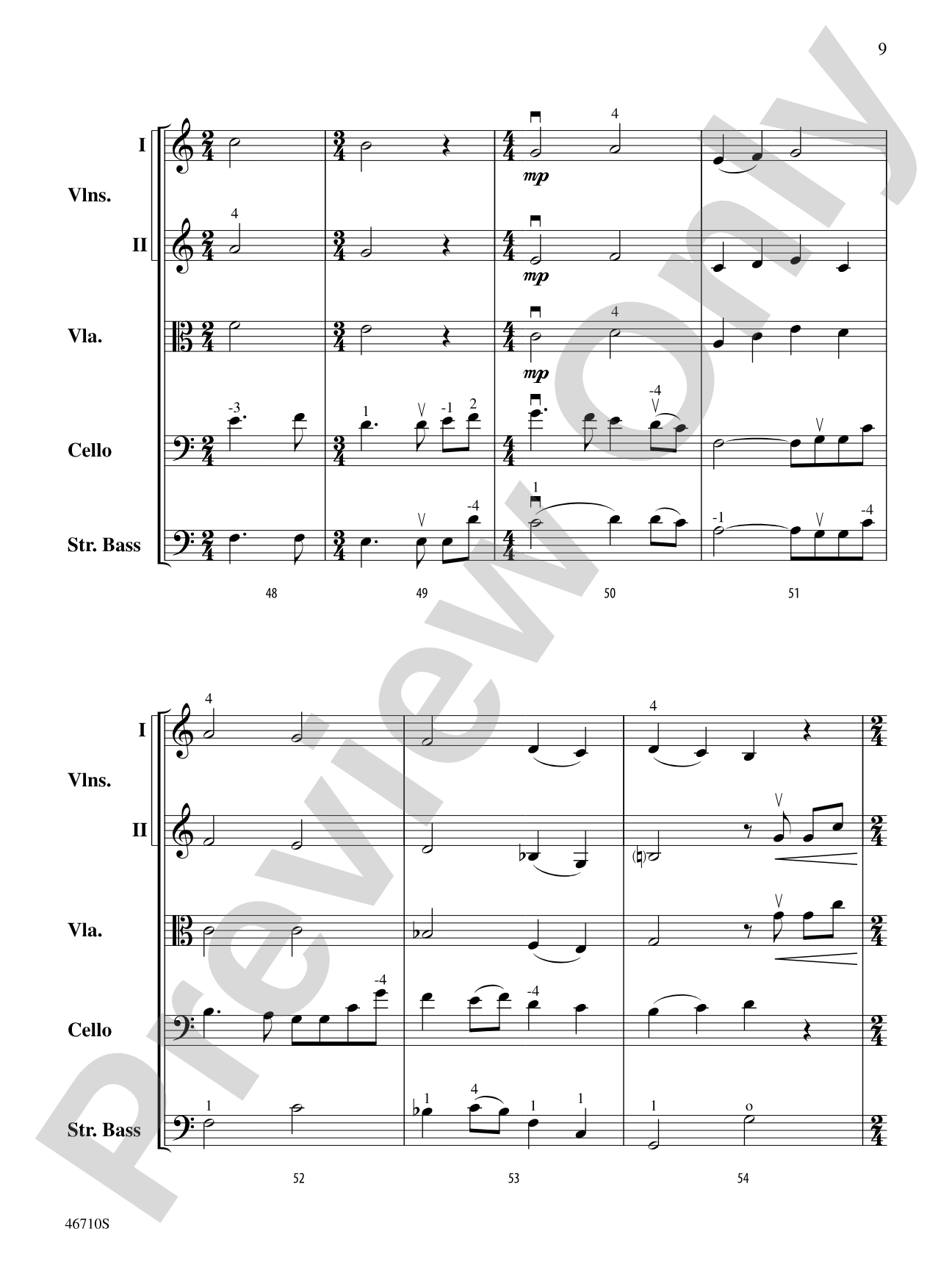
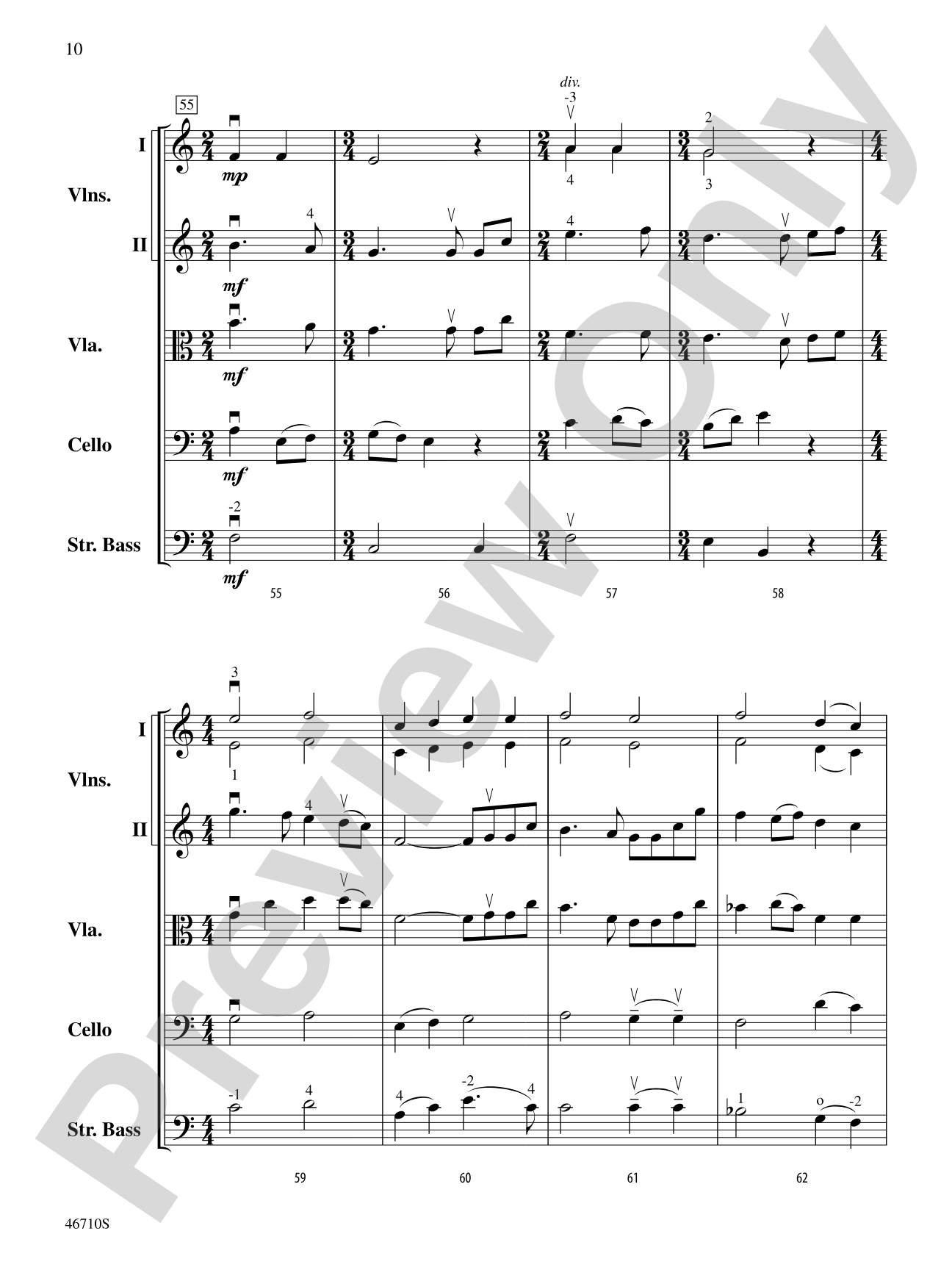
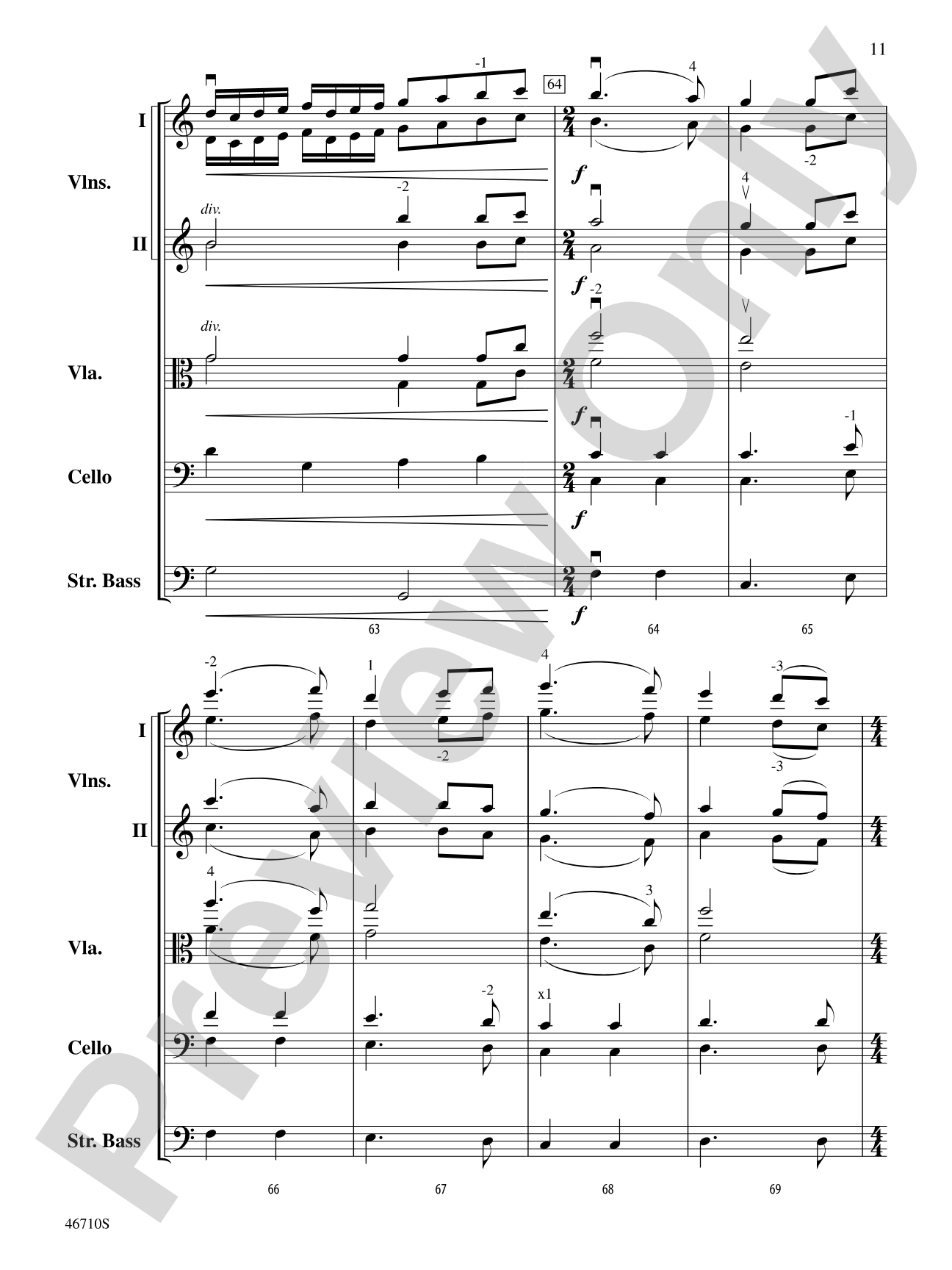
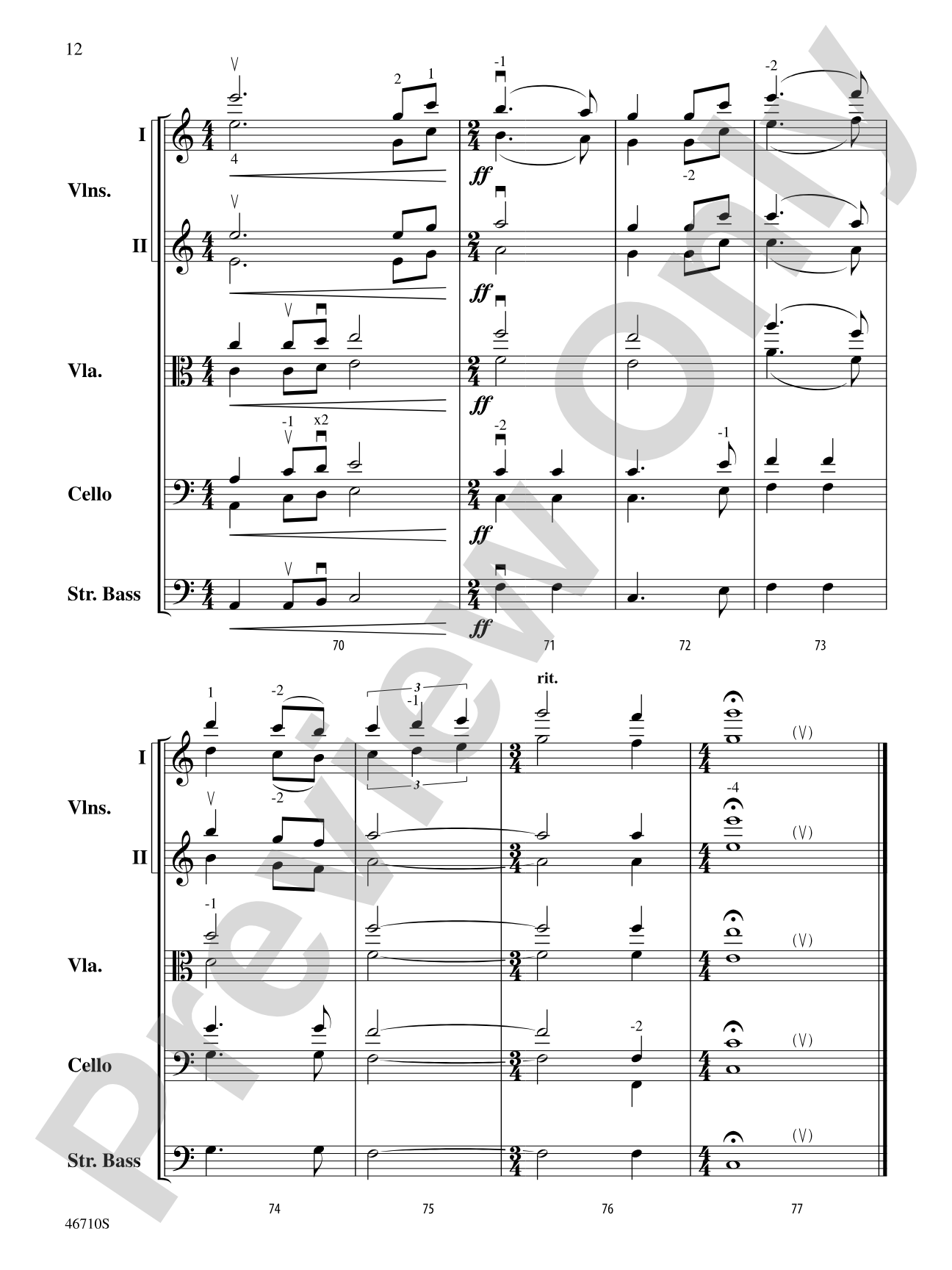

Moment at Angels Landing: String Orchestra Conductor Score & Parts
By Bob Phillips
Grade: 3
Item: 00-PK-0007552

$49.00
Pickup currently not available
Buy Extra Parts (Digital PDF Download)
| Product | Price | Quantity |
|---|---|---|
| Moment at Angels Landing: Score | $9.00 | |
| Moment at Angels Landing: 1st Violin | $5.99 | |
| Moment at Angels Landing: 2nd Violin | $5.99 | |
| Moment at Angels Landing: Viola | $5.99 | |
| Moment at Angels Landing: Cello | $5.99 | |
| Moment at Angels Landing: String Bass | $5.99 |
Parts Added to Cart!
Description
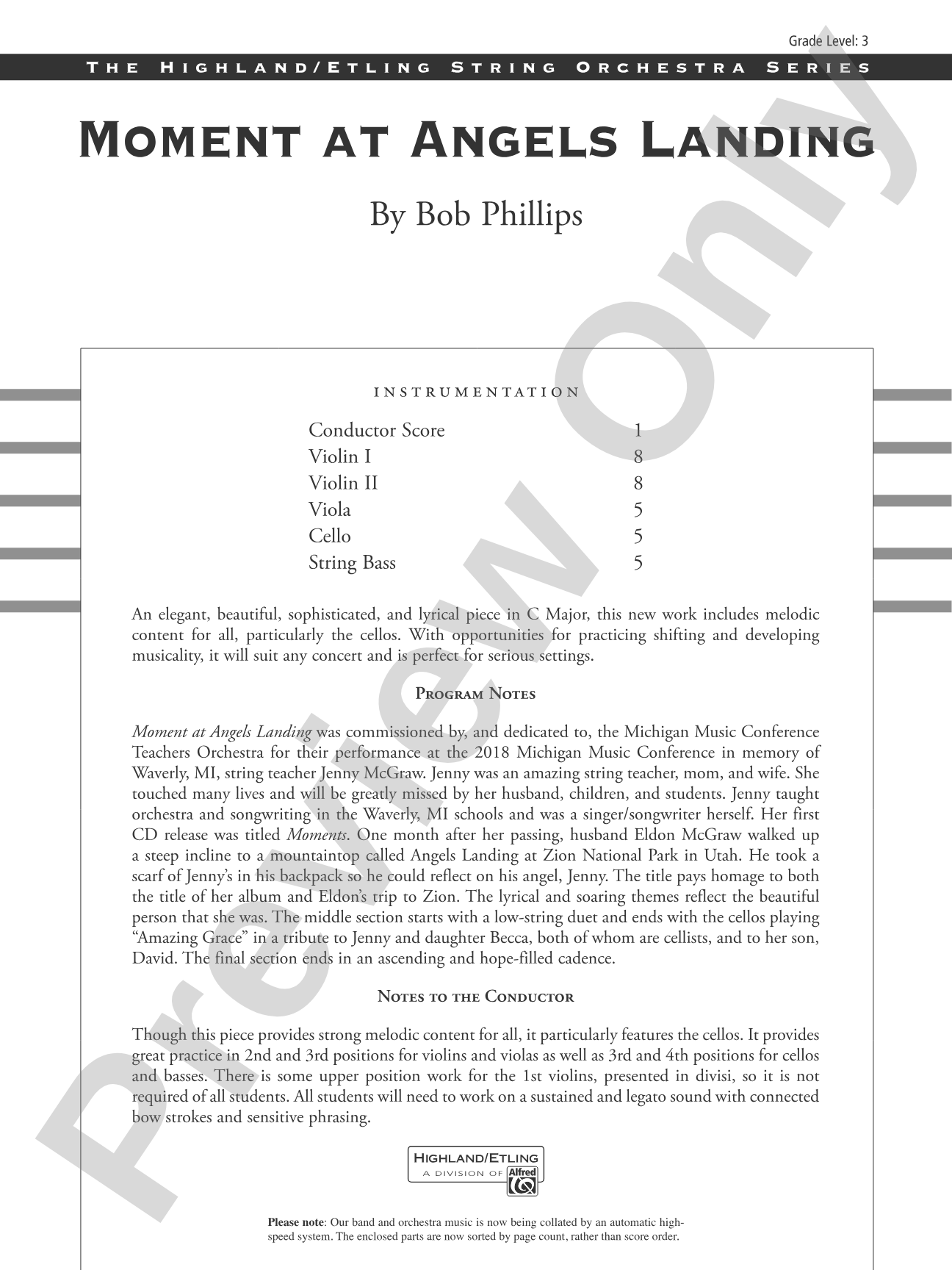
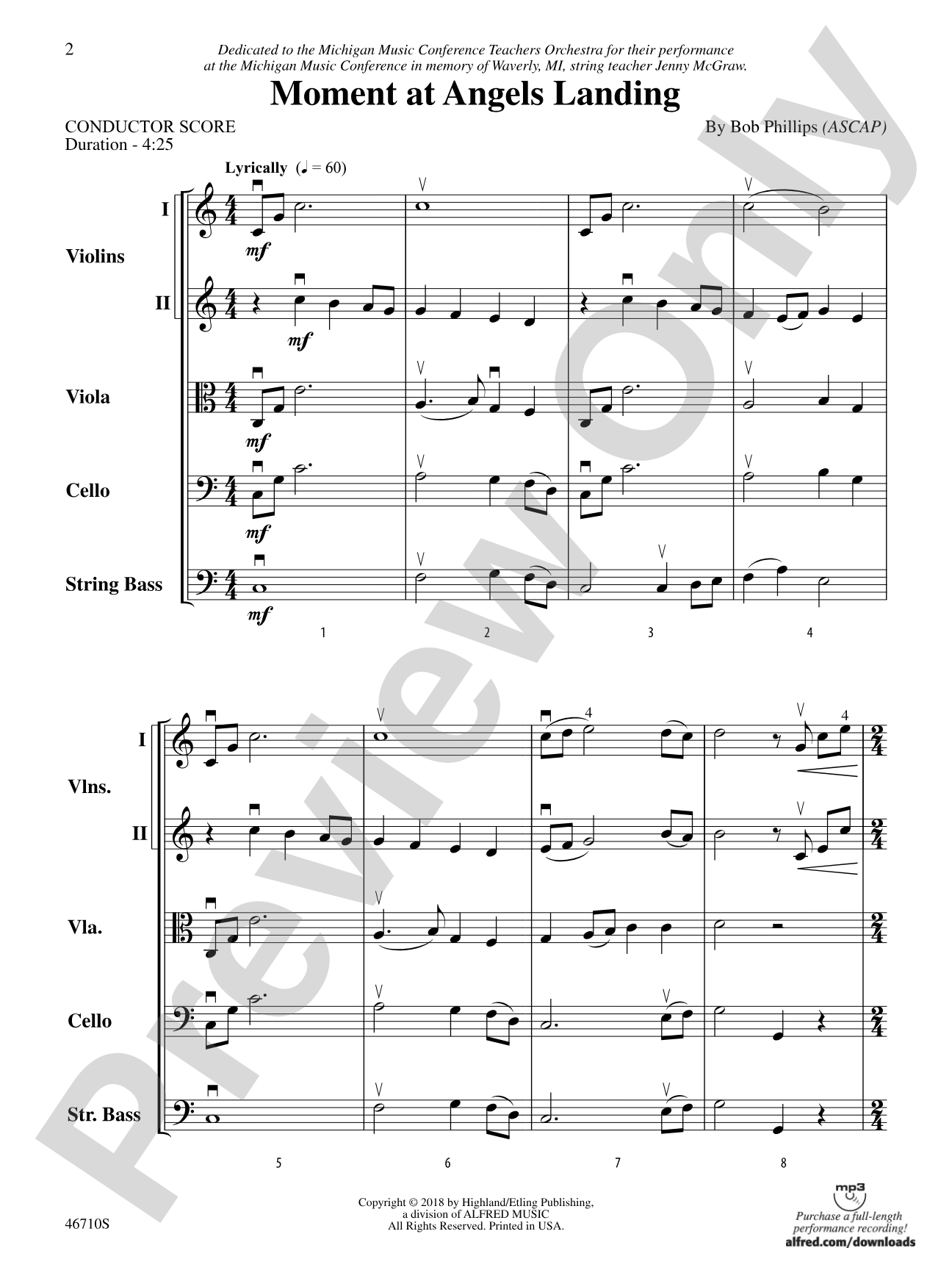
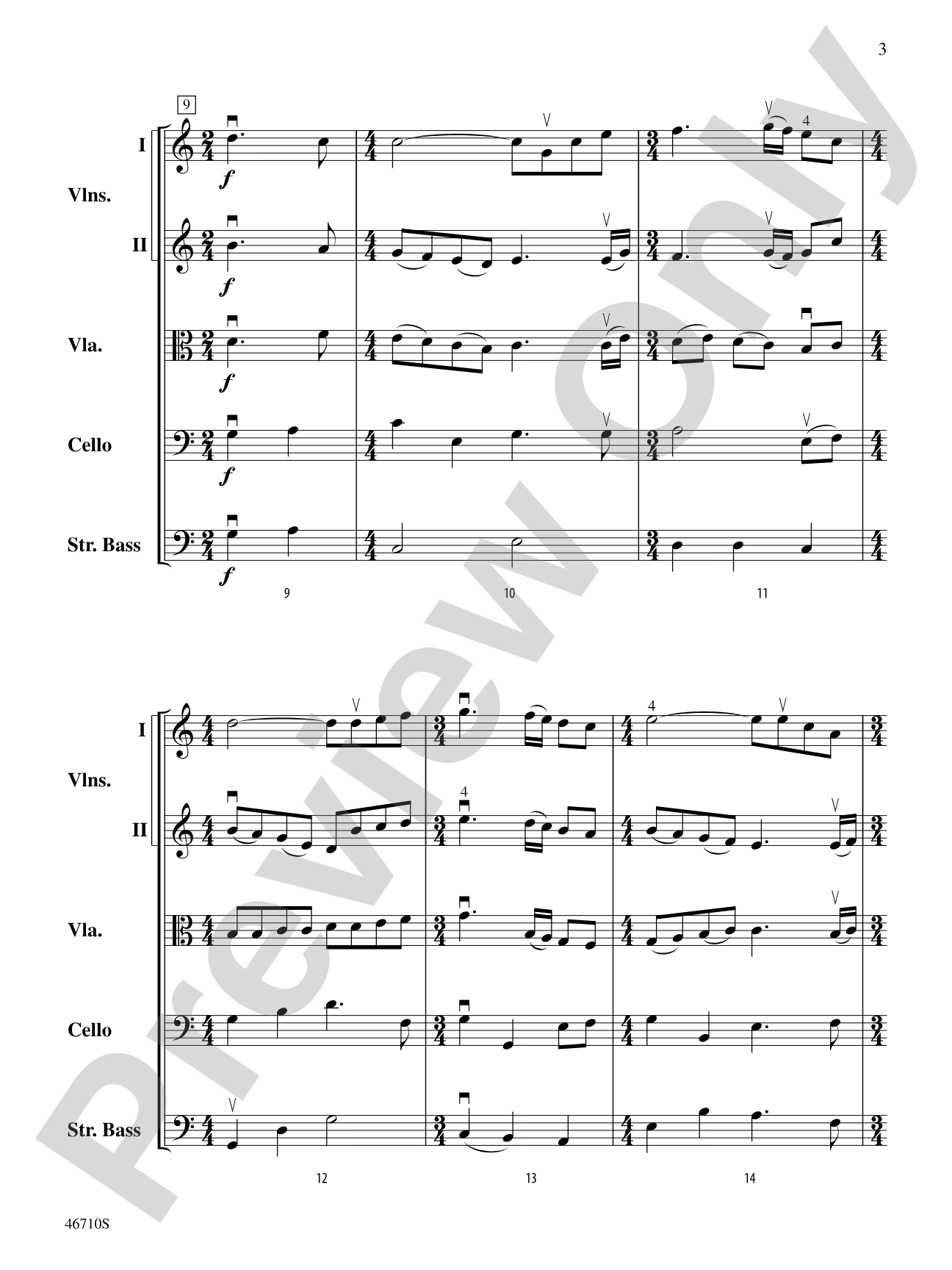
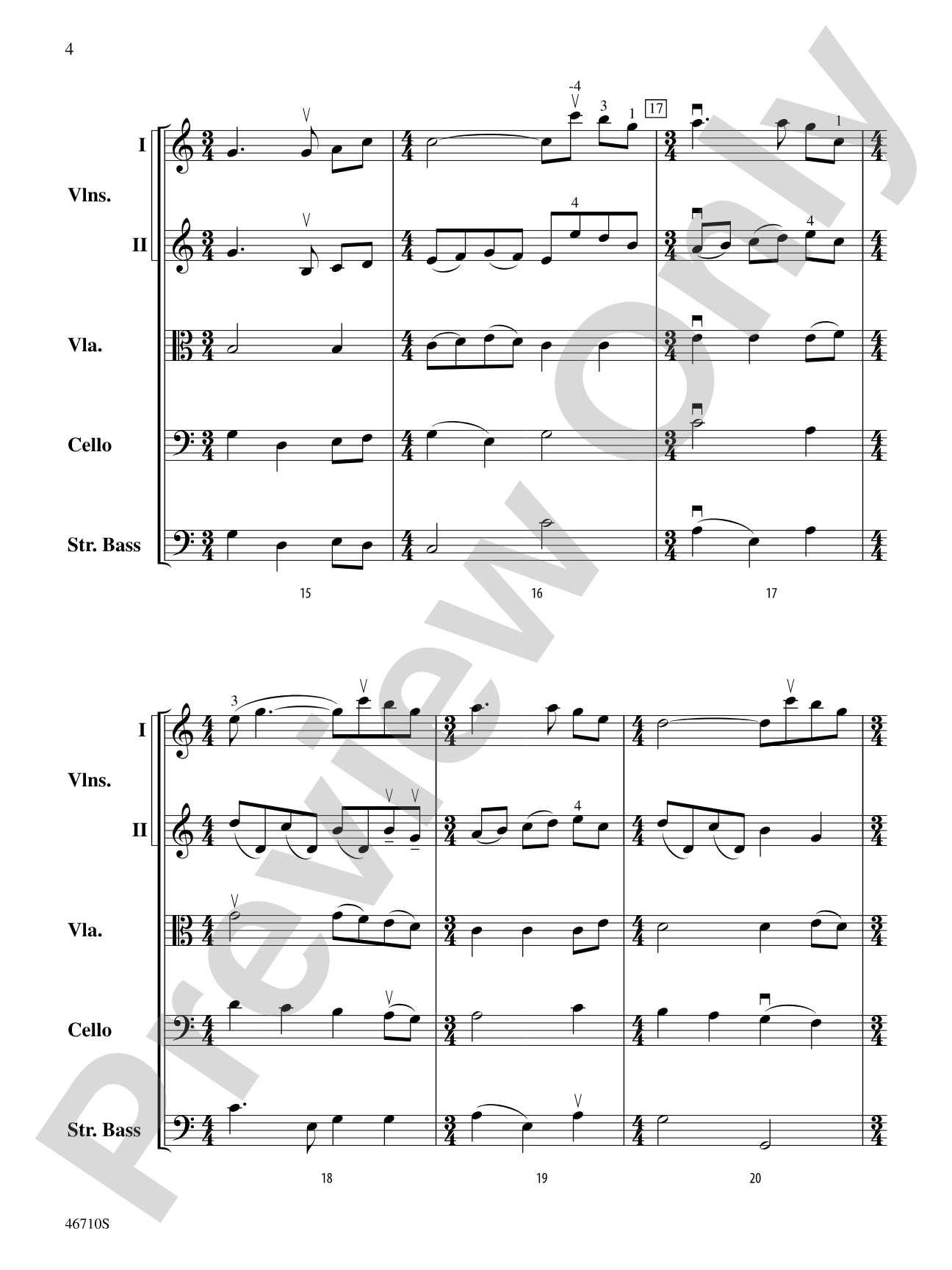
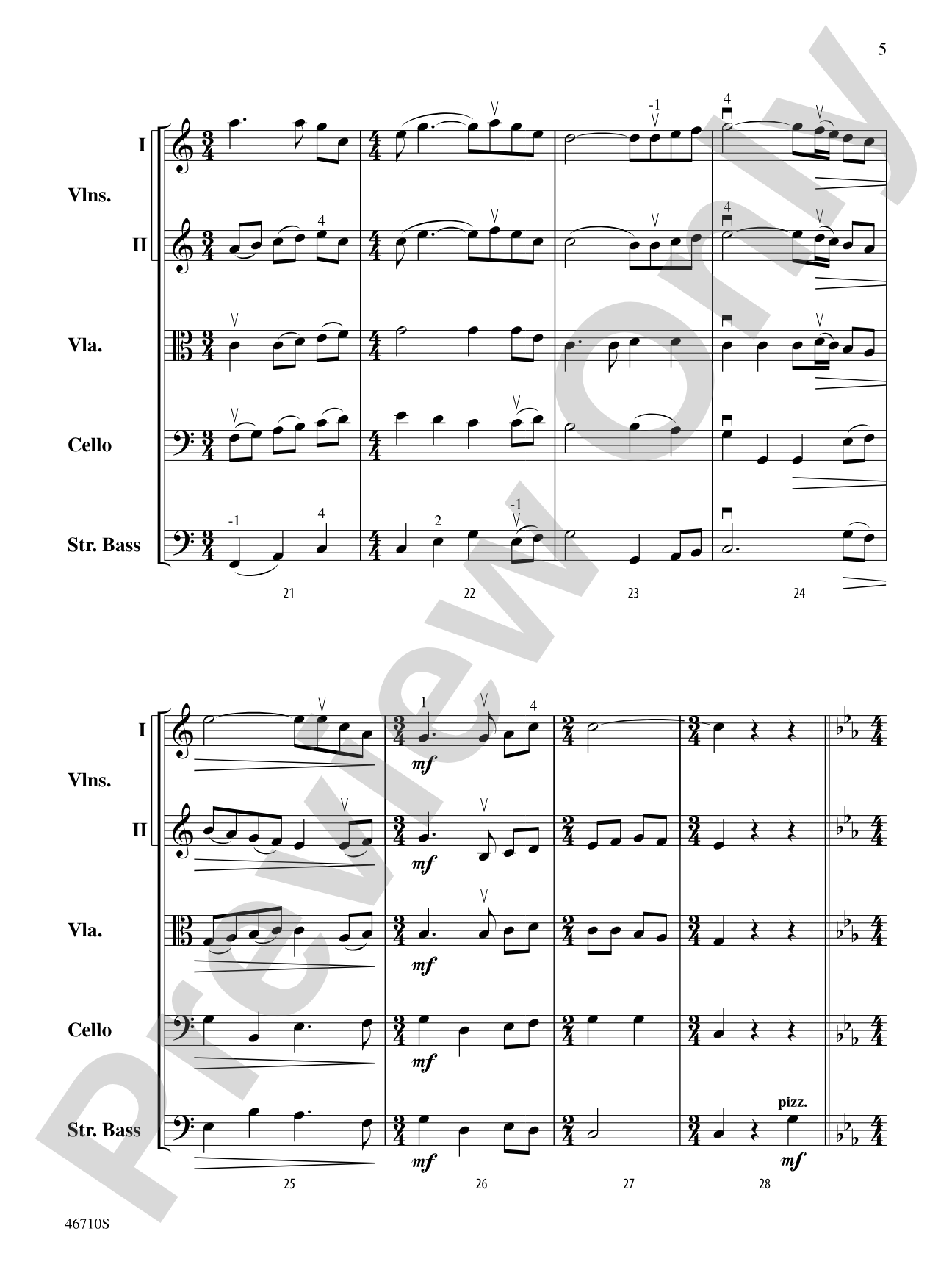
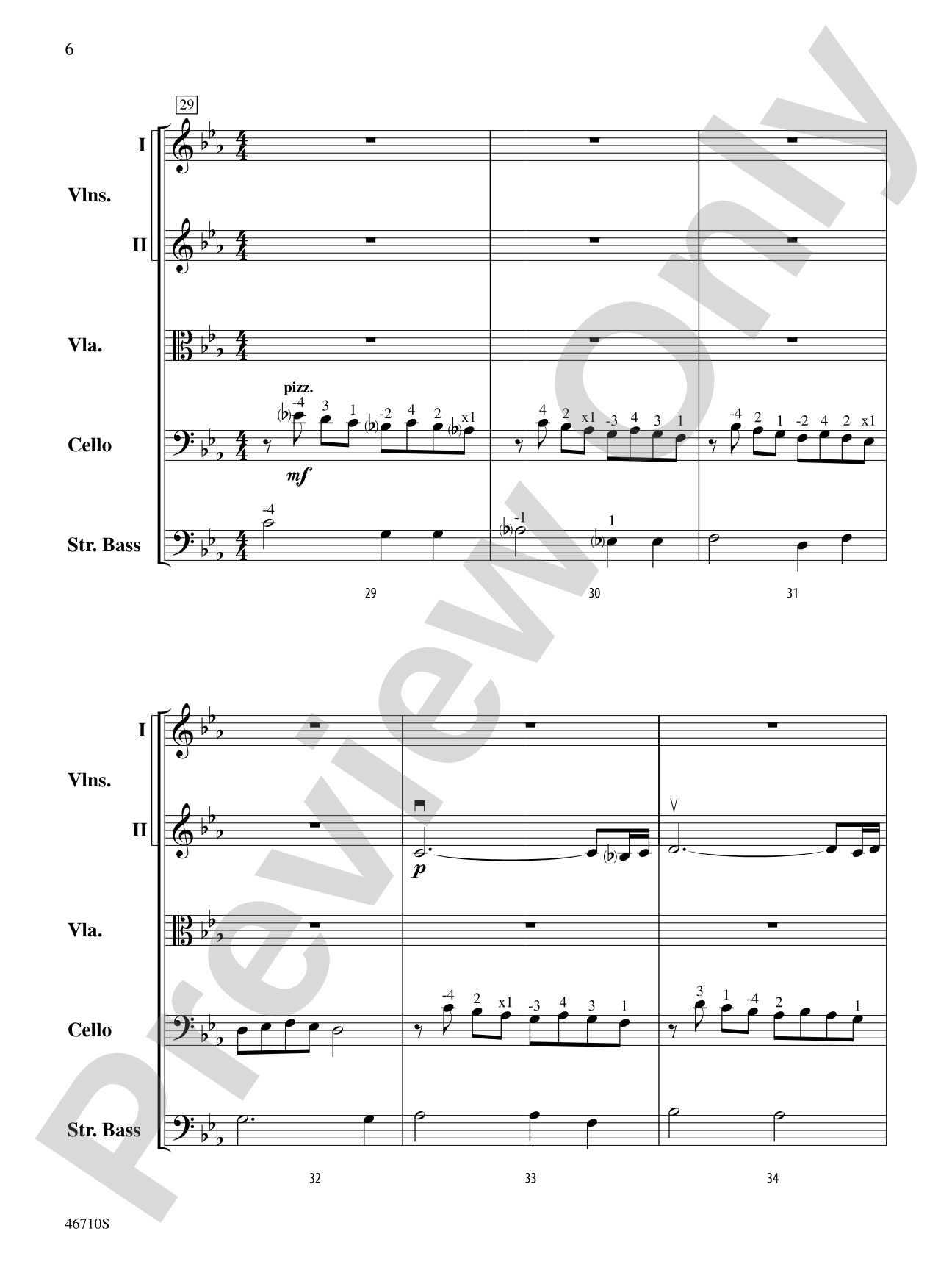
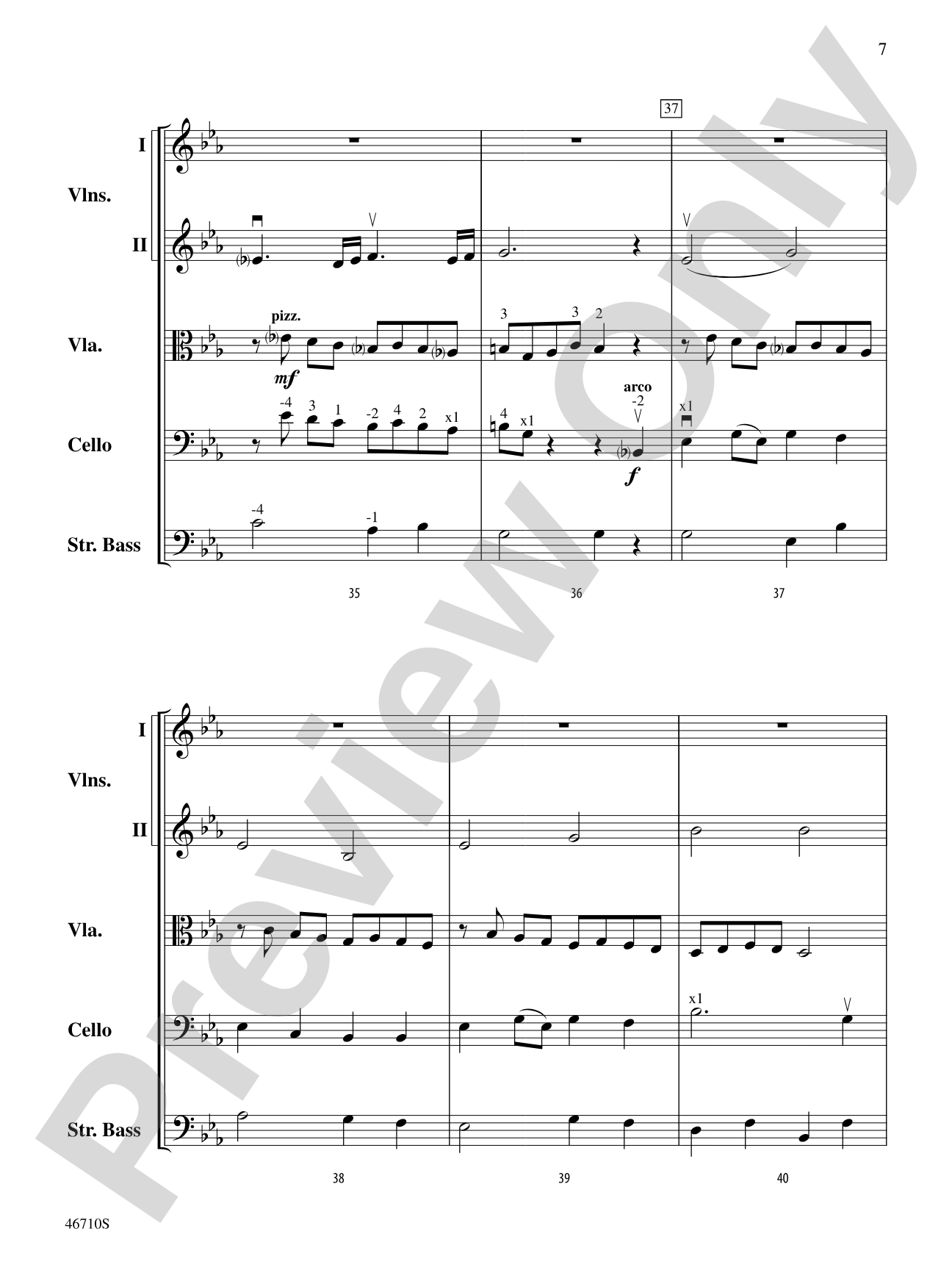
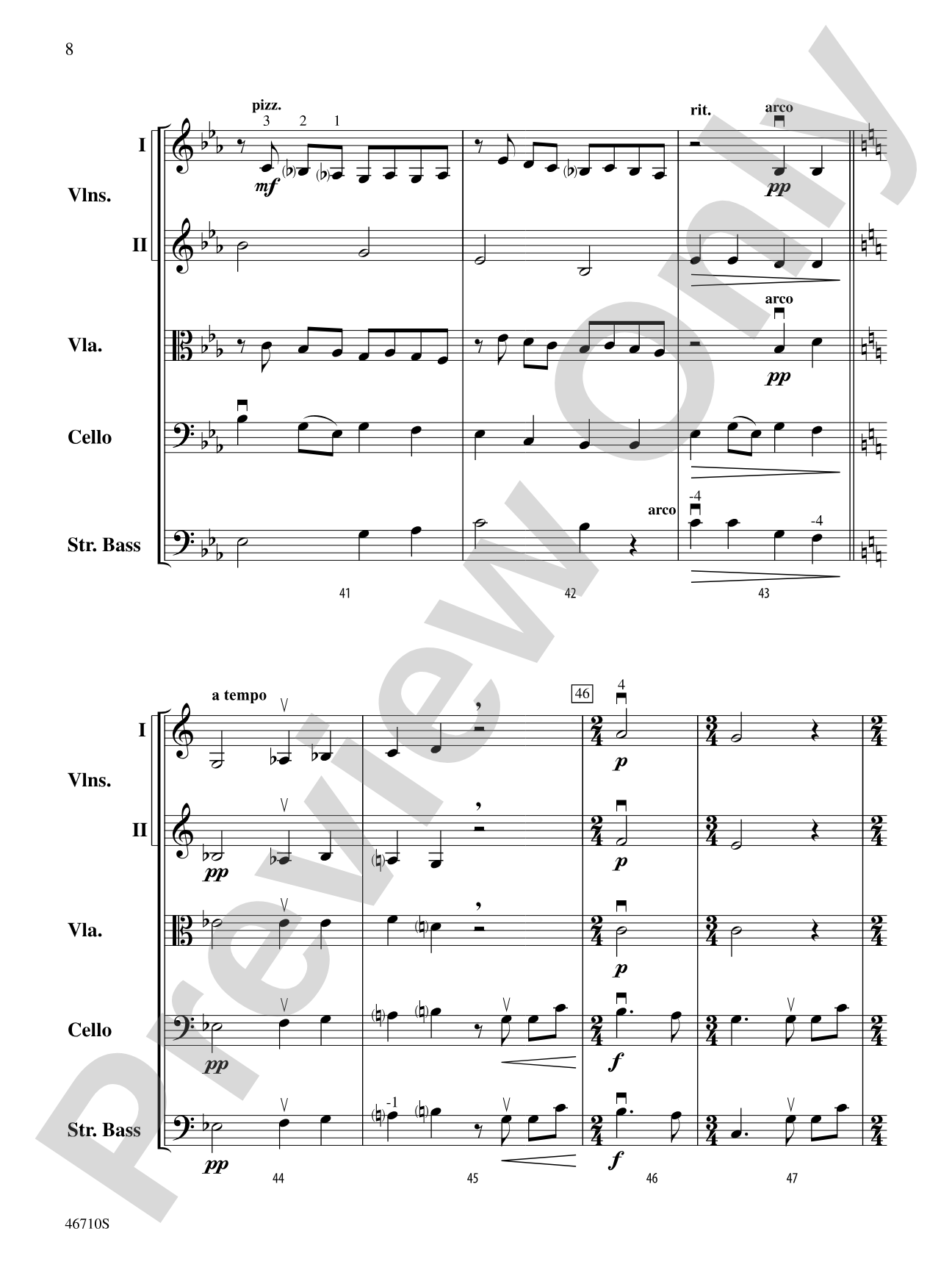
An elegant, beautiful, sophisticated, and lyric piece in C Major, this new work includes melodic content for all, particularly the cellos. With opportunities for practicing shifting and developing musicality, it will suit any concert and is perfect for serious settings. "Moment at Angels Landing" by Bob Phillips provides great practice in 2nd and 3rd positions for violins and violas as well as 3rd and 4th positions for cellos and basses. There is some upper position work for the 1st violins---presented in divisi, so it is not required of all students. All students will have opportunities to work on a sustained and legato sound with connected bow strokes and sensitive phrasing.


Don't just read it, hear it, play along with it, and watch your students grow with it. In MakeMusic Cloud, Moment at Angels Landing: String Orchestra Conductor Score & Parts comes alive with professional accompaniment, adjustable tempo, and built-in practice tools that turn solo practice into real progress.
Open in the Player
Jump straight in and assign it today.
Start Your Free Trial
Open this title and explore the full library in minutes.
Sample Audio
1
Audio File
--:--
0:00
0:00
Sample Video
Additional Details
Series:
Highland/Etling String Orchestra
Publisher:
Alfred Music
Page Count:
124
SKU:
00-PK-0007552
More about this title
About the Composer: Bob Phillips

Bob Phillips (b. 1953) has shaped string education through decades of conducting, composing, and teaching at the highest levels. His work spans both classical and contemporary idioms; he authored the complete Sound Innovations series and pioneered eclectic style publications including Jazz Philharmonic, Rock Philharmonic, and Mariachi Philharmonic. Over 200 of his works have been published for orchestras and bands, and he is an award-winning ASCAP composer whose pieces are regularly heard at the Midwest Clinic.
For 27 years, Phillips built the string program in Saline, Michigan into a national model, directing ensembles that performed at state and national conferences, the White House, and international festivals. He has served as resident conductor for the Wintergrass Festival in Seattle, guest conductor for multiple all-state orchestras across the country, and arranger for the professional ensemble Barrage 8. His instructional DVDs, String Clinics to Go, continue to reach thousands of teachers in the field.
Why we love this
This piece cuts through the usual Grade 3 programming options by offering genuine musical substance alongside pedagogical clarity. Every section of the orchestra carries melodic material, yet the shifting requirements and position work scaffold learning in a way that feels organic rather than imposed. Directors appreciate repertoire that builds specific technical skills without sacrificing the kind of beauty that reminds students why they play strings.
What to expect
A reflective moment captured in sound, with lyrical melody flowing through the ensemble like light across a landscape. The piece breathes naturally, inviting players to listen deeply to the voices around them and shape phrases with sensitivity. C Major clarity paired with sustained harmonic writing creates space and elegance without sentimentality.
Who it's for
String orchestras working at the Grade 3 level who want to develop genuine musicianship alongside technical growth. This is equally suited to students preparing for festival performance or building a concert program that demands attention to phrasing, tone quality, and ensemble balance. It works well for orchestras with mixed ability levels because the divisi writing in upper positions gives stronger players meaningful challenge without sidelining others.
How to get the most out of it
- Guide cellists to shape their melodic moments with the same care you'd expect in a featured solo; their sustained lines are the heart of this work.
- Work the legato passages as a full orchestra unit, treating bow connections and phrase breathing as ensemble skills, not individual ones.
- Use the divisi sections in first violin as an opportunity to rotate students through upper position work across rehearsals, allowing everyone to experience the challenge without overburdening any one player on performance day.
- Lock the balance between sustained harmonic voices and melodic content by rehearsing in layers; have one section hold their line while another learns theirs, then reverse.
How to use it
Position this as a centerpiece offering in a concert of contrasting works; its sophistication and programmatic foundation anchor a program beautifully alongside lighter fare. It also pairs well as a contest or festival entry where judges expect both technical demonstration and musical maturity. Consider programming it mid-season when students have developed the bow control and listening skills to honor its lyrical demands.
Skills your students will build
- Shifting in 2nd and 3rd positions for violins and violas
- Cellos and basses in 3rd and 4th positions
- Upper position work for 1st violins (presented in divisi)
- Sustained and legato sound with connected bow strokes
- Sensitive phrasing and ensemble listening
- Musicality across all voice parts, particularly in accompaniment roles