Momcat Mambo Sheet Music Preview

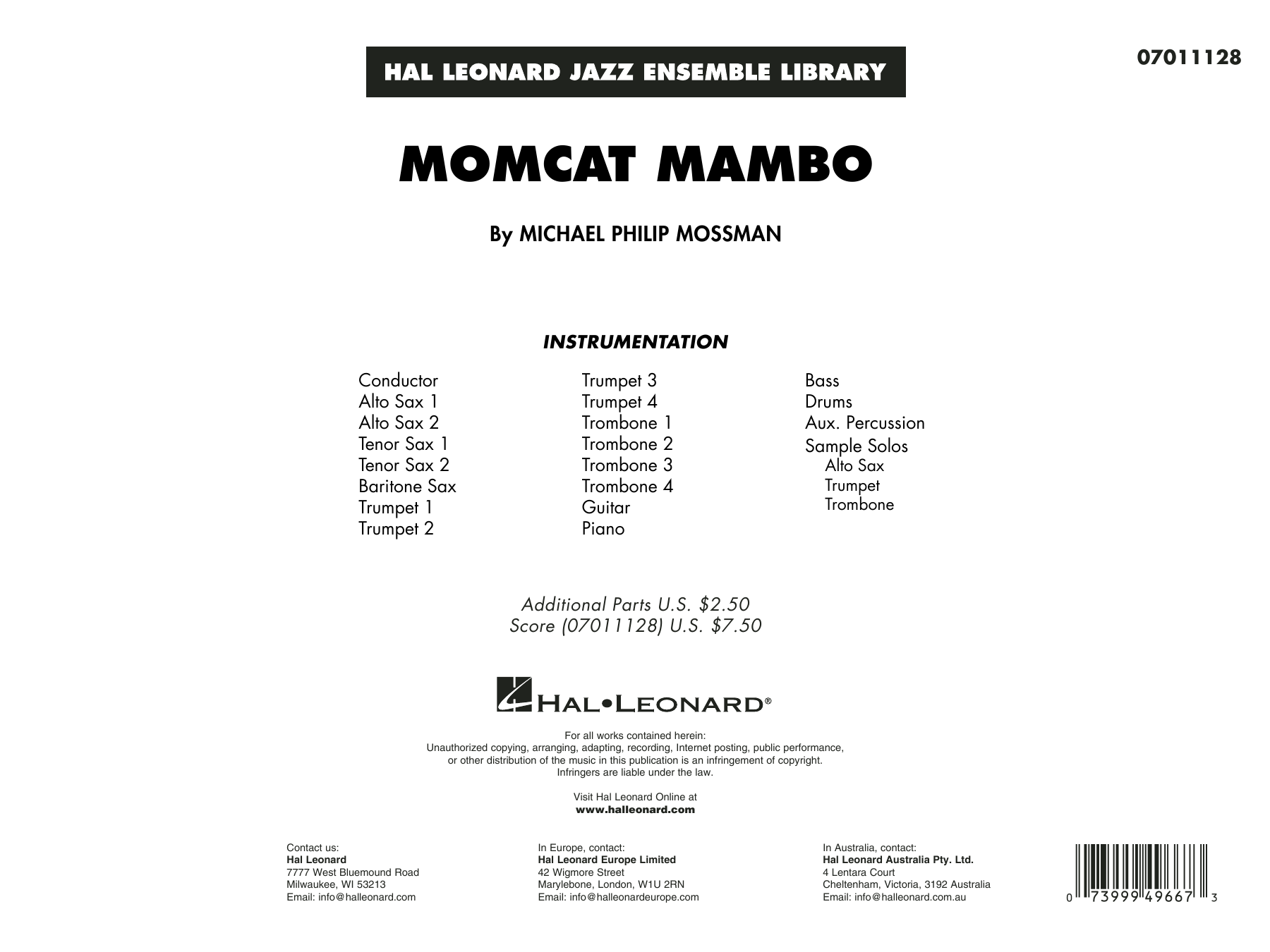
Momcat Mambo: Jazz Ensemble Conductor Score & Parts

By Michael Philip Mossman

Grade: 4

Item: 35-PK00141577

Digital Download
$50.00

One moment…

Description
Explore the exciting world of "mambo" with this Michael Philip Mossman original commissioned by the Delavan-Darien (WI) H.S. Jazz Ensemble. A variety of moods and meters are used and there is solo space for dueling alto saxes, trombone and trumpet. The angular melody and quartal harmonies give this one a distinctive sound, ensuring that your players will have a ball.

Momcat Mambo: Jazz Ensemble Conductor Score & Parts isn't in MakeMusic Cloud just yet...but it could be. Let us know you'd like to see it, and you'll help shape what comes next. In the meantime, start a free trial and dive into thousands of interactive titles your students can play along with today.

Sample Audio
No sample audio found.
Sample Video
Additional Details
Publisher: Hal Leonard
SKU: 35-PK00141577

More about this title

About the Composer: Michael Philip Mossman

Michael Philip Mossman is a composer and arranger with deep roots in jazz education and ensemble writing. His work balances accessibility with sophistication, creating pieces that challenge players while remaining genuinely enjoyable to perform.

Mossman's commissions for high school jazz ensembles have made him a trusted voice in secondary music programs. He understands what works in the rehearsal room and what translates to an energized performance.

Why we love this

Mossman refuses to write predictable mambo by layering in metric shifts and quartal harmony that keep both sections and soloists on their toes. The piece breathes with enough space for genuine musical conversation between the alto saxes, trombone, and trumpet, making the solo sections feel earned rather than inserted. Your ensemble will leave the first rehearsal wanting to play it again.

What to expect

Momcat Mambo hits with the energy of a street party but maintains an intellectual edge through its harmonic choices. The angular melody and shifting meters create a sound that feels both contemporary and rooted in latin tradition, refusing to sit still.

Who it's for

Jazz ensembles working at Grade 4 level who are ready for modal thinking and metric flexibility. Your soloists need confidence and some improvisational experience, but the piece itself rewards careful ensemble playing over individual virtuosity.

How to get the most out of it

  • Establish the clave early in rehearsals and reinforce it daily. The latin groove depends on rhythmic precision in the rhythm section, not just timekeeping.
  • Balance the angular melody with the hip pocket underneath. The uncommon harmonies can sound thin if the ensemble plays it straight; lean into the swing.
  • Give soloists space to find their voice in the dueling sections. These aren't showpiece moments; they're conversations between players.
  • Mark the meter changes clearly and have players write them in their parts. Shifting between moods demands active awareness, not passive reading.

How to use it

Save this for a concert where you want to showcase growth in your section players and soloists together. The quartal harmonies and metric variety make it an ideal anchor piece for a contemporary jazz set, especially if you're pairing it with standards that have more conventional harmonic language.

Skills your students will build

  • Reading and performing in mixed meters (duple and triple subdivisions)
  • Understanding clave-based rhythmic structures and their application to modern composition
  • Improvising over quartal harmonies and non-traditional chord changes
  • Listening and responding within ensemble solo contexts (comping, accompaniment sensitivity)
  • Balancing angular melodic writing with pocket-focused rhythmic support

You May Also Like