
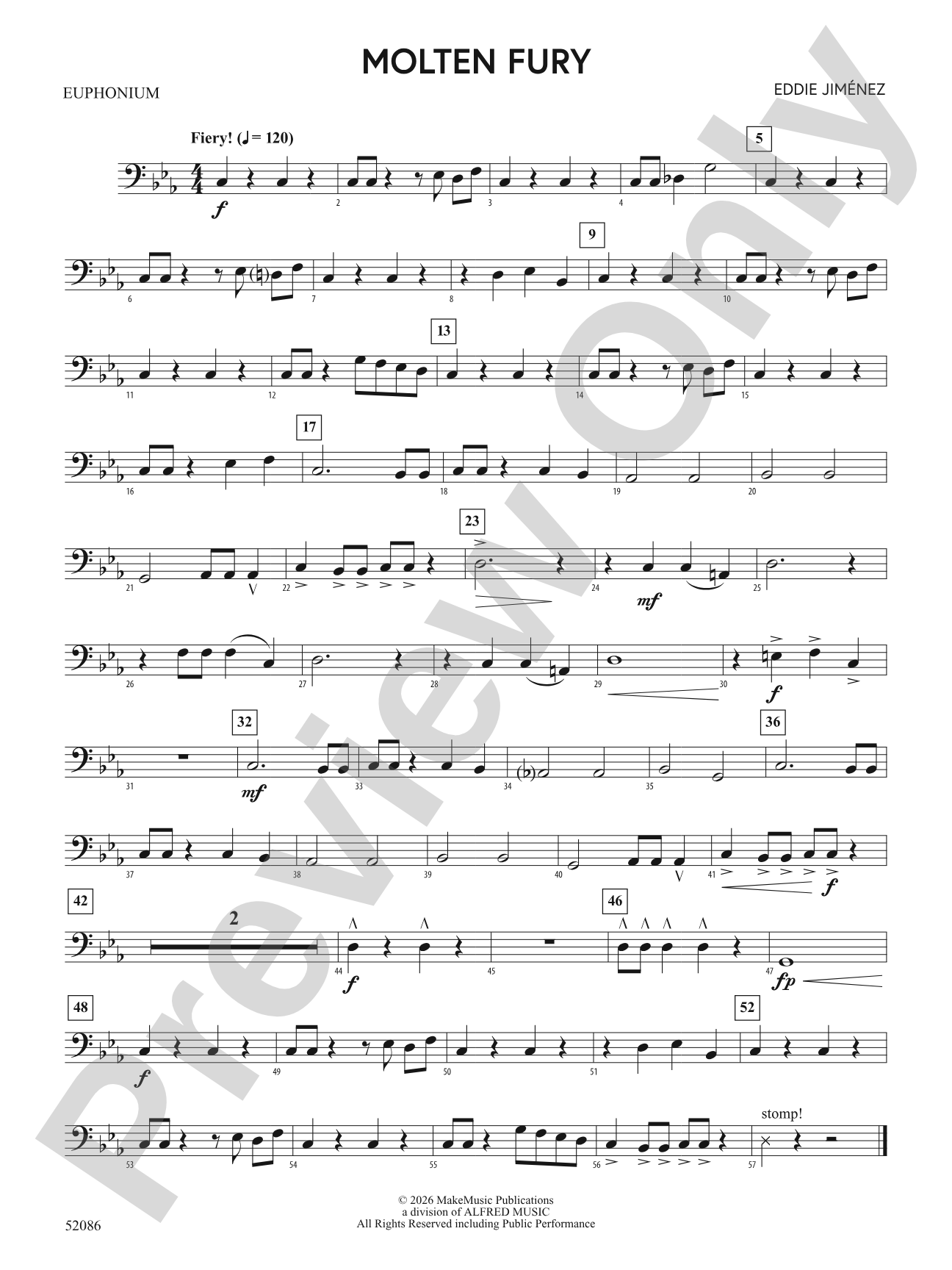

Molten Fury: Baritone B.C.
Eddie Jiménez
Grade: 1.5
Item: 00-PC-0019686_BBC1
$3.00
Pickup currently not available
Description
Unleash the raw power of nature with Molten Fury! This programmatic work by Eddie Jiménez vividly portrays a volcanic eruption, underscored by the haunting Dies Irae. Engage your ensemble and audience with dramatic musical storytelling, exploring themes of ancient disaster and overwhelming force. A truly captivating experience for your next concert! (2:00)


Don't just read it, hear it, play along with it, and watch your students grow with it. In MakeMusic Cloud, Molten Fury: Baritone B.C. comes alive with professional accompaniment, adjustable tempo, and built-in practice tools that turn solo practice into real progress.
Open in the Player
Jump straight in and assign it today.
Start Your Free Trial
Open this title and explore the full library in minutes.
Sample Audio
1
Audio File
--:--
0:00
0:00
Sample Video
Additional Details
Series:
MakeMusic Developing Band
Publisher:
MakeMusic Publications
SKU:
00-PC-0019686_BBC1
More about this title
About the Composer: Eddie Jiménez

Eddie Jiménez holds degrees from both the University of Miami (bachelor's in instrumental performance) and Manhattan School of Music (master's in orchestral trumpet performance), where he earned The Cecil Collins Award for Excellence in Brass Performance. As a performer, he maintains an active schedule with regional orchestras and ensembles including The Plano Symphony, Las Colinas Symphony, Irving Symphony, Allen Philharmonic, Imperial Brass, and The Lone Star Wind Orchestra, while also serving as a hall of fame member of the Blue Devils Drum and Bugle Corps.
Based in Dallas, Jiménez combines his performance career with extensive teaching and composing. He directs bands, teaches private trumpet lessons, leads masterclasses, and works as a teaching artist throughout the region. His original compositions and arrangements have been performed by university ensembles at Miami, Manhattan, Houston, and Miami Dade College, as well as by countless secondary school bands across Texas. A native of Havana, Cuba, Jiménez brings both classical training and practical expertise in music education to his work.
Why we love this
Molten Fury delivers the dramatic payoff your audience craves without requiring advanced technical demands from your ensemble. The integration of the Dies Irae into a vivid programmatic narrative gives younger players a meaningful dramatic anchor while building confidence with accessible voicing and clear sectional writing.
What to expect
Molten Fury immerses listeners in the raw chaos of geological power. The haunting Dies Irae threading through the destruction creates an unsettling contrast, mixing ancient foreboding with modern orchestration to build genuine dramatic tension that leaves the audience breathless.
Who it's for
Concert bands working at the Grade 1.5 level will find this piece both musically and programmatically engaging without facing extreme technical hurdles. Directors seeking a contest or festival piece that tells a compelling story and captures audience attention should consider this as a strong choice for your next performance.
How to get the most out of it
- Build the dynamic arc gradually across the work. Resist the urge to play the loudest moments at full volume immediately; save your peak intensity for the actual eruption sequence so the climax lands with genuine force.
- Balance the Dies Irae references clearly. This traditional melody grounds the chaos, so make sure brass carries it with clarity even as percussion and lower voices surge around it.
- Use the 2:00 duration efficiently in rehearsal by marking structural sections and referring to them by measure number rather than musical description. This keeps ensemble focus and speeds sectional work.
How to use it
Program this as a mid-concert anchor piece that transitions your program from lighter fare into something with real theatrical weight. The two-minute runtime also makes it ideal for festival competitions where time restrictions matter, allowing you to make a substantial artistic statement without consuming your entire set.
Skills your students will build
- Reading and executing rapid dynamic changes within phrases
- Balancing thematic material (Dies Irae) against surrounding textural complexity
- Responding to programmatic cues for expressive phrasing without over-dramatizing
- Ensemble control during cumulative crescendo passages
- Distinguishing between rhythmic precision and stylistic interpretation