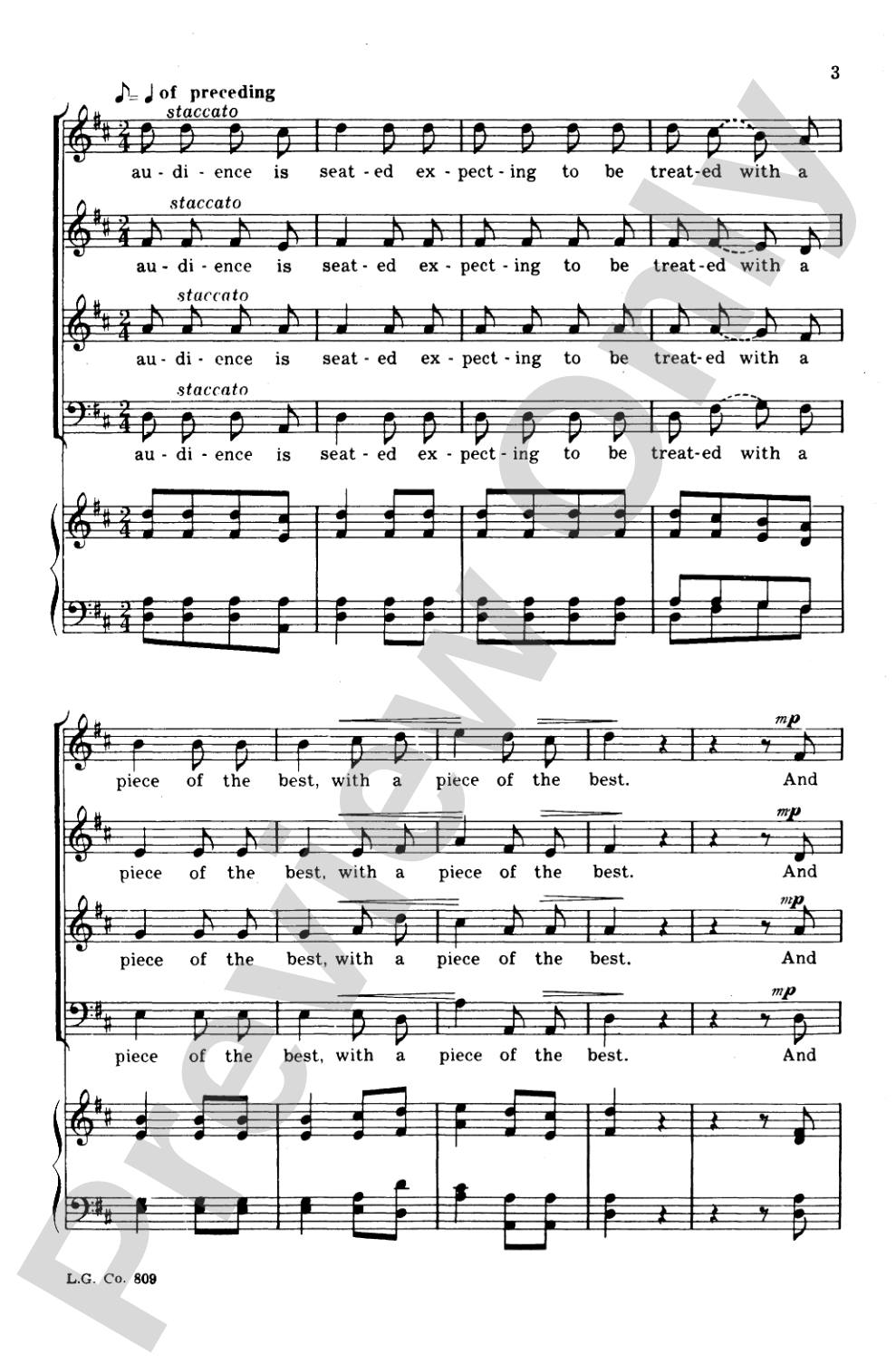
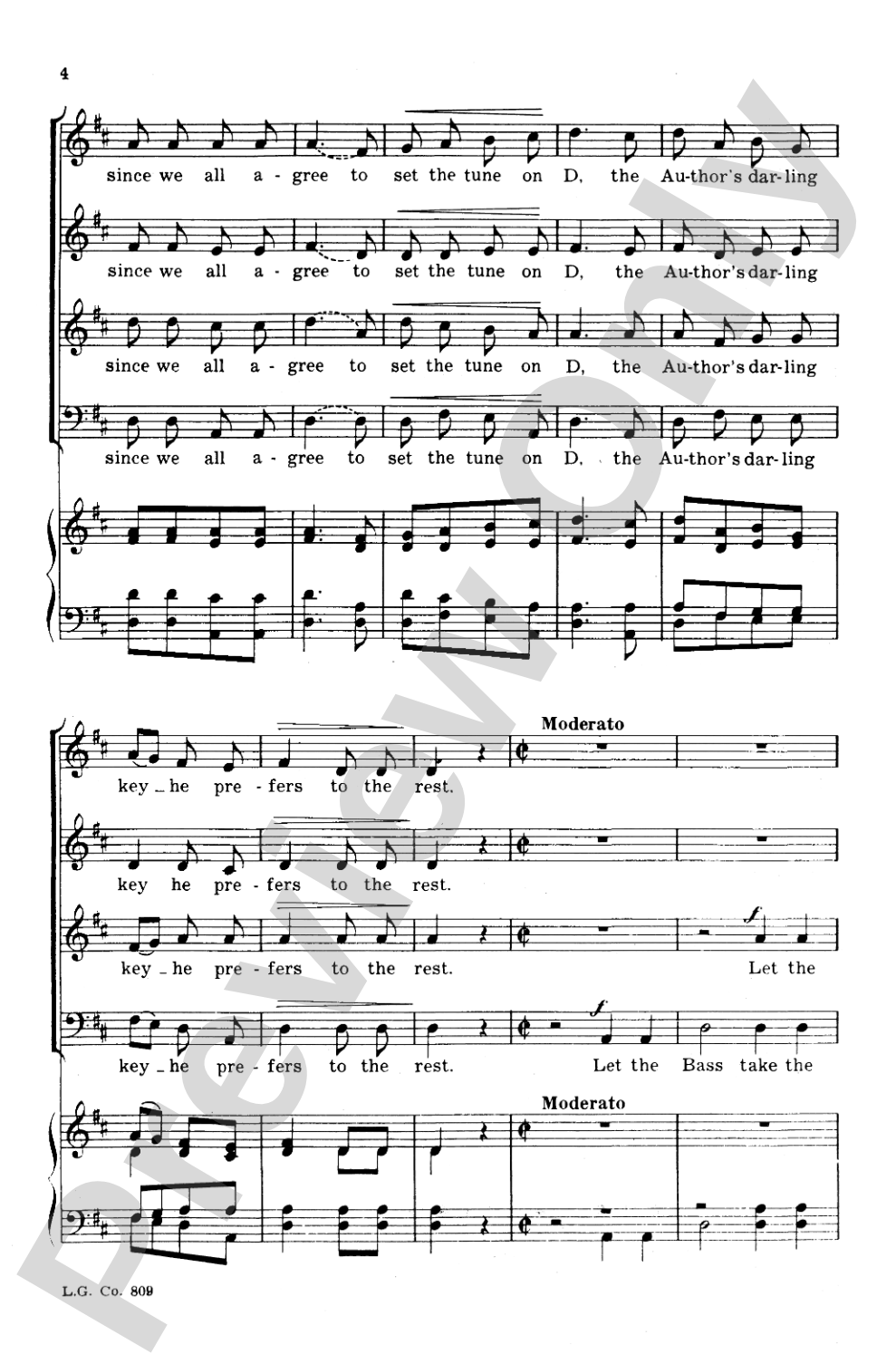
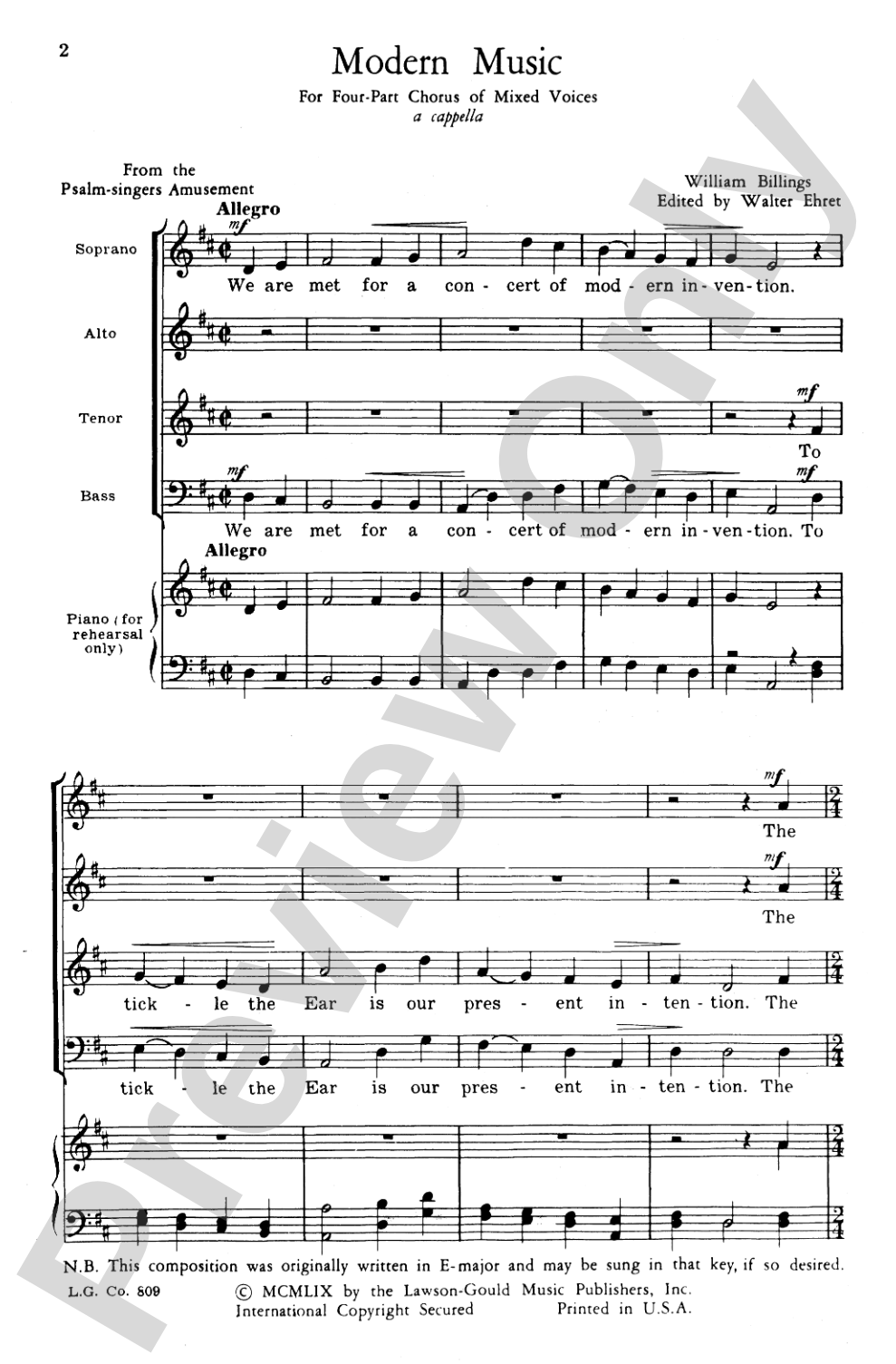
Modern Music Sheet Music Preview

Modern Music: SATB Choral Octavo

By William Billings / ed. Walter Ehret

Item: 00-PO-0004945

Digital Download
$2.25

Minimum order quantity: 20 copies

Description

Modern Music: SATB Choral Octavo isn't in MakeMusic Cloud just yet...but it could be. Let us know you'd like to see it, and you'll help shape what comes next. In the meantime, start a free trial and dive into thousands of interactive titles your students can play along with today.

Sample Audio
No sample audio found.
Sample Video
Additional Details
Series: Alfred Archive Edition: Lawson-Gould Music Publishers
Publisher: Alfred Music
Page Count: 12
SKU: 00-PO-0004945

More about this title

About the Composer: William Billings

William Billings (1746-1800) stands as one of early America's most prolific and inventive composers. Working in Boston during the Revolutionary era, he composed hymns, fuging tunes, and secular works that blended European harmonic traditions with a distinctly American sensibility. His music was widely published and performed in his lifetime, making him a central figure in the development of American choral music.

Billings' compositions are characterized by angular melodic lines, unexpected harmonic turns, and a democratic approach to part-writing where all four voices receive engaging musical material. His secular works demonstrate compositional sophistication and continue to reward choral singers with rewarding ensemble experiences.

Why we love this

Billings gives all four voices genuinely interesting material, which means singers at every level feel engaged and invested in the outcome. The harmonic language is direct and compelling without requiring rehearsal time spent explaining chromatic voice-leading or text-painting techniques. Programming early American secular music alongside your other repertoire enriches your concert's narrative and introduces singers and audiences to a composer whose influence on American musical culture deserves attention.

What to expect

Sturdy and direct, with the honest beauty of music written for singers rather than for concert halls. The harmonies shift in unexpected ways that feel both logical and surprising, creating moments of genuine harmonic color without abandoning accessibility.

Who it's for

High school and college choral programs seeking repertoire that challenges singers without requiring advanced vocal technique or extensive rehearsal time. Ensembles interested in American musical heritage and directors looking for secular concert material that stands apart from the standard Renaissance and Romantic canon.

How to get the most out of it

  • Prepare singers for sudden harmonic surprises and modal inflections by isolating problematic sections in sectional rehearsals rather than assuming ears will adjust during full-choir runs.
  • Balance the four parts carefully; Billings writes in a texture where each voice needs clarity, especially in passages where voices move in shorter rhythmic values.
  • Let the text articulation guide phrasing decisions rather than imposing Romantic-era legato traditions. Billings' secular works benefit from cleaner consonant attacks and shorter note values that breathe naturally with the language.
  • Record a sectional reference or use isolated vocal lines during early rehearsals so singers internalize their parts before blending with other voices.

How to use it

Include this piece in a concert exploring American composers, pairing it with spirituals, shape-note hymns, or later American choral works to trace a musical lineage. Its secular character and moderate difficulty make it an ideal programming choice midway through a concert, where it can refresh both singers and audience after more demanding repertoire.

Skills your students will build

  • Reading and performing four-part harmony with angular melodic lines
  • Balancing independent vocal lines within a cohesive choral sound
  • Understanding modal and unexpected harmonic movement in historical context
  • Performing early American secular music with appropriate style and articulation

You May Also Like