Modal Overture: Oboe Sheet Music Preview

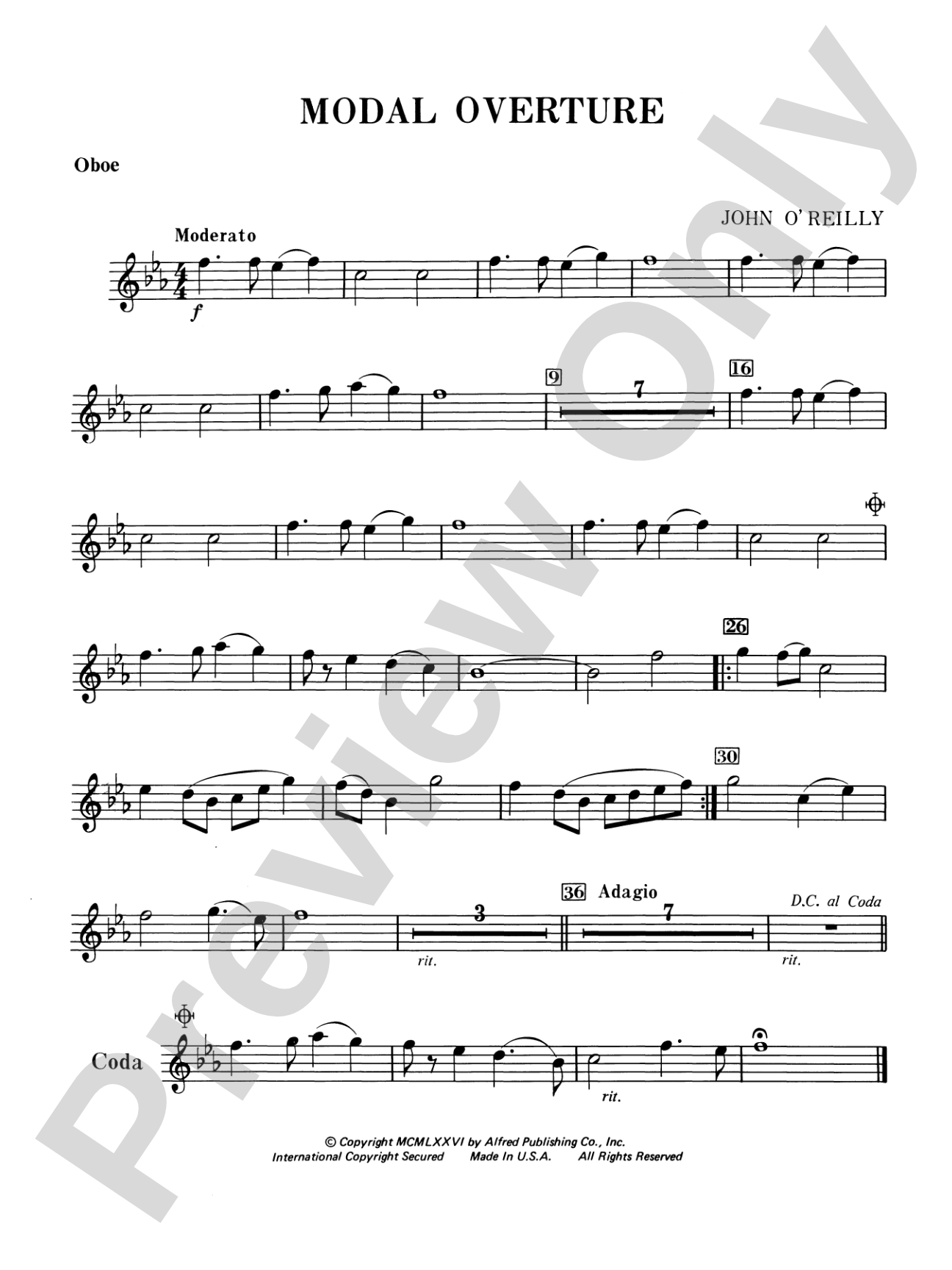
Modal Overture: Oboe

By John O'Reilly

Grade: 1.5 (Easy)

Item: 00-PC-0015269_O1

Digital Download
$3.00
Description

Don't just read it, hear it, play along with it, and watch your students grow with it. In MakeMusic Cloud, Modal Overture: Oboe comes alive with professional accompaniment, adjustable tempo, and built-in practice tools that turn solo practice into real progress.

Sample Audio
0:00
0:00
Sample Video
Additional Details
Series: Contempo Series
Publisher: Alfred Music
Page Count: 98
SKU: 00-PC-0015269_O1

More about this title

Why we love this

Modal Overture delivers exactly what a Grade 1.5 band needs: musical substance without unnecessary complexity. O'Reilly's use of modal harmony gives the piece real character and sophistication, letting young players feel the harmonic color shift without wrestling through dense voice-leading. It's a contest piece that respects both the ensemble's ability level and its audience's ears.

What to expect

Modal Overture opens with the certainty of an overture form while the harmonic language breathes something fresher than typical diatonic writing. The piece feels both confident and exploratory, inviting the band into a musical world that feels slightly different from everyday repertoire without losing accessibility.

Who it's for

This score and parts set is built for concert bands at the developing level, especially those preparing for festival or contest performance. Young musicians will stretch their harmonic listening skills while working with music that sits comfortably under their fingers.

How to get the most out of it

  • Shape the modal shifts deliberately by adjusting the ensemble's blend and weight between sections; these harmonic changes are the piece's backbone, so make them audible without forcing.
  • Watch tempo consistency through the overture structure; younger bands often rush exciting passages, so use a clear, steady conducting pattern to hold the line.
  • Balance the middle voices to let the harmonic color come through; modal writing lives in the inner parts, not just the melody, so ensure violas and second clarinets aren't buried.

How to use it

This works as either a festival single or an opening number for a spring concert where you want to showcase the band's growing sophistication. Pair it with a contrasting lyrical work or a march to frame it clearly on a program.

Skills your students will build

  • Recognizing and executing modal harmonic shifts
  • Maintaining steady tempo through form changes
  • Balancing inner voices to support harmonic color
  • Reading at a faster clip while staying clean
  • Hearing and responding to ensemble blend cues

You May Also Like