Mizmorei T'hilim Sheet Music Preview

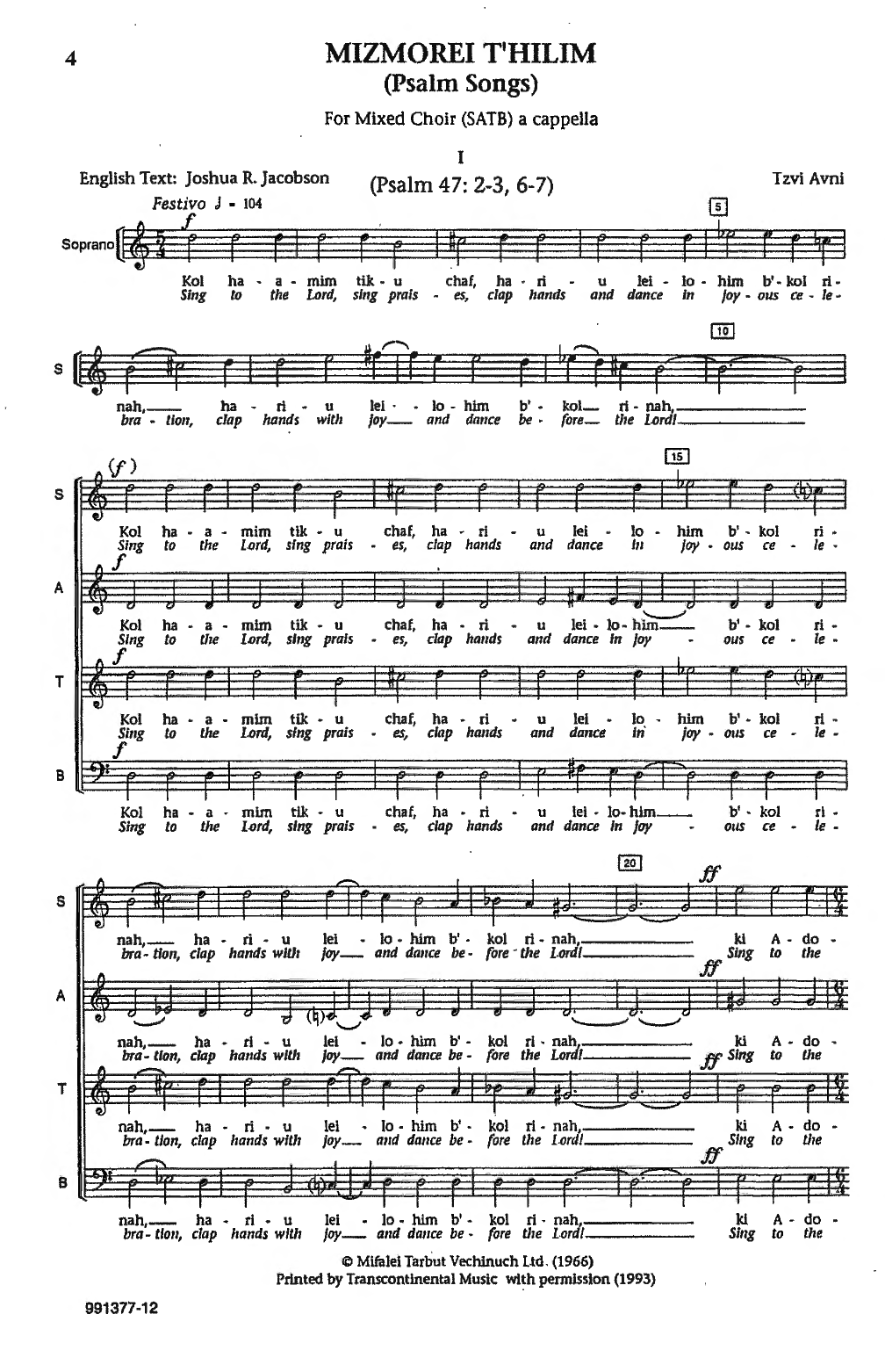
Mizmorei T'hilim: SATB Choral Octavo

Arranged by Tzvi Avni

Item: 35-DS00410378

Digital Download
$2.99
Description

Mizmorei T'hilim: SATB Choral Octavo isn't in MakeMusic Cloud just yet...but it could be. Let us know you'd like to see it, and you'll help shape what comes next. In the meantime, start a free trial and dive into thousands of interactive titles your students can play along with today.

Sample Audio
No sample audio found.
Sample Video
Additional Details
Publisher: Hal Leonard
Page Count: 14
SKU: 35-DS00410378

More about this title

About the Arranger: Tzvi Avni

Tzvi Avni is an Israeli composer and arranger whose work bridges liturgical tradition and contemporary choral writing. His arrangements honor the textural possibilities of the human voice while respecting the spiritual weight of Jewish musical sources, making him a significant figure in modern Jewish choral music education.

Why we love this

Avni's setting brings sophisticated harmonic language to psalmic material without losing accessibility. The arrangement sits naturally for four-part singers while creating moments of genuine vocal richness that reward careful preparation.

What to expect

Meditative yet purposeful. The harmonic language creates moments of luminous calm alongside passages that build with dignified intensity. This is music that invites listeners into reflection rather than demanding their attention through force.

Who it's for

Choirs seeking substantial yet singable sacred music that connects to Jewish tradition. This works equally well for secular ensembles interested in exploring liturgical texts and for programs that value cultural and spiritual diversity.

How to get the most out of it

  • Balance the parts carefully during vertical sonorities; the harmonic density requires each voice to maintain independence while blending into unified harmony.
  • Pay attention to text underlay and phrasing as guided by the Psalmic structure; allow the word rhythm to inform your approach rather than imposing external phrasing.
  • Consider the liturgical context of the text when shaping dynamics and tempo; this grounds the interpretation in meaning beyond the notes.

How to use it

Include this in a concert exploring sacred music across cultures, or program it as a bridge between secular and liturgical repertoire. It also serves well as an encore or closing piece that leaves audiences with a sense of contemplative completion.

Skills your students will build

  • Singing in Hebrew with authentic pronunciation and textual understanding
  • Balancing independent melodic lines within four-part harmonic textures
  • Sustaining emotional focus during extended harmonic progressions
  • Interpreting liturgical text with appropriate pacing and reverence

You May Also Like