
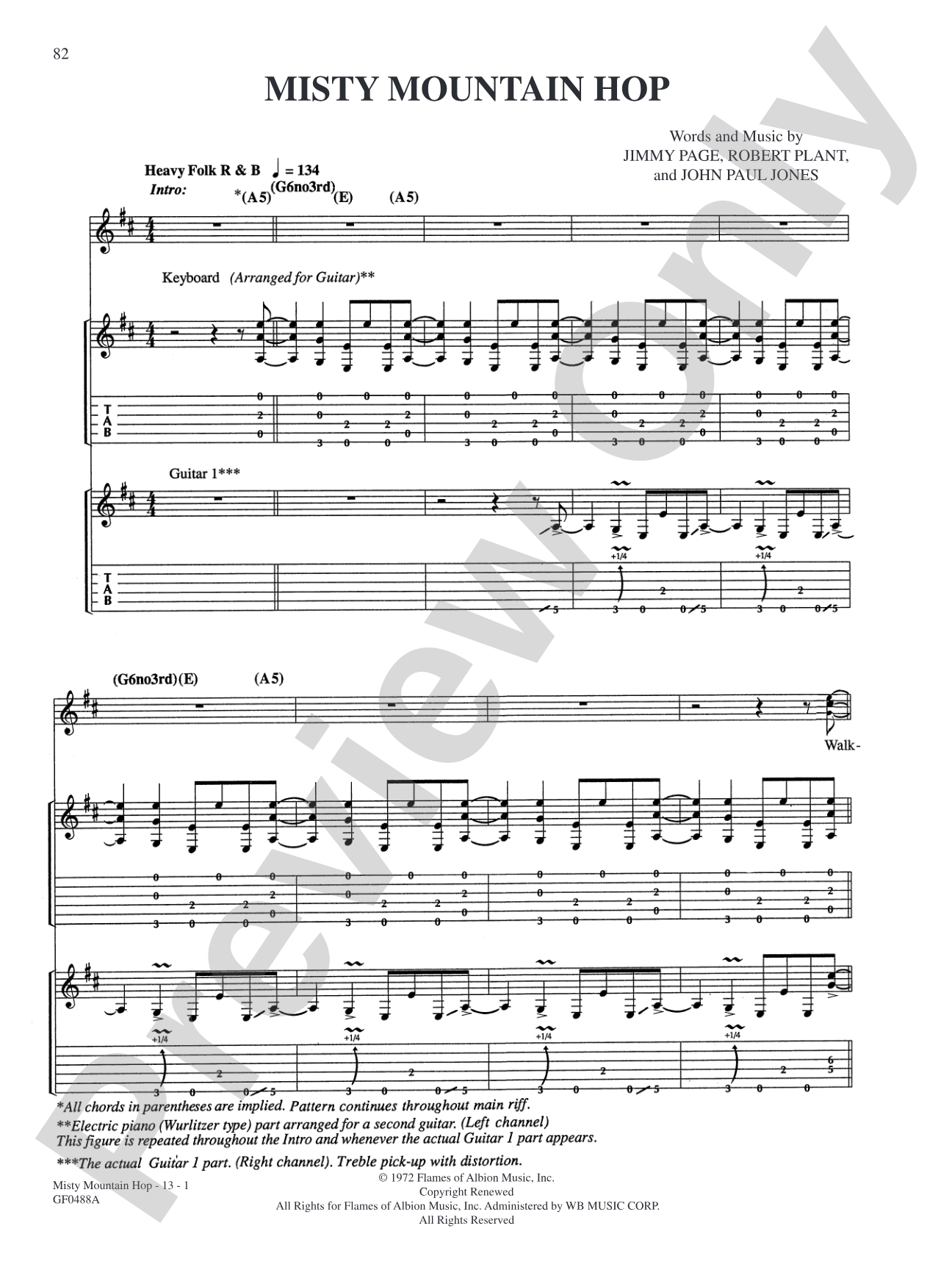
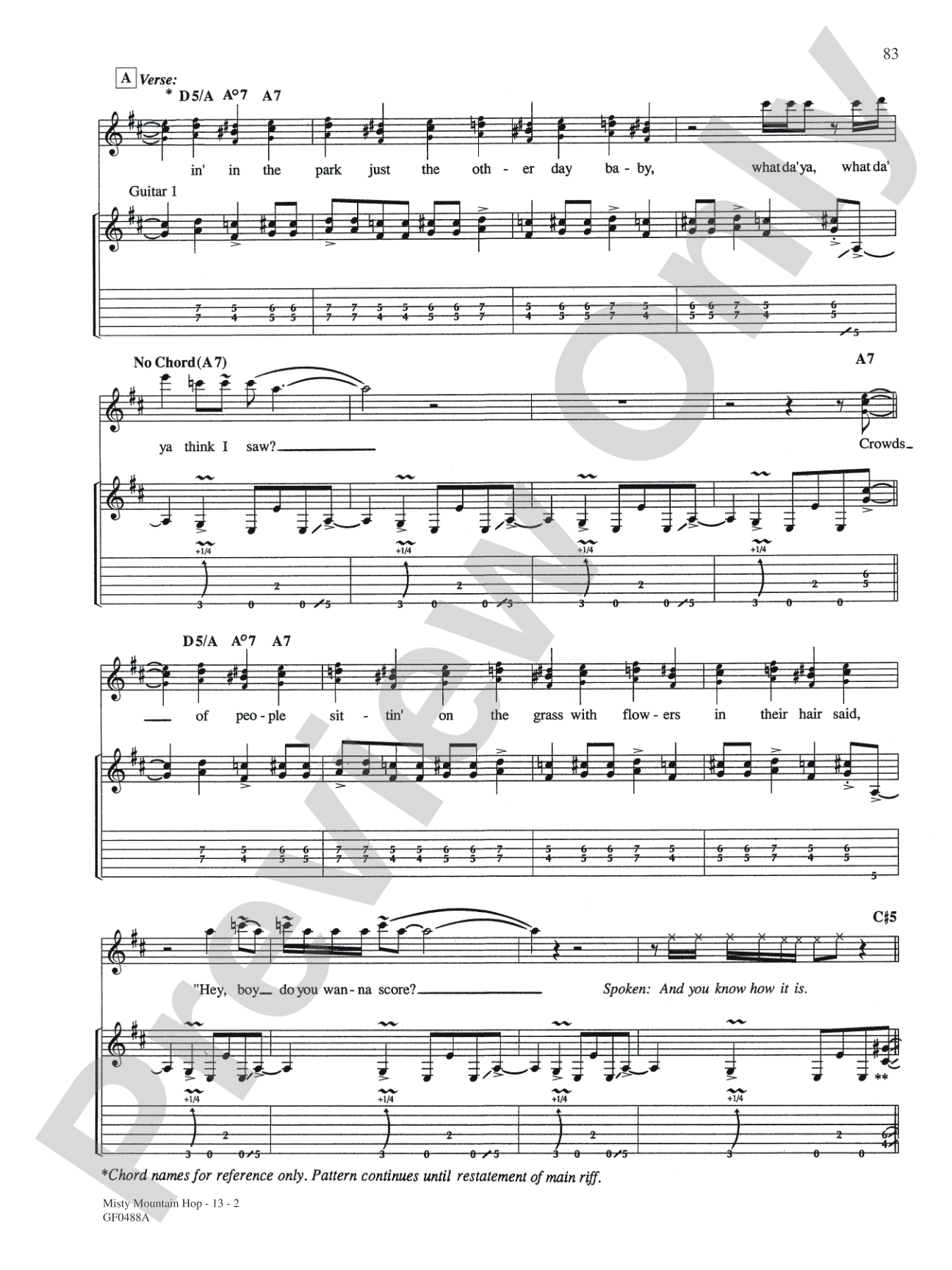

Misty Mountain Hop: Authentic Guitar TAB
Led Zeppelin
Item: 00-PSG-000122
$5.99
Pickup currently not available
Related Items
The Battle Of Evermore: Authentic Guitar TAB |
$5.99
|
View | |
Four Sticks: Authentic Guitar TAB |
$5.99
|
View | |
Going To California: Authentic Guitar TAB |
$5.99
|
View | |
When The Levee Breaks: Authentic Guitar TAB |
$5.99
|
View | |
Black Dog: Authentic Guitar TAB |
$9.99
|
View | |
Rock And Roll: Authentic Guitar TAB |
$9.99
|
View | |
Stairway To Heaven: Authentic Guitar TAB |
$9.99
|
View | |
When the Levee Breaks: Piano/Vocal/Chords |
$5.99
|
View | |
Black Dog: Piano/Vocal/Chords |
$5.99
|
View | |
Rock and Roll: Piano/Vocal/Chords |
$5.99
|
View | |
The Battle of Evermore: Piano/Vocal/Chords |
$5.99
|
View | |
Going to California: Piano/Vocal/Chords |
$5.99
|
View | |
Misty Mountain Hop: Piano/Vocal/Chords |
$5.99
|
View | |
Led Zeppelin: IV Platinum Album Edition: Piano/Vocal/Chords Book |
$19.95
|
View | |
Led Zeppelin: IV Platinum Album Edition: Authentic Guitar TAB Book |
$27.99
|
View | |
Led Zeppelin: IV Platinum Album Edition: Drum Transcriptions Book |
$19.95
|
View |
Description
Alfred Music, in association with Led Zeppelin, is proud to present new Platinum Album Edition songbooks for each of the band's classic studio recordings. Drawn from more than 30 years of documentation, interviews, and recorded footage, these all-new transcriptions deliver unprecedented accuracy and insight into the guitar style of Jimmy Page. With vintage Zeppelin photographs and a historical foreword by Guitar World magazine's editor-in-chief, Brad Tolinski, each volume is a true collectible every fan must own. Titles: Black Dog * Rock and Roll * The Battle of Evermore * Stairway to Heaven * Misty Mountain Hop * Four Sticks * Going to California * When the Levee Breaks.


Misty Mountain Hop: Authentic Guitar TAB isn't in MakeMusic Cloud just yet...but it could be. Let us know you'd like to see it, and you'll help shape what comes next. In the meantime, start a free trial and dive into thousands of interactive titles your students can play along with today.
Request This Title
Tell us you want it.
Start Your Free Trial
Explore everything that's ready to play right now.
Sample Audio
No sample audio found.
Sample Video
No sample videos found.
Additional Details
Series:
Alfred's Platinum Album Editions
Publisher:
Alfred Music
Page Count:
92
SKU:
00-PSG-000122
More about this title
About the Composer: Jimmy Page
Jimmy Page stands as one of the most influential rock guitarists in music history, known for his innovative approach to composition, arrangement, and studio production. His work with Led Zeppelin from 1968 onward redefined what guitar could accomplish in rock music, blending blues, folk, and world music influences into a distinctive sonic language that continues to shape how guitarists think about tone, texture, and arrangement.
Why we love this
These transcriptions represent decades of meticulous documentation and bring unprecedented accuracy to some of rock's most studied and imitated guitar work. Having access to Page's actual playing translated into TAB form gives serious students a direct window into his technical approach, note choices, and rhythmic sensibilities without the guesswork that typically surrounds classic rock transcription.
What to expect
These transcriptions unlock the raw power and unexpected subtlety of Page's playing. The music moves between driving, riff-based grooves and intricate fingerpicking passages with an energy that feels both primal and carefully crafted, revealing why these recordings have remained touchstones for rock guitarists across generations.
Who it's for
Intermediate to advanced guitarists who want to understand how Led Zeppelin's signature sounds are actually constructed and played. Guitar teachers working with students studying rock music history and those preparing transcription-based lesson material will find this resource invaluable for accuracy and depth.
How to get the most out of it
- Study the fingerings suggested in the TAB closely; Page's voicing choices and hand positions are deliberate and often differ from more obvious alternatives that produce the same pitches
- Reference the original recordings while working through the transcriptions to internalize the tone and touch; Page's dynamics and attack significantly shape how each riff sits in the mix
- Build the riffs slowly and methodically before attempting tempo; the syncopation and rhythmic nuance in Page's playing reveal themselves more clearly at slower speeds
- Pay attention to any notation regarding alternate tunings or capo placement; these details are essential to capturing the actual sound and playability of the original arrangements
How to use it
Assign individual transcriptions as repertoire goals for advanced students studying rock guitar or music history. These pieces work equally well as solo study material or as collaborative projects where students perform the transcribed parts alongside recordings in a classroom or recital setting.
Skills your students will build
- Reading complex rhythmic figures and syncopation in TAB notation
- Playing alternate tunings and capo-based arrangements
- Adapting fingering strategies to match recorded voicings and techniques
- Translating recorded guitar tone into technical choices about dynamics, touch, and string selection
- Analyzing riff construction and melodic arrangement in rock composition