Misterioso: E-flat Alto Clarinet Sheet Music Preview

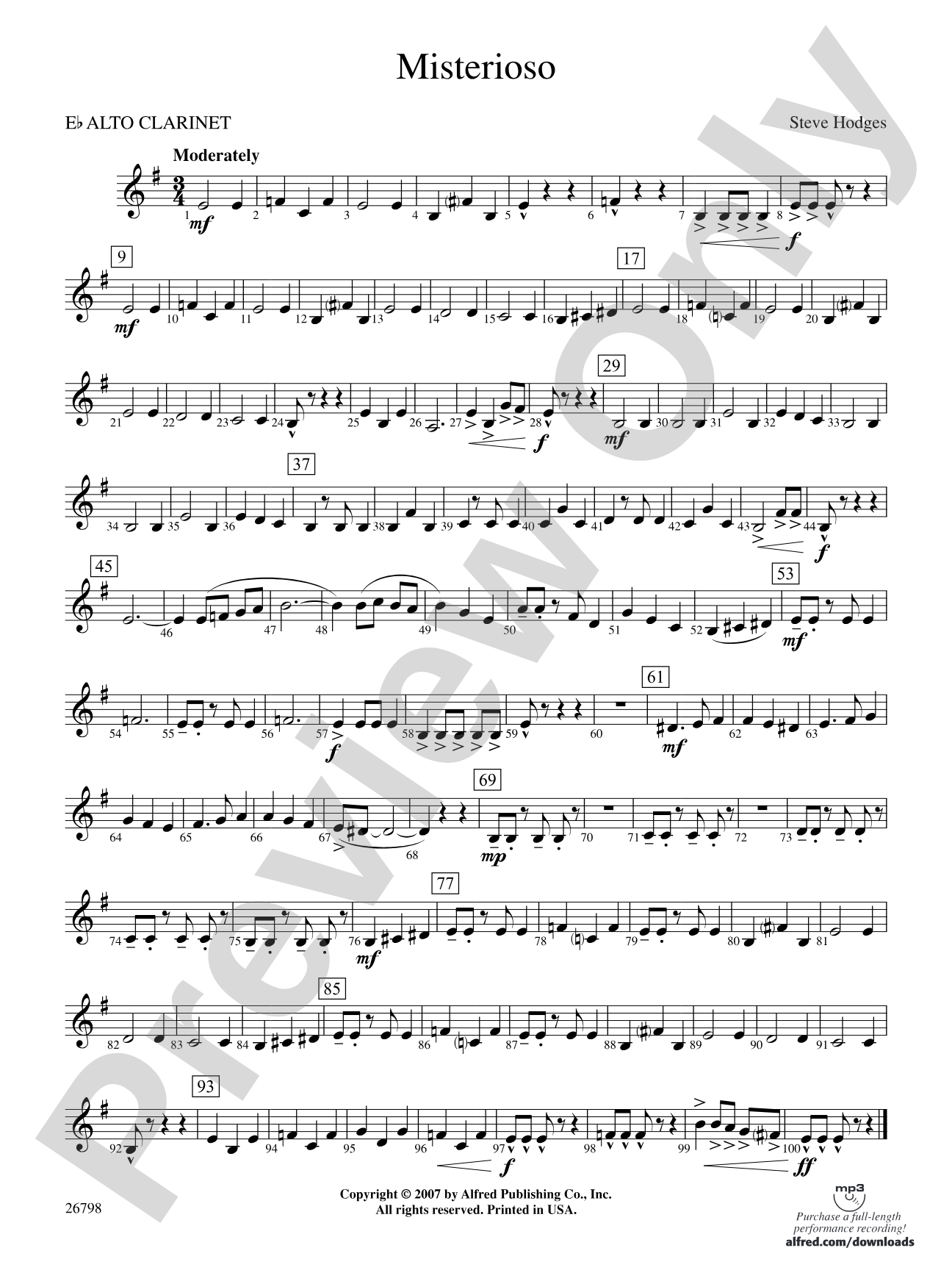
Misterioso: E-flat Alto Clarinet

By Steve Hodges

Grade: 1.5 (Easy)

Item: 00-PC-0001236_AC1

Digital Download
$3.00
Description
A variety of textures and colors accent this thrilling piece featuring a catchy theme, Spanish-style harmonies and expanded percussion section. With a good contrast of textural settings, this piece will provide a lot of interest and enjoyment for the band and audience! This title is available in MakeMusic Cloud.

Don't just read it, hear it, play along with it, and watch your students grow with it. In MakeMusic Cloud, Misterioso: E-flat Alto Clarinet comes alive with professional accompaniment, adjustable tempo, and built-in practice tools that turn solo practice into real progress.

Sample Audio
0:00
0:00
Sample Video
Additional Details
Series: Challenger Band Series
Publisher: Alfred Music
Page Count: 70
SKU: 00-PC-0001236_AC1

More about this title

About the Composer: Steve Hodges

Steve Hodges

Steve Hodges studied music education at Western Oregon University and earned his Master of Music Education from Central Washington University. Over four decades in public school music, he directed concert bands, choirs, and chamber ensembles at every level before retiring from full-time teaching.

Since 1986, Hodges has composed more than 120 concert band works published by Alfred Music, along with choral arrangements for Staff Music and Shawnee Press. His compositions have traveled internationally to festivals and state conventions, and he has received commissions from honor bands and school programs across Virginia, Iowa, Washington, Oregon, North Carolina, and British Columbia. His music has also been licensed by TBS and ESPN. A member of ASCAP, Hodges remains active in community music in The Dalles, Oregon, and takes particular joy in hearing his grandchildren perform his pieces in their school bands.

Why we love this

Misterioso delivers exactly what a 1.5-grade band needs: rhythmic drive, textural variety, and the confidence that comes from playing something that genuinely sounds professional. The Spanish-flavored harmony and expanded percussion writing keep every section engaged while remaining accessible, and the catchy theme ensures your students will leave rehearsal humming it.

What to expect

The piece opens with intrigue, unfolding Spanish-inflected harmonies that immediately signal sophistication. The catchy theme has enough swagger to engage players and audiences alike, while the varied textures prevent any sense of routine or predictability.

Who it's for

This piece suits concert bands at the early intermediate level who are ready to tackle something with real character and ensemble responsibility. Whether you're building toward the spring concert or seeking a reliable opener that builds confidence, Misterioso works for bands eager to explore Latin textures without navigating advanced rhythmic complexity.

How to get the most out of it

  • Balance the melodic line carefully when the theme moves between upper woodwinds and brass; too much doublings will bury the Latin character under weight.
  • Shape the Spanish-style harmonies with a slight rubato in the slower, more misterioso passages; let the band breathe into those moment rather than pushing straight through.
  • Engage your percussion section intentionally. The expanded writing suggests color changes and textural support, not just keeping time. Let them contribute to the mood shifts.
  • Mark clear section transitions in the parts so players understand how the piece builds contrast; Grade 1.5 ensembles benefit from knowing exactly when the texture changes.

How to use it

Program this as an opener when you want to grab attention and set a vibrant tone for the concert, or pair it with contrasting styles from your Challenger Band Series selections to showcase your band's range. It also works well as a festival piece where you want your ensemble to make an impression with something that sounds mature and stylistically distinct.

Skills your students will build

  • Latin rhythmic patterns and feel
  • ensemble balance across multiple texture changes
  • reading expanded percussion scoring
  • sustaining a melodic line through harmonic color shifts

You May Also Like