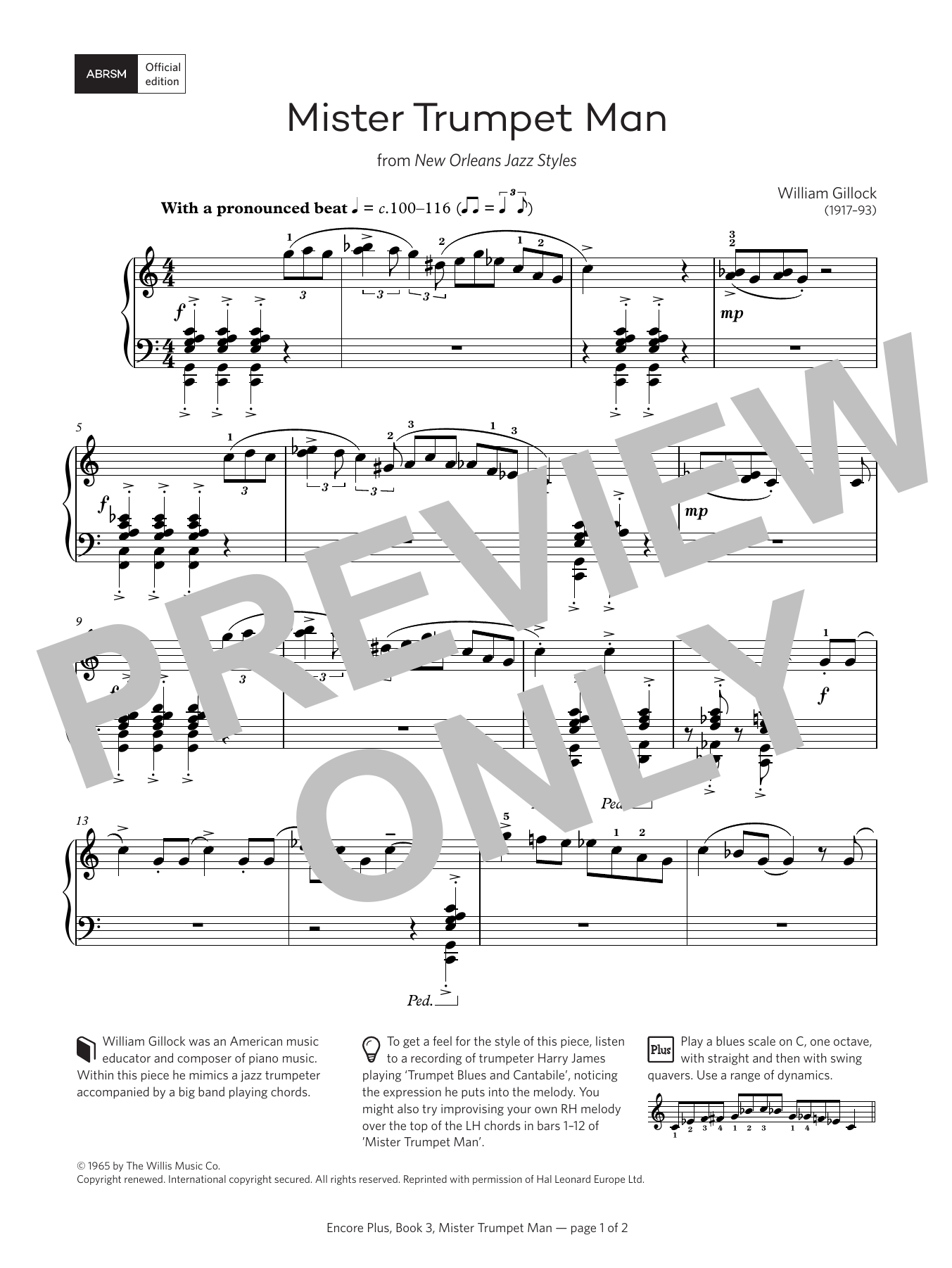
William Gillock (1917–2001) shaped American piano pedagogy through his distinctive synthesis of jazz idioms, blues inflections, and classical forms. His output of over 200 pieces for young pianists established him as a composer who understood both the technical demands and musical interests of developing musicians, refusing to talk down to students while remaining deeply practical about what works in the practice room and on stage.
Gillock's teaching legacy extends beyond individual compositions. His ability to embed sophisticated harmonic ideas and rhythmic sophistication into accessible pieces gave generations of students permission to experience musical richness without waiting for advanced technical mastery. Teachers value him because he solved a genuine problem: how to keep young pianists engaged and challenged without overwhelming them.