Mist Shrouded Memories: String Bass Sheet Music Preview

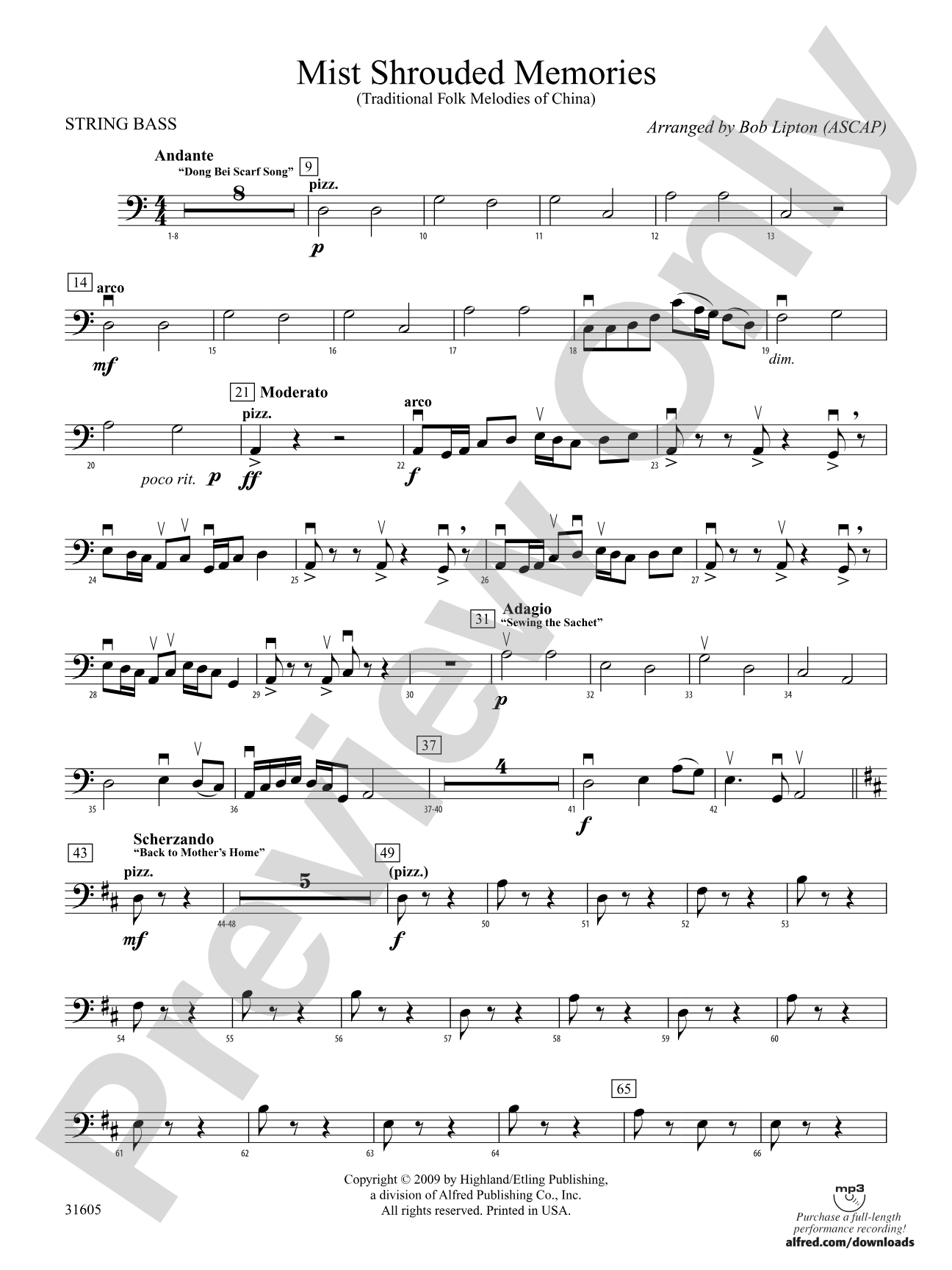
Mist Shrouded Memories: String Bass

Traditional Folk Melodies of China

Arr. Bob Lipton

Grade: 3

Item: 00-PC-0001770_SB

Digital Download
$5.99
Description
Transport your audience halfway around the world with this poignant, powerful and playful arrangement of traditional Chinese folk melodies. Starting with a plaintive viola solo, then moving through a wide variety of moods, all members of the orchestra will be fully engaged playing music that sounds ancient and fresh at the same time. Perfect for concert or contest, this arrangement written by a middle school teacher has been kid tested and approved.

Don't just read it, hear it, play along with it, and watch your students grow with it. In MakeMusic Cloud, Mist Shrouded Memories: String Bass comes alive with professional accompaniment, adjustable tempo, and built-in practice tools that turn solo practice into real progress.

Sample Audio
0:00
0:00
Sample Video
Additional Details
Series: Highland/Etling String Orchestra
Publisher: Alfred Music
Page Count: 124
SKU: 00-PC-0001770_SB

More about this title

About the Arranger: Bob Lipton

Bob Lipton

Bob Lipton earned his B.M. in music education from San Francisco State University and has spent the past 19 years directing orchestra and band at the middle school level in Silicon Valley. His background as a tuba performer spans orchestral stages across Northern California (San Jose, Oakland, Napa, Monterey, and Berkeley symphonies) as well as festival and entertainment settings including the SF 49ers marching band, international jazz festivals, and high-profile events like the Filmfare Awards in Mumbai.

Beyond his classroom work, Lipton arranges and performs with brass quintet, bringing a versatile musician's ear to his compositions for student ensembles. His arrangements for school orchestras and bands reflect a deep understanding of what young players can achieve when given music that challenges and excites them.

Why we love this

An arranger writing from inside the middle school rehearsal room has crafted something that feels urgent and current while honoring the melodies it draws from. The structural arc across this piece gives every section something meaningful to play, which matters enormously when you're keeping students engaged through a full concert.

What to expect

The piece unfolds like a journey through mist and memory, grounded in melodies that feel both timeless and immediate. Shifting moods and textures prevent any sense of predictability, creating an experience that sounds ancient and alive in the same breath.

Who it's for

Middle and early high school string orchestras performing at concerts or festivals will find a piece that sits at an honest Grade 3 level without condescension. Directors looking for repertoire that expands their students' cultural and harmonic vocabulary while keeping rehearsal manageable will find a strong fit here.

How to get the most out of it

  • Shape the opening viola solo with a sense of longing but not distance; the plaintive character needs clarity and warmth so the orchestra can follow its emotional direction when they enter.
  • Balance the texture shifts carefully as moods change; this piece lives in the transitions, so mark those moments in rehearsal and give each section a chance to hear how their dynamic choices shape the overall color.
  • Let the Chinese folk melodies breathe naturally rather than rushing through their phrases, especially when they move between upper and lower voices.

How to use it

This arrangement works equally well as a centerpiece for a concert themed around world music or folk traditions, or as a standalone selection that introduces audiences to Chinese musical content without requiring extensive program notes. The contest-ready designation makes it a strong choice for festival programming where you want a piece that sounds sophisticated and culturally substantive.

Skills your students will build

  • Playing sustained legato lines with shape and direction
  • Reading and balancing divisi passages in multiple sections
  • Responding to rapid mood and texture changes
  • Intonation control in modal and pentatonic harmonic contexts
  • Ensemble listening and blend across different orchestral colors

You May Also Like