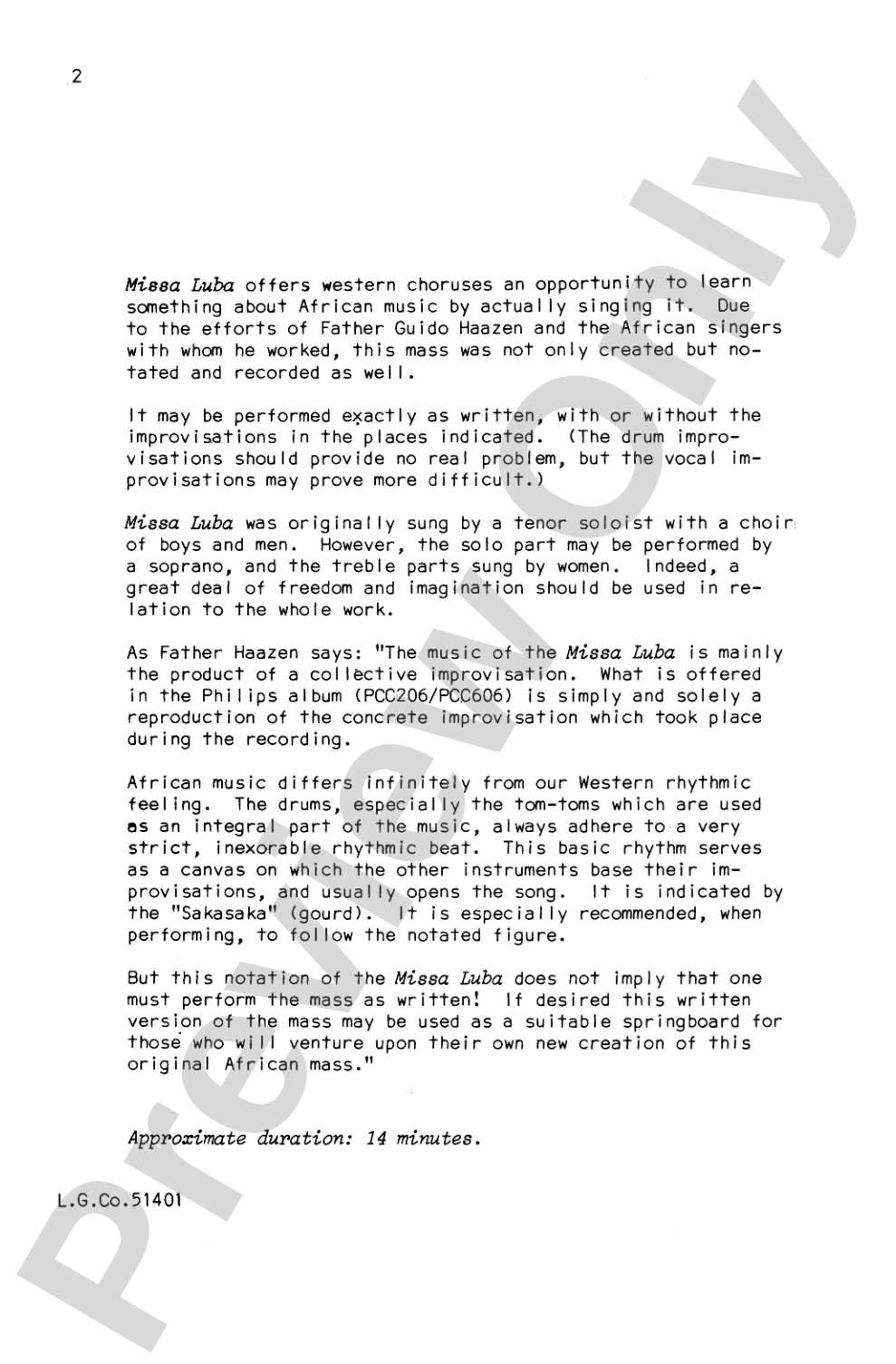
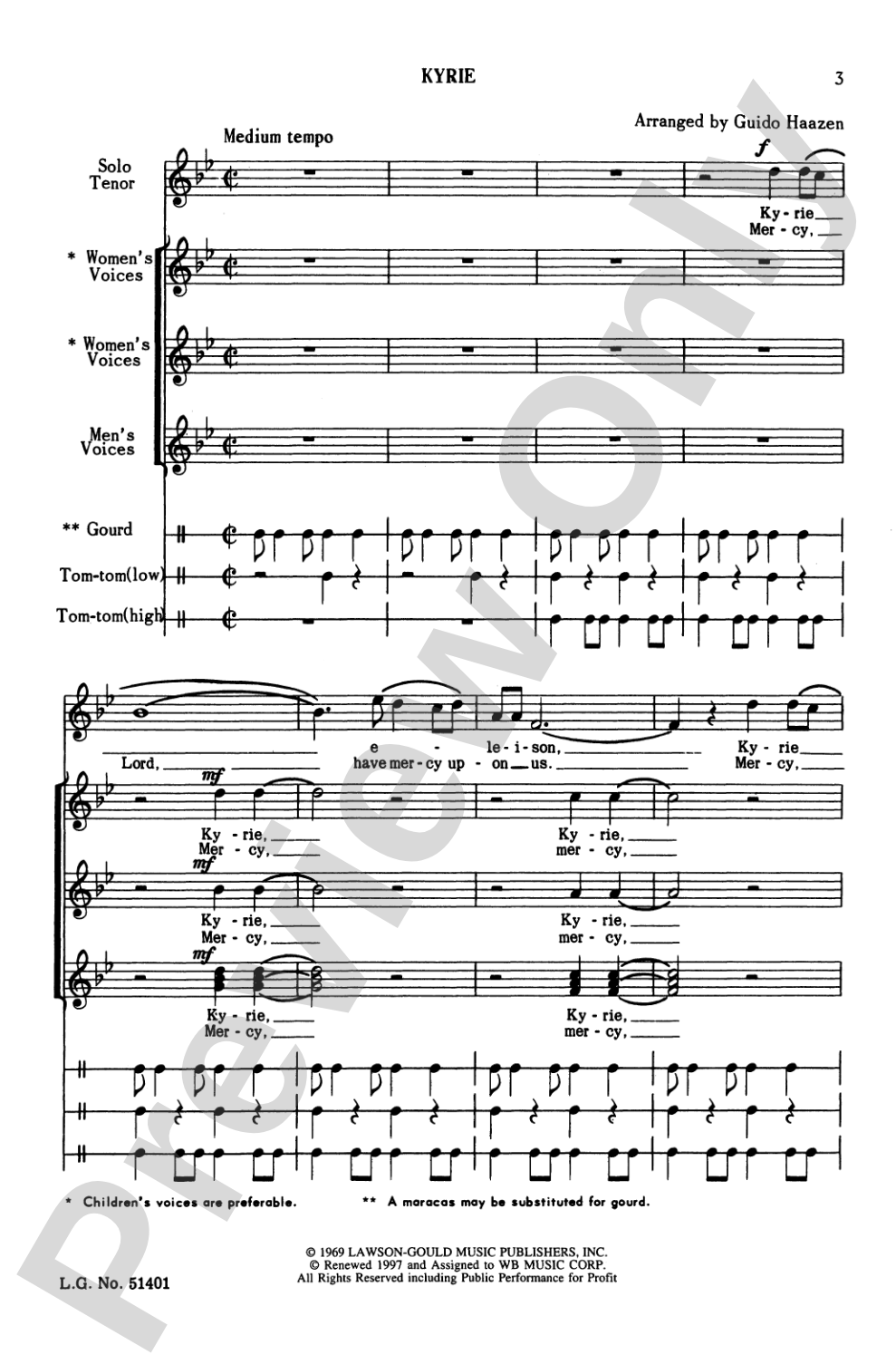
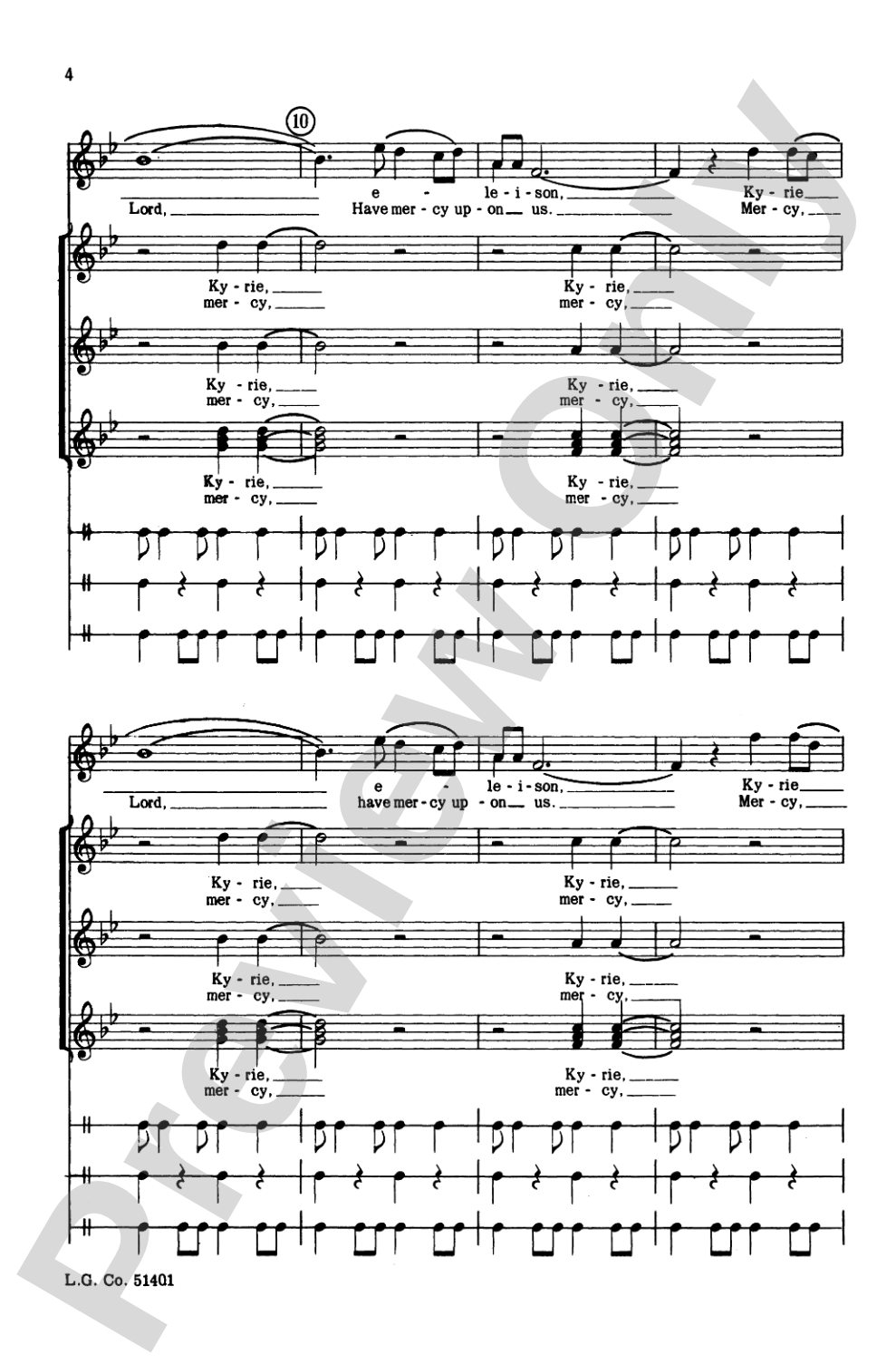
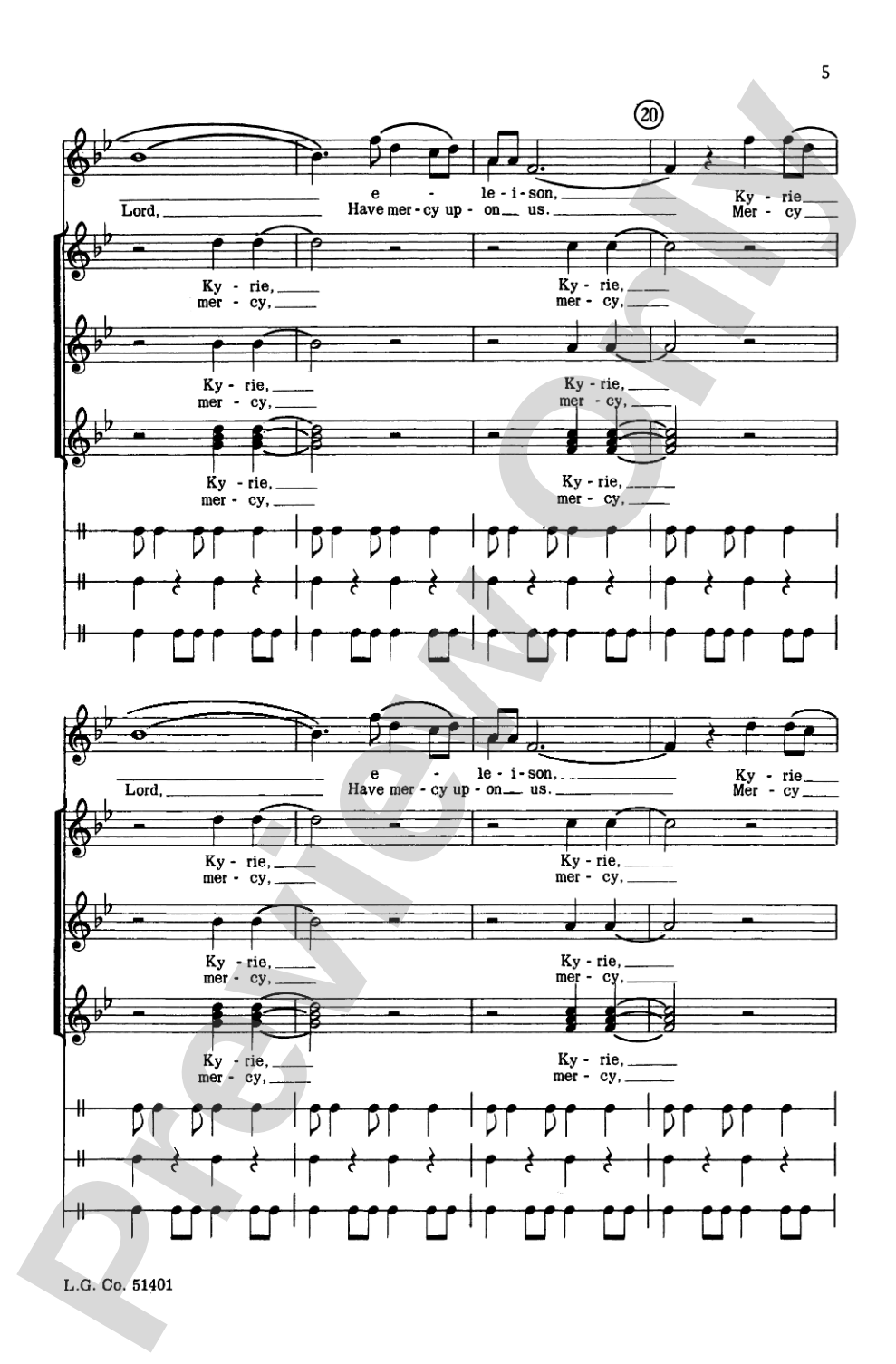
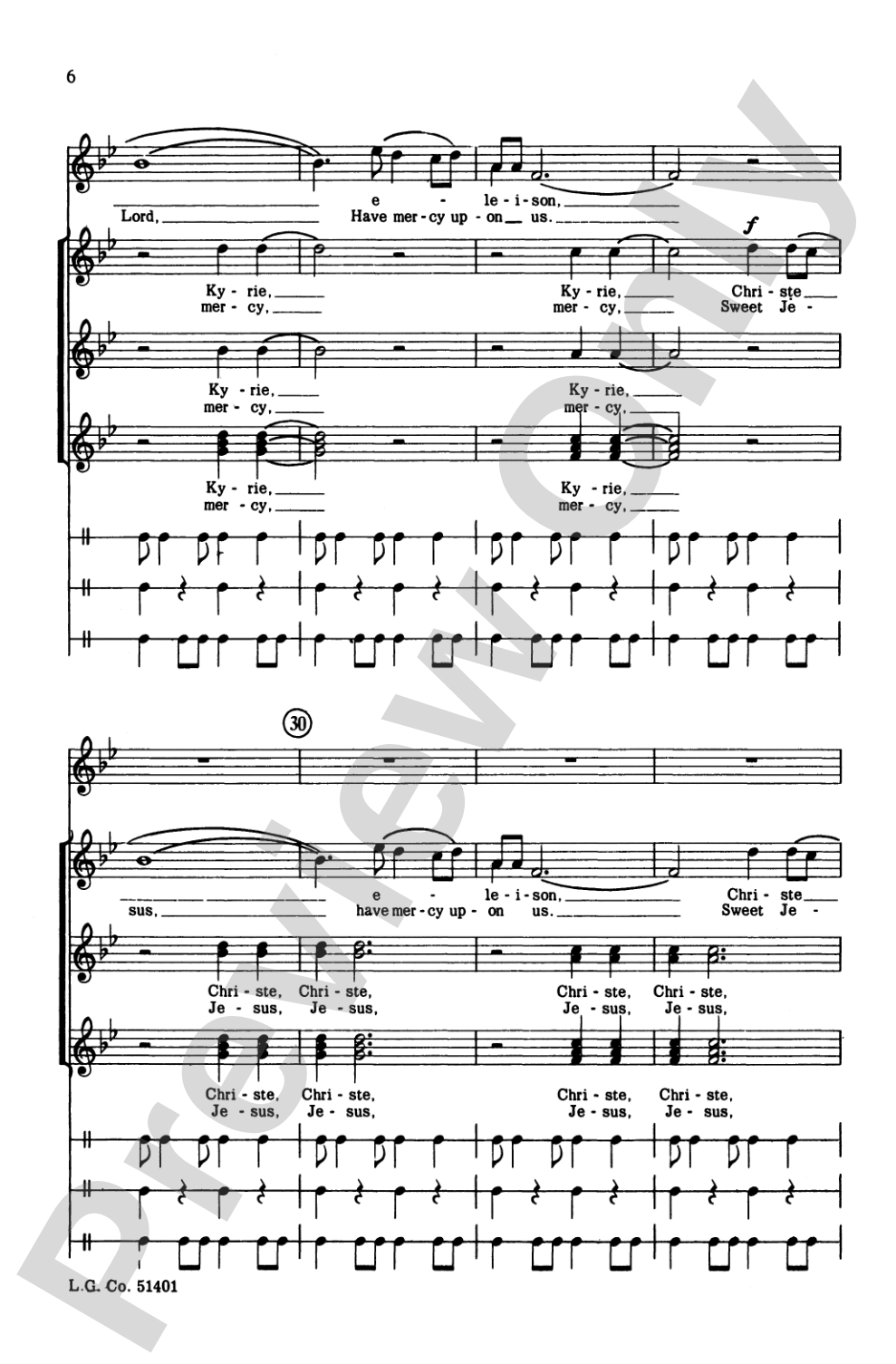
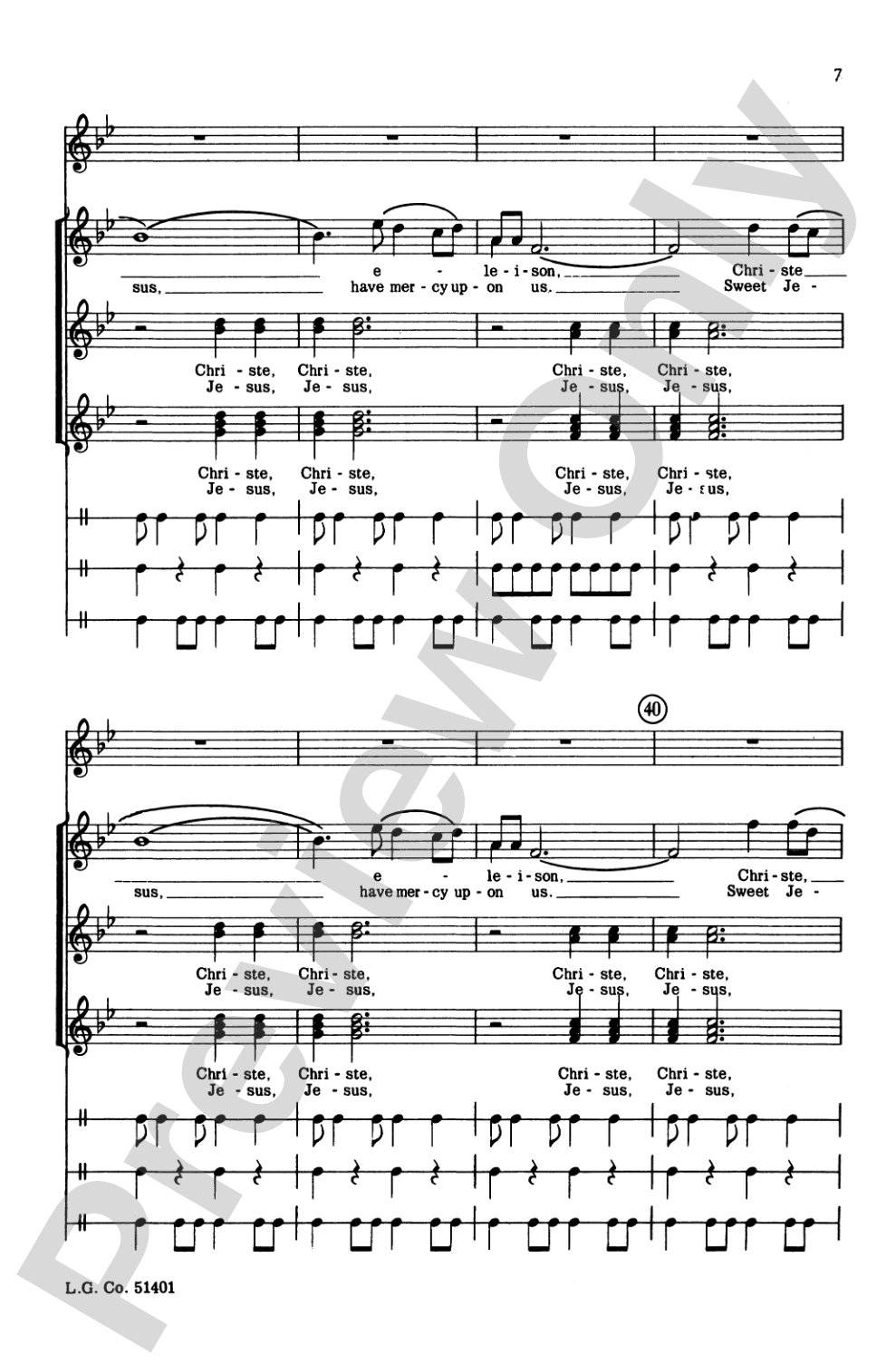
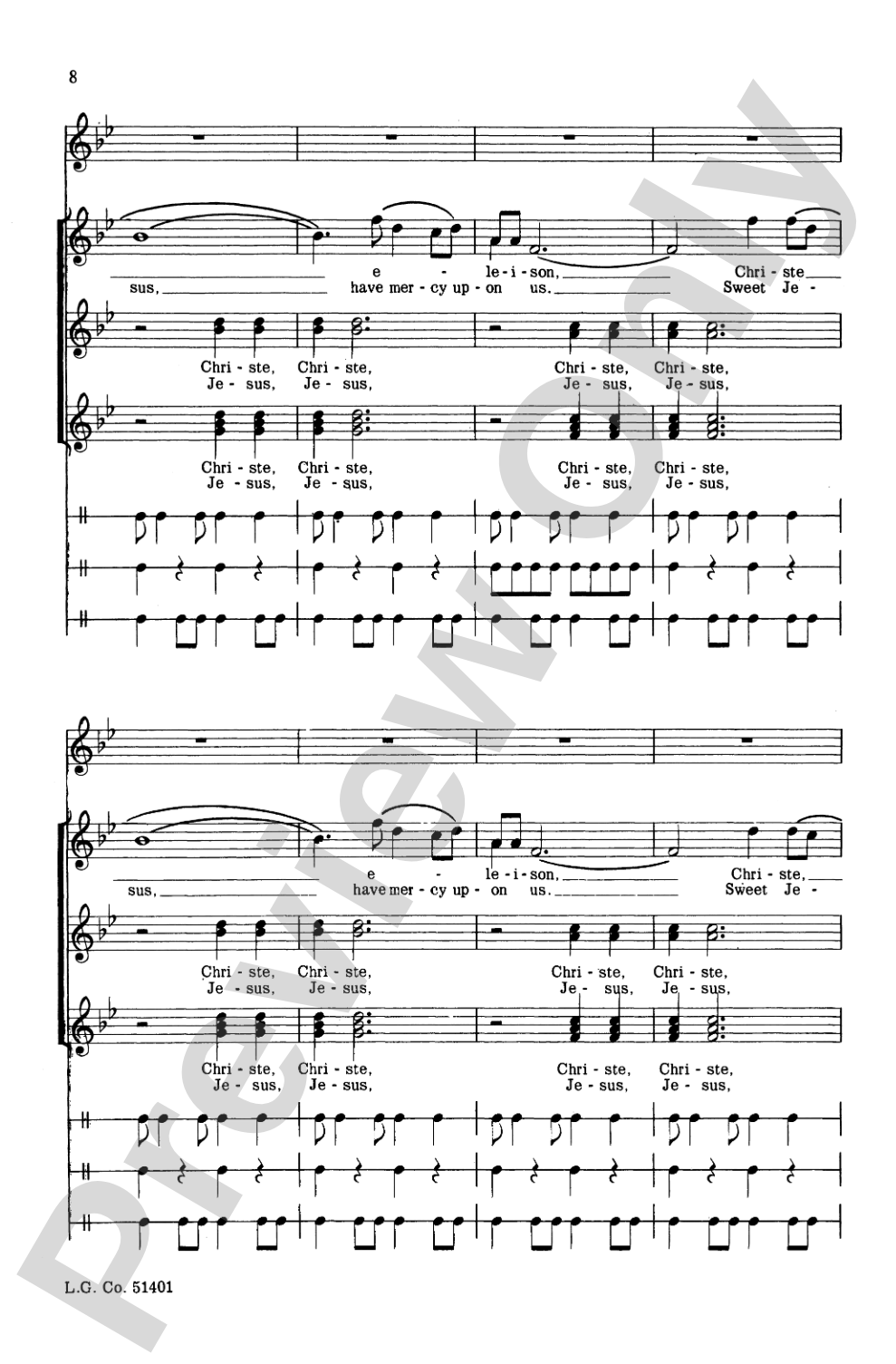
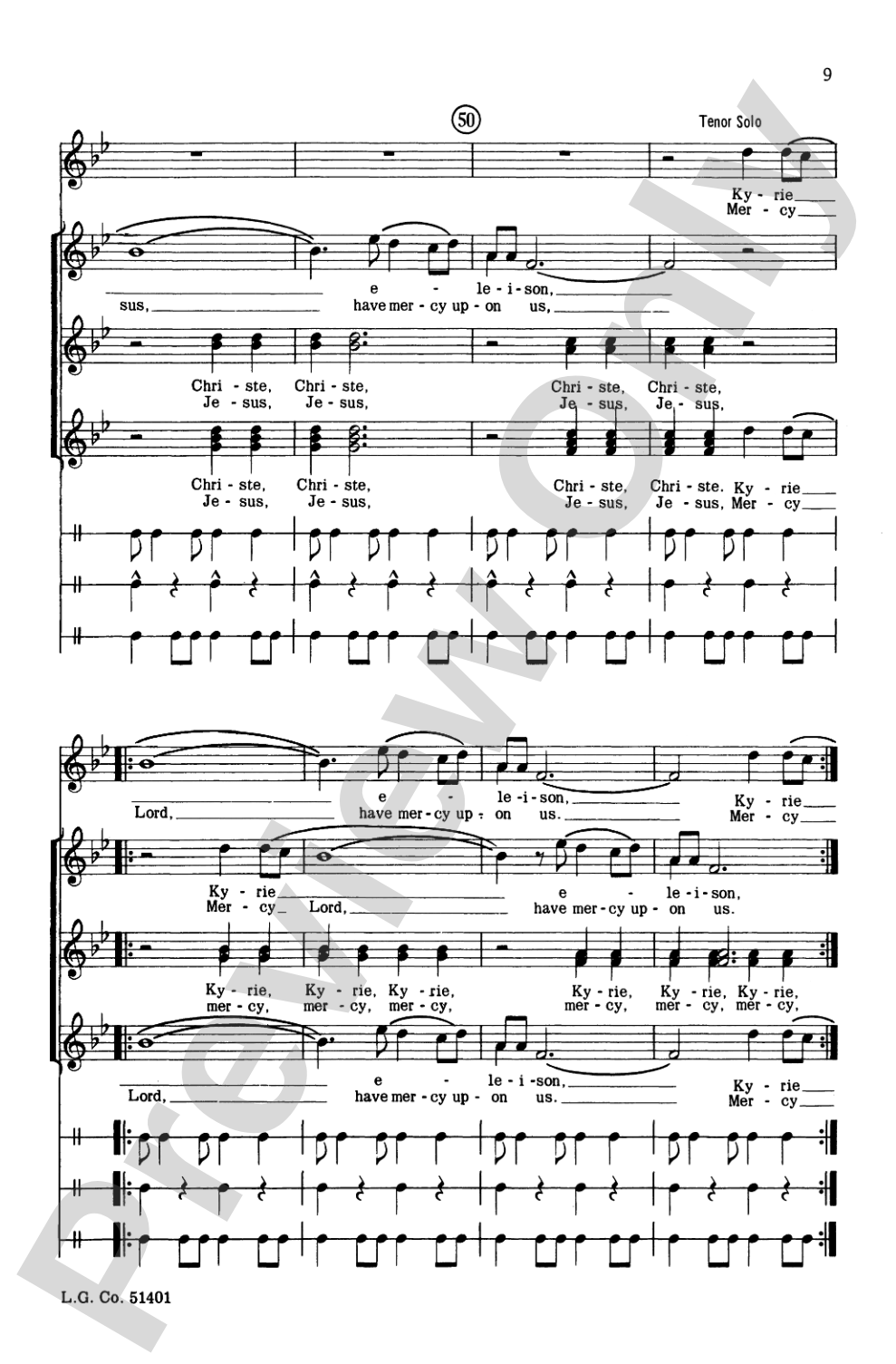
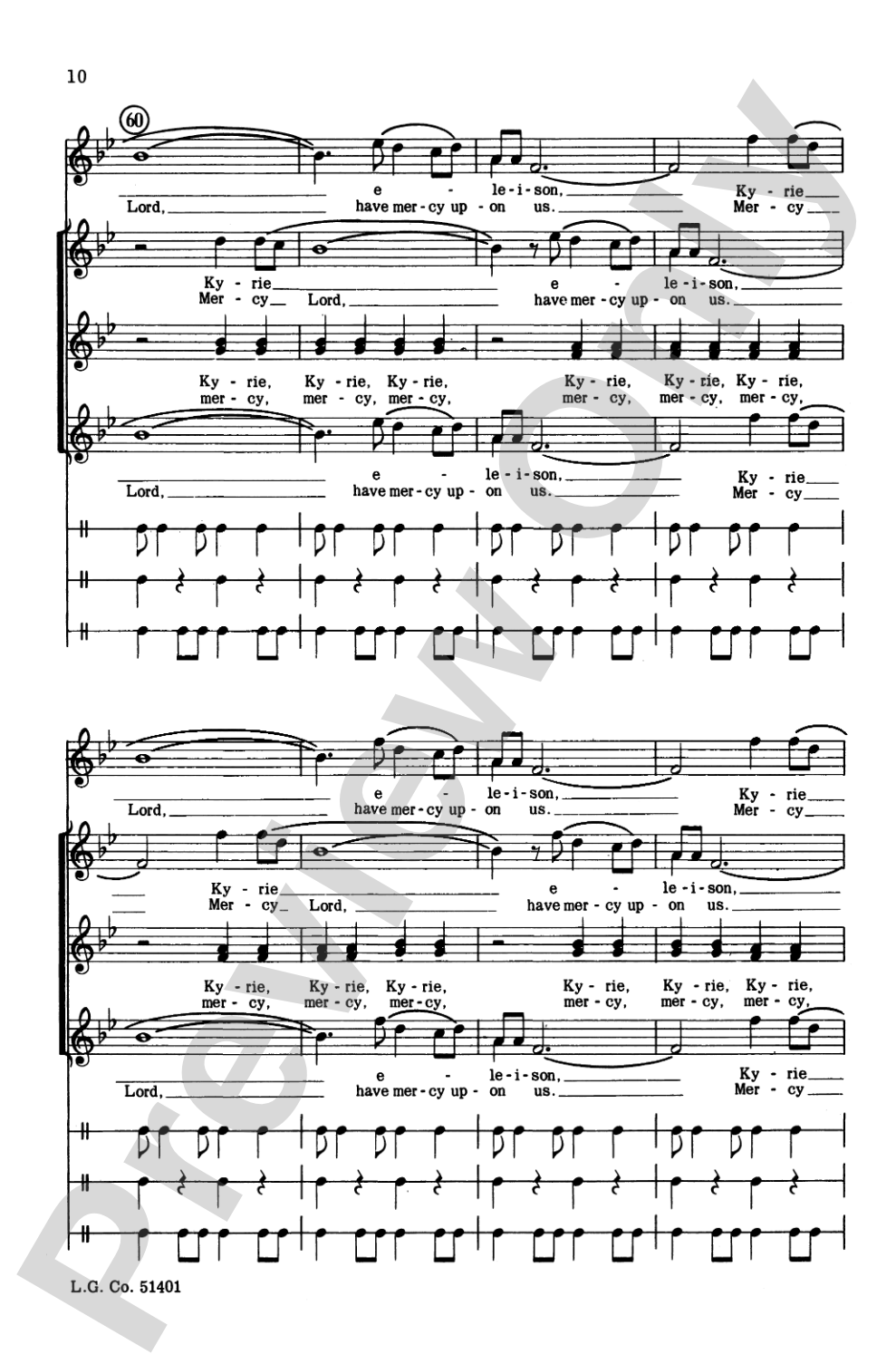
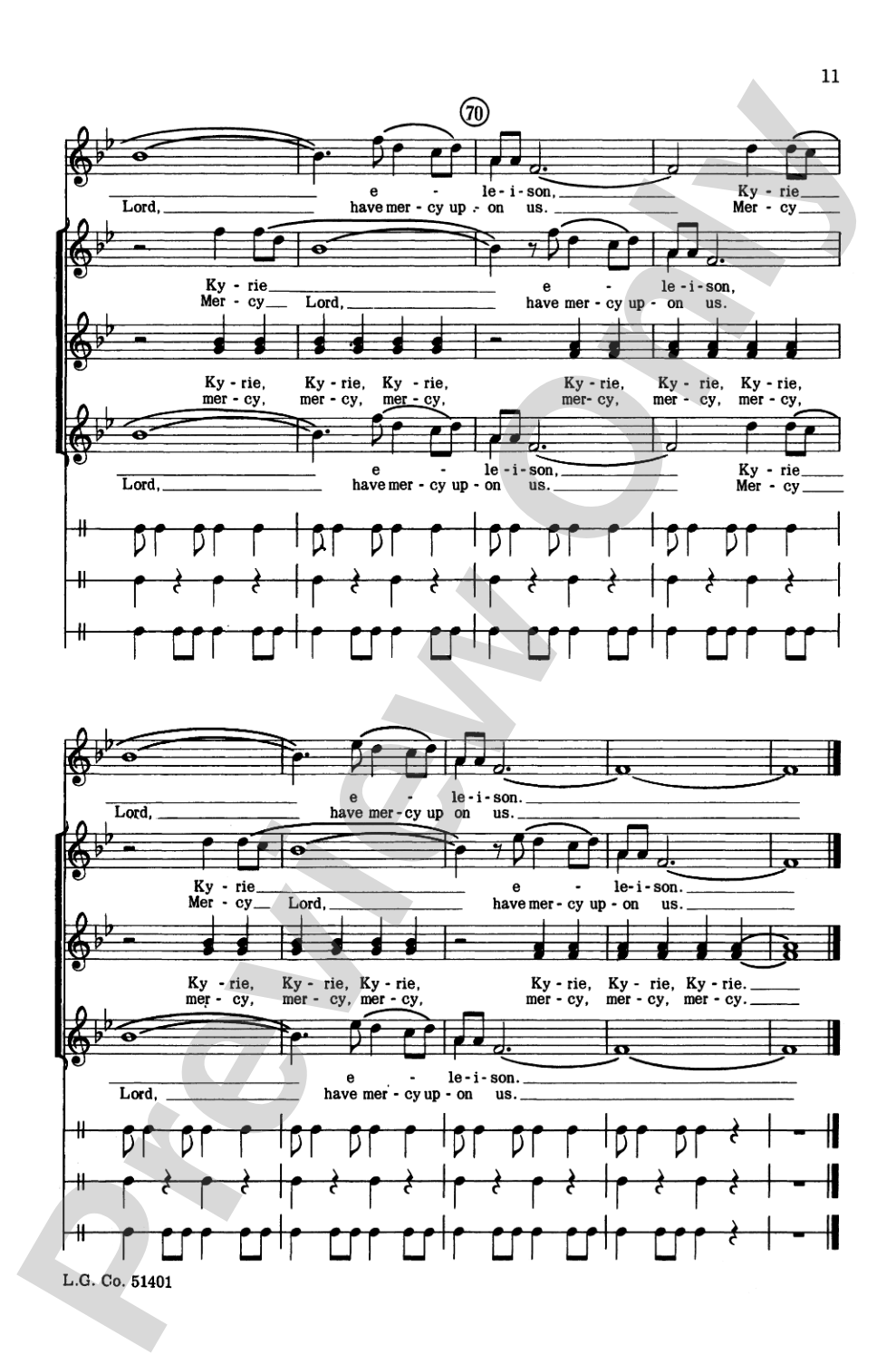
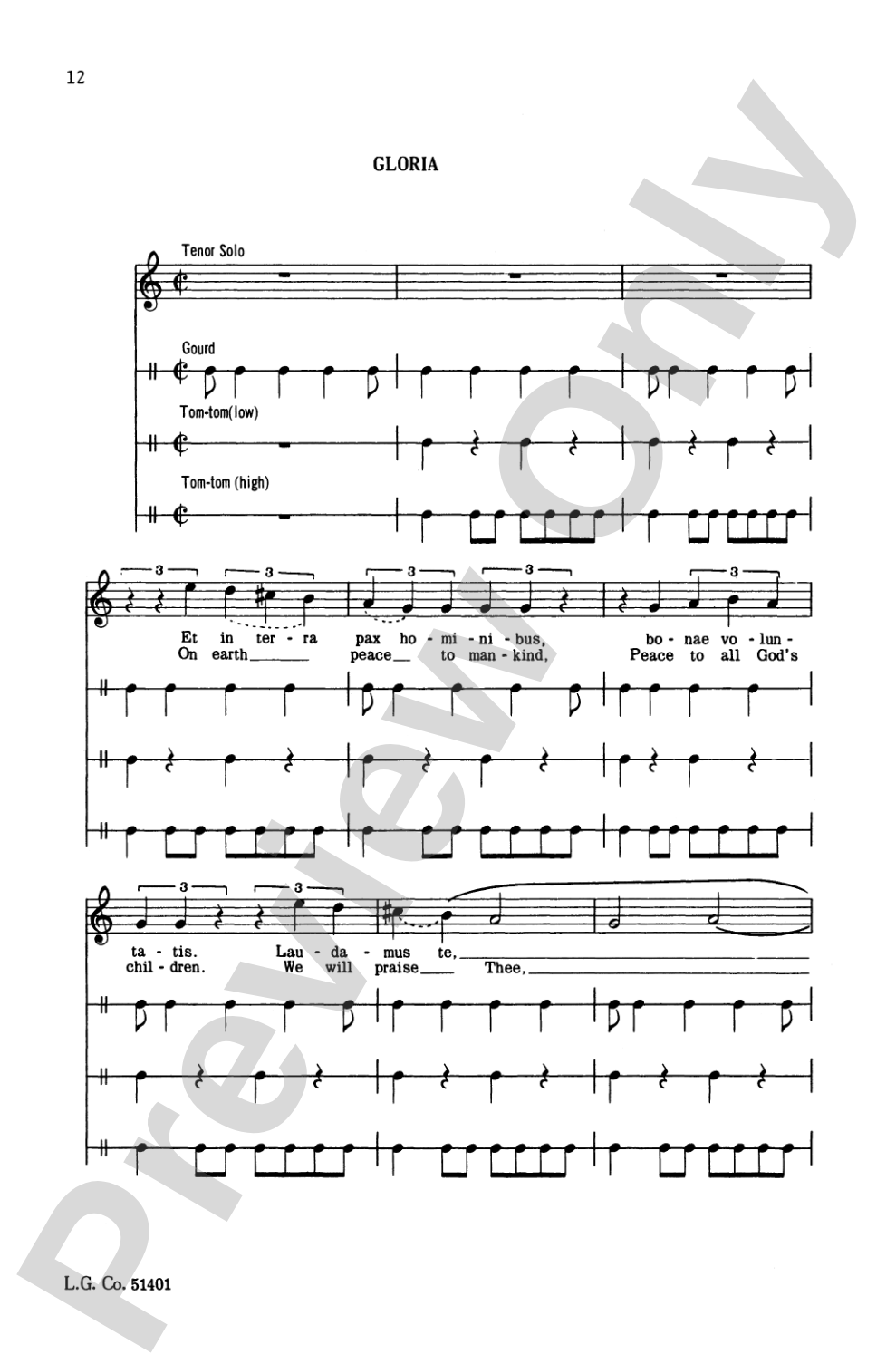
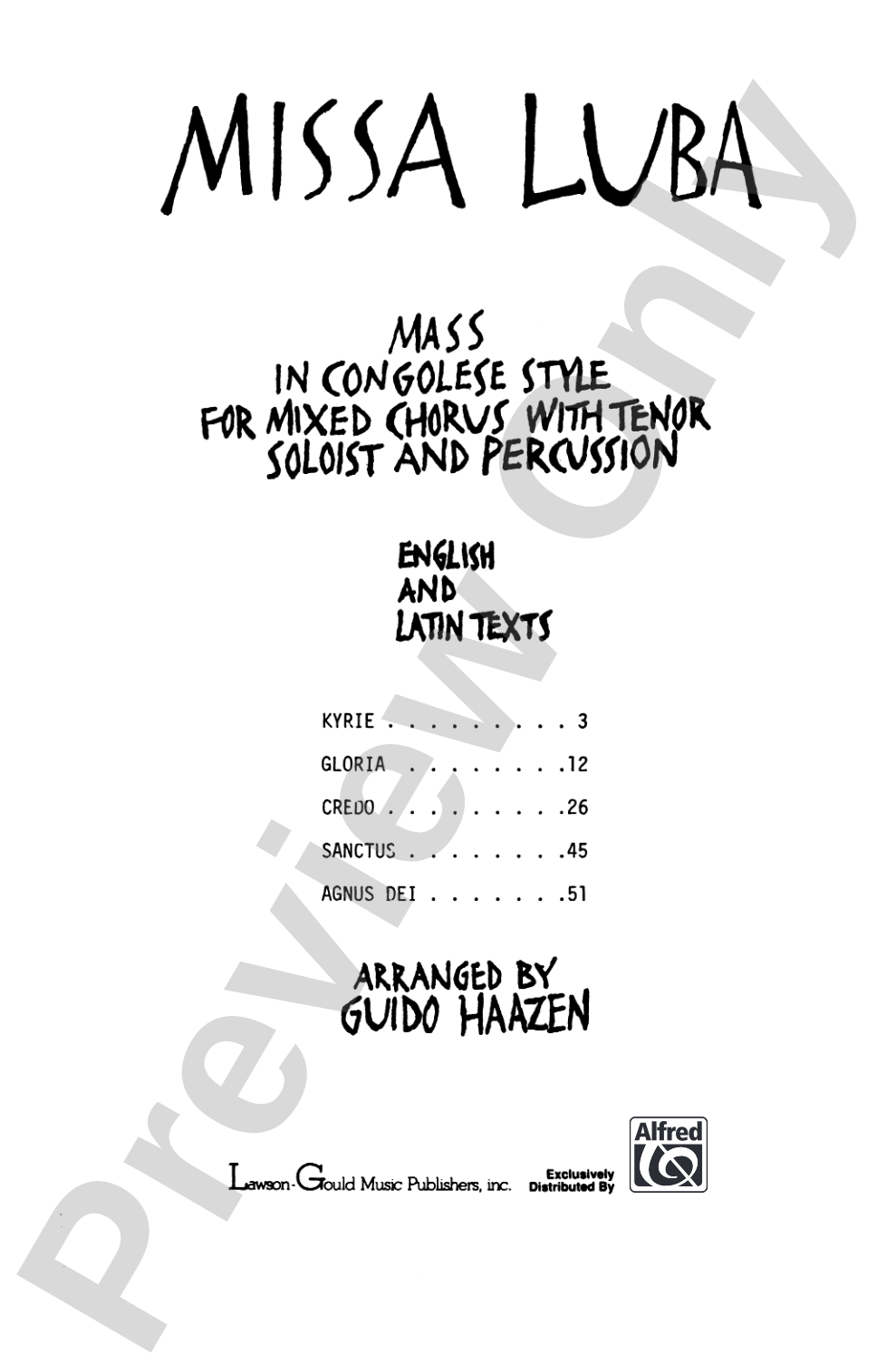
Missa Luba Sheet Music Preview

Missa Luba: Choir

Arr. Guido Haazen

Item: 00-PB-0001148

Digital Download
$7.99
Description

Missa Luba: Choir isn't in MakeMusic Cloud just yet...but it could be. Let us know you'd like to see it, and you'll help shape what comes next. In the meantime, start a free trial and dive into thousands of interactive titles your students can play along with today.

Sample Audio
No sample audio found.
Sample Video
Additional Details
Series: Lawson-Gould
Publisher: Alfred Music
Page Count: 56
SKU: 00-PB-0001148

More about this title

About the Arranger: Guido Haazen

Guido Haazen is a Belgian composer and arranger whose work bridges classical training with deep engagement in world music and liturgical traditions. His arrangements demonstrate a sophisticated understanding of how to preserve the spiritual and cultural integrity of source material while making it accessible to Western choral ensembles.

Why we love this

Haazen's treatment of this mass respects the original Congolese musical language while crafting vocal lines that sit naturally in a standard SATB range. The 56-page score provides substantial material that doesn't rely on exotic difficulty but rather on authentic expression and clear harmonic thinking, making it a genuine liturgical option rather than a novelty piece.

What to expect

The score carries a quiet, meditative warmth. Haazen preserves the gentle cyclical quality of the original while anchoring it in accessible harmonies that let voices breathe and blend rather than strain. There's an intimacy here that reads as both prayerful and communal.

Who it's for

This works for choirs with solid vocal fundamentals who are ready to expand beyond European harmonic language. It suits programs that aim for liturgical authenticity or educational depth around music from the Congo, and it's substantial enough for a concert centerpiece or service conclusion.

How to get the most out of it

  • Pay attention to the rhythmic language in the original notation; the swing and syncopation won't feel natural if approached with strict metronomic precision.
  • Balance the parts carefully in sections where the melody migrates between soprano and alto lines, ensuring the narrative stays clear without forcing volume.
  • Record a full run-through before your first performance to identify blend issues in the harmonies, which often reveal themselves only when all four parts lock in together.
  • Let the text shape your phrasing rather than relying on bar lines as breathing landmarks.

How to use it

Consider this as a concert closer, where its reflective quality can serve as a moment of stillness. It also works beautifully in a service context, paired with spoken text or silence. The length makes it suitable for a full section of a longer program focused on sacred or world music traditions.

Skills your students will build

  • Singing in non-Western harmonic language and recognizing how chord function differs across musical traditions
  • Maintaining rhythmic independence when working with syncopation across all four voice parts
  • Blending voices in close harmonies without sacrificing individual line clarity
  • Interpreting text with cultural sensitivity and authenticity

You May Also Like