Missa Brevis Sheet Music Preview

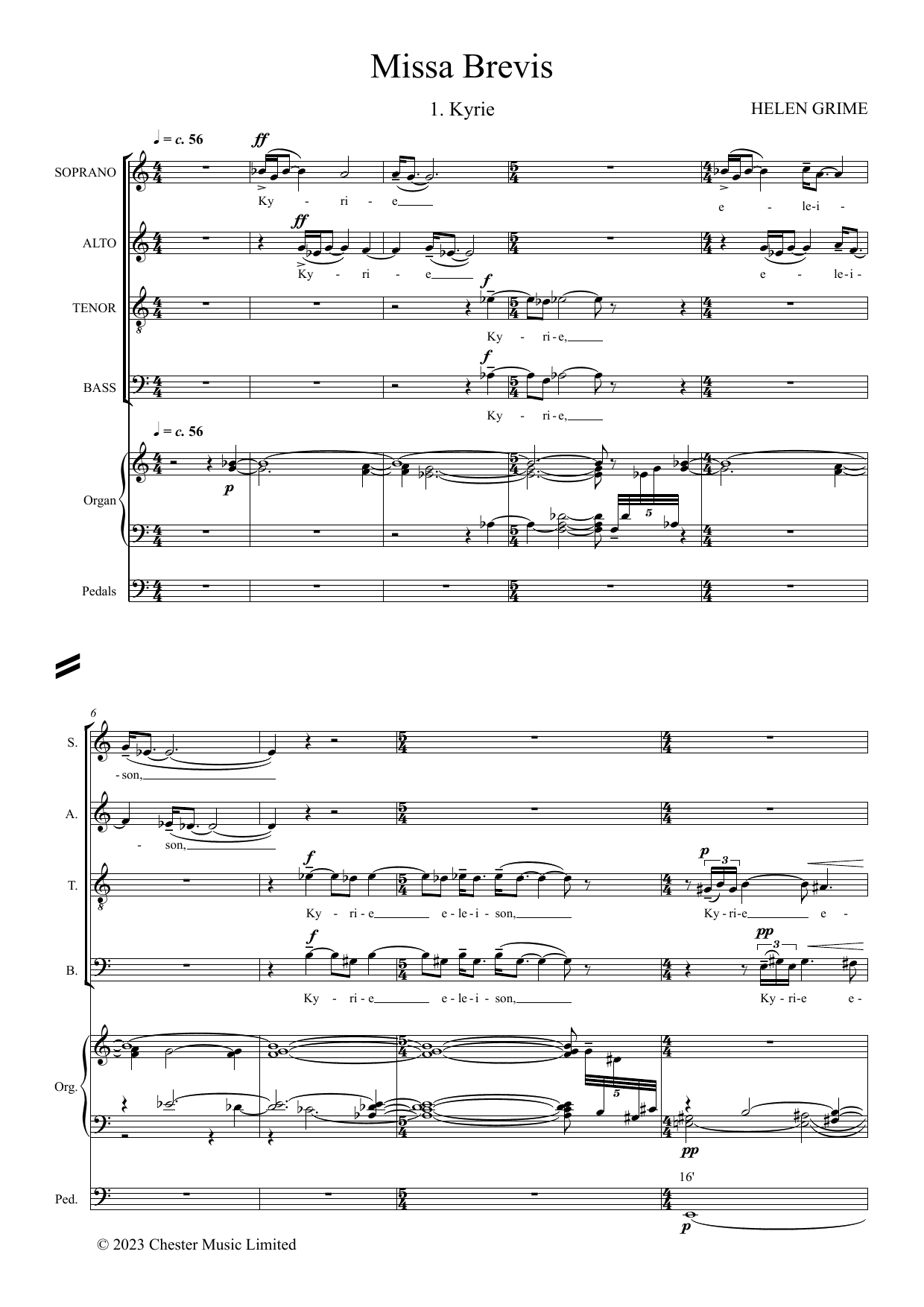
Missa Brevis: SATB Choral Octavo

By Helen Grime

Item: 35-DS01518165

Digital Download
$16.95
Description

Missa Brevis: SATB Choral Octavo isn't in MakeMusic Cloud just yet...but it could be. Let us know you'd like to see it, and you'll help shape what comes next. In the meantime, start a free trial and dive into thousands of interactive titles your students can play along with today.

Sample Audio
No sample audio found.
Sample Video
Additional Details
Publisher: Hal Leonard
Page Count: 39
SKU: 35-DS01518165

More about this title

About the Composer: Helen Grime

Helen Grime is a Scottish composer whose sacred choral works have become fixtures in cathedral and collegiate repertoire across Britain and beyond. Her writing balances textural clarity with harmonic sophistication, drawing on her deep knowledge of liturgical music while maintaining a distinctly contemporary voice.

Why we love this

Grime's gift for crafting liturgical music that sounds both reverent and immediately engaging makes this Missa Brevis accessible without sacrificing musical substance. The voice leading sits naturally on the page while the harmonic language keeps listeners attentive; it's the kind of piece that works equally well in a concert setting or as part of a Sunday service without feeling like a compromise in either context.

What to expect

Grime's harmonic language creates moments of quiet luminosity alongside passages of noble, clear-voiced declaration. The piece breathes with restraint and dignity, never manipulative, never showy, yet compelling in its directness.

Who it's for

This work suits intermediate to advanced SATB choirs with a solid sense of ensemble blend and secure intonation. It sits well for groups that sing both sacred and secular repertoire and want a contemporary liturgical piece with real substance.

How to get the most out of it

  • Shape each movement's phrasing through breath rather than relying on written articulations. Grime's text setting often carries the natural phrasing if you trust the words.
  • Balance transparency with weight in the homophonic sections. These moments need resonance but must never sound thick or opaque.
  • Treat the text underlay as a guide to vowel placement and not as a limitation on interpretation. Some syllables invite you to linger slightly for musical effect.
  • Listen across all four parts during rehearsal even when working sectionally. The harmonic motion lives in the spaces between voices.

How to use it

This works beautifully as a closing piece on a concert that mixes sacred and secular works, where its contemporary sensibility and formal control will feel like a natural culmination rather than a sudden shift in mood. It also serves effectively as the centerpiece of a liturgical program or as part of a concert exploring modern approaches to the Mass Ordinary.

Skills your students will build

  • Independent voice leading in four-part harmony with contemporary harmonic language
  • Rhythmic precision across all four voices, particularly where lines move in different metrical units
  • Sustaining long phrases with consistent tone and breath control
  • Interpreting text underlay in ways that serve both clarity and musicality
  • Ensemble listening and balance in both homophonic and imitative sections

You May Also Like