
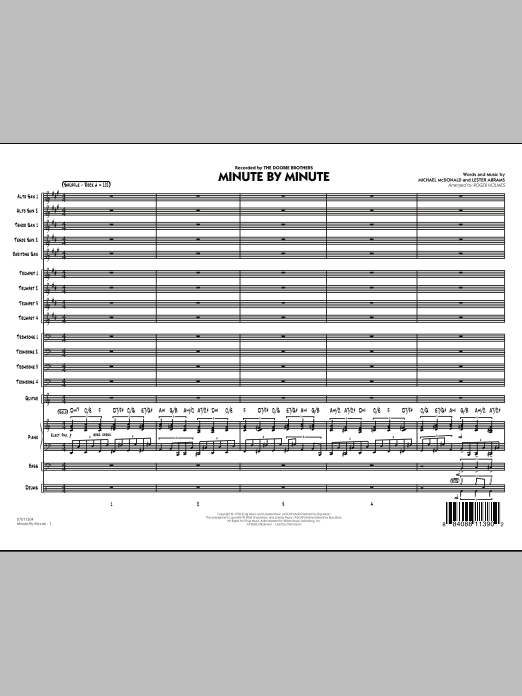

Minute By Minute (arr. Roger Holmes): Jazz Ensemble Conductor Score & Parts
As performed by The Doobie Brothers / As performed by Michael McDonald / Arranged by Roger Holmes
Grade: 4
Item: 35-PK00159712
$50.00
Pickup currently not available
Buy Extra Parts (Digital PDF Download)
Parts Added to Cart!
Description
Recorded by Michael McDonald, this bluesy tune features a moderate shuffle groove and a distinctive contemporary sound. Scored with plenty of variety, this appealing chart also includes solo space for trumpet and/or tenor sax.


Minute By Minute (arr. Roger Holmes): Jazz Ensemble Conductor Score & Parts isn't in MakeMusic Cloud just yet...but it could be. Let us know you'd like to see it, and you'll help shape what comes next. In the meantime, start a free trial and dive into thousands of interactive titles your students can play along with today.
Request This Title
Tell us you want it.
Start Your Free Trial
Explore everything that's ready to play right now.
Sample Audio
No sample audio found.
Sample Video
No sample videos found.
Additional Details
Publisher:
Hal Leonard
SKU:
35-PK00159712
More about this title
About the Artist: The Doobie Brothers
The Doobie Brothers emerged from San Jose in the early 1970s to become one of rock's most durable and inventive bands. Their sound blended rock, soul, and funk with sophisticated harmonies and tight ensemble playing, hallmarks that made them natural vehicles for jazz education. The group's collaboration with vocalist and keyboardist Michael McDonald in the late 1970s brought a groovier, more soulful dimension to their work, producing some of their most enduring hits.
For music educators, The Doobie Brothers represent a bridge between pop accessibility and genuine musicianship. Their arrangements showcase tight section work, syncopated rhythms, and the kind of melodic sensibility that keeps students engaged while demanding real technical growth.
Why we love this
Roger Holmes brings sophisticated jazz voicings and narrative arrangement choices to material that could easily feel dated in a concert setting. The built-in solo spaces let your strongest improvisers shine without overwhelming the ensemble, and the shuffle groove sits squarely in the pocket that students find instantly gratifying to lock into.
What to expect
Cool and laid-back, with an irresistible bluesy pocket that makes the ensemble want to move. The distinctive contemporary sound Holmes captured from the original sits somewhere between funk precision and jazz sophistication, never feeling forced or overwritten. When it clicks, your ensemble will feel the confidence that comes from playing something genuinely musical and genuinely fun.
Who it's for
Jazz ensemble directors looking for repertoire with genuine commercial appeal that still demands solid musicianship. This works equally well for high school ensembles seeking approachable rock repertoire and college groups wanting to expand beyond straight jazz standards into the soul and funk territories that shaped modern groove.
How to get the most out of it
- Establish the shuffle feel in rehearsals before worrying about the parts; if the rhythm section isn't grooving together, nothing else lands. Have the drums and bass lock in at half tempo first, then gradually bring it up to performance speed.
- Balance the horn section carefully during the unison passages. Since everyone's moving together, slight timing variations become obvious, so mark attacks and releases with precision.
- Give your soloists clear expectations about form and feel. A recorded reference helps, but your students should understand how the tune breathes in the original before they build their own improvisations.
- The arrangement's contemporary voicings will sound thin if the ensemble rushes. Slow down in rehearsal and let the chords ring; the funk lives in space, not speed.
How to use it
Book this alongside other modern ensemble hits from the 1970s and 1980s to show students the continuity between rock grooves and jazz ensemble writing. It works brilliantly as a closer on a concert, or paired with ballad material as part of a program exploring soul and funk influences on contemporary jazz.
Skills your students will build
- Executing shuffle rhythms with precision and independence
- Balancing section cohesion in tight unison passages
- Navigating blues harmony and voice leading
- Blues-inflected trumpet and tenor saxophone improvisation
- Groove ownership and ensemble pocket playing
- Reading and responding to contemporary jazz voicings