
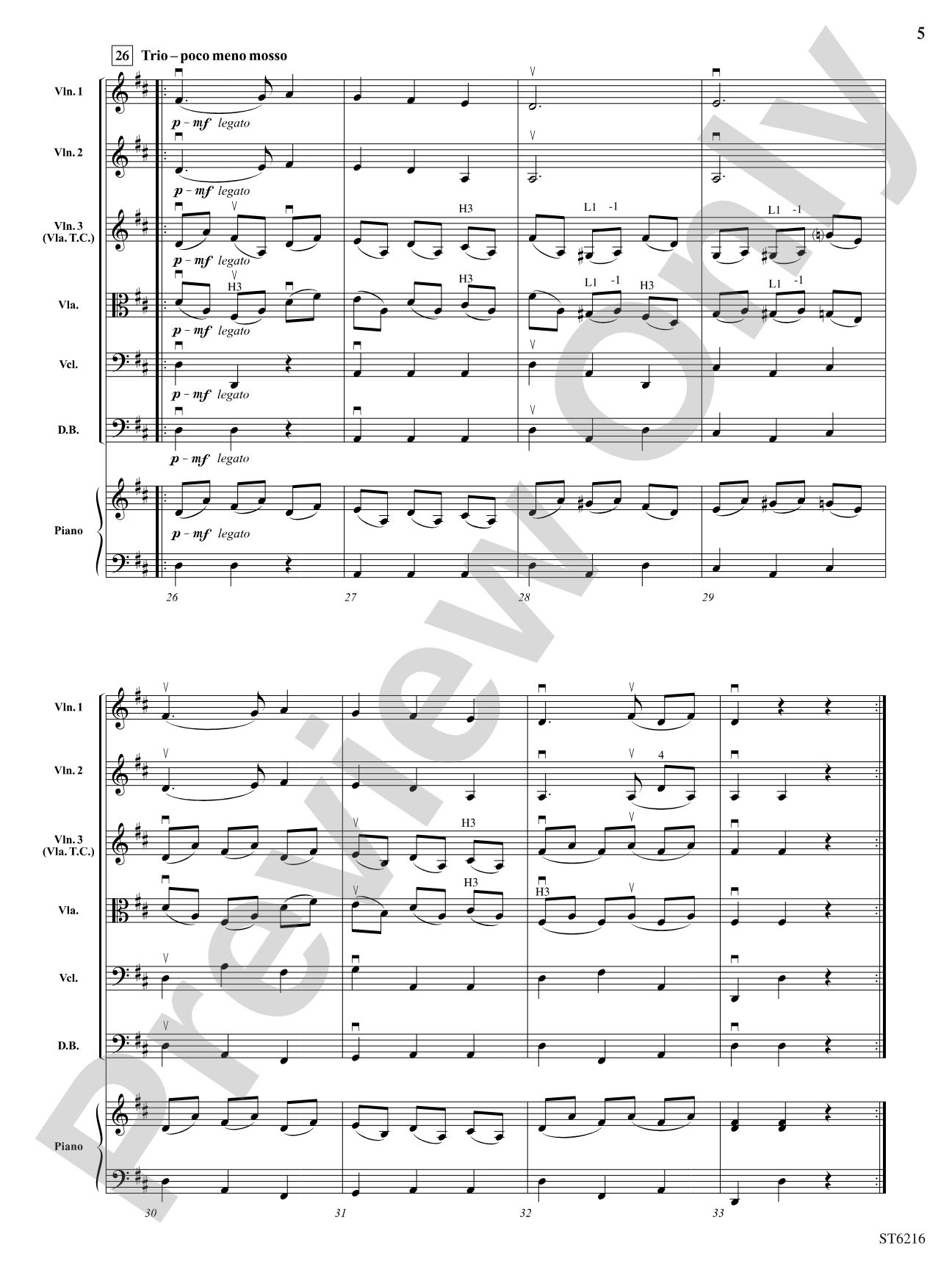
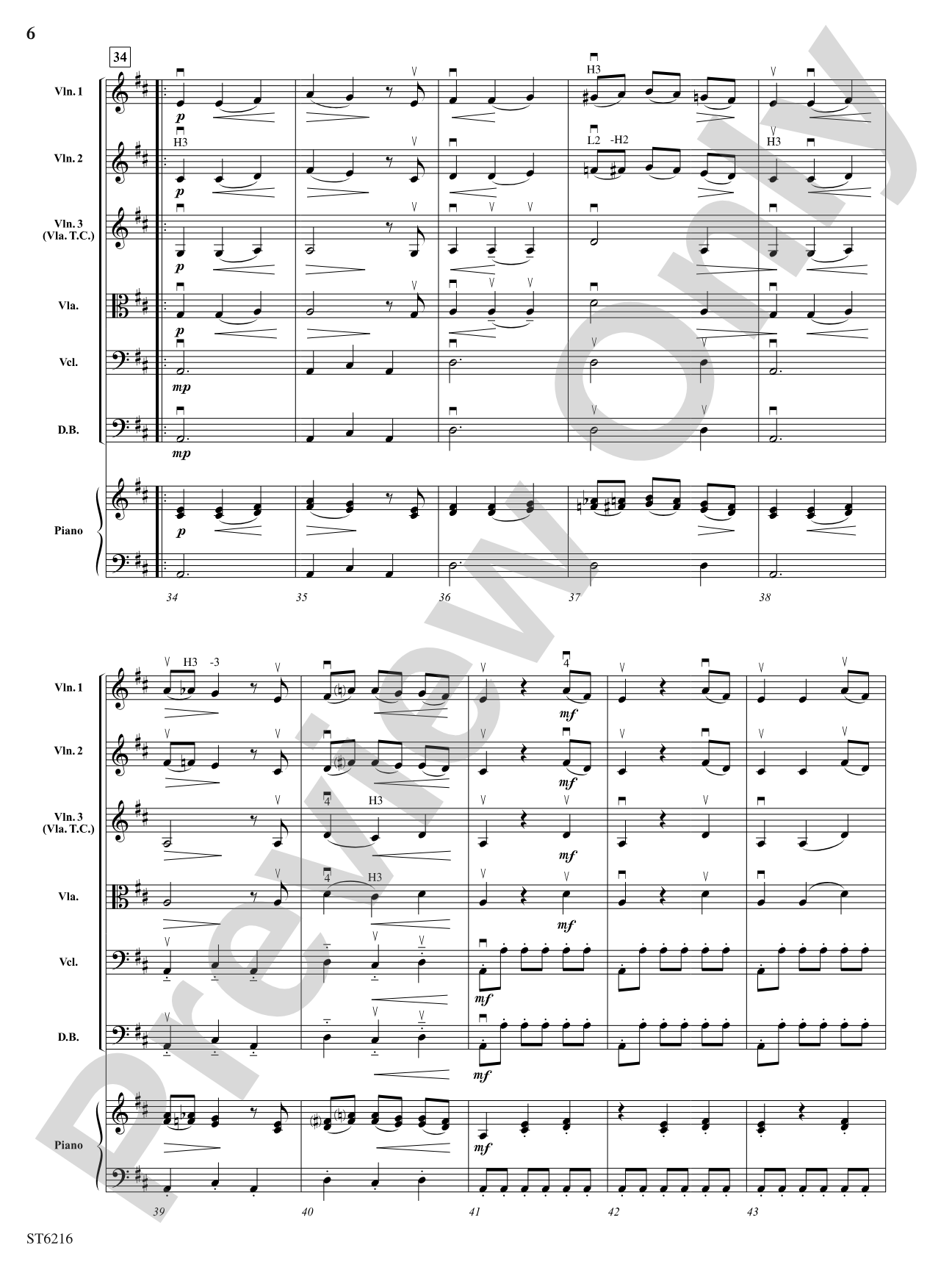
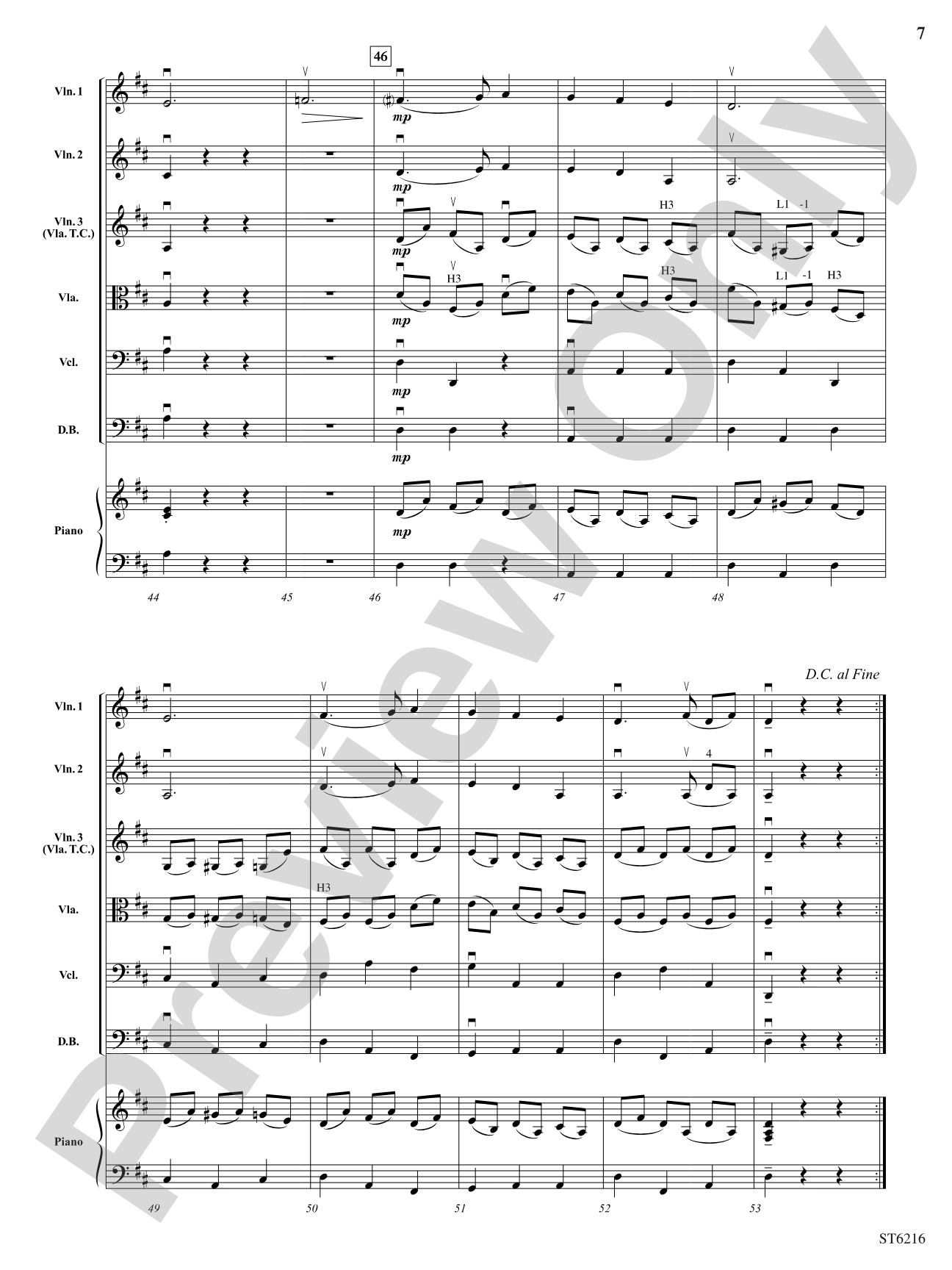

Minuetto from Symphony No. 35 "Haffner": String Orchestra Conductor Score & Parts
By Wolfgang Amadeus Mozart / arr. Robert D. McCashin
Grade: 2.5
Item: 98-DST6216
$45.00
Pickup currently not available
Buy Extra Parts (Digital PDF Download)
Parts Added to Cart!
Description
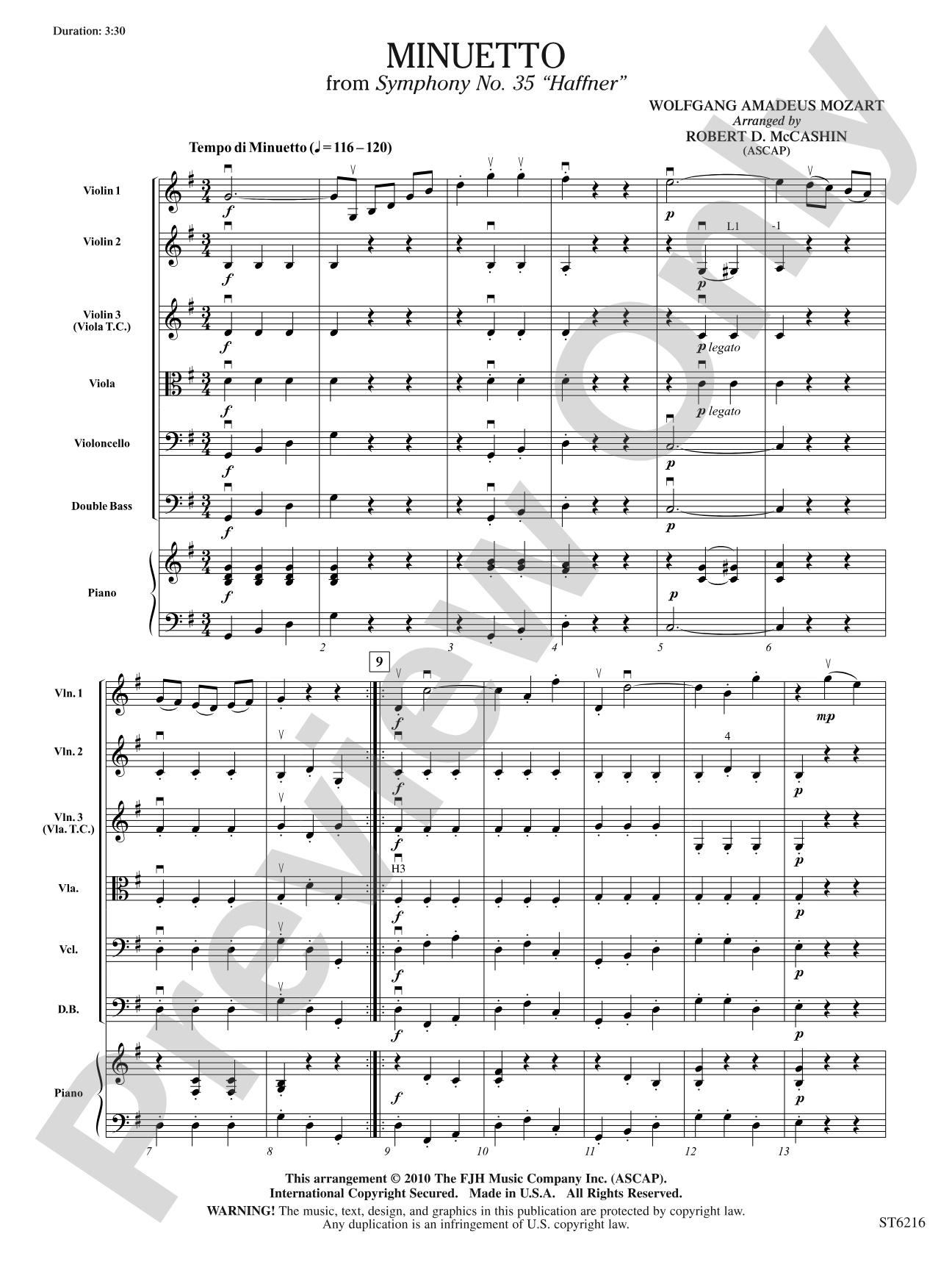
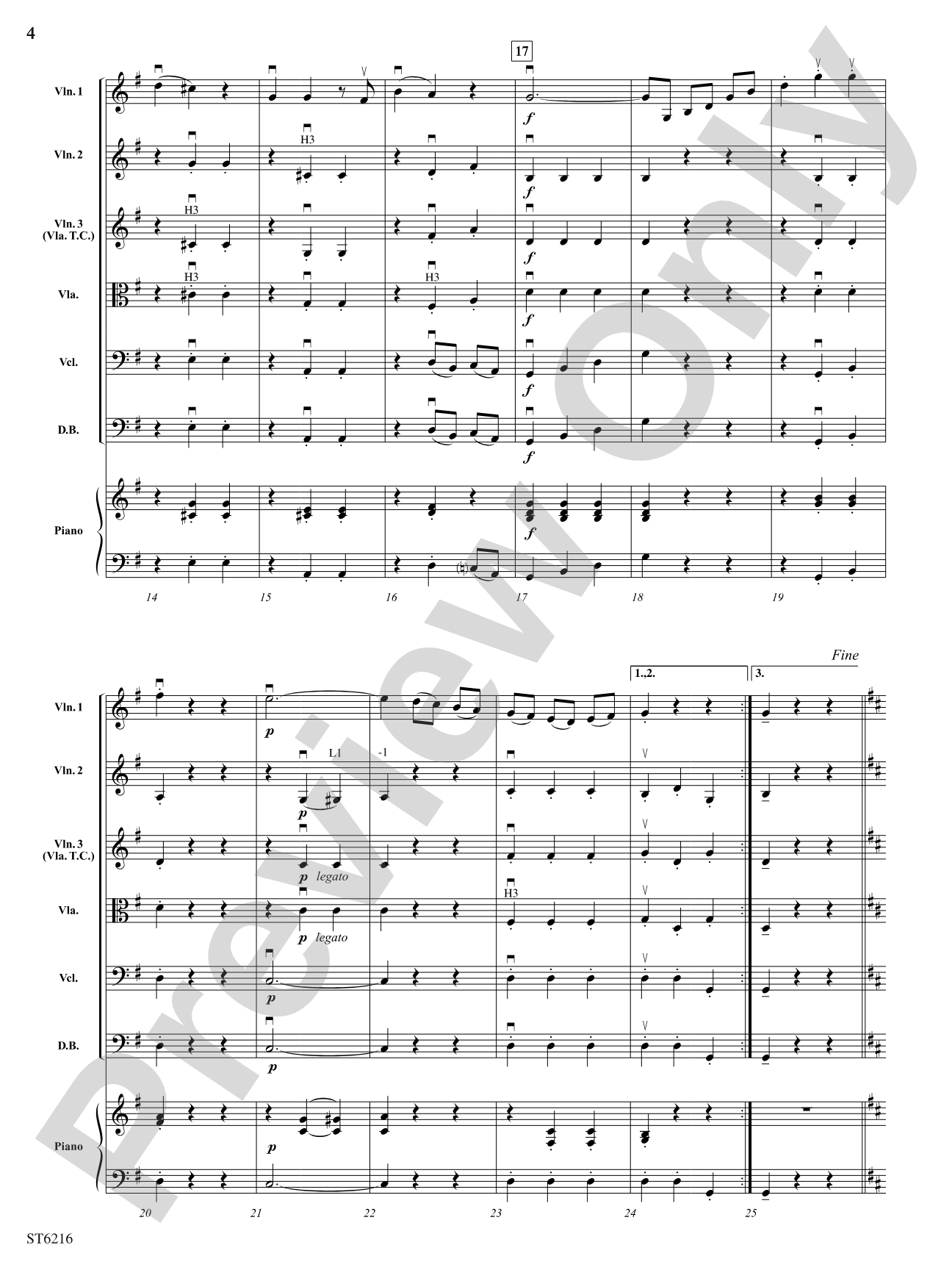
This highly approachable arrangement provides an excellent opportunity to include Mozart's Haffner Symphony on your next program. Ideal for working on style while exposing your students to the work of a master, this arrangement stays true to the original.


Discover MakeMusic Cloud: thousands of interactive titles your students can play along with today.
Sample Audio
1
Audio File
--:--
0:00
0:00
Sample Video
No sample videos found.
Additional Details
Series:
FJH Developing Strings
Publisher:
The FJH Music Company, Inc.
SKU:
98-DST6216
More about this title
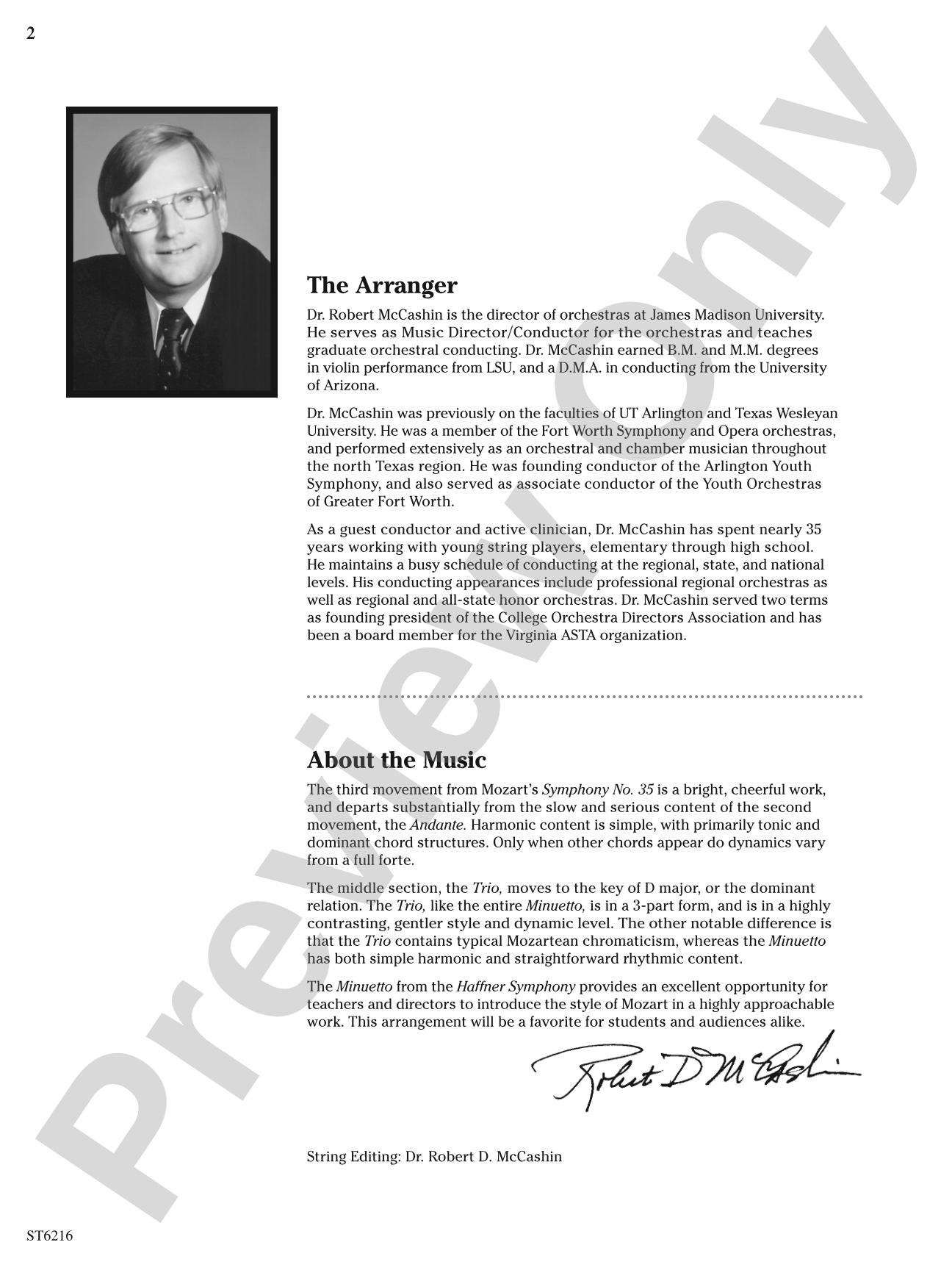
About the Composer: Wolfgang Amadeus Mozart
Wolfgang Amadeus Mozart (1756-1791) composed across every major genre of his time, from operas and concertos to symphonies and chamber works. His technical mastery and seemingly effortless melodic invention made him a model for generations of composers and remain central to music education today.
Why we love this
This arrangement opens one of Mozart's most celebrated symphonies to developing orchestras without compromising the elegance of the original. The Minuetto is instantly recognizable, giving your students a confidence boost while they absorb how a master structures melody, accompaniment, and phrase.
What to expect
A refined, dance-like movement with courtly grace. The writing flows with clarity and transparency, showcasing Mozart's gift for melody while asking only what intermediate players can deliver with focus and good intonation.
Who it's for
String orchestras at the early-intermediate level who are ready to engage with genuine classical repertoire. This works for ensembles building confidence in style and phrasing, and for directors seeking authentic masterworks that don't require advanced technique.
How to get the most out of it
- Shape the main theme with gentle dynamic peaks; Mozart's phrasing breathes naturally at the cadences, so resist the urge to press forward.
- Balance the first and second violins carefully. The arrangement likely distributes the melody between parts, so rehearse them separately to ensure clarity before blending.
- Keep the minuet tempo steady and unhurried. A tempo around 120 BPM gives the music room to articulate without rushing.
How to use it
Program this alongside other classical-era works to create a style unit, or use it as a shorter work that gives your orchestra a chance to show musicianship and control. It pairs well with contemporary pieces, allowing audiences to hear how clarity and restraint can be just as engaging as larger gesture.
Skills your students will build
- Mozart-era stylistic awareness (phrasing, articulation, texture)
- Balancing melody and accompaniment within the orchestra
- Sustaining steady tempo in moderate minuet time
- Reading and executing dynamic shaping across multiple parts
- Ensemble blend and intonation in transparent orchestral texture