Minuet in G: Cello Sheet Music Preview

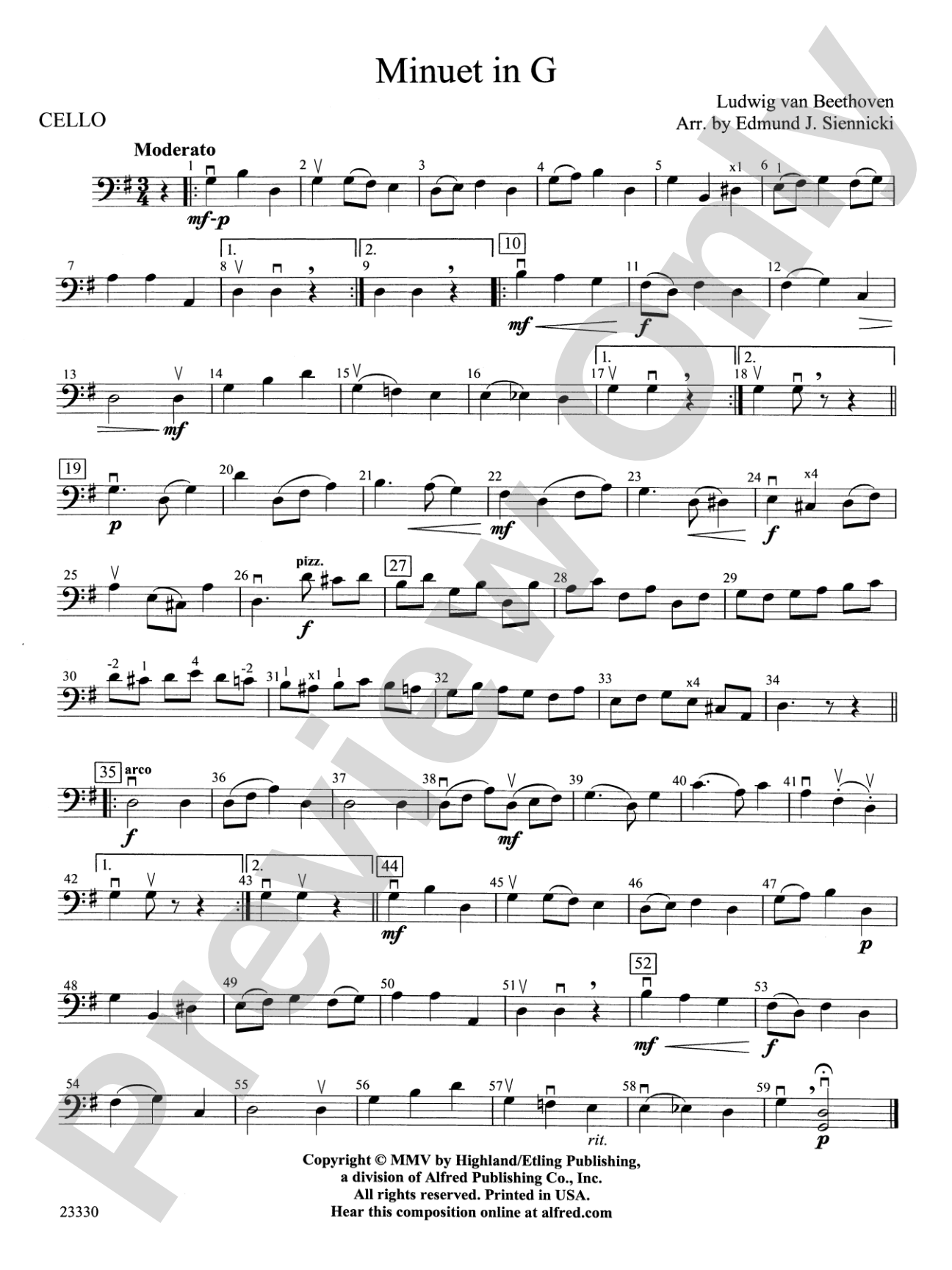
Minuet in G: Cello

By Ludwig van Beethoven / arr. Edmund J. Siennicki

Item: 00-PC-0000677_VC1

Digital Download
$5.99
Description
This arrangement of Beethoven's Minuet in G incorporates bowing slurs up to four notes long and gives all instruments a chance to play melodic phrases. Hooked bowing, bouncing spiccato, and legato are all used-cellos and basses use pizzicato as well. A great way to introduce your students to the classics!

Don't just read it, hear it, play along with it, and watch your students grow with it. In MakeMusic Cloud, Minuet in G: Cello comes alive with professional accompaniment, adjustable tempo, and built-in practice tools that turn solo practice into real progress.

Sample Audio
0:00
0:00
Sample Video
Additional Details
Series: Highland/Etling Strictly Strings
Publisher: Alfred Music
Page Count: 1
SKU: 00-PC-0000677_VC1

More about this title

About the Composer: Ludwig van Beethoven

Ludwig van Beethoven (1770-1827) stands as one of the most influential composers in Western music history. His work bridged the Classical and Romantic eras, expanding the emotional range and structural possibilities of nearly every form he touched. For string educators, Beethoven's output offers essential repertoire that challenges students to think beyond mechanical execution and toward expressive, purposeful playing.

Why we love this

This arrangement gives every instrument genuine melodic material while keeping the technical demands accessible. The variety of bowing techniques feels purposeful rather than showy, and students grasp quickly why legato differs from spiccato when they're performing a recognizable masterwork that demands both.

What to expect

Elegant and purposeful, with the courtly grace characteristic of the minuet form. The varied bowing textures keep the familiar melody fresh and engaging, moving between moments of crystalline clarity and warm, singing legato.

Who it's for

String orchestra players at the intermediate level will find this piece rewarding because it asks them to execute multiple bowing techniques with intention, not just variety for its own sake. The single-page format makes it manageable for classes building confidence with Classical masterworks.

How to get the most out of it

  • Shape the slurs expressively rather than mechanically. A four-note slur should breathe slightly at its end to preserve forward motion and clarity.
  • Balance the bouncing spiccato so it doesn't overpower the legato passages. This is an opportunity to teach dynamic control across different articulations.
  • Coordinate hooked bowings across sections carefully during rehearsal. Mark them consistently in all parts to avoid the scattered effect that comes from individual interpretation.
  • Let pizzicato in the lower strings ring naturally without dampening prematurely. This supports harmonic resonance and gives the arrangement a warmer Classical sound.

How to use it

Pair this with other arranged masterworks to build a concert devoted to how string players interpret the repertoire that defined their instrument's history. At a single page, it works well as a concert opener that signals to the audience that young musicians have command of technique and style.

Skills your students will build

  • Multi-note slurs with proper weight distribution and shape
  • Bouncing spiccato with controlled articulation and consistent tone
  • Transition between legato and hooked bowings without disrupting phrasing
  • Pizzicato technique with proper resonance and duration
  • Ensemble balance across varied articulation styles

You May Also Like