Minuet In G Sheet Music Preview

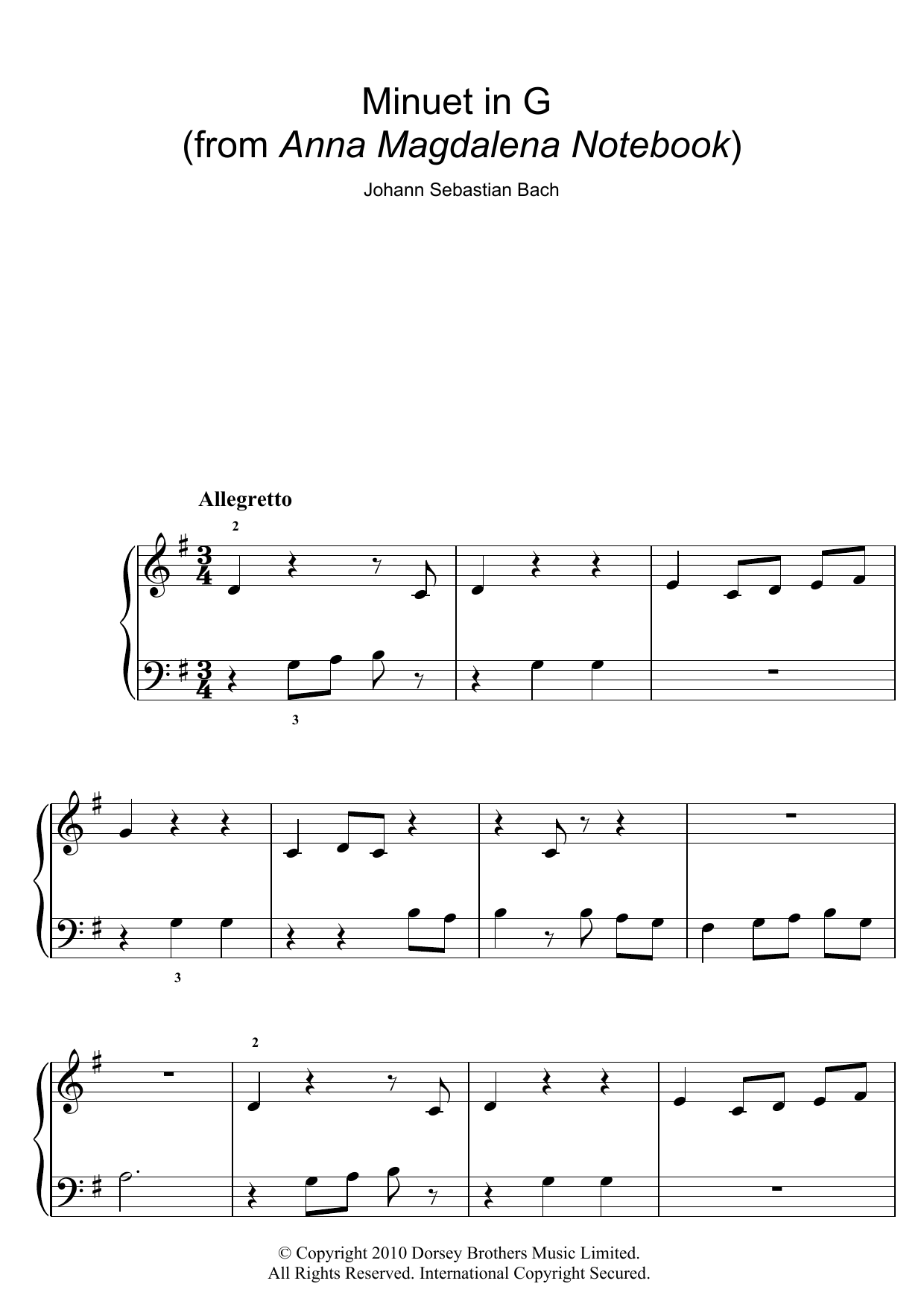
Minuet In G: 5-Finger Piano

By Johann Sebastian Bach

Item: 35-DS00153470

Digital Download
$4.99
Description

Discover MakeMusic Cloud: thousands of interactive titles your students can play along with today.

Sample Audio
No sample audio found.
Sample Video
Additional Details
Publisher: Hal Leonard
Page Count: 2
SKU: 35-DS00153470

More about this title

About the Composer: Johann Sebastian Bach

Johann Sebastian Bach (1685–1750) shaped Western music so fundamentally that his influence is nearly invisible; it's simply everywhere. Working in Leipzig and Weimar, he synthesized German, Italian, and French musical traditions into a language of mathematical precision and emotional depth. His keyboard works form the foundation of piano pedagogy because they demand clarity of voice, control of independent hands, and an understanding of harmonic architecture that transfers directly to any music students encounter later.

Why we love this

This arrangement distills Bach's melodic gift into a format young pianists can grasp immediately. The five-finger position keeps students focused on phrasing and articulation rather than hand position logistics, letting the elegant proportions of the minuet form itself become the teacher. It's the kind of piece that sounds refined after just a few practice sessions, which matters for keeping early students engaged and believing in their own musicianship.

What to expect

Elegant and purposeful, with an understated grace that feels mature without being showy. The piece unfolds with the calm assurance of someone walking through a formal garden, each phrase balanced and complete.

Who it's for

Beginning pianists ready to move beyond isolated exercises and into actual repertoire with historical weight. This suits students roughly in their first or second year of piano study who can manage a steady tempo and coordinate both hands in contrasting textures.

How to get the most out of it

  • Shape each phrase by shaping the dynamic arc rather than playing note-to-note. The minuet's courtly character emerges through intentional direction toward harmonic goals.
  • Keep the tempo steady and unhurried. Rushing tempo is the most common pitfall; think of walking rather than dancing.
  • Differentiate the hand articulation subtly. The melody benefits from gentle legato while the accompaniment can sit slightly detached, creating transparency.
  • Practice the left hand separately until the harmonic progression feels natural. Knowing where the harmony moves lets the right hand breathe more expressively.

How to use it

Open a student recital with this piece and you signal that the program takes music history seriously. It pairs naturally alongside other Baroque miniatures or serves as an excellent bridge between method book material and Bach's more complex keyboard works students might encounter later.

Skills your students will build

  • Reading and performing binary form structures
  • Coordinating independent hand parts in legato and detached textures simultaneously
  • Shaping phrases in the absence of dynamic markings using harmonic awareness
  • Understanding baroque articulation and style conventions
  • Building evenness and control within a limited hand position

You May Also Like