
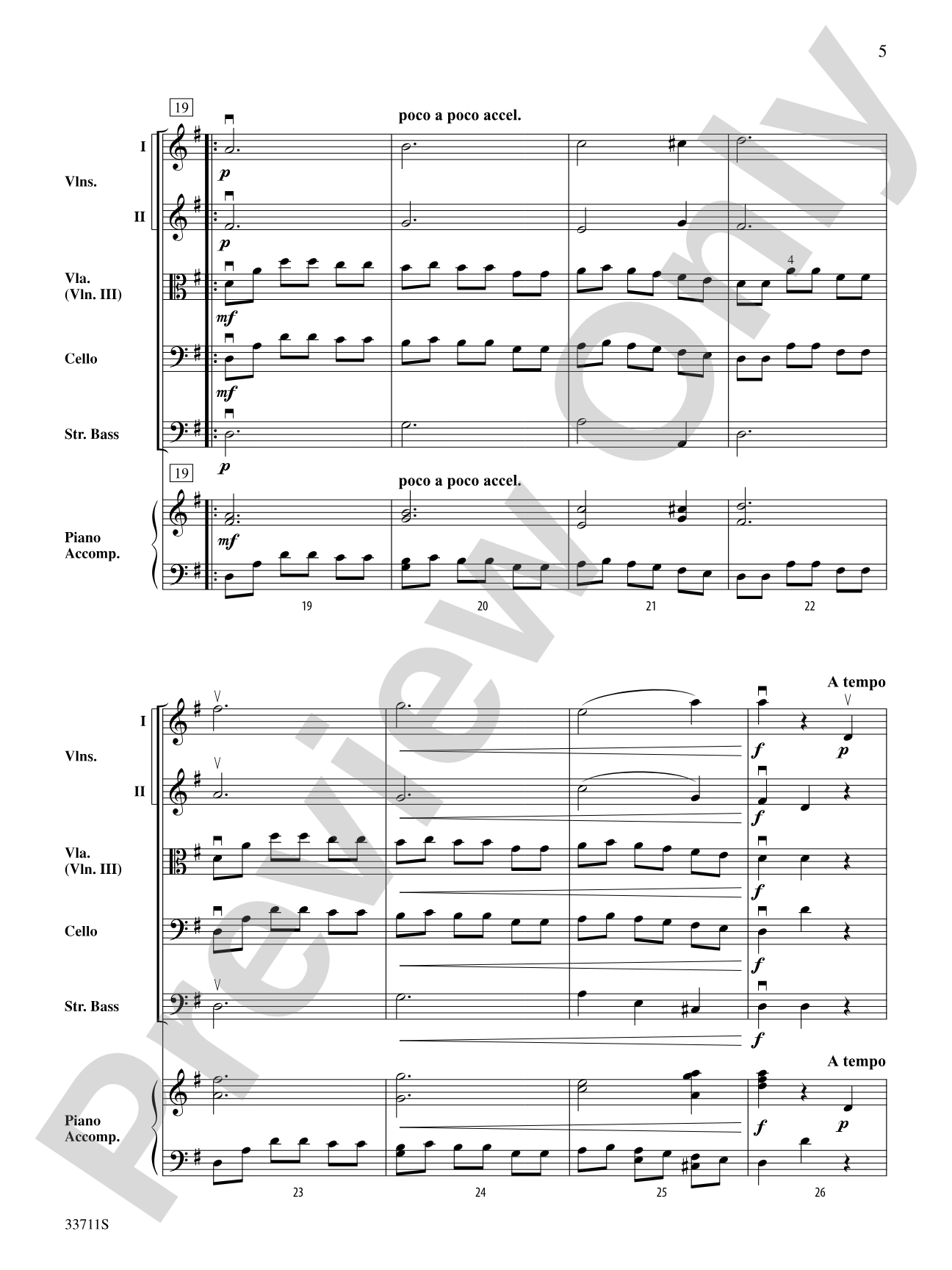
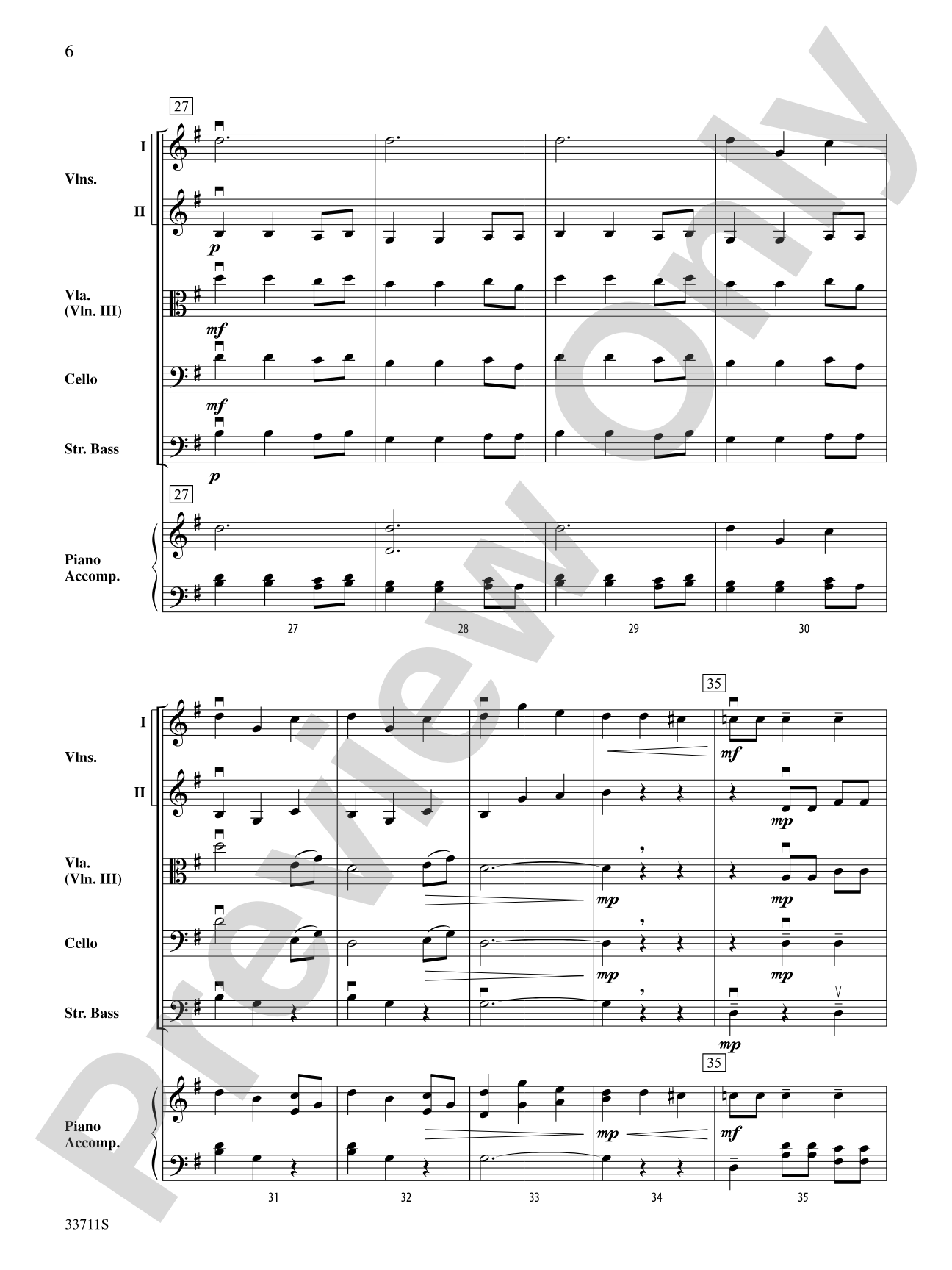
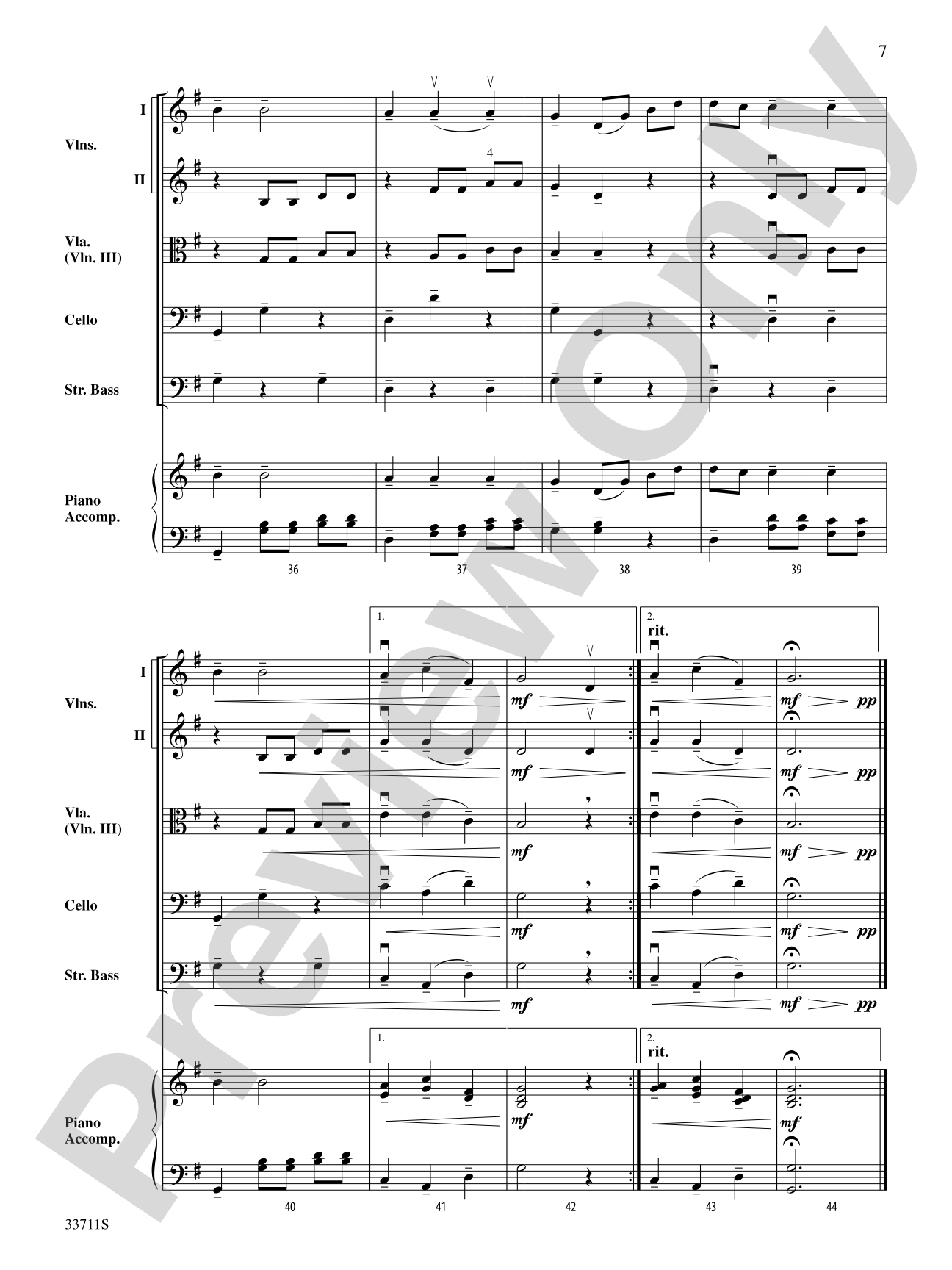


Minuet in G: String Orchestra Conductor Score & Parts
By Ignace Jan Paderewski / arr. Andrew H. Dabczynski
Grade: 1.5
Item: 00-PK-0004200

$42.00
Pickup currently not available
Buy Extra Parts (Digital PDF Download)
| Product | Price | Quantity |
|---|---|---|
| Minuet in G: Score | $6.00 | |
| Minuet in G: 1st Violin | $5.99 | |
| Minuet in G: 2nd Violin | $5.99 | |
| Minuet in G: 3rd Violin (Viola [TC]) | $5.99 | |
| Minuet in G: Viola | $5.99 | |
| Minuet in G: Cello | $5.99 | |
| Minuet in G: String Bass | $5.99 | |
| Minuet in G: Piano Accompaniment | $5.99 |
Parts Added to Cart!
Related Items
Minuet in G: String Orchestra Conductor Score |
$6.00
|
View |
Description
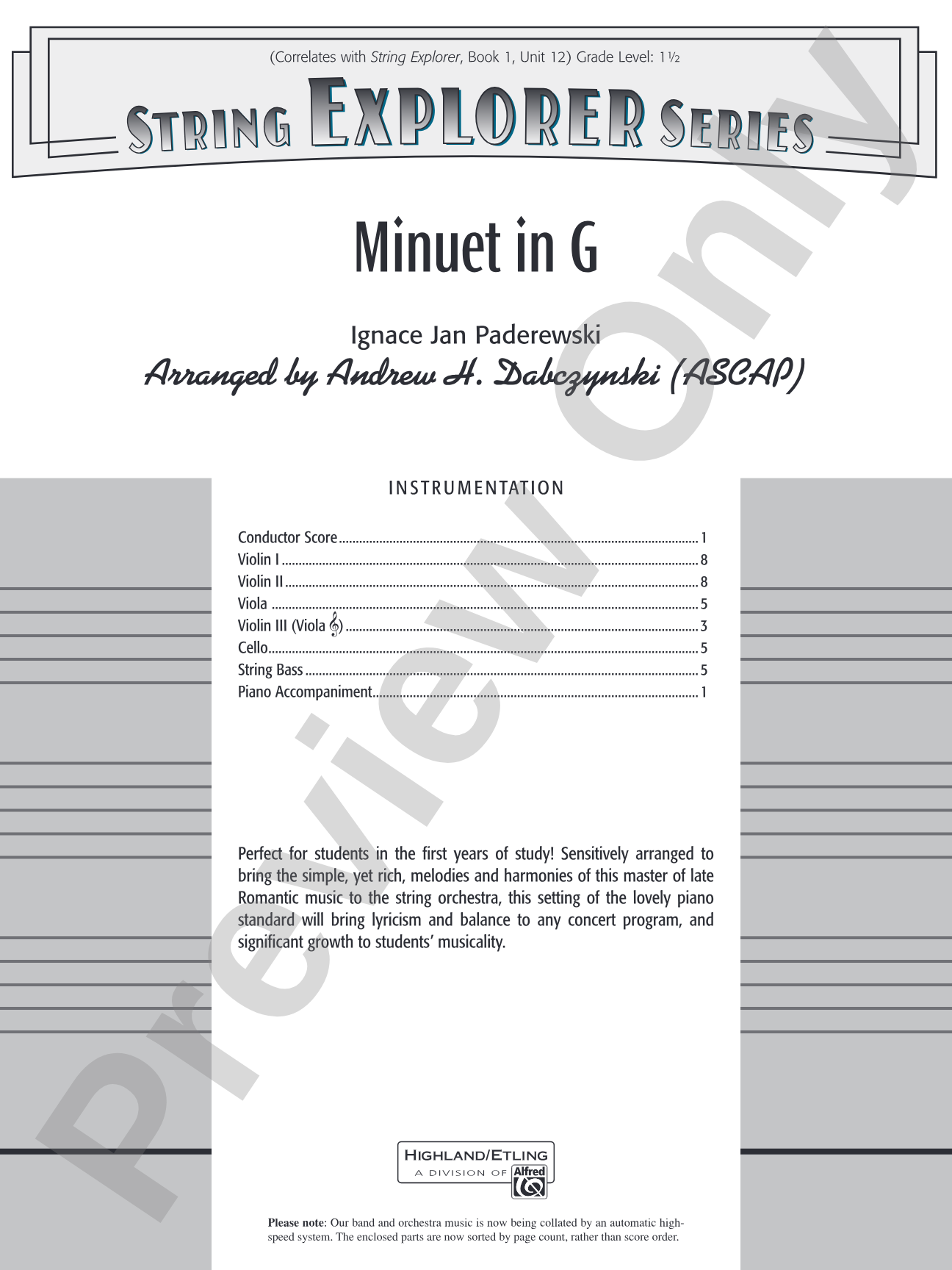
Perfect for students in the first years of study! Sensitively arranged to bring the simple, yet rich, melodies and harmonies of this master of late Romantic music to the string orchestra, this setting of the lovely piano standard will bring lyricism and balance to any concert program, and significant growth to students' musicality.


Don't just read it, hear it, play along with it, and watch your students grow with it. In MakeMusic Cloud, Minuet in G: String Orchestra Conductor Score & Parts comes alive with professional accompaniment, adjustable tempo, and built-in practice tools that turn solo practice into real progress.
Open in the Player
Jump straight in and assign it today.
Start Your Free Trial
Open this title and explore the full library in minutes.
Sample Audio
1
Audio File
--:--
0:00
0:00
Sample Video
No sample videos found.
Additional Details
Series:
Highland/Etling String Explorer
Publisher:
Alfred Music
Page Count:
72
SKU:
00-PK-0004200
More about this title
About the Composer: Ignace Jan Paderewski
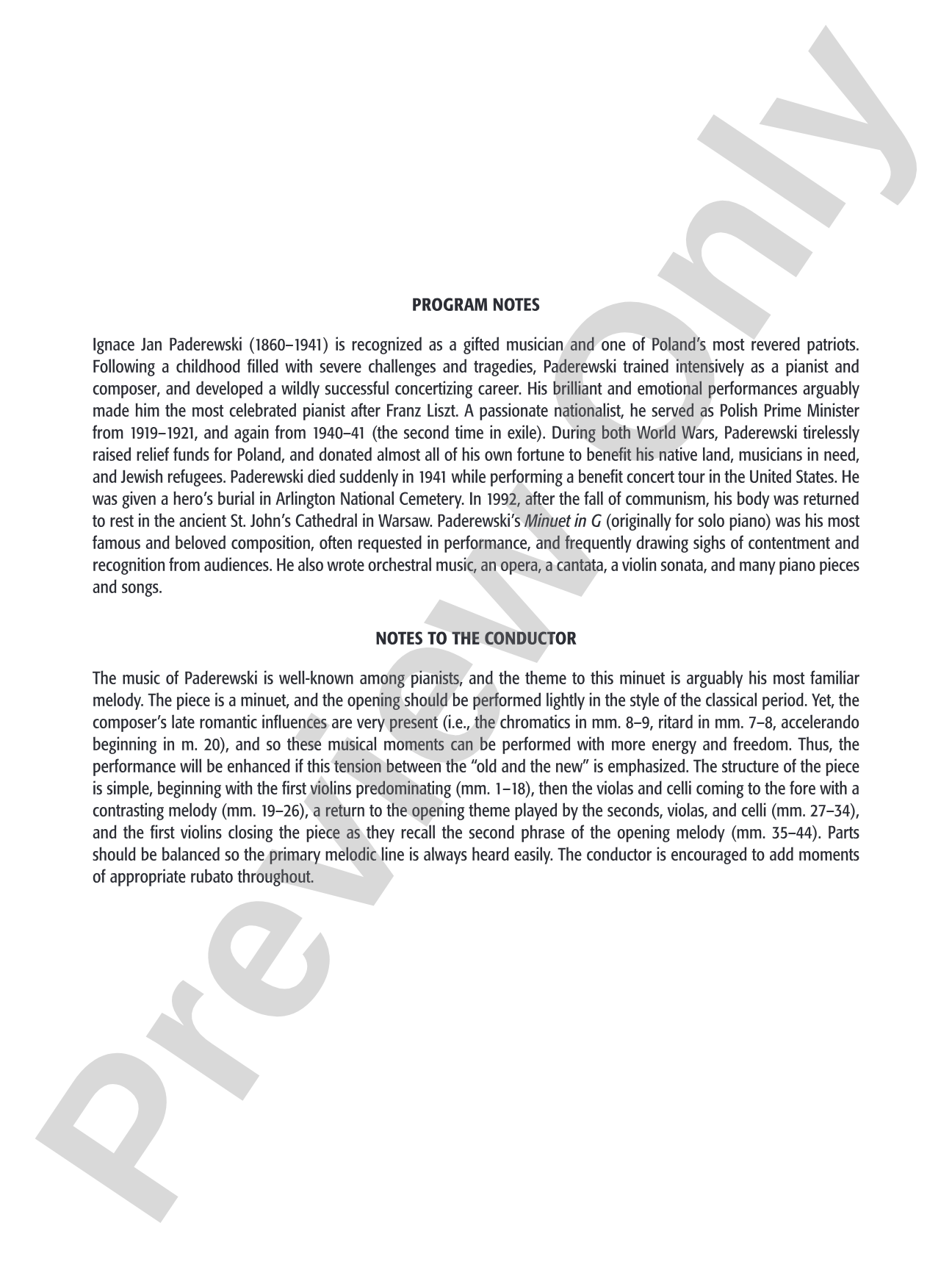
Ignace Jan Paderewski (1860, 1941) was a Polish pianist, composer, and statesman whose virtuosic performances and lyrical compositions made him one of the most celebrated musicians of the late 19th century. Beyond the concert hall, he served as Poland's prime minister and delegate to the Paris Peace Conference, making him a rare figure in history who achieved prominence in both music and politics.
For music educators, Paderewski's legacy rests on melodies that sing naturally and harmonies that balance simplicity with emotional depth. His piano works, including the famous Minuet in G, reveal a craftsman who understood how to write music that engages young musicians while respecting their developing abilities.
Why we love this
Dabczynski's arrangement captures the warmth and lyricism of Paderewski's original without overwhelming young string players. The Grade 1.5 setting respects students' developing technique while preserving the piece's genuine musical substance, offering repertoire that feels grown-up rather than simplified. Directors will appreciate how naturally this fits into concert programming alongside more contemporary works.
What to expect
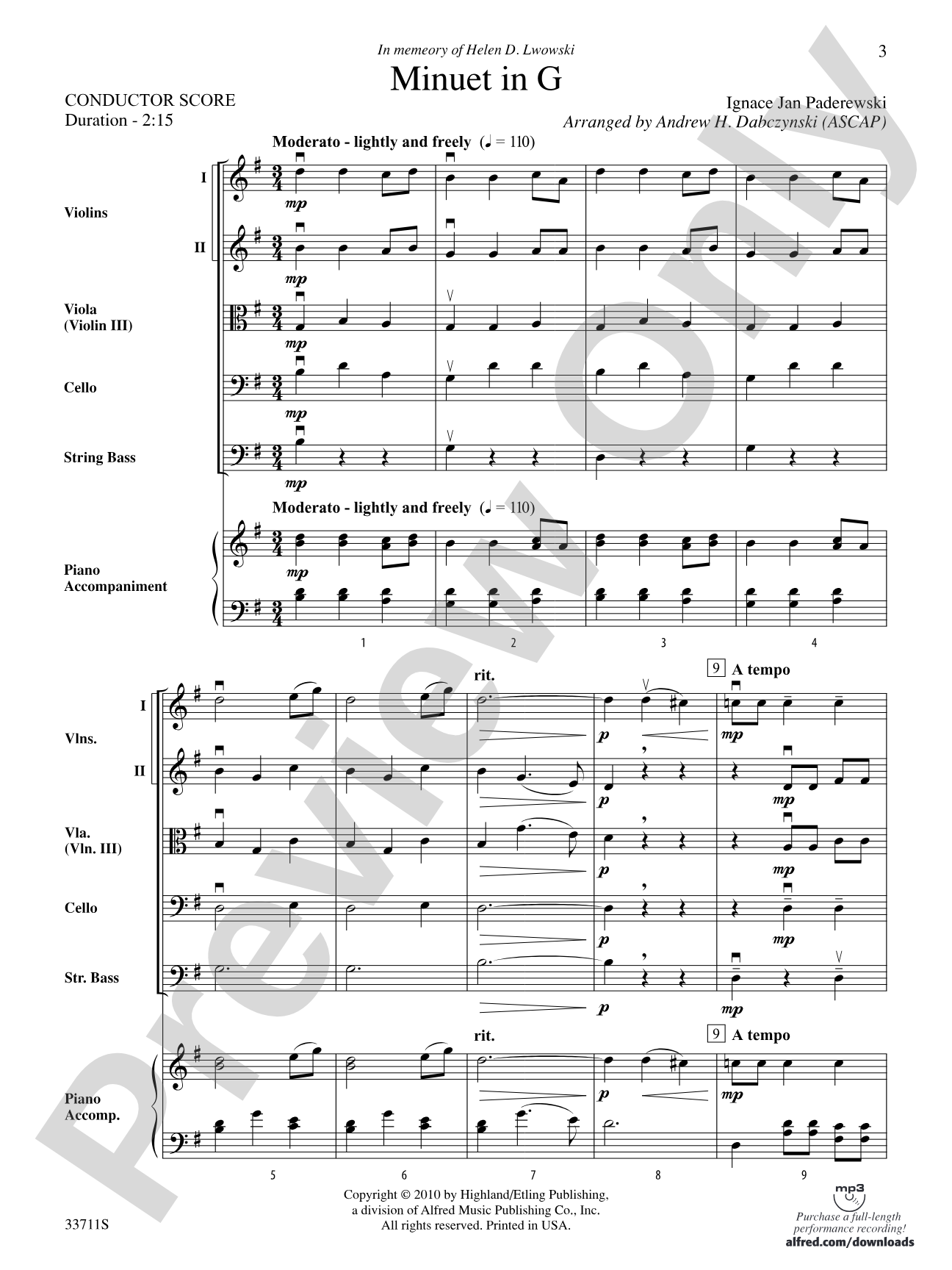
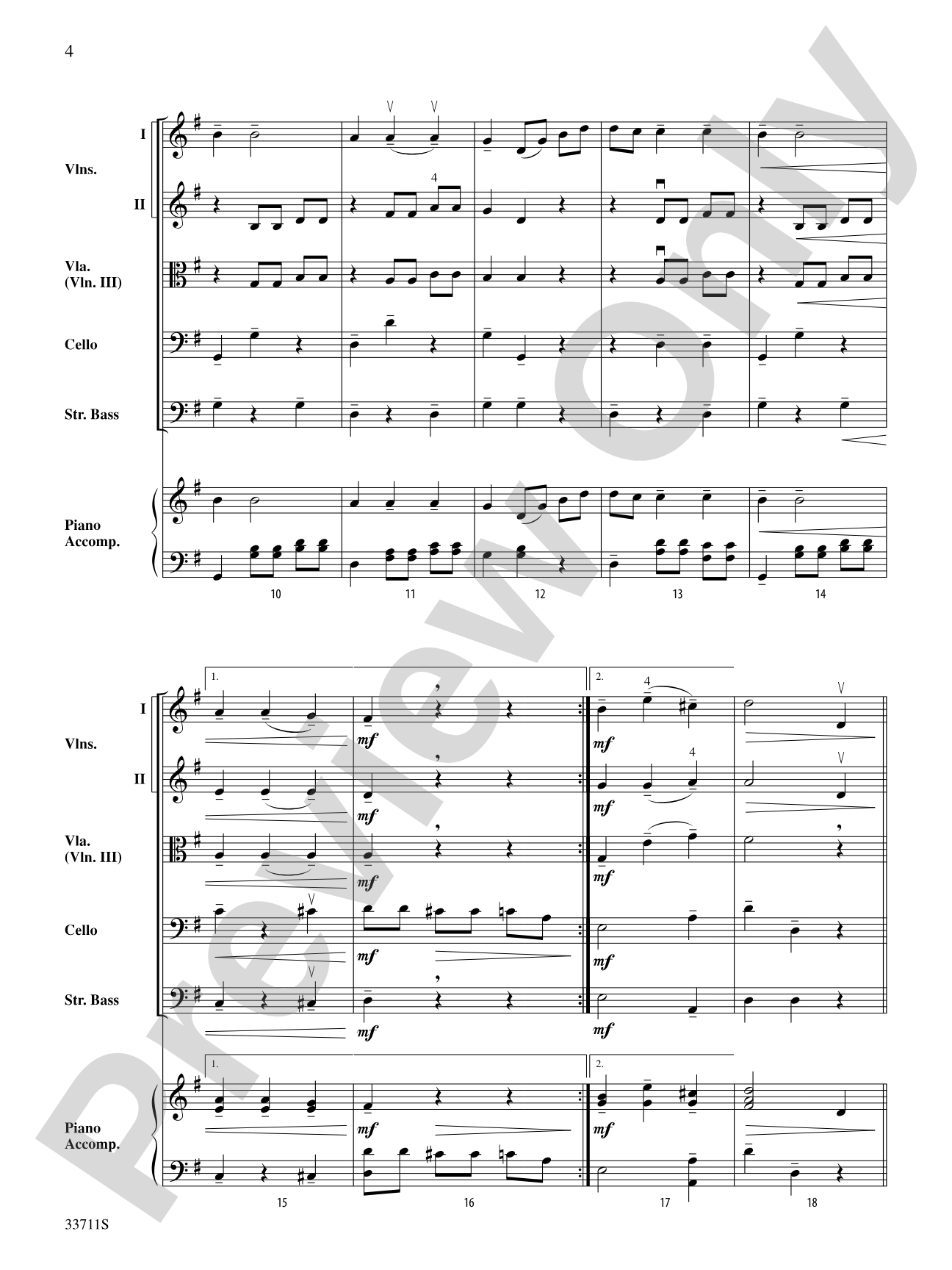
The Minuet in G unfolds with the grace of a nineteenth-century drawing room, all warm melodic contours and gentle harmonic movement. Its restraint and refinement offer young musicians a chance to explore how small dynamic and expressive choices create deeply musical performances.
Who it's for
Developing string orchestras in their first or second year of study will find this a rich introduction to Romantic-era compositional thinking. Conductors seeking Grade 1.5 repertoire with genuine musical weight will value how this piece teaches musicality without demanding advanced technical facility.
How to get the most out of it
- Shape the opening melody with gentle dynamic contours rather than playing straight through. Let violins breathe at natural phrase endings, even if no rest appears on the page.
- Balance the inner voices carefully; violas and cellos carry harmonic support that matters. A quick sectional focused on blend between first and second violins with viola/cello foundation prevents the texture from sounding thin.
- Work the middle section transitions slowly at first. Students need to hear how the key shifts function before executing them at tempo.
- Establish a clear, unhurried pulse in rehearsal. This piece gains elegance from spaciousness, not speed.
How to use it
This works beautifully as the lyrical centerpiece of a concert, paired before or after more rhythmic contemporary pieces to showcase your ensemble's range. It also serves well in festival settings where judges appreciate both musicianship and appropriate repertoire choices, and its modest length fits comfortably into full concert programs without dominating.
Skills your students will build
- Phrasing over barlines and recognizing natural musical sentences
- Intonation within sustained harmonic progressions
- Dynamic shadings and expressive control in classical contexts
- Listening for and balancing inner voices within the ensemble
- Reading and executing Romantic-era articulation and expression markings