

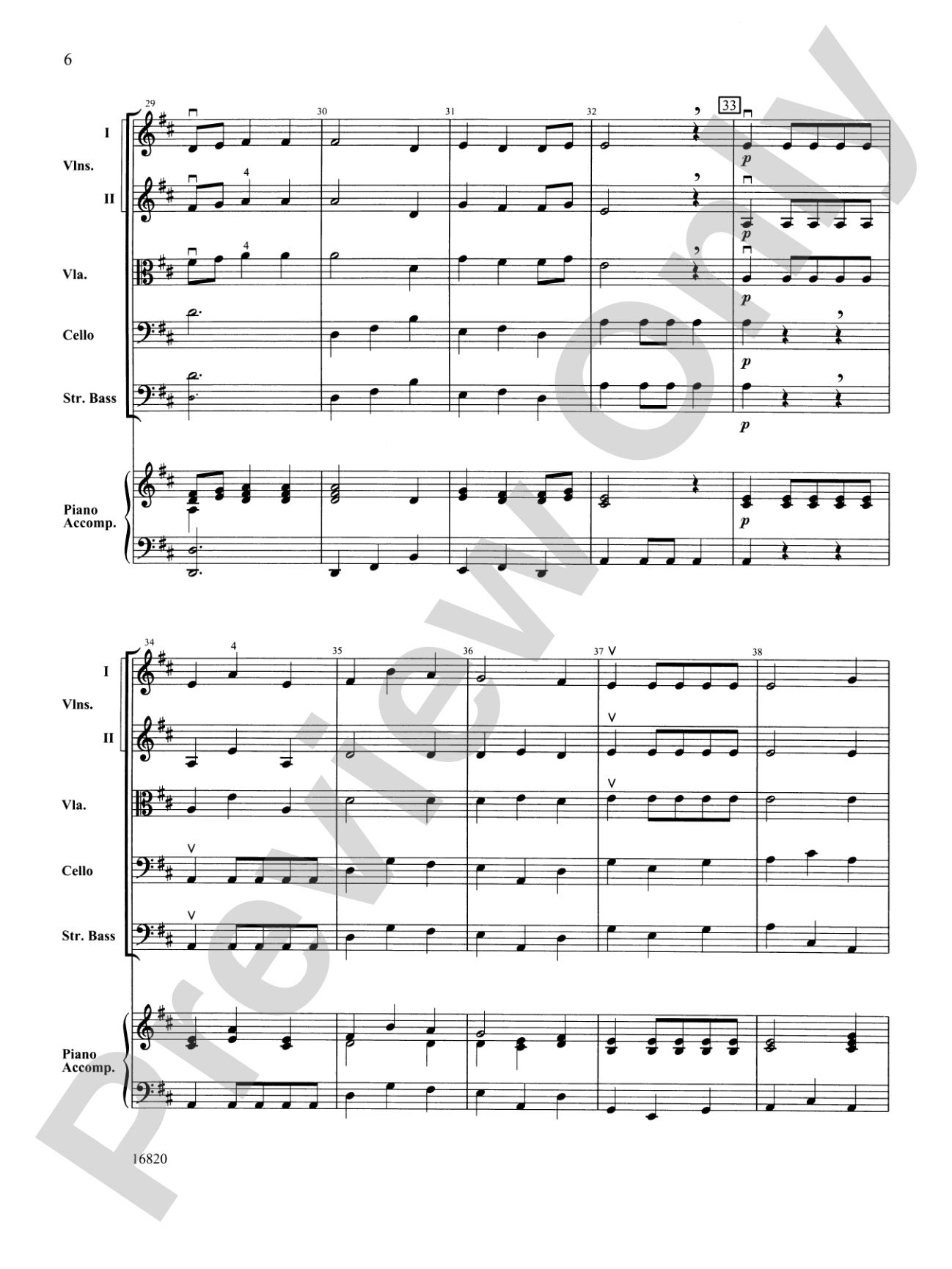
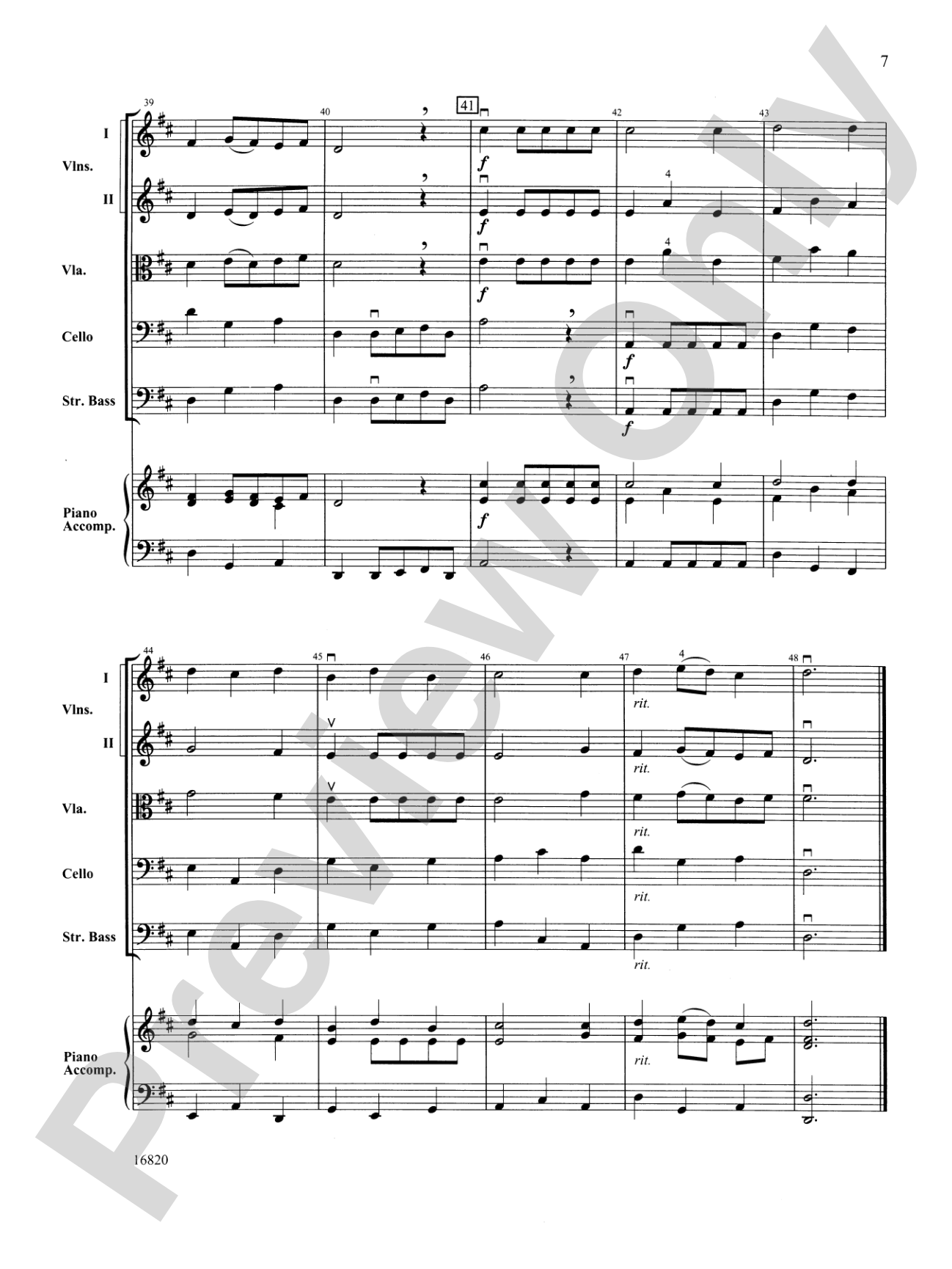


Minuet from Water Music: String Orchestra Conductor Score & Parts
Arr. Mark Williams
Grade: 1
Item: 00-PK-0000198

$46.00
Pickup currently not available
Buy Extra Parts (Digital PDF Download)
| Product | Price | Quantity |
|---|---|---|
| Minuet from Water Music: Score | $8.00 | |
| Minuet from Water Music: 1st Violin | $5.99 | |
| Minuet from Water Music: 2nd Violin | $5.99 | |
| Minuet from Water Music: Viola | $5.99 | |
| Minuet from Water Music: Cello | $5.99 | |
| Minuet from Water Music: String Bass | $5.99 | |
| Minuet from Water Music: Piano Accompaniment | $5.99 |
Parts Added to Cart!
Description
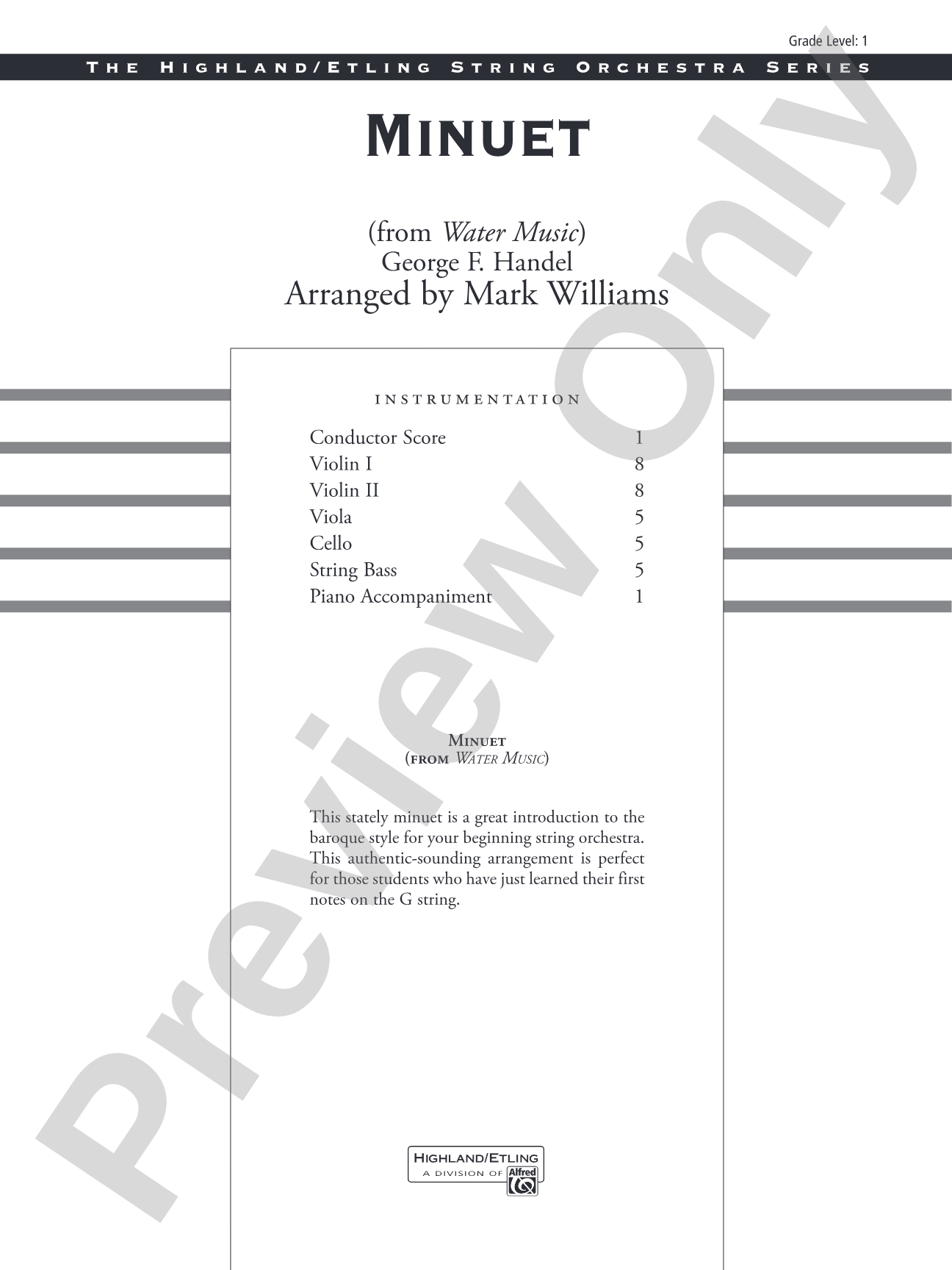
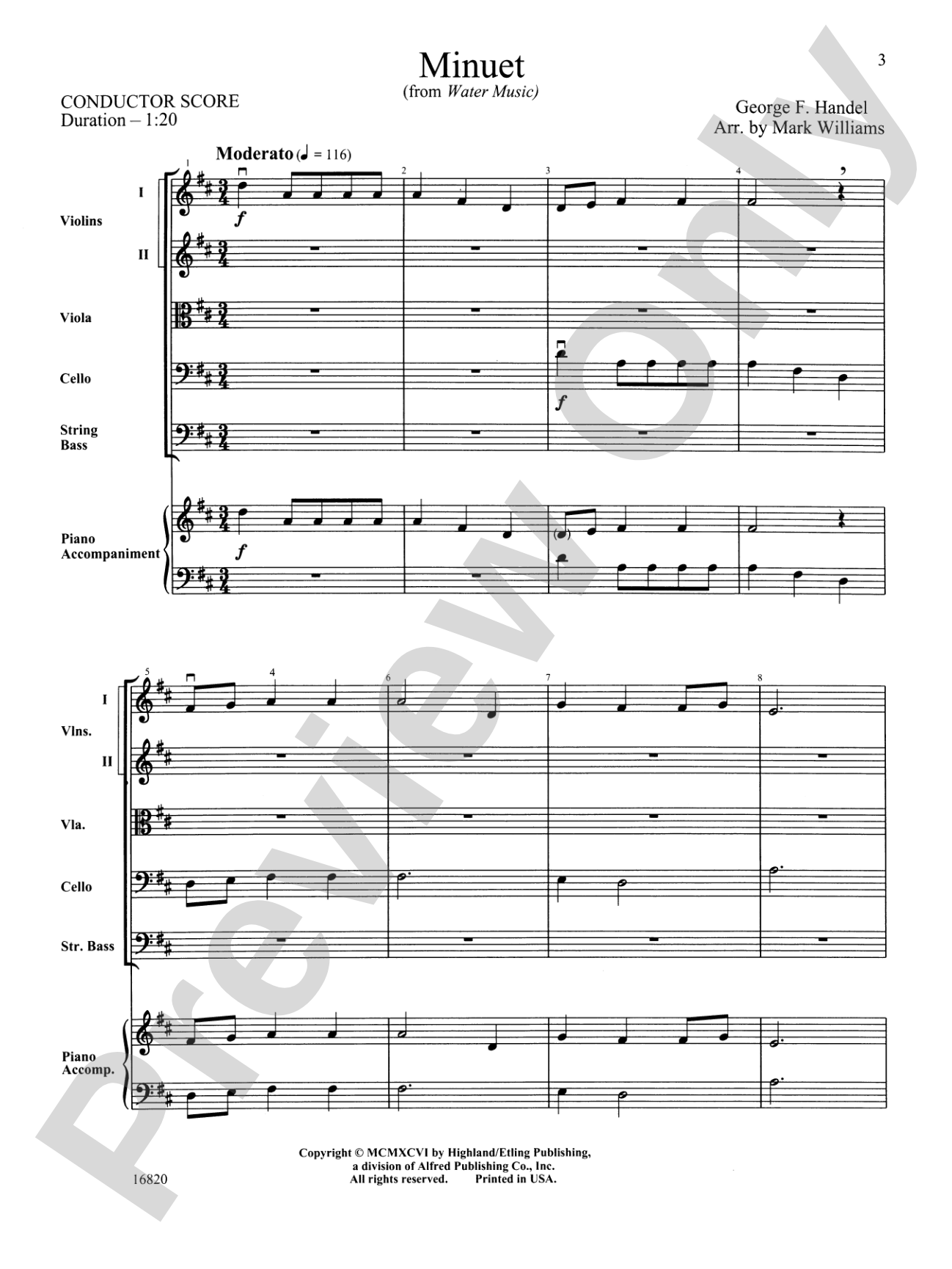
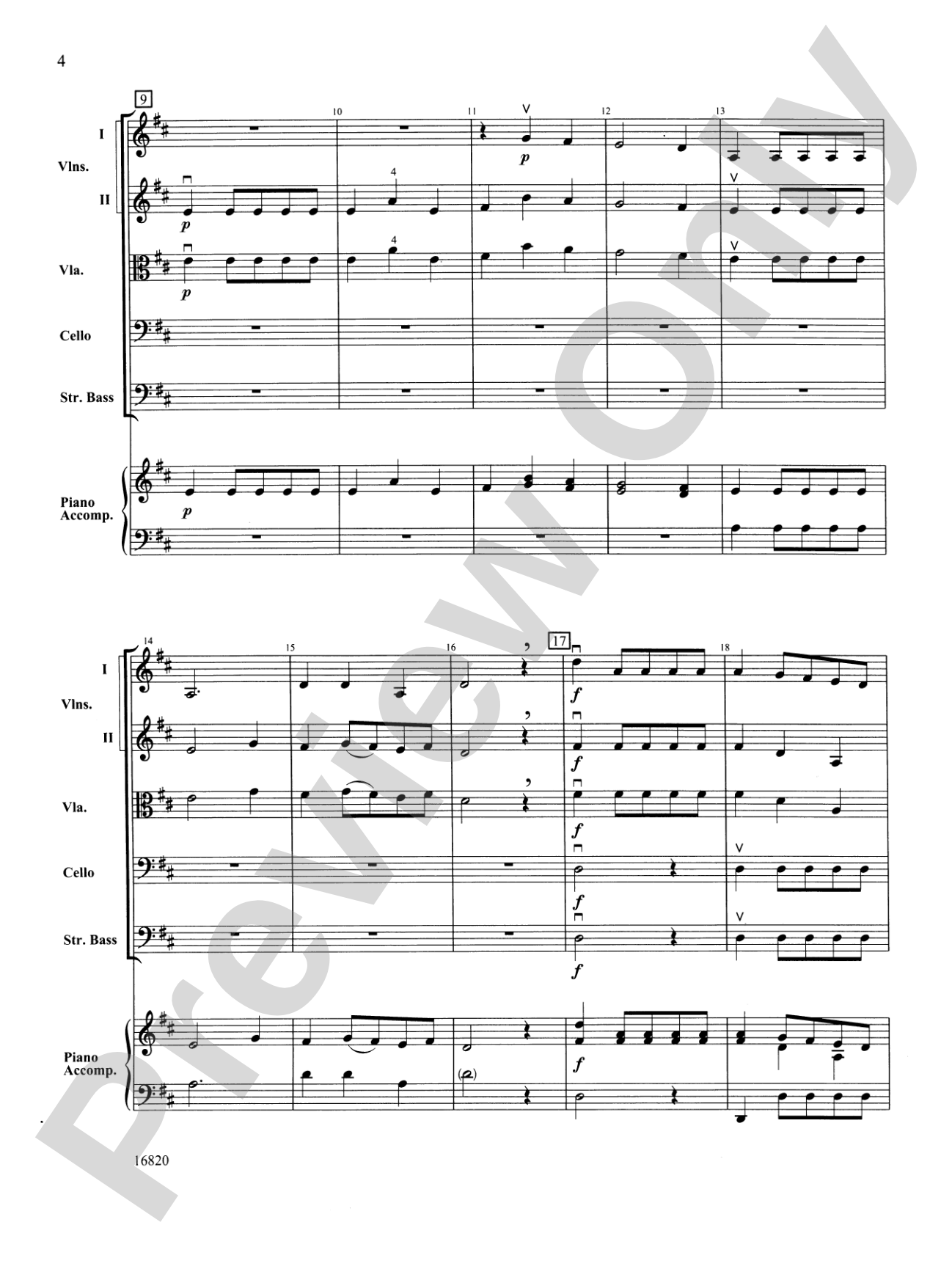
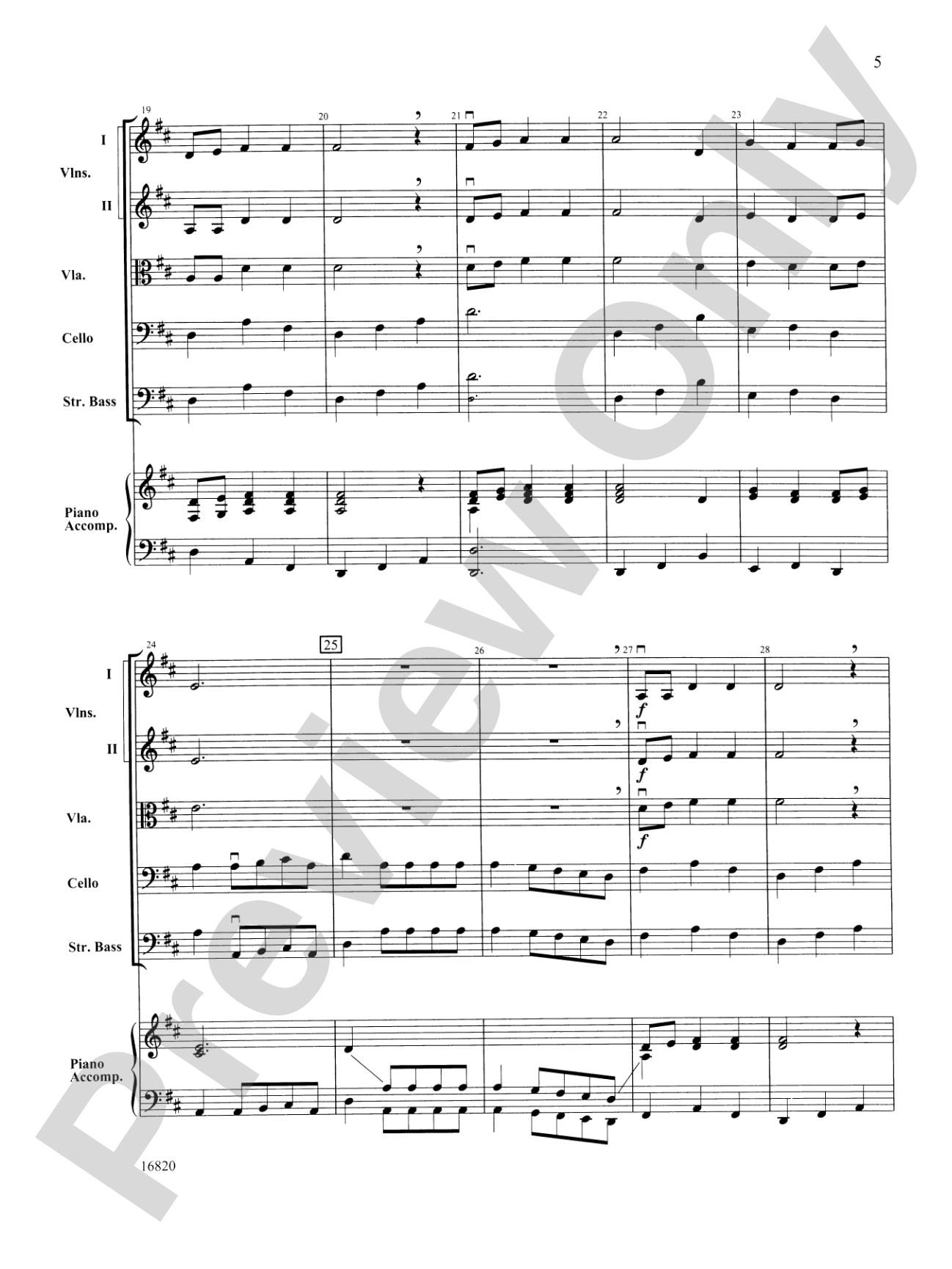
This stately minuet is a great introduction to the Baroque style for your beginning string orchestra. This authentic-sounding arrangement is perfect for students who have just learned their first notes on the G string. (Grade 1 - Correlates with Strictly Strings, Book 1, page 26) This title is available in MakeMusic Cloud.


Don't just read it, hear it, play along with it, and watch your students grow with it. In MakeMusic Cloud, Minuet from Water Music: String Orchestra Conductor Score & Parts comes alive with professional accompaniment, adjustable tempo, and built-in practice tools that turn solo practice into real progress.
Open in the Player
Jump straight in and assign it today.
Start Your Free Trial
Open this title and explore the full library in minutes.
Sample Audio
1
Audio File
--:--
0:00
0:00
Sample Video
No sample videos found.
Additional Details
Series:
Highland/Etling Strictly Strings
Publisher:
Alfred Music
Page Count:
33
SKU:
00-PK-0000198
More about this title
About the Arranger: Mark Williams

Mark Williams built his reputation as a prolific voice in school music, composing and arranging over 200 works for young musicians across multiple ensembles. A Chicago native who spent his career in Washington state, he earned degrees from Eastern Washington University and became known for his keen understanding of what beginning and intermediate students could achieve. His work as a clinician, guest conductor, and woodwind performer took him across North America and to Australia, while his role as arranger for the 560th Air Force Band deepened his skill in adapting music for varied instrumentation.
Beyond his compositional output, Williams received recognition from the Western International Band Clinic and multiple ASCAP awards for his contributions to band, orchestra, and choral music. He performed regularly on bassoon and served as conductor and artistic director for the Spokane British Brass Band, bringing his expertise in both contemporary educational music and classical repertoire to audiences throughout his career.
Why we love this
Williams has crafted an arrangement that respects the elegance of the original while meeting your beginning string players exactly where they are. The writing sits comfortably on the G string and opens the door to Baroque phrasing without overwhelming rhythmic or technical demands, making it an ideal stepping stone between unison exercises and more varied string technique.
What to expect
Stately and graceful, this minuet captures the restrained elegance of the Baroque court without pretension. There is clarity and order in every measure, yet the melody sings with quiet dignity, inviting young players to discover that good music need not be complicated to be beautiful.
Who it's for
String orchestra directors working with beginning students who have mastered their first open string exercises and are ready to apply that foundation to a recognizable masterwork. This arrangement works equally well for students using Strictly Strings Book 1 or as a standalone introduction to Baroque style and phrase structure.
How to get the most out of it
- Shape the phrases with gentle dynamics rather than sudden shifts; Baroque minuets breathe in two or four measure units, so encourage your section leaders to listen for those natural phrase points.
- Keep the tempo steady and light to maintain the minuet's courtly character; a tempo around 120-132 BPM typically works well for this Grade 1 version.
- Balance the melody clearly without letting it dominate; the supporting voices in this arrangement carry important harmonic color that young players need to hear as they develop ensemble awareness.
How to use it
Include this on an early-season concert to showcase how quickly young string players advance from foundational exercises to recognizable repertoire; it also pairs naturally with other Grade 1 arrangements to demonstrate stylistic variety. Consider programming it as the opening of a Baroque-themed set or as a bridge piece between a classical listening segment and more contemporary student compositions.
Skills your students will build
- Sustaining tone and bow control on open strings
- Reading and executing phrase markings in Baroque style
- Listening for harmonic balance within an ensemble
- Maintaining steady tempo as part of an organized group
- Understanding basic Baroque character and performance conventions