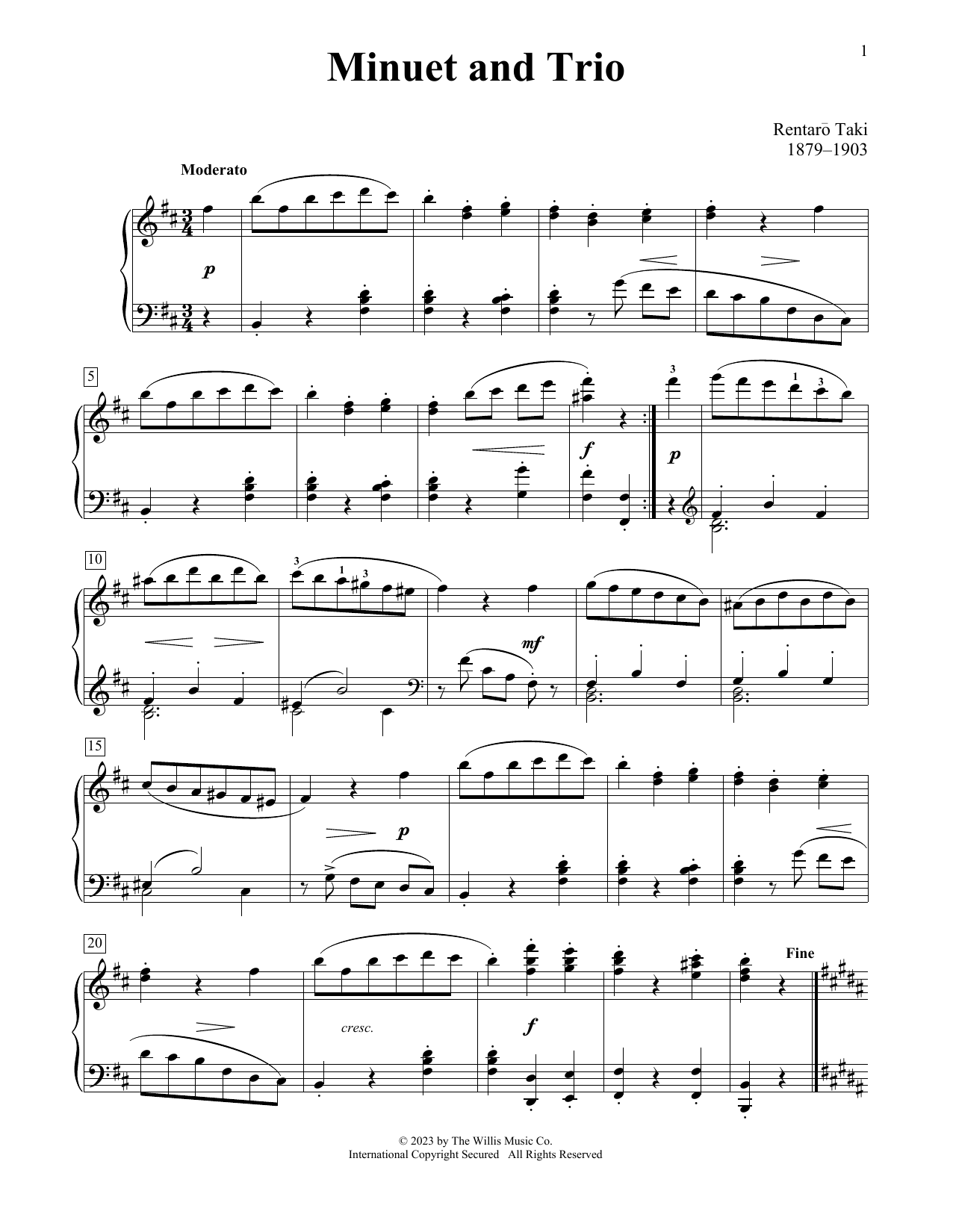
The minuet and trio form offers students a clear structural blueprint: two distinct melodic ideas, contrasting characters, and the satisfaction of returning to familiar material. At two pages, it fits perfectly into a practice routine without becoming overwhelming, making it an ideal stepping stone between elementary repertoire and more substantial classical works.
What to expect
Graceful and ordered, with the mannered elegance of the ballroom. The minuet carries itself with poise; the trio offers lighter texture and often warmer colors before the original theme reclaims the stage.
Who it's for
Early intermediate pianists who have mastered basic major and minor scales and are ready to tackle formal structures. Students benefit from exposure to the minuet and trio format, a foundational architecture in classical music.
How to get the most out of it
Shape the minuet melody with gentle dynamic contours; avoid playing it as a series of even notes. The courtly character emerges through subtle phrasing.
Create textural clarity between hands by allowing the left hand to sit slightly back while the right hand carries the melodic voice forward.
Mark the return to the minuet after the trio with a fresh sense of arrival, as if hearing the theme anew rather than as mere repetition.
How to use it
Include this in a recital that surveys classical forms, or use it as a bridge piece between a sonatina and a longer multi movement work. It also serves well as a standalone piece when your program calls for something brief and charming.
Skills your students will build
Understanding ternary form (ABA structure)
Maintaining evenness and independence between hands
Articulation control and dynamic shaping in a melodic line
Recognizing and executing period-appropriate phrasing
Steady rhythmic clarity in accompaniment patterns
You May Also Like
Scan to Complete Your Purchase
Use your phone's camera to scan the code below
You'll log in on your phone and the order will be added to your account