Minor Major March: 2nd B-flat Clarinet Sheet Music Preview

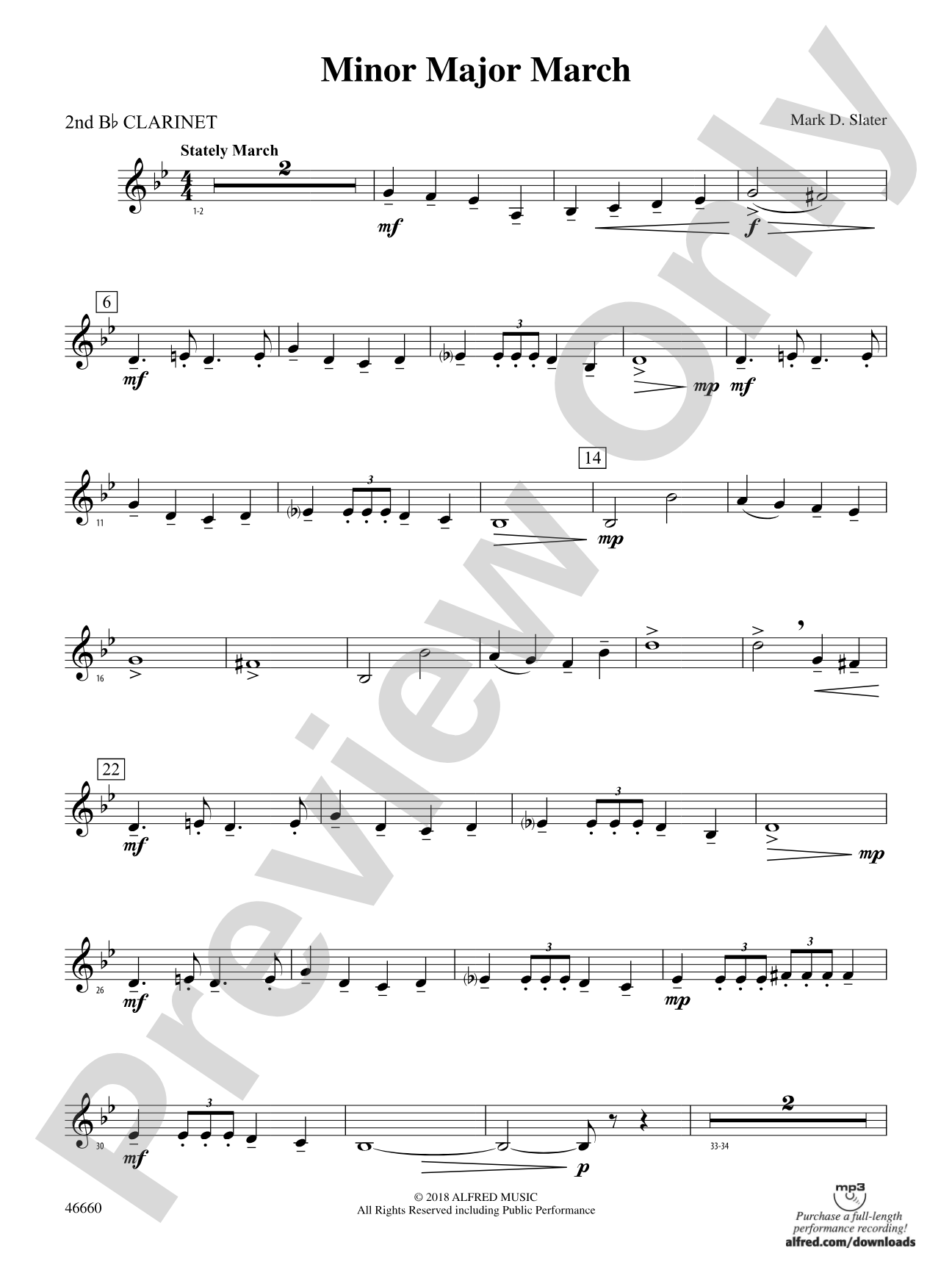
Minor Major March: 2nd B-flat Clarinet

By Mark D. Slater

Grade: 2 (Medium Easy)

Item: 00-PC-0018090_C2

Digital Download
$3.00
Description
A march written predominately in a minor key? Crazy! This unique and fun-to-play march explores the tonal centers of F minor and D-flat major. Chock-full of rhythmic and dynamic elements, this is a great teaching piece that will be an exciting component of any concert or contest program.

Don't just read it, hear it, play along with it, and watch your students grow with it. In MakeMusic Cloud, Minor Major March: 2nd B-flat Clarinet comes alive with professional accompaniment, adjustable tempo, and built-in practice tools that turn solo practice into real progress.

Sample Audio
0:00
0:00
Sample Video
Additional Details
Series: Young Symphonic
Publisher: Alfred Music
Page Count: 184
SKU: 00-PC-0018090_C2

More about this title

Why we love this

Slater takes a structural risk by building a march around minor tonality, which immediately sets this apart from the standard repertoire. The balance between F minor and D-flat major keeps the harmonic landscape interesting without overwhelming Grade 2 players, and the rhythmic and dynamic demands give your band genuine material to sink their teeth into without excessive difficulty.

What to expect

A march that feels slightly angular and modern because of its minor-key foundation, yet remains approachable and straightforward rhythmically. The contrast between F minor's darker character and the brightness of D-flat major creates a dynamic narrative arc that keeps listeners engaged throughout.

Who it's for

Bands at the Grade 2 level who have solid intonation and can navigate chromatic passages with confidence. This march works equally well for concert and contest settings, making it a practical choice for directors building a program that needs both polish and educational substance.

How to get the most out of it

  • Establish the F minor tonality early in rehearsal. Have the full band play the opening statement together several times before sectionals, so everyone hears the harmonic center even when playing their individual parts.
  • Shape the dynamic transitions deliberately. Slater includes frequent dynamic shifts; mark these clearly on your parts and have students hold through the full dynamic value rather than rushing the change.
  • Balance the low voices when D-flat major sections arrive. The tonal shift to the relative major can feel muddy if basses and trombones aren't prominent enough to anchor the new harmonic area.

How to use it

Open a concert with this piece to signal that your band tackles unconventional harmonic territory with confidence. Its length and complexity make it substantial enough to carry weight on a festival or competition schedule, and the march genre ensures clear structure for judges or audiences.

Skills your students will build

  • Reading and intonating in minor tonality (F minor)
  • Managing sudden harmonic shifts between F minor and D-flat major
  • Executing precise dynamic changes and rhythmic articulation
  • Balancing sectional roles in a multi-section form
  • Maintaining march tempo and style through contrasting tonal regions

You May Also Like