Minor Chant: 1st Trombone Sheet Music Preview

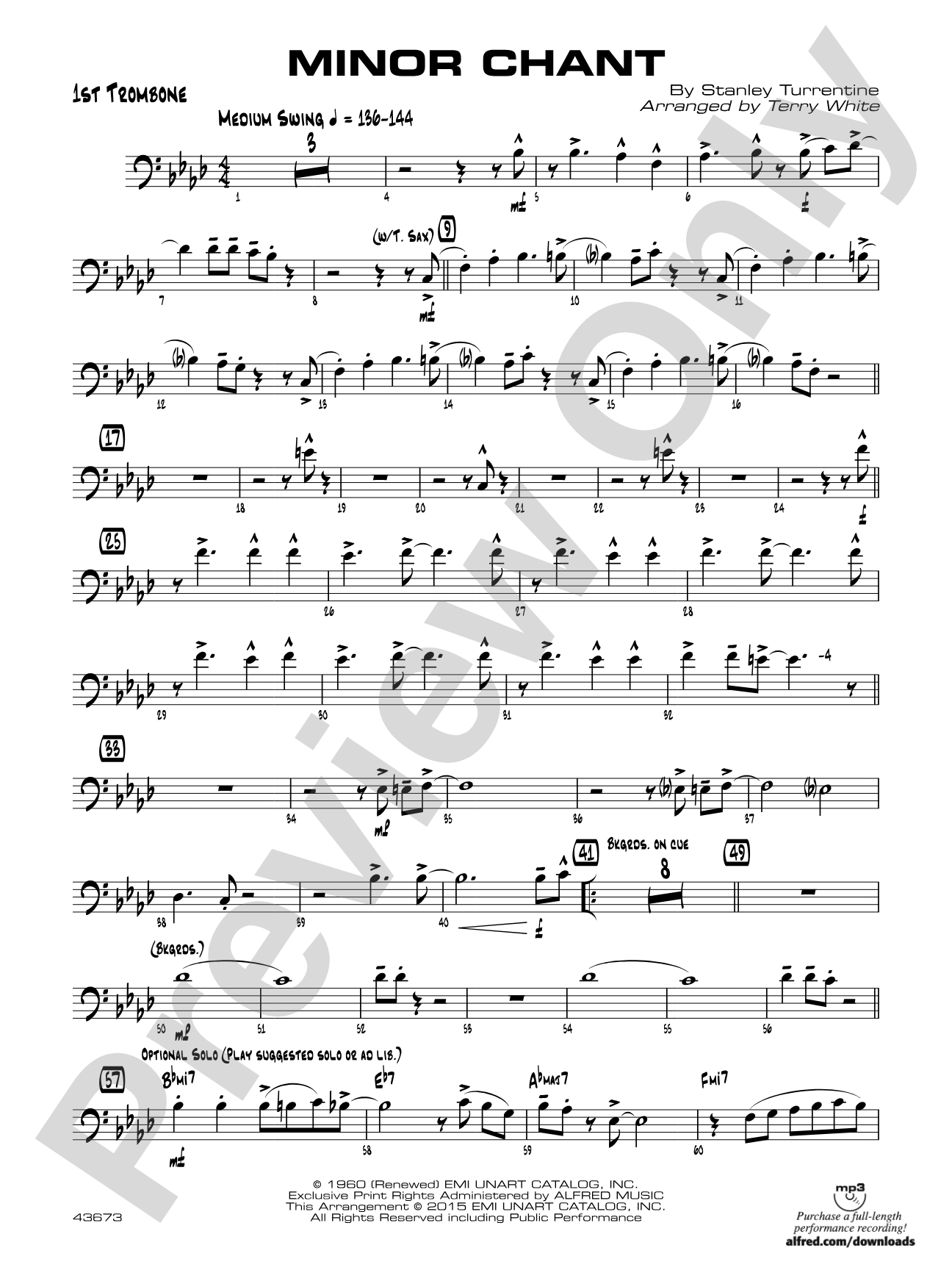
Minor Chant: 1st Trombone

By Stanley Turrentine / arr. Terry White

Grade: 2 (Medium Easy)

Item: 00-PC-0016813_TN1

Digital Download
$3.00
Description
Minor Chant, arranged by Terry White, is a medium swing chart that is played at 140 BPM with the melody handled by tenor 1 and trombone 1. There are written solos for alto, tenor, trumpet, and trombone. Featuring great dynamic contrasts and a nice shout chorus, your band will enjoy this fine arrangement. (4:18)

Don't just read it, hear it, play along with it, and watch your students grow with it. In MakeMusic Cloud, Minor Chant: 1st Trombone comes alive with professional accompaniment, adjustable tempo, and built-in practice tools that turn solo practice into real progress.

Sample Audio
0:00
0:00
Sample Video
Additional Details
Series: Young Jazz Ensemble
Publisher: Alfred Music
Page Count: 102
SKU: 00-PC-0016813_TN1

More about this title

About the Composer: Stanley Turrentine

Stanley Turrentine was a tenor saxophonist and composer whose career spanned from the 1950s through the early 2000s. Known for his soulful, blues-inflected tone and ability to bridge soul jazz, hard bop, and funk styles, Turrentine became one of the most recorded saxophonists in jazz history, leading his own groups and collaborating with major artists across multiple decades.

Turrentine's compositions are prized in jazz education for their accessibility and strong melodic content. His writing balances sophistication with approachability, making his pieces ideal for developing ensembles learning to navigate swing feel, solo phrasing, and ensemble interplay.

Why we love this

Terry White's arrangement captures the soul and groove of Turrentine's original while maintaining Grade 2 accessibility for developing ensembles. The built-in solo vehicles for four different instruments give multiple players meaningful opportunities to shine, and the dynamic range from laid-back sections to a full shout chorus keeps rehearsals and performances engaging without demanding virtuosity beyond reach.

What to expect

Minor Chant has the warmth and accessibility of classic soul jazz, built on a minor harmonic foundation that gives the melody a contemplative, soulful character. The arrangement moves gracefully between intimate solo moments and a driving, celebratory ensemble shout, creating a performance arc that feels both sophisticated and genuinely fun.

Who it's for

This arrangement suits developing jazz ensembles (high school, middle school, or serious community groups) with players at early to intermediate levels. It works equally well for groups just developing their swing vocabulary and those ready to add more expressive arranging color to their repertoire.

How to get the most out of it

  • Establish a relaxed swing feel at 140 BPM in early rehearsals by having the rhythm section lock the pulse first, then add horns phrase by phrase rather than jumping to full section sound.
  • Balance the tenor 1 and trombone 1 melody line so both voices blend equally; the melody's strength depends on the partnership between these two voices.
  • Give soloists space to breathe during their feature passages. Younger improvisers often rush; support them with a steady, unflinching rhythm section underneath.
  • Shape the shout chorus with clear dynamic building across phrases. Use section dynamics and articulation cues in rehearsal to create the lift and energy the arrangement asks for.

How to use it

Program this as a mid-set closer or festival selection where its combination of musicality and accessibility serves as a strong showcase for ensemble development. It pairs well alongside blues-based charts or more contemporary swing pieces, showing a band's command of authentic jazz language without requiring advanced technical demands.

Skills your students will build

  • Swing subdivision and relaxed phrasing in a minor tonality
  • Solo construction and melodic improvisation across different instruments
  • Ensemble balance and blend between saxophone and trombone sections
  • Dynamic contrast and ensemble shaping in arranged sections
  • Listening and responding within a rhythm section-led framework

You May Also Like