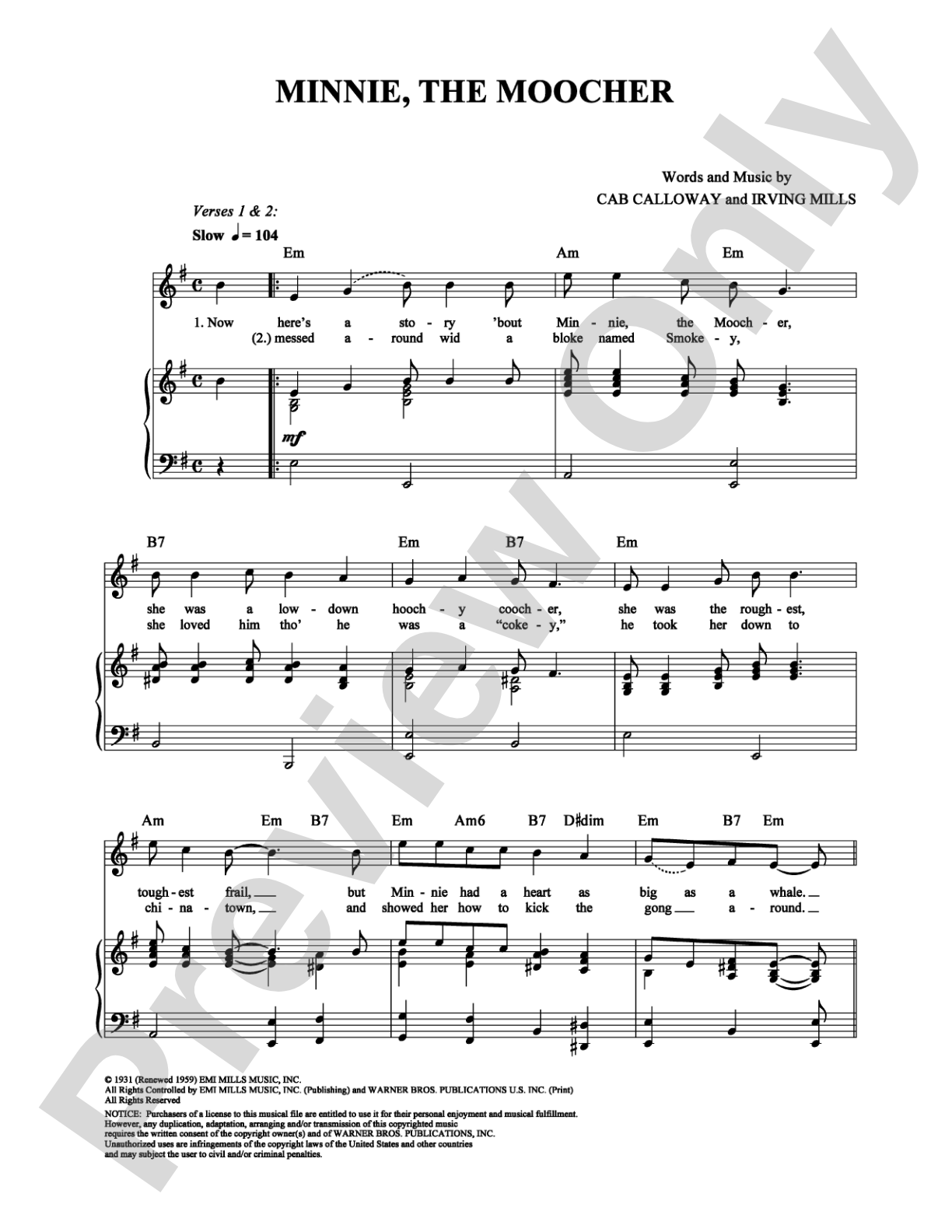
Minnie, the Moocher: Piano/Vocal/Chords Digital Sheet Music

Minnie, the Moocher: Piano/Vocal/Chords Digital Sheet Music

Irving Mills, Cab Calloway

Item: 00-PS-0009070

Digital Download
$3.99
Description

Minnie, the Moocher: Piano/Vocal/Chords Digital Sheet Music isn't in MakeMusic Cloud just yet...but it could be. Let us know you'd like to see it, and you'll help shape what comes next. In the meantime, start a free trial and dive into thousands of interactive titles your students can play along with today.

Sample Audio
No sample audio found.
Sample Video
Additional Details
SKU: 00-PS-0009070

More about this title

About the Creator: Cab Calloway, Irving Mills

"Minnie the Moocher" emerged from the creative partnership of Irving Mills and Cab Calloway in 1930, becoming one of the most iconic novelty songs of the jazz age. Calloway's signature hi-de-ho scat vocals and infectious energy transformed the piece into a showstopper that defined an era of American popular music.

The song remains a masterclass in character work and comedic timing. Its enduring appeal lies in the perfect marriage of cheeky lyrics, memorable melody, and rhythmic vitality that captures the playful spirit of early swing.

Why we love this

This standard belongs in every jazz vocalist's book, and the piano/vocal/chords format gives singers and accompanists exactly what they need to interpret it their own way. The piece has genuine theatrical flair without requiring a full ensemble, making it accessible for recitals, cabaret programs, or classroom performance.

What to expect

This tune carries the smoky, knowing warmth of a New York nightclub, with a melody that sits comfortably in the voice and enough harmonic interest to keep pianists engaged. It's playful and slightly wry, with the kind of character-driven storytelling that rewards committed interpretation.

Who it's for

Jazz singers and pianists preparing a solo recital or cabaret performance will find this an essential standard to have at hand. It also works for musicians teaching jazz history or exploring the Great American Songbook in a classroom setting.

How to get the most out of it

  • Treat the piano part as a conversation partner, not just a timekeeper. The comping figures should breathe with the vocal line and respond to interpretive choices the singer makes.
  • Lean into the rhythmic swagger of the melody. This tune asks for a relaxed, almost conversational delivery, so avoid rushing the phrasing.
  • Use the chord symbols to find your harmonic palette as a pianist. Don't feel locked into a single voicing; explore what sounds natural and supports the story the lyric is telling.
  • Singers should own the character. The song works best when you're telling the story rather than just hitting the notes.

How to use it

Program this in a jazz or standards-focused recital, or pair it with other tunes from the same era to build a cabaret-style set. It also fits well in a unit on American songwriting history or as an accessible entry point for singers learning to interpret jazz repertoire.

Skills your students will build

  • Interpreting jazz phrasing and articulation
  • Comping flexibility and harmonic awareness for accompanists
  • Reading and realizing chord symbols
  • Storytelling and character interpretation in song

You May Also Like