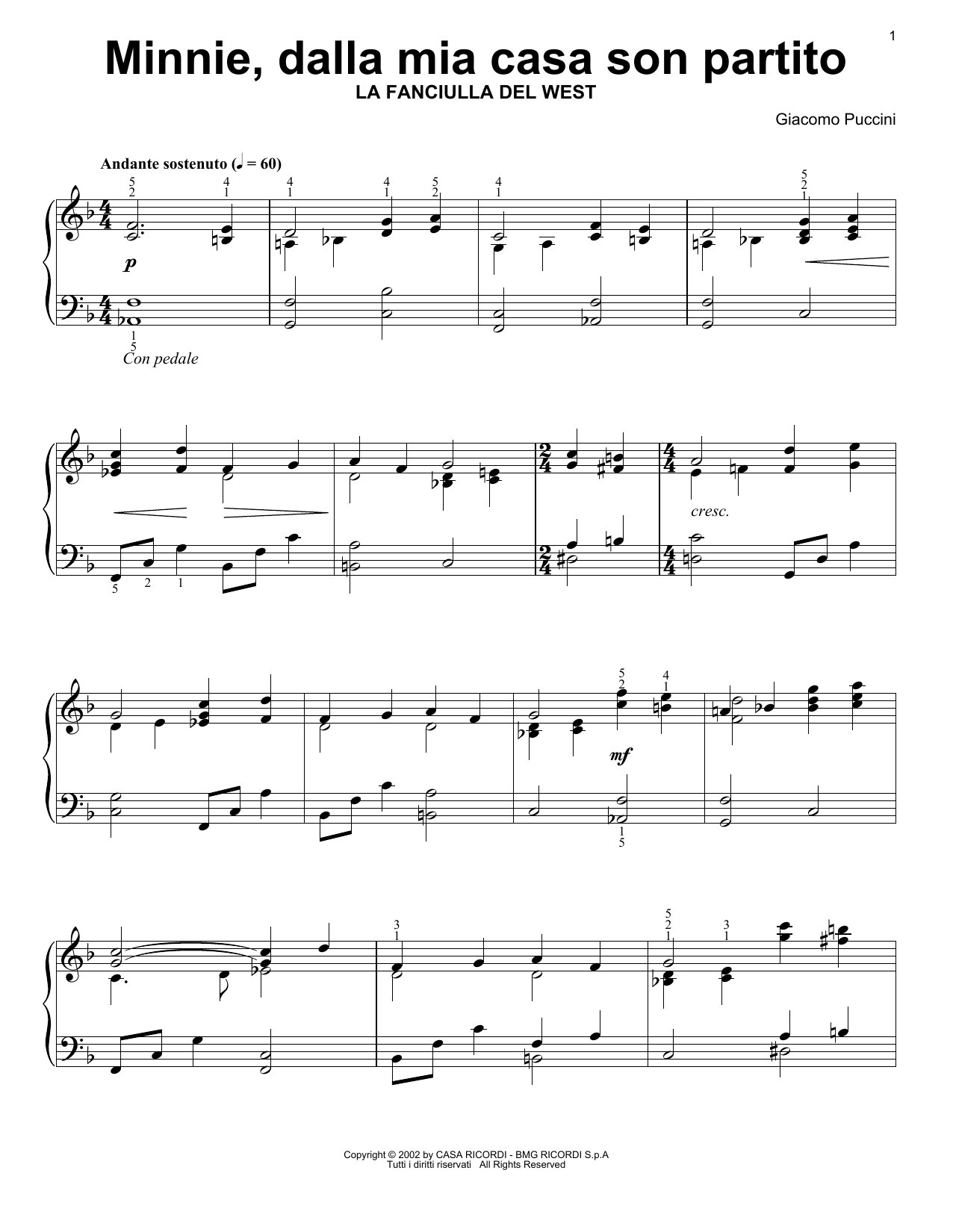
Minnie, Dalla Mia Casa Son Partito Sheet Music Preview

Minnie, Dalla Mia Casa Son Partito: Easy Piano Solo

By Giacomo Puccini

Item: 35-DS00478681

Digital Download
$4.99
Description

Discover MakeMusic Cloud: thousands of interactive titles your students can play along with today.

Sample Audio
No sample audio found.
Sample Video
Additional Details
Publisher: Hal Leonard
Page Count: 2
SKU: 35-DS00478681

More about this title

About the Composer: Giacomo Puccini

Giacomo Puccini (1858–1924) shaped late Romantic opera through his gift for melody and dramatic orchestration. His operas, including La Bohème, Tosca, and Madama Butterfly, remain staples of concert halls worldwide because of their emotional directness and unforgettable vocal lines.

For pianists and music students, Puccini's work offers direct access to operatic voice leading and harmonic language. This aria from La fanciulla del West (The Girl of the Golden West) demonstrates how he crafted singable, memorable melodies that translate beautifully to the keyboard.

Why we love this

Opera arrangements for piano often feel thin or overly simplified, but this version preserves the lyrical sweep of Puccini's writing without demanding virtuosity. Students get to inhabit the emotional world of a major operatic moment while developing genuine musicianship rather than just technique.

What to expect

Warmth mixed with yearning. The melody unfolds with the kind of effortless beauty that makes Puccini unforgettable, carrying the weight of homesickness and longing without a trace of sentimentality. Every phrase breathes like a singer taking in air between phrases.

Who it's for

Intermediate pianists ready to step beyond etudes into operatic repertoire. Classroom musicians studying Puccini or late Romantic opera will find this accessible yet authentic. It works equally well for recital programming or as a supplementary listening score in a music history unit.

How to get the most out of it

  • Shape the melody in long phrases rather than measure by measure. Think of singing through the entire line, letting dynamic peaks and valleys emerge naturally from the text Puccini set.
  • Balance melody and accompaniment so the left hand supports without overwhelming. The opera's full orchestration sits behind this aria; your role is to suggest that weight without burying the tune.
  • Lean into rubato at phrase endings. Puccini expected singers to breathe and hover slightly on cadences, and pianists should honor that same expressiveness.

How to use it

Pair this with other Puccini keyboard arrangements to build a short operatic recital set, or program it alongside Romantic-era art song to show students how melody functions across vocal and instrumental contexts. It also serves as an excellent bridge piece for students transitioning from classical to late Romantic harmonic language.

Skills your students will build

  • Singing style legato playing and sustaining long melodic lines
  • Operatic phrase shaping and respiration in instrumental music
  • Balancing melody and accompaniment texture
  • Understanding late Romantic harmonic language and functional harmony
  • Interpretive rubato and expressive timing

You May Also Like