
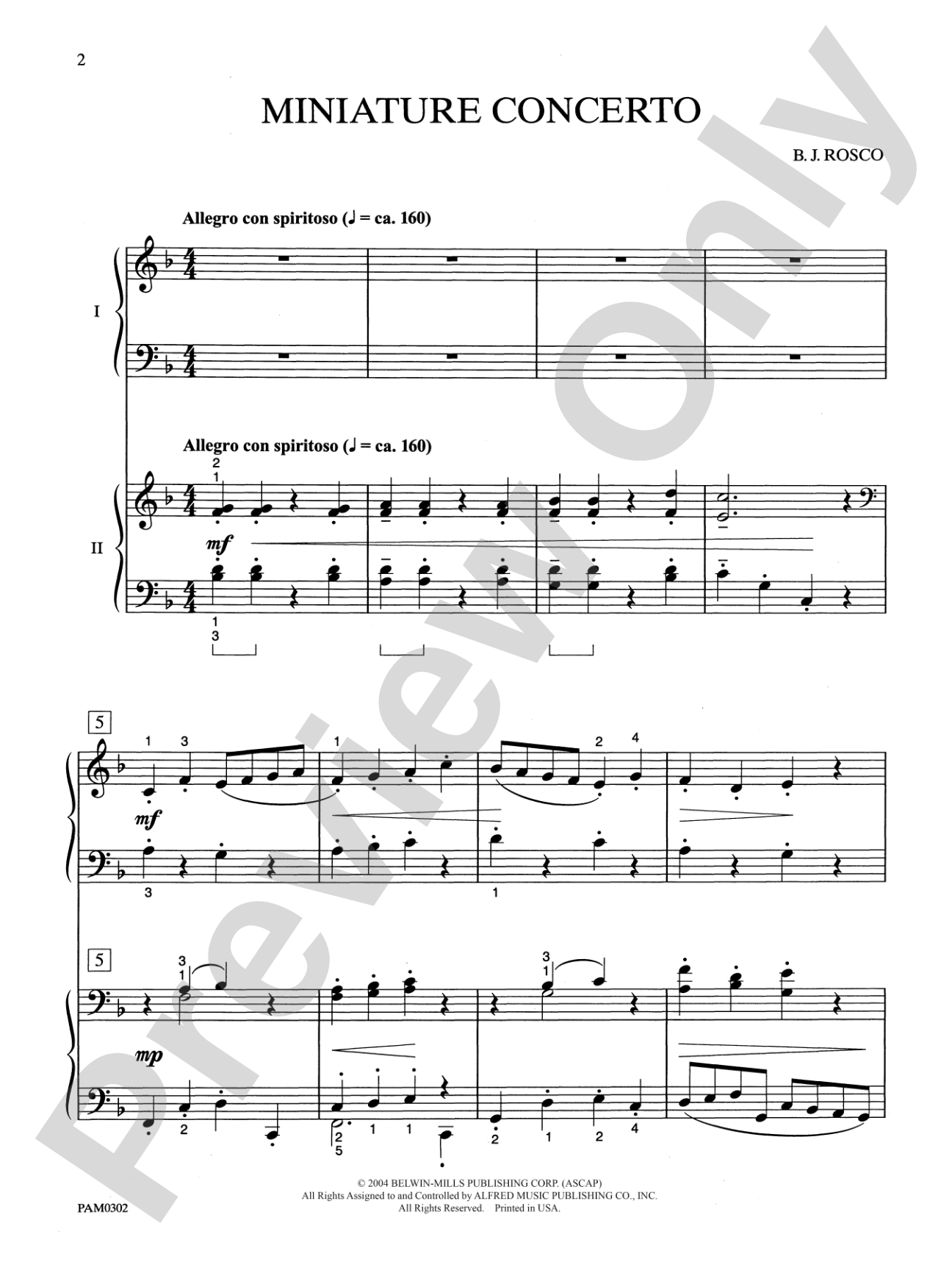
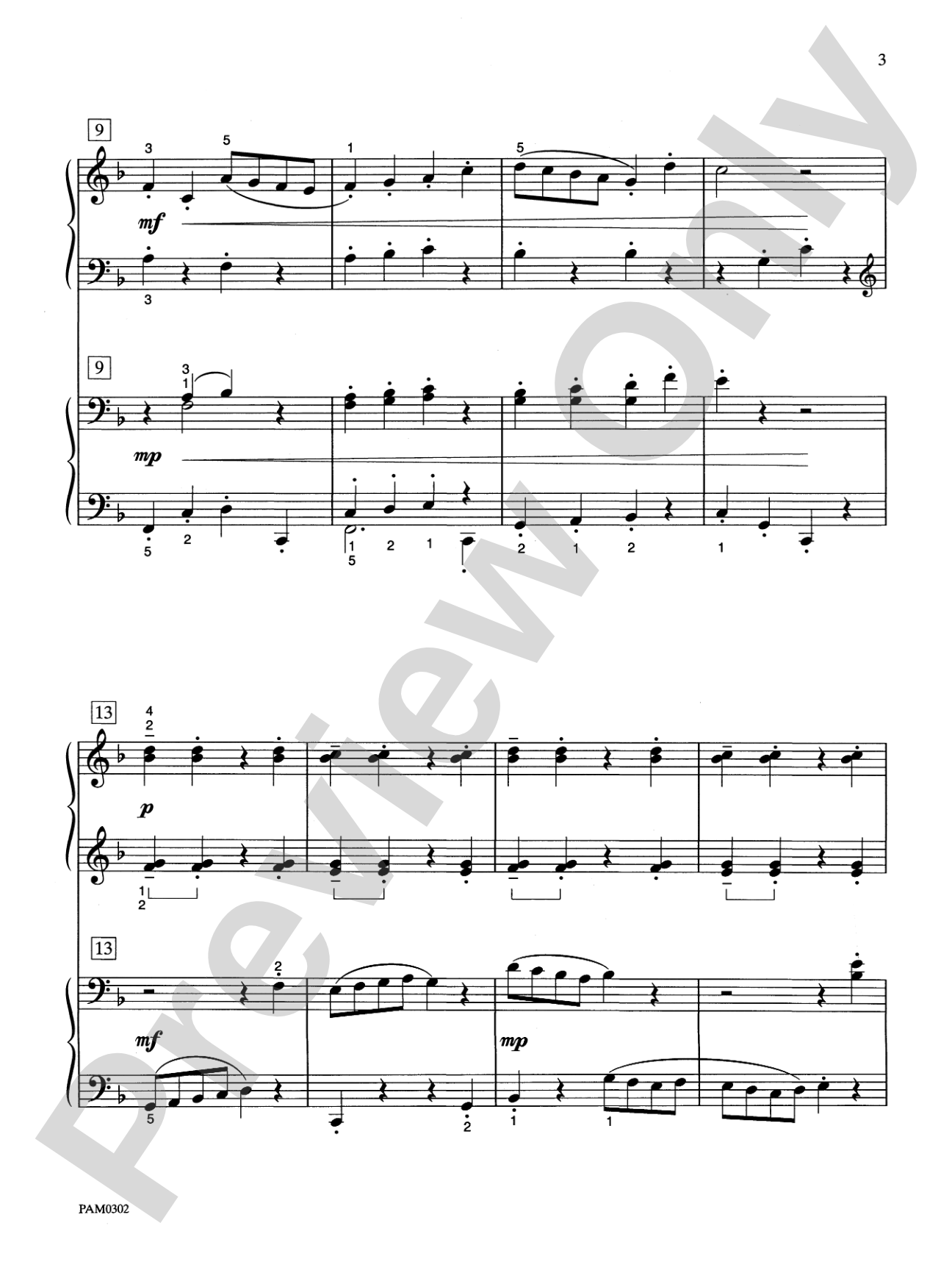
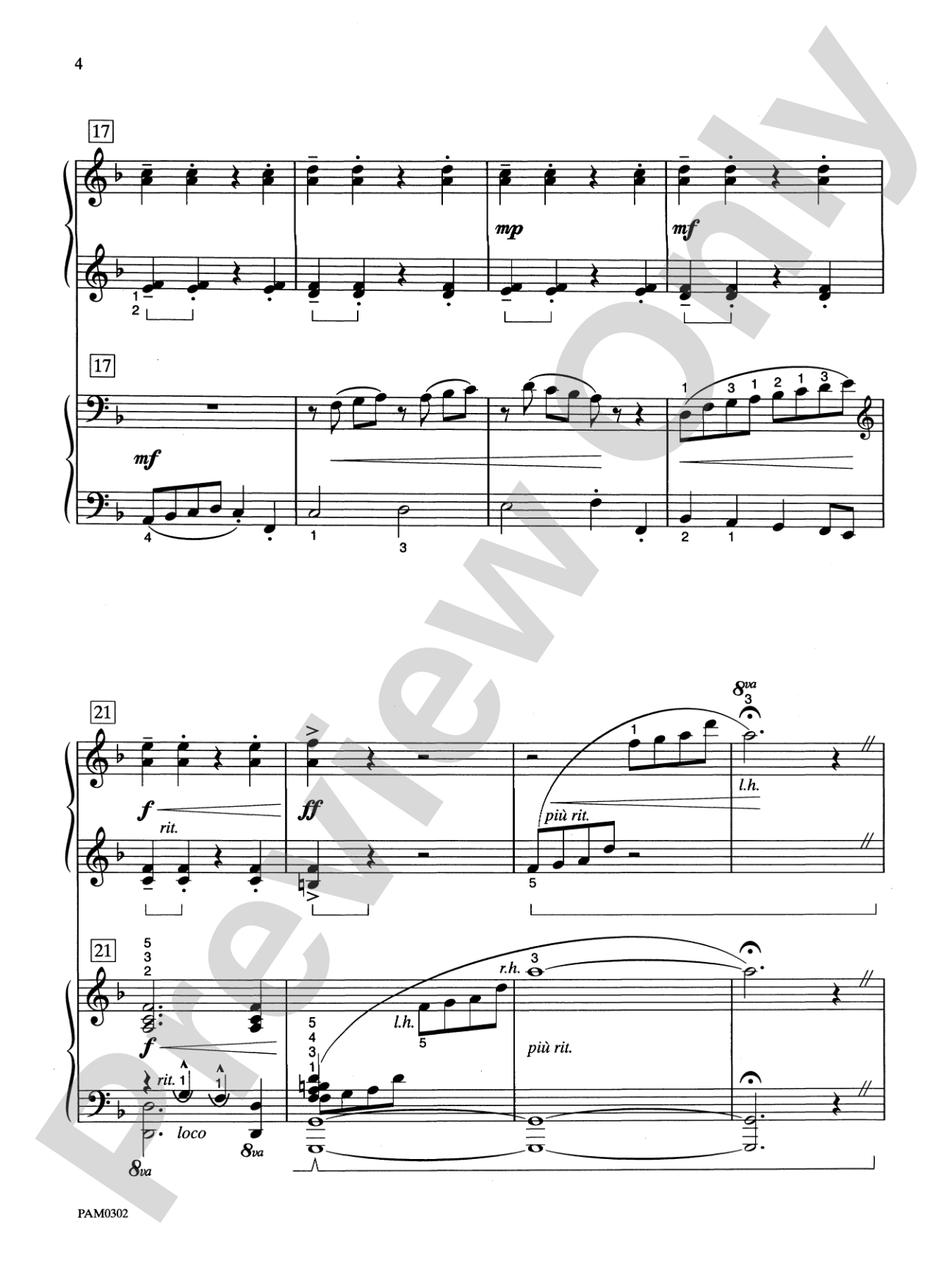
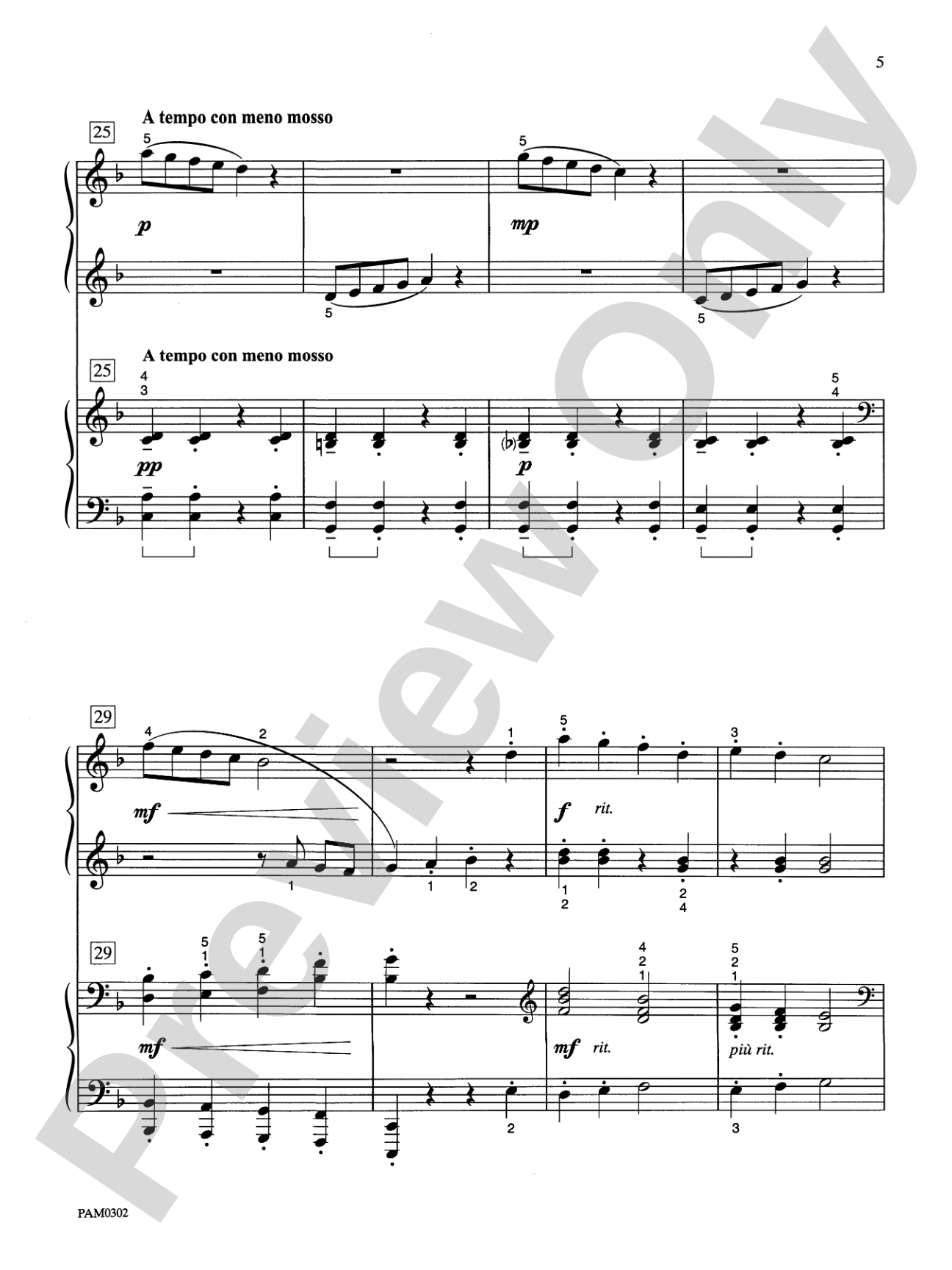
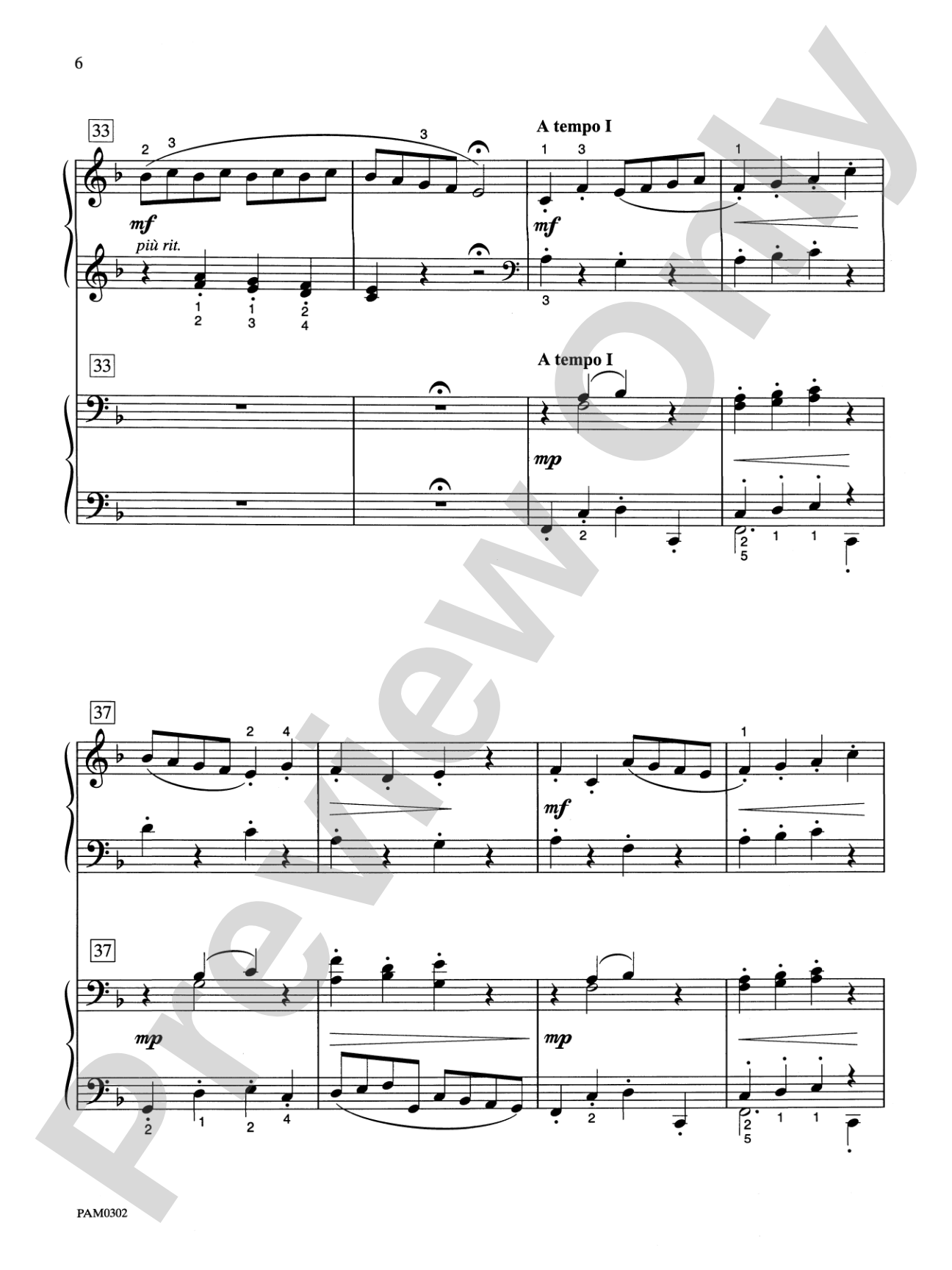
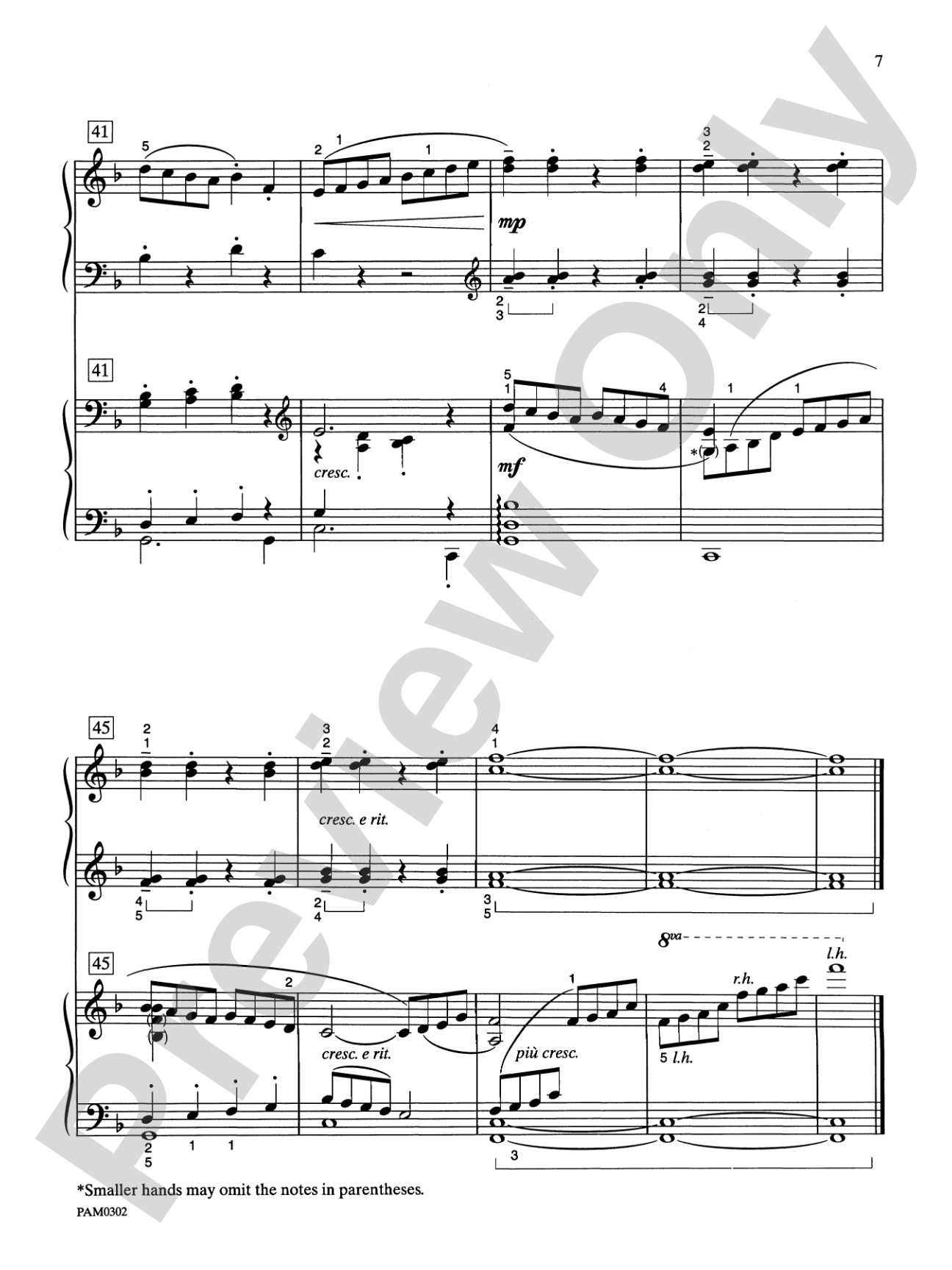
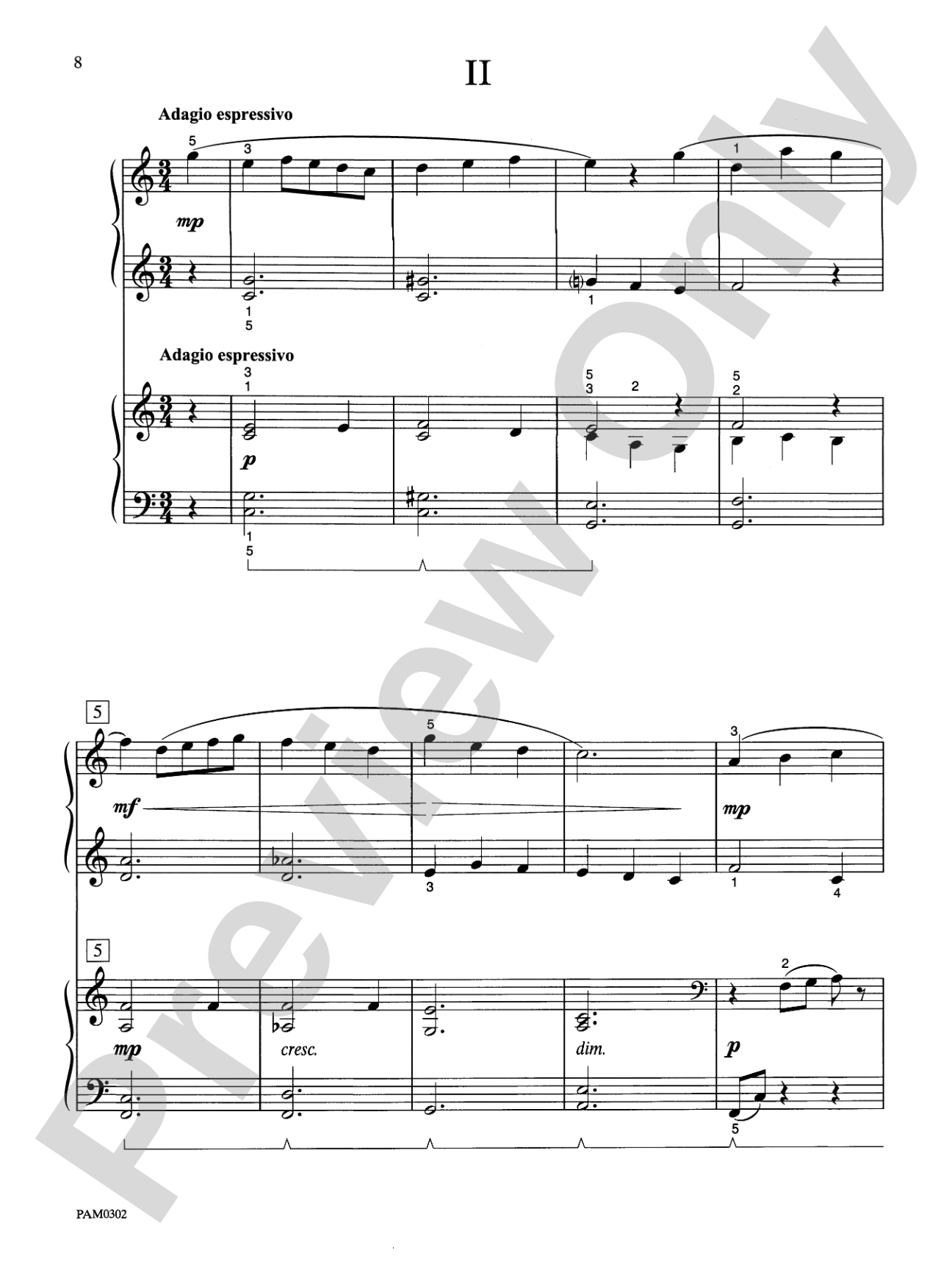
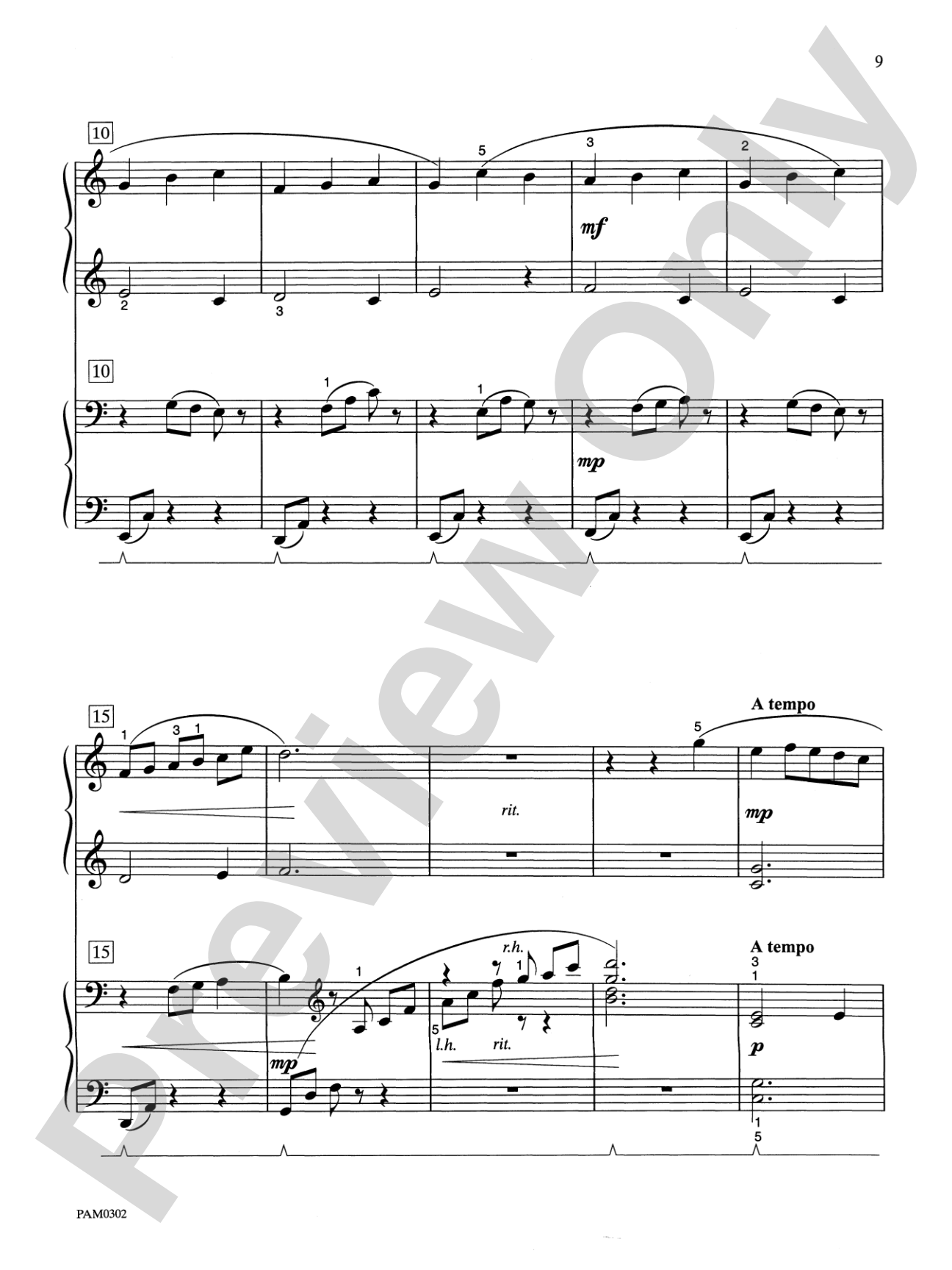
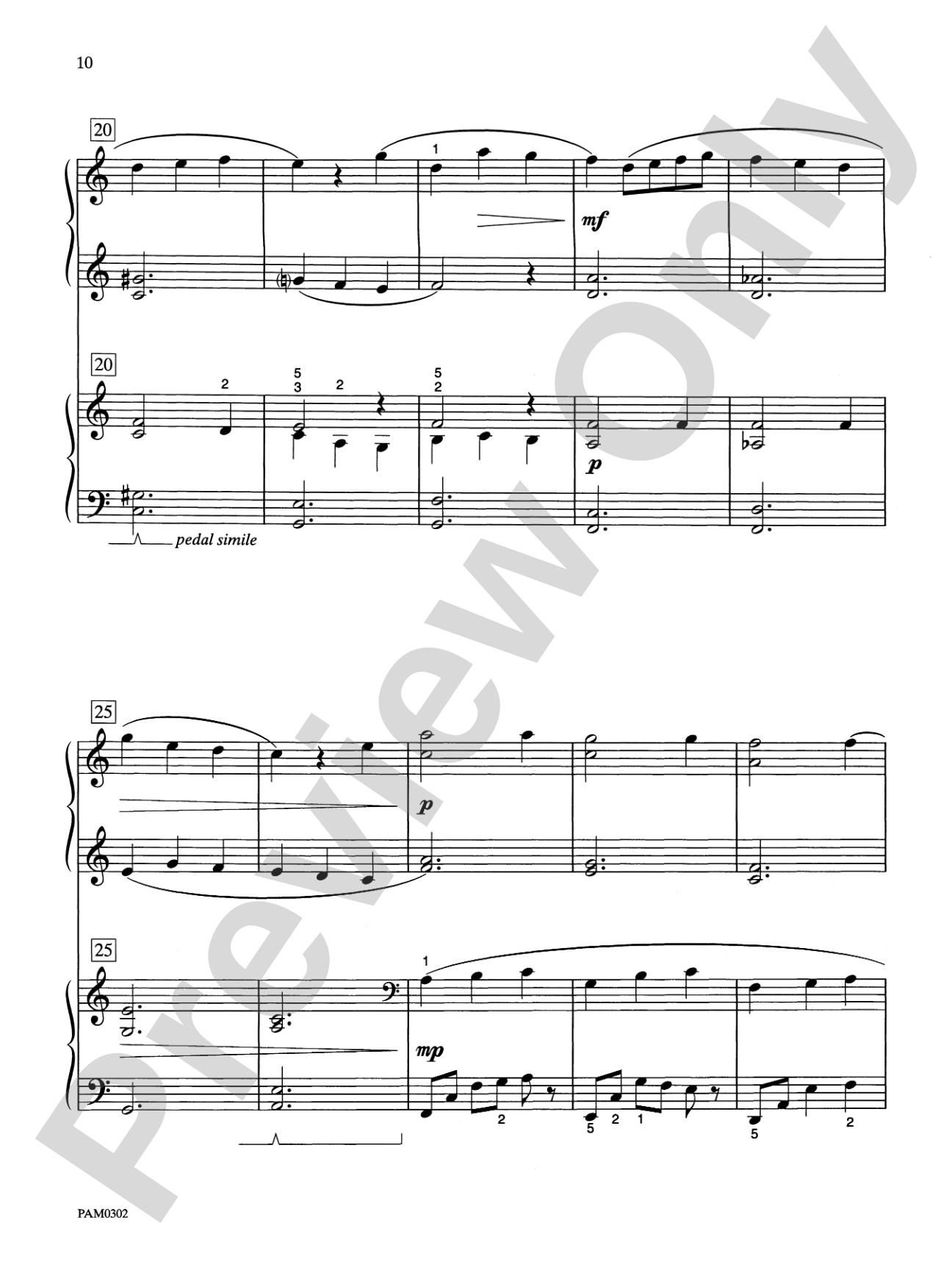

Miniature Concerto - Piano Duo (2 Pianos, 4 Hands): Piano Duets & Four Hands
By B. J. Rosco
Level: Early Intermediate
Item: 00-PS-0016201

$8.99
Pickup currently not available
Related Items
Miniature Concerto: Piano Duo (2 Pianos, 4 Hands) Sheet (2 copies included) |
$8.95
|
View |
Description
B. J. Rosco's clever and creative writing makes this work the perfect choice for a first concerto. The orchestral part is reduced for the second piano, but Rosco has kept each part easy enough for intermediate players. This work is an excellent introduction to "large-scale" compositions. All three movements are Federation Festivals 2016-2020 selections. A Federation Festivals 2020-2024 selection. A Federation Festivals 2024-2028 selection.


Don't just read it, hear it, play along with it, and watch your students grow with it. In MakeMusic Cloud, Miniature Concerto - Piano Duo (2 Pianos, 4 Hands): Piano Duets & Four Hands comes alive with professional accompaniment, adjustable tempo, and built-in practice tools that turn solo practice into real progress.
Open in the Player
Jump straight in and assign it today.
Start Your Free Trial
Open this title and explore the full library in minutes.
Sample Audio
No sample audio found.
Sample Video
No sample videos found.
Additional Details
Publisher:
Alfred Music
Page Count:
48
SKU:
00-PS-0016201
More about this title
About the Composer: B. J. Rosco
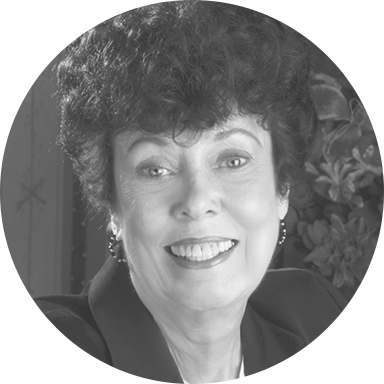
B. J. Rosco brings a distinctive compositional voice to music education, having crafted original works for piano and orchestra published by major houses. Her compositions have been heard in symposia, new music festivals, and lecture recitals across the United States and Europe, earning her commissions from Clavier magazine, the Joanna Hodges Summer Piano Seminar, and the Washington State Music Teachers Association, which recognized her as Composer of the Year in 2004.
Rosco's artistic mission centers on introducing young musicians to 20th-century compositional techniques through carefully constructed pieces that engage visual, aural, and tactile learning. By building these foundations early, she prepares students to approach advanced repertoire with confidence and understanding. She maintains an active private studio offering piano instruction, composition training, and courses in performance, music theory, and music awareness.
Why we love this
Rosco has engineered a work that genuinely feels like a concerto without overwhelming either pianist. The orchestral reduction for the second piano maintains musical substance while keeping both parts within early intermediate reach, making this an authentic stepping stone to the larger forms students will encounter at the high school level. Across three movements and multiple festival selections spanning 2016-2028, this piece has proven its pedagogical and artistic durability.
What to expect
The writing balances structural ambition with technical accessibility, creating three movements that unfold with genuine dramatic shape. Rosco's orchestral thinking shines through the reduced accompaniment, giving the secondo piano moments of real musical consequence rather than relegating it to background support.
Who it's for
This work suits two early intermediate pianists preparing for their first concerto experience or students working toward a recital that showcases collaborative chamber playing. It also works well for studio teachers introducing composition beyond the sonata form and for festival preparation, given its consistent selection across multiple competition years.
How to get the most out of it
- Balance the primo and secondo parts by thinking of the secondo piano as the "orchestra." The secondo player should listen actively to the primo soloist and support without overshadowing.
- Work through the score separately first, then conduct rehearsals with both pianos in the same room to establish clear ensemble rhythms and entries, especially at movement transitions.
- Record yourselves playing through all three movements to identify spots where the dialogue between pianos becomes unclear, then address those sections in targeted rehearsal.
- Mark breath points and phrase arrivals in both scores before you begin, ensuring both pianists understand the large-scale architecture across the full concerto.
How to use it
Feature this at a spring recital where two of your pianists can share the solo spotlight, or program it as a bridge between traditional sonatina repertoire and the concerto grosso forms students encounter in chamber music. Its festival-tested status makes it a smart choice for competition seasons when you want a substantial, performable work that adjudicators respect.
Skills your students will build
- Interpreting large-scale formal structures across three movements
- Balancing solo and accompaniment roles in ensemble playing
- Reading and executing orchestral reduction notation
- Coordinating rhythm and phrasing across two independent keyboard instruments
- Developing musical independence within a collaborative context