
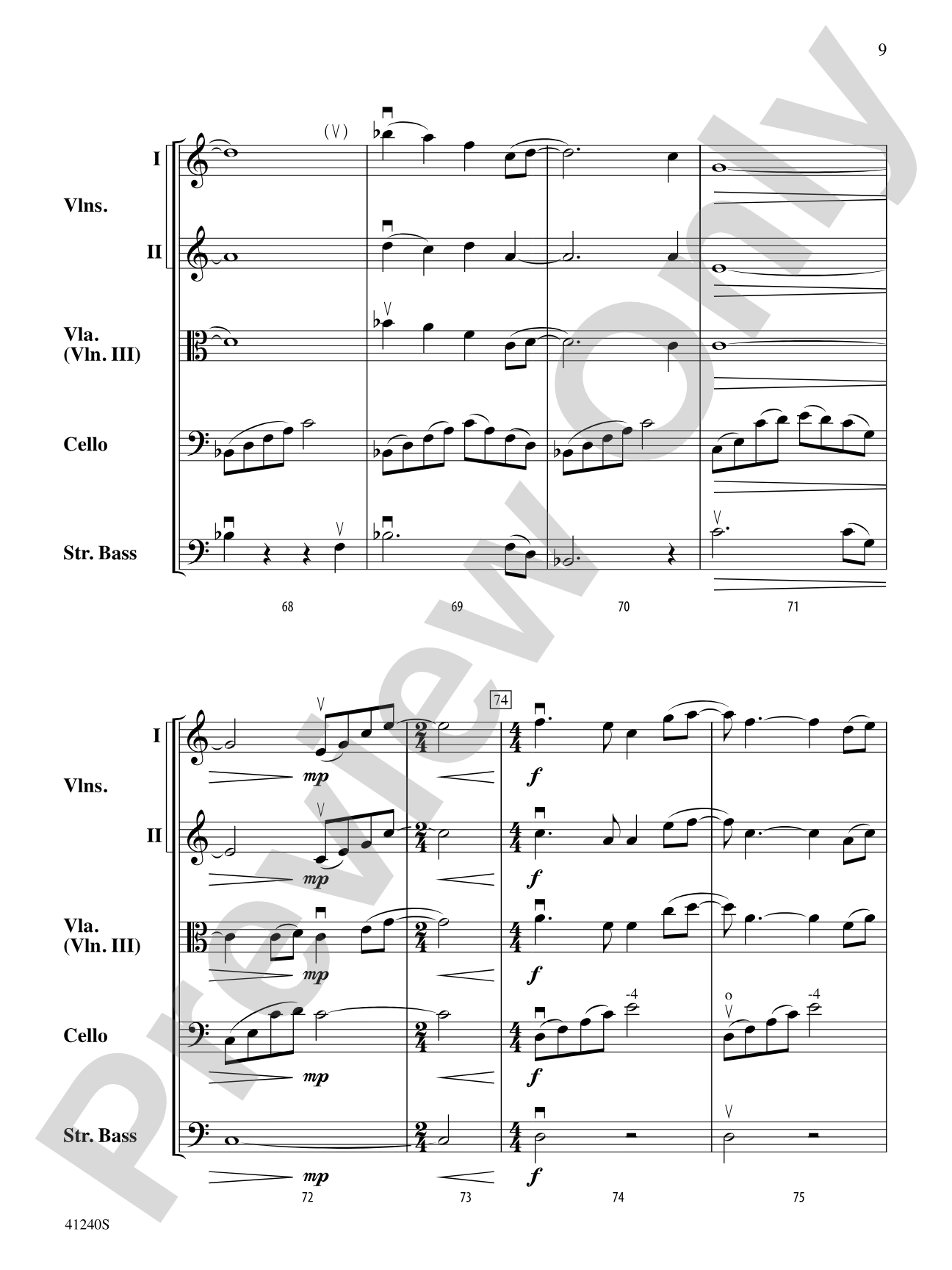
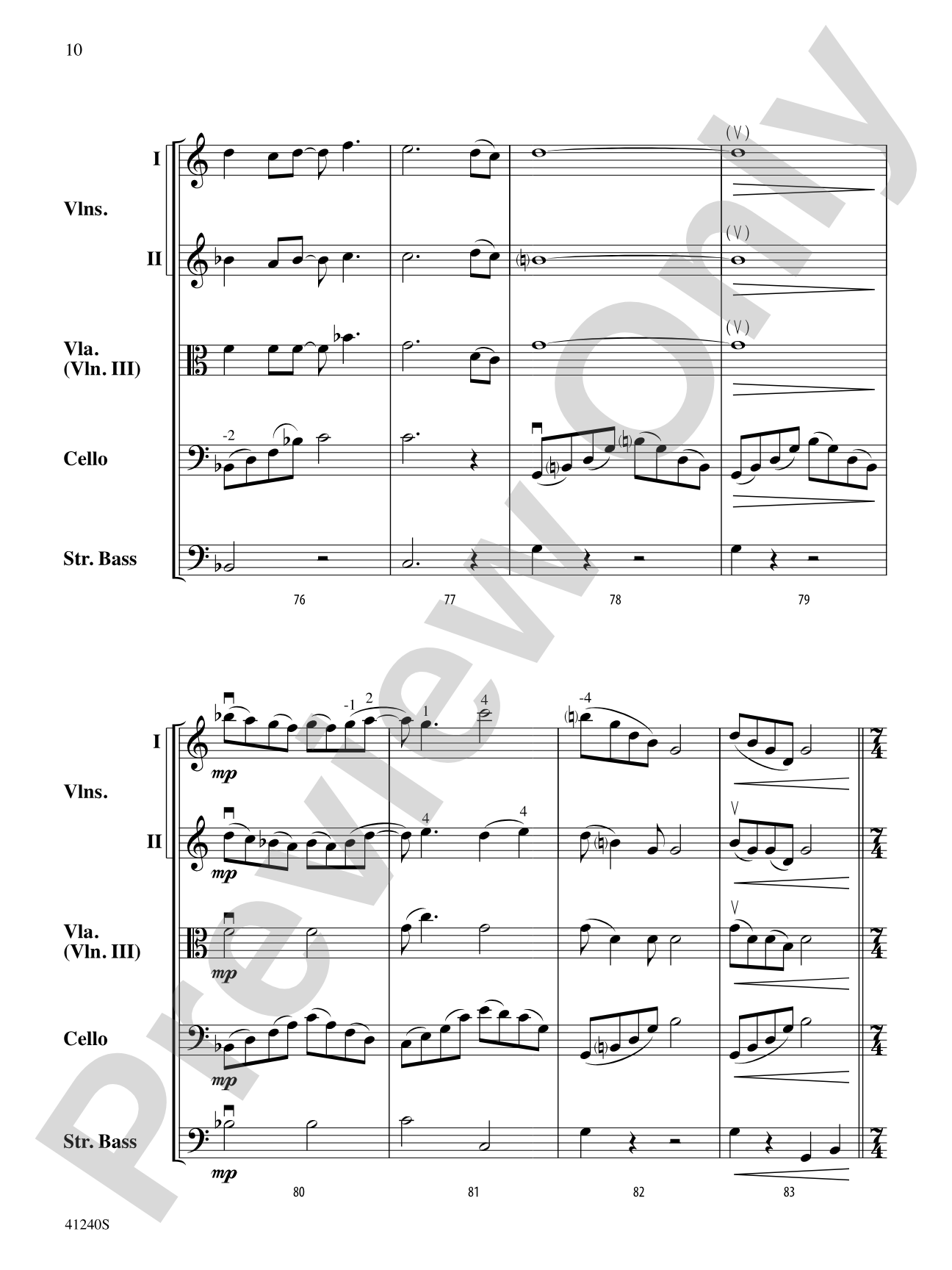
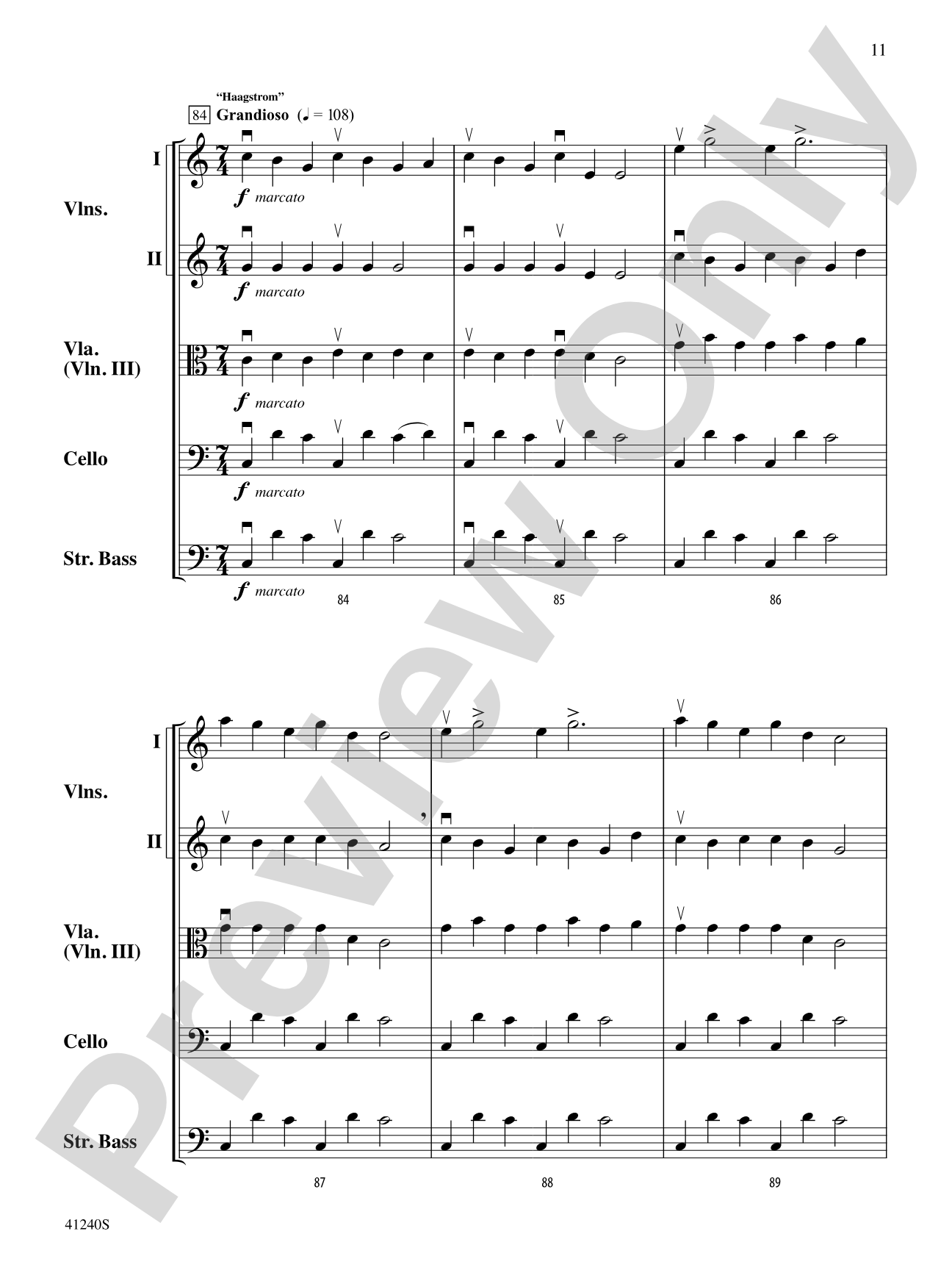
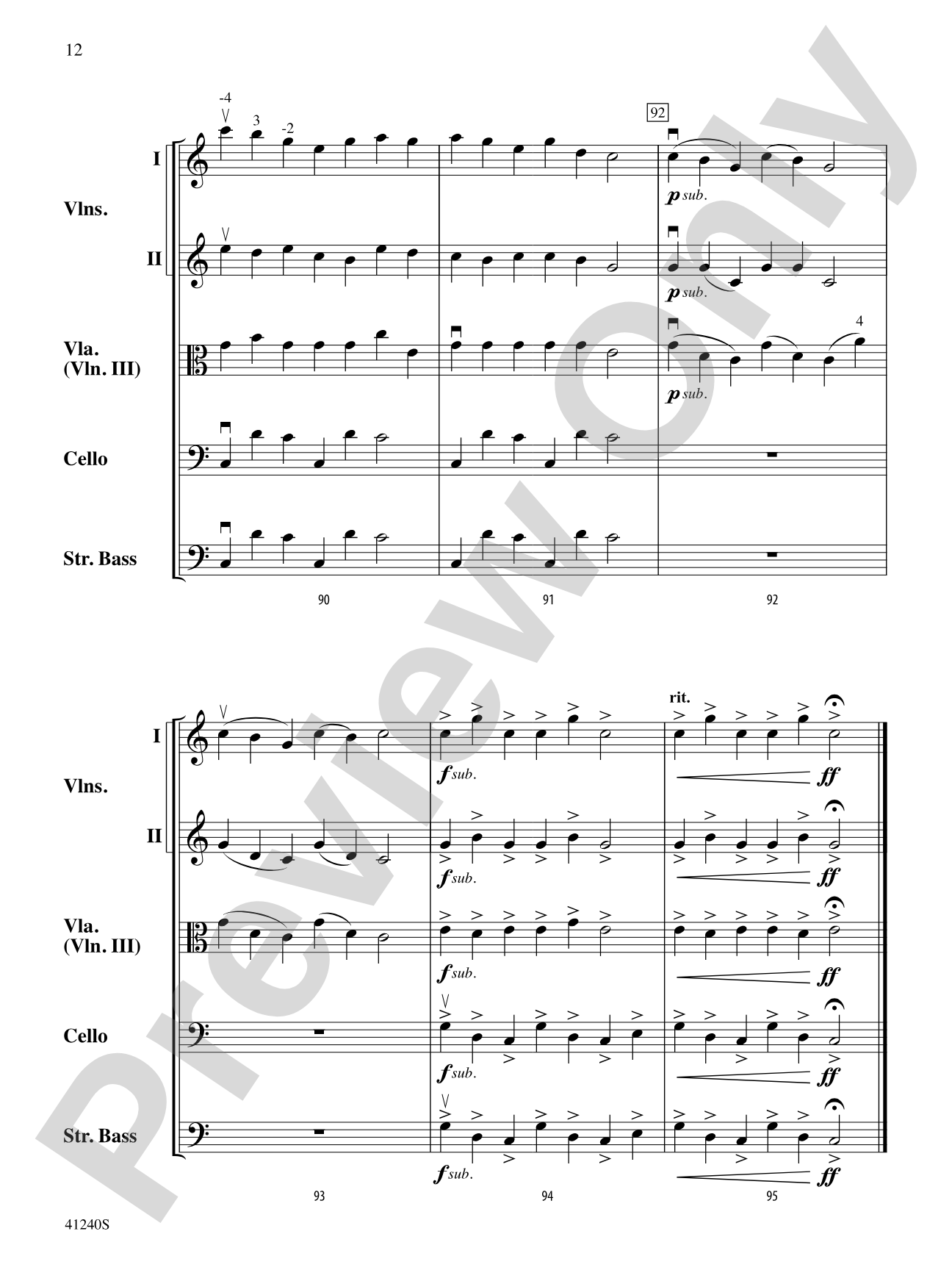

Minecraft: String Orchestra Conductor Score & Parts
Selections from Volume Alpha
Composed by Daniel Rosenfeld / arr. Ralph Ford
Grade: 2.5
Item: 00-PK-0006458

$60.00
Pickup currently not available
Buy Extra Parts (Digital PDF Download)
| Product | Price | Quantity |
|---|---|---|
| Minecraft: Score | $9.00 | |
| Minecraft: 1st Violin | $7.99 | |
| Minecraft: 2nd Violin | $7.99 | |
| Minecraft: 3rd Violin (Viola [TC]) | $7.99 | |
| Minecraft: Viola | $7.99 | |
| Minecraft: Cello | $7.99 | |
| Minecraft: String Bass | $7.99 |
Parts Added to Cart!
Related Items
Minecraft: Concert Band Conductor Score & Parts |
$70.00
|
View | |
Minecraft: String Orchestra Conductor Score & Parts |
$60.00
|
View | |
Minecraft: String Orchestra Conductor Score |
$9.00
|
View | |
Minecraft: Concert Band Conductor Score & Parts |
$70.00
|
View | |
Minecraft: Concert Band Conductor Score |
$10.00
|
View |
Description
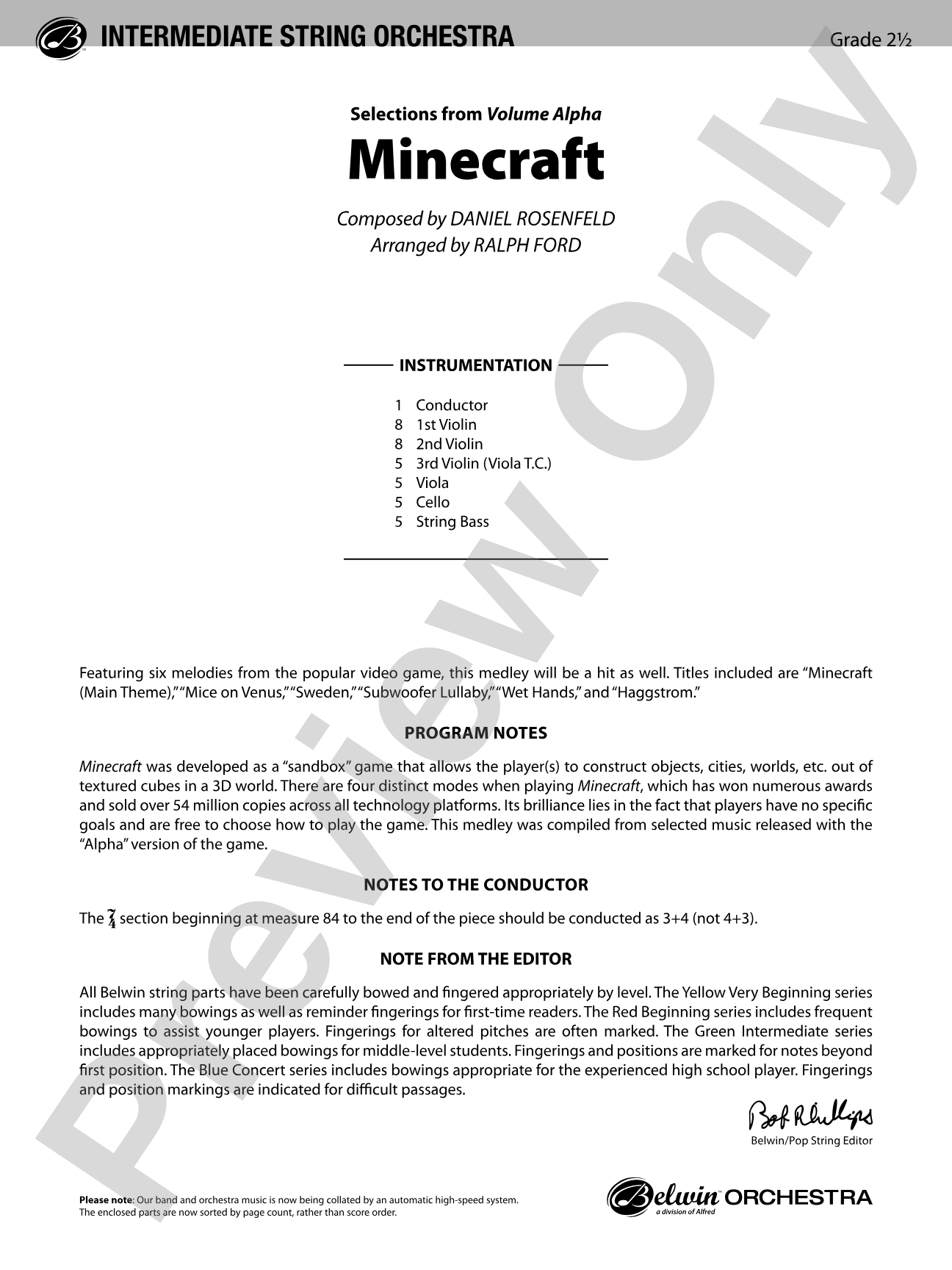
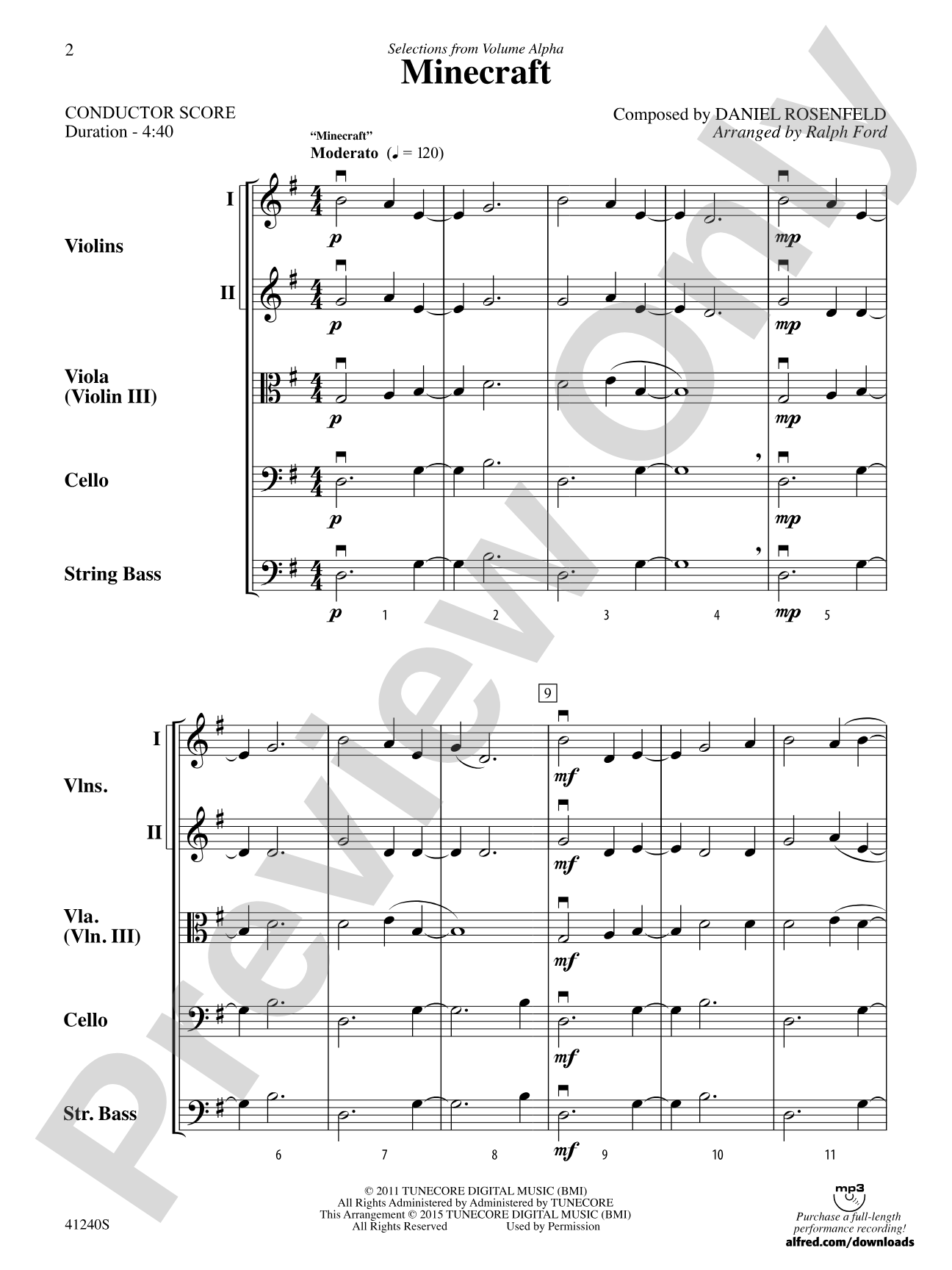
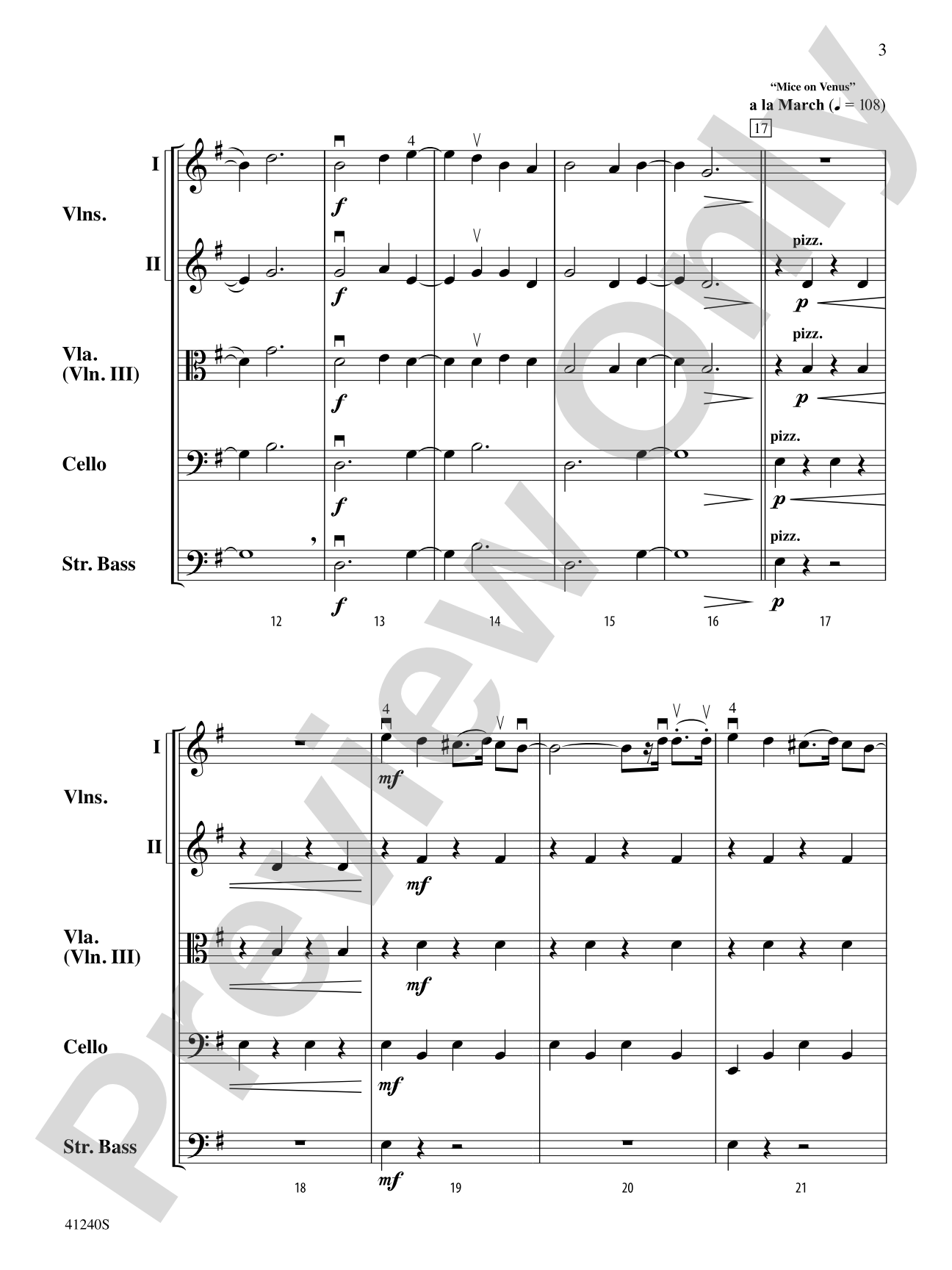
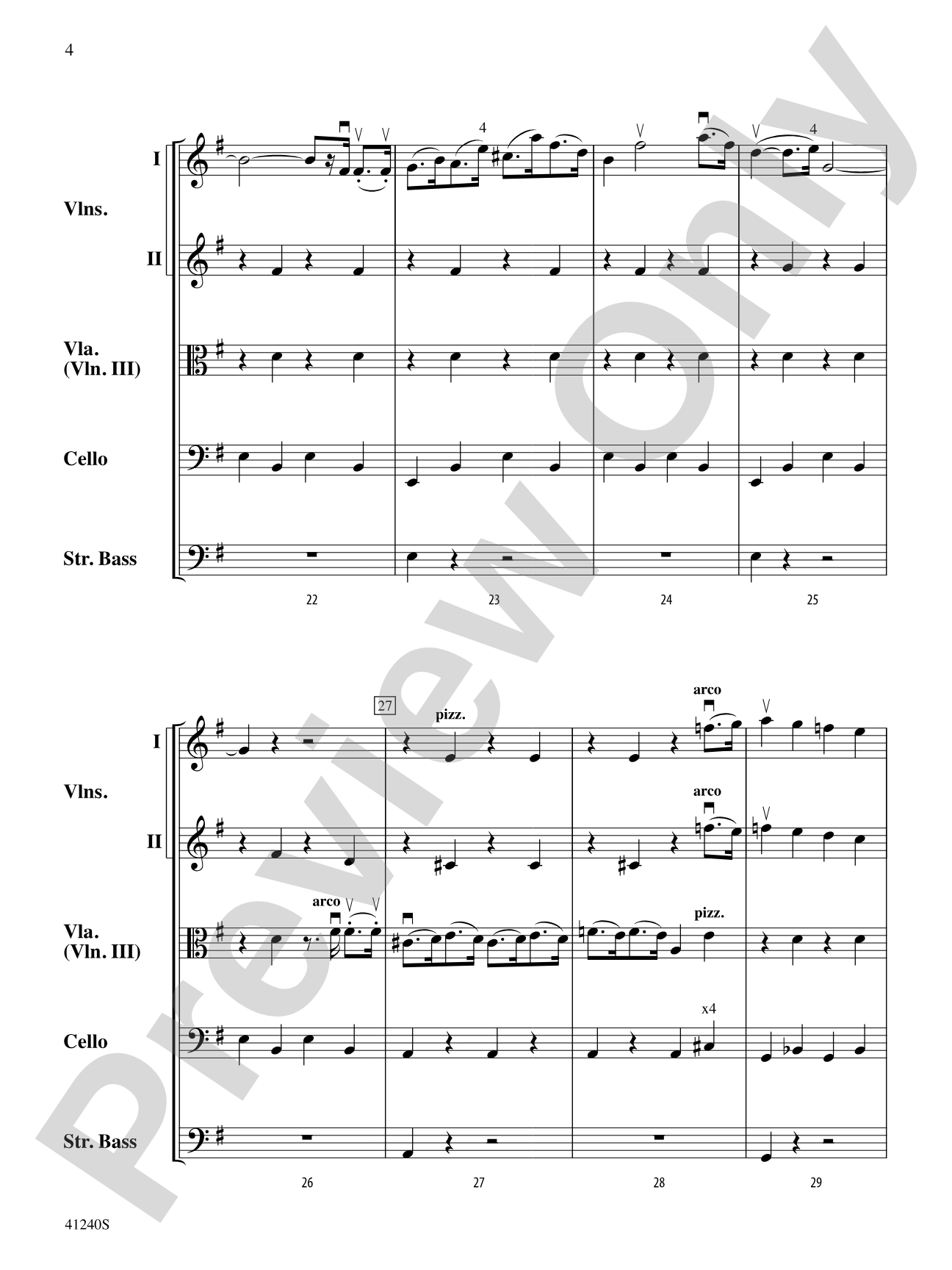
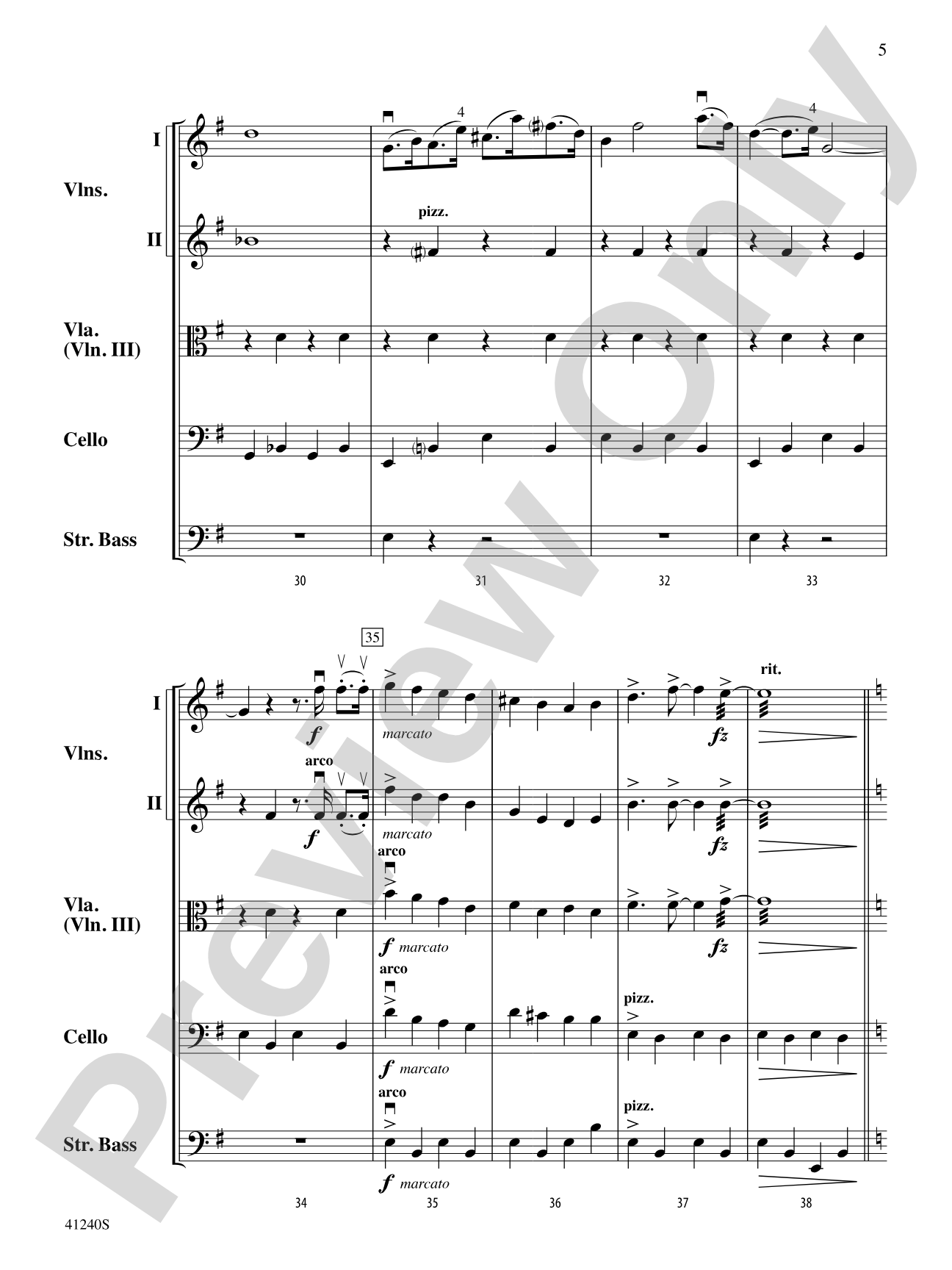
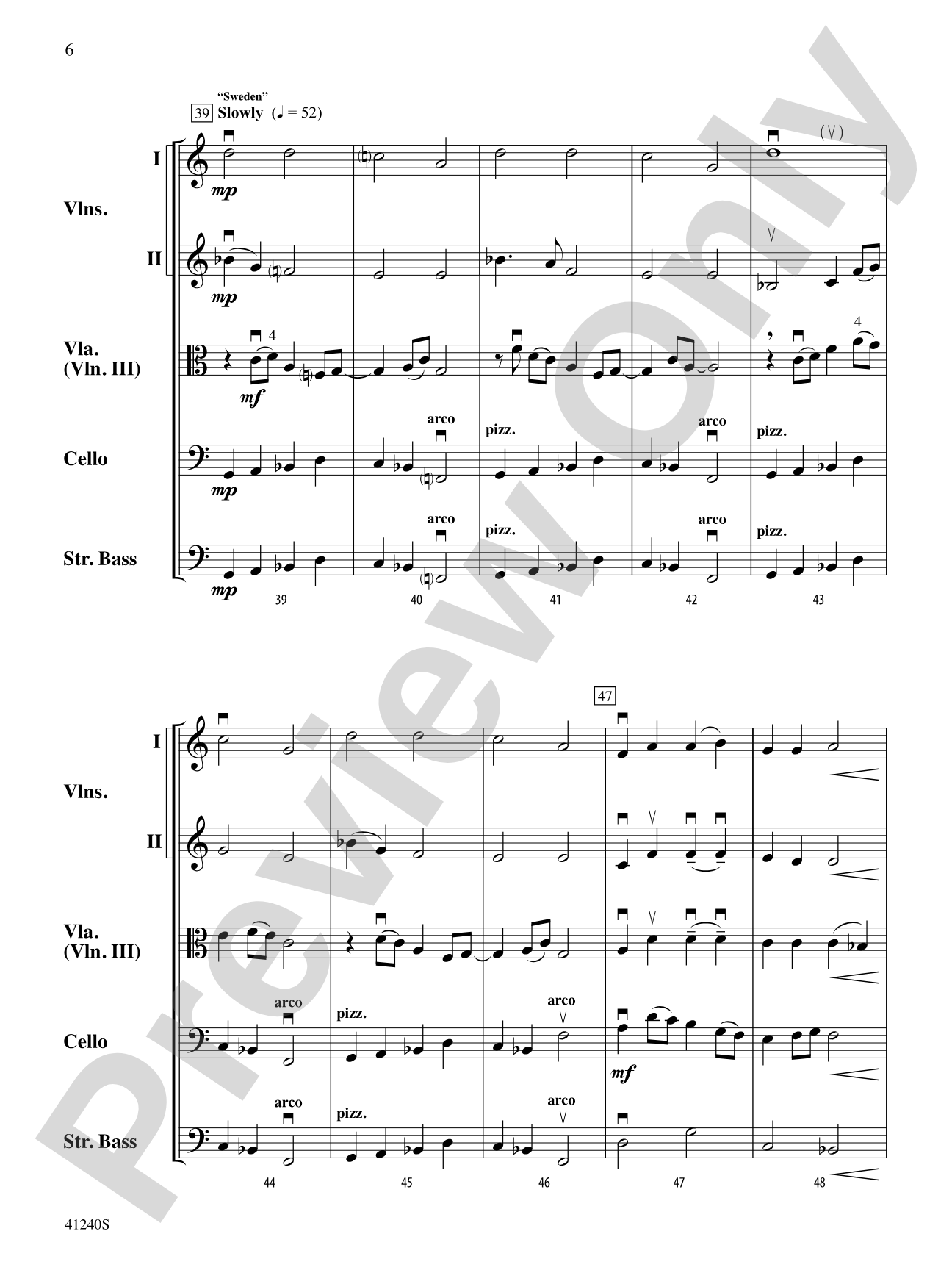
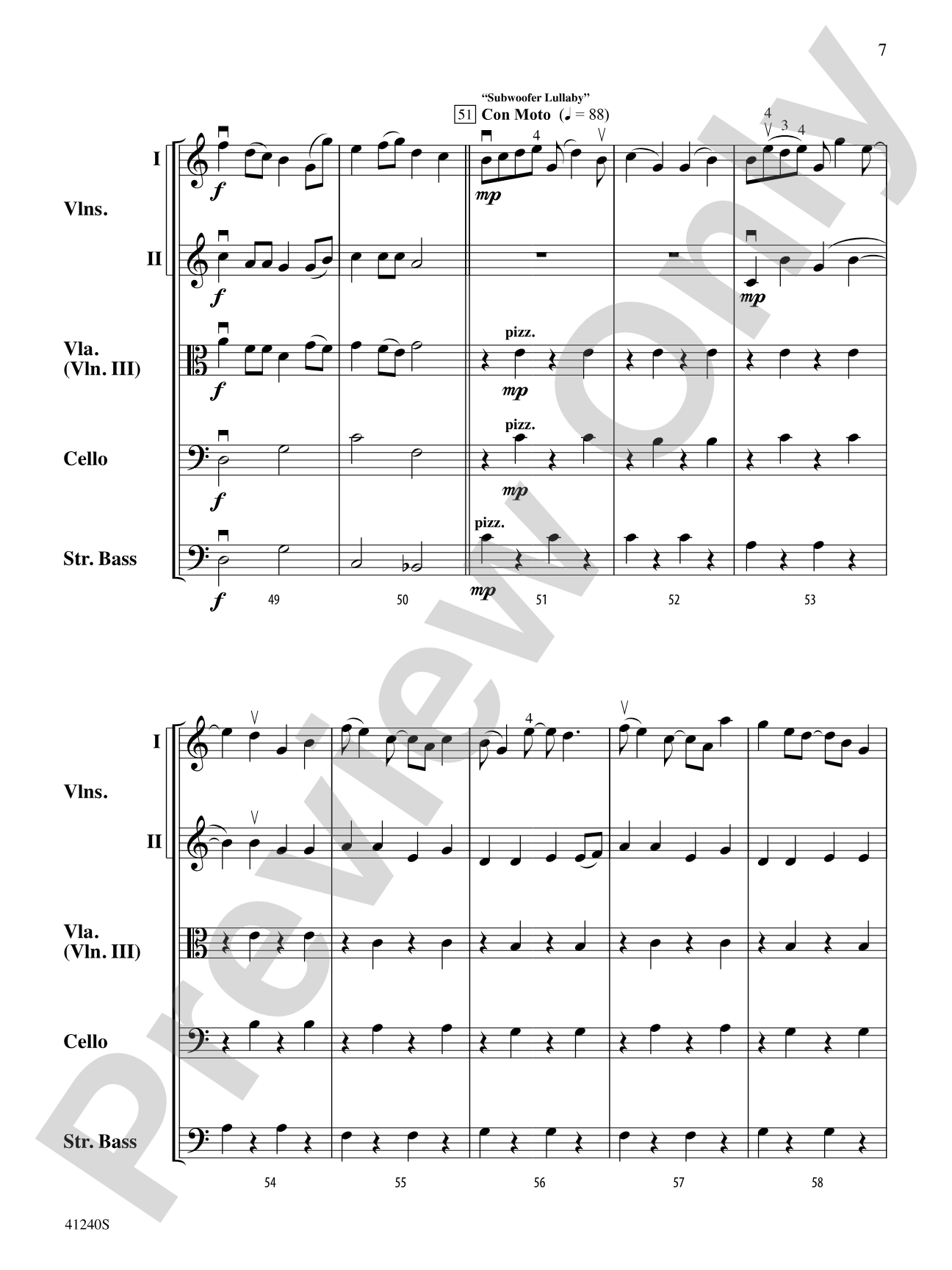
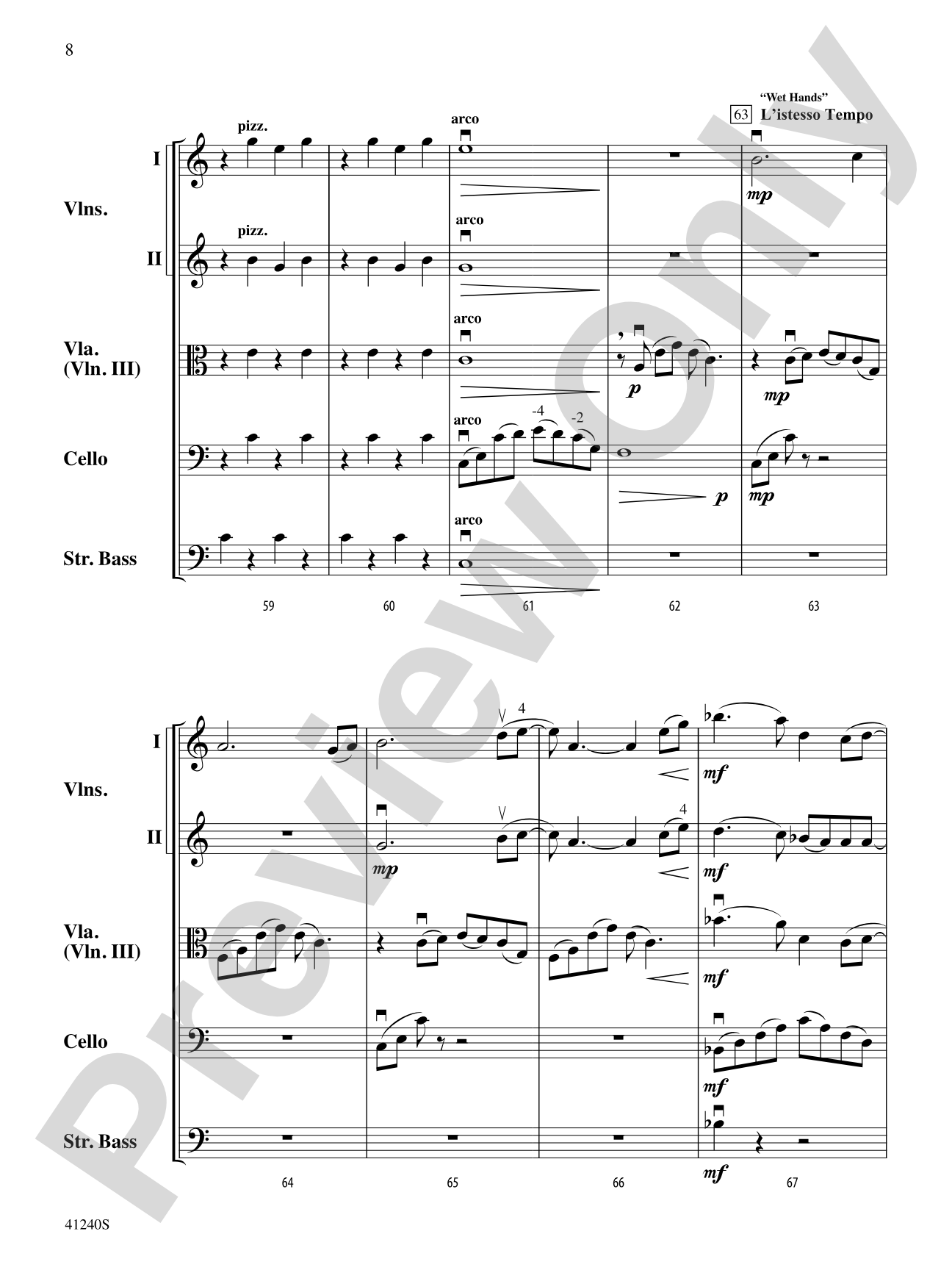
Featuring six melodies from the popular video game, titles included in this medley: Minecraft (Main Theme) * Mice on Venus * Sweden * Subwoofer Lullaby * Wet Hands * and Haggstrom. (4:40)


Don't just read it, hear it, play along with it, and watch your students grow with it. In MakeMusic Cloud, Minecraft: String Orchestra Conductor Score & Parts comes alive with professional accompaniment, adjustable tempo, and built-in practice tools that turn solo practice into real progress.
Open in the Player
Jump straight in and assign it today.
Start Your Free Trial
Open this title and explore the full library in minutes.
Sample Audio
1
Audio File
--:--
0:00
0:00
Sample Video
No sample videos found.
Additional Details
Series:
Pop Intermediate String Orchestra
Publisher:
Alfred Music
Page Count:
144
SKU:
00-PK-0006458
More about this title
About the Composer: Daniel Rosenfeld
Daniel Rosenfeld, known professionally as C418, is a German video game composer whose work has defined the sonic landscape of Minecraft since 2009. His compositions balance ambient exploration with memorable melodic hooks, creating music that enhances gameplay without demanding attention. Rosenfeld's ability to craft accessible yet sophisticated instrumental music has made him a significant figure in game music composition and a valuable resource for music educators seeking contemporary, engaging repertoire.
Why we love this
Ralph Ford's arrangement captures the wistful, contemplative character of Rosenfeld's original melodies while keeping the ensemble writing transparent and idiomatic for intermediate string players. The medley format allows you to program recognizable, engaging material that resonates with students without sacrificing musical substance. Six distinct themes create natural sectional variety, making this both musically satisfying and logistically manageable for a developing orchestra.
What to expect
Peaceful exploration mixed with gentle nostalgia. The medley invites players and listeners into quiet, pixelated landscapes, then shifts between moments of reflection and subtle adventure. The harmonic language is warm and accessible without being simplistic, creating an intimate concert experience that feels both modern and timeless.
Who it's for
String orchestra directors programming intermediate-level concerts who want repertoire that excites students and audiences alike. This works equally well for ensembles seeking contemporary music that bridges popular culture and concert performance, or for directors building thematically unified programs around video game music and its artistic merit.
How to get the most out of it
- Balance the main theme's singing quality across the first violin line while keeping accompaniment textures light; these melodies ask for lyrical phrasing even at moderate tempos.
- Pay attention to the transitions between themes; each shift requires a subtle reset in texture and mood rather than a hard stop.
- Let the lower voices anchor each harmonic foundation clearly, especially in passages where divisi writing creates independence across the section.
- Shape phrases with awareness of the game's ambient origins; allow space for breath and reflection within the forward motion.
How to use it
Program this as a standalone feature on a spring concert or as part of a broader "Music from Games" segment that positions video game composition as legitimate contemporary art music. The 4:40 runtime fits neatly into a concert arc, and the medley structure allows you to open or close a set with strong audience engagement while maintaining artistic credibility.
Skills your students will build
- Sustained legato phrasing across multiple phrases without breath breaks
- Balanced accompaniment textures (maintaining dynamic differentiation between melody and harmony)
- Reading divisi writing and maintaining independent voice lines within a section
- Shifting between contrasting tonal characters across a single piece
- Rhythmic precision in transitions between themed sections