

Mind Games: String Orchestra Conductor Score & Parts
By Brian Balmages
Grade: 1.5
Item: 00-PK-0008716

$50.00
One moment…
Description
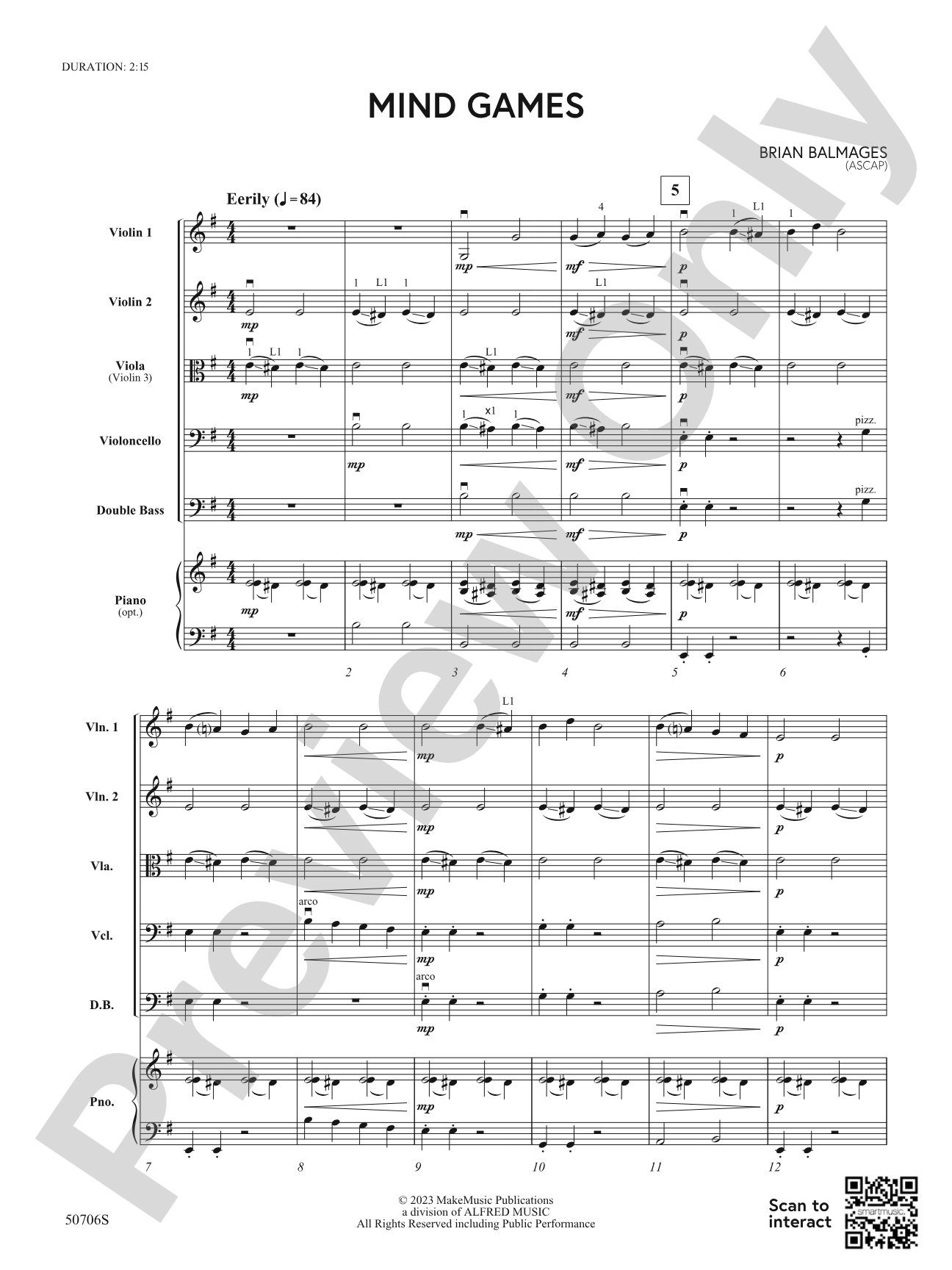
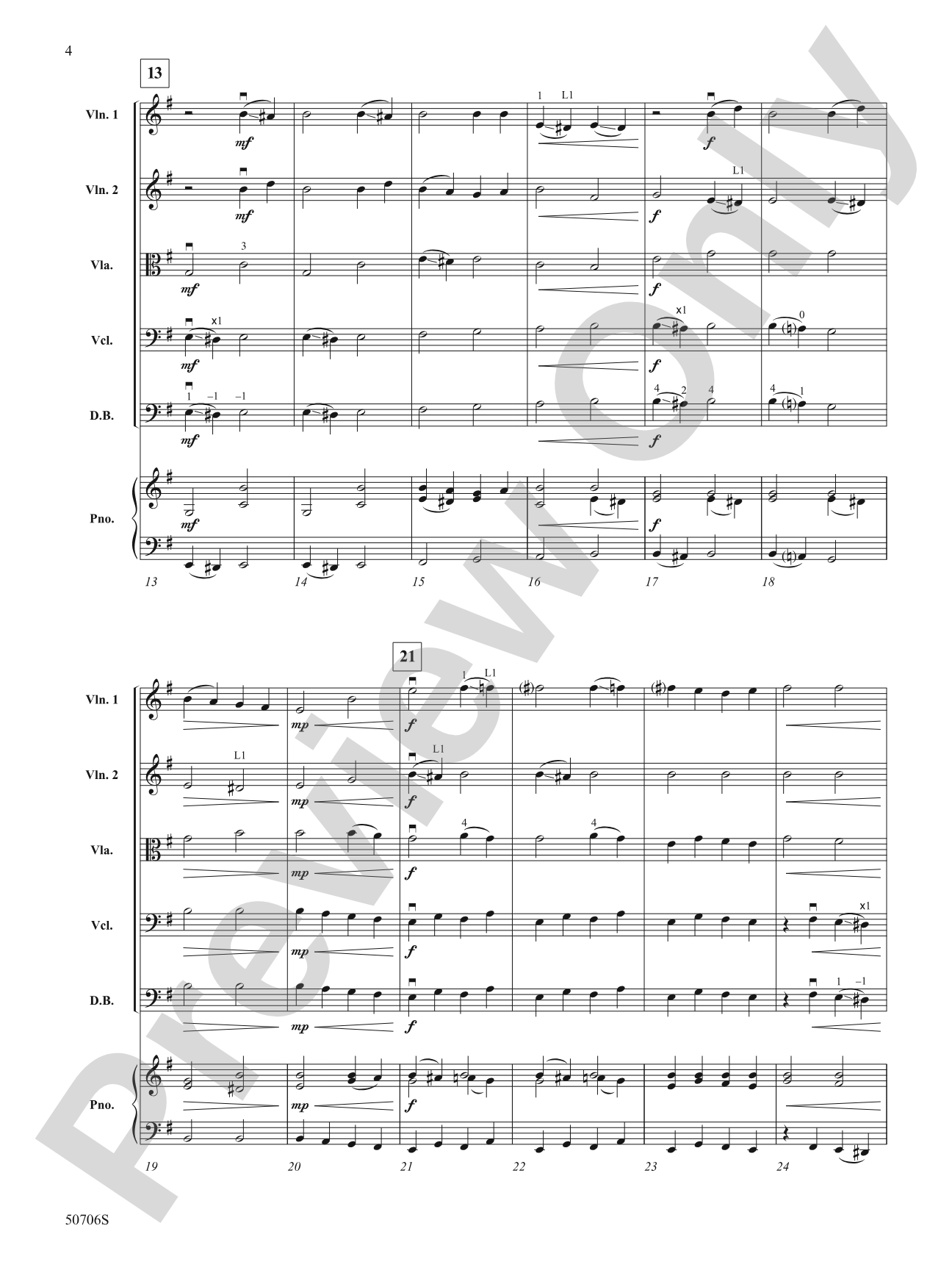
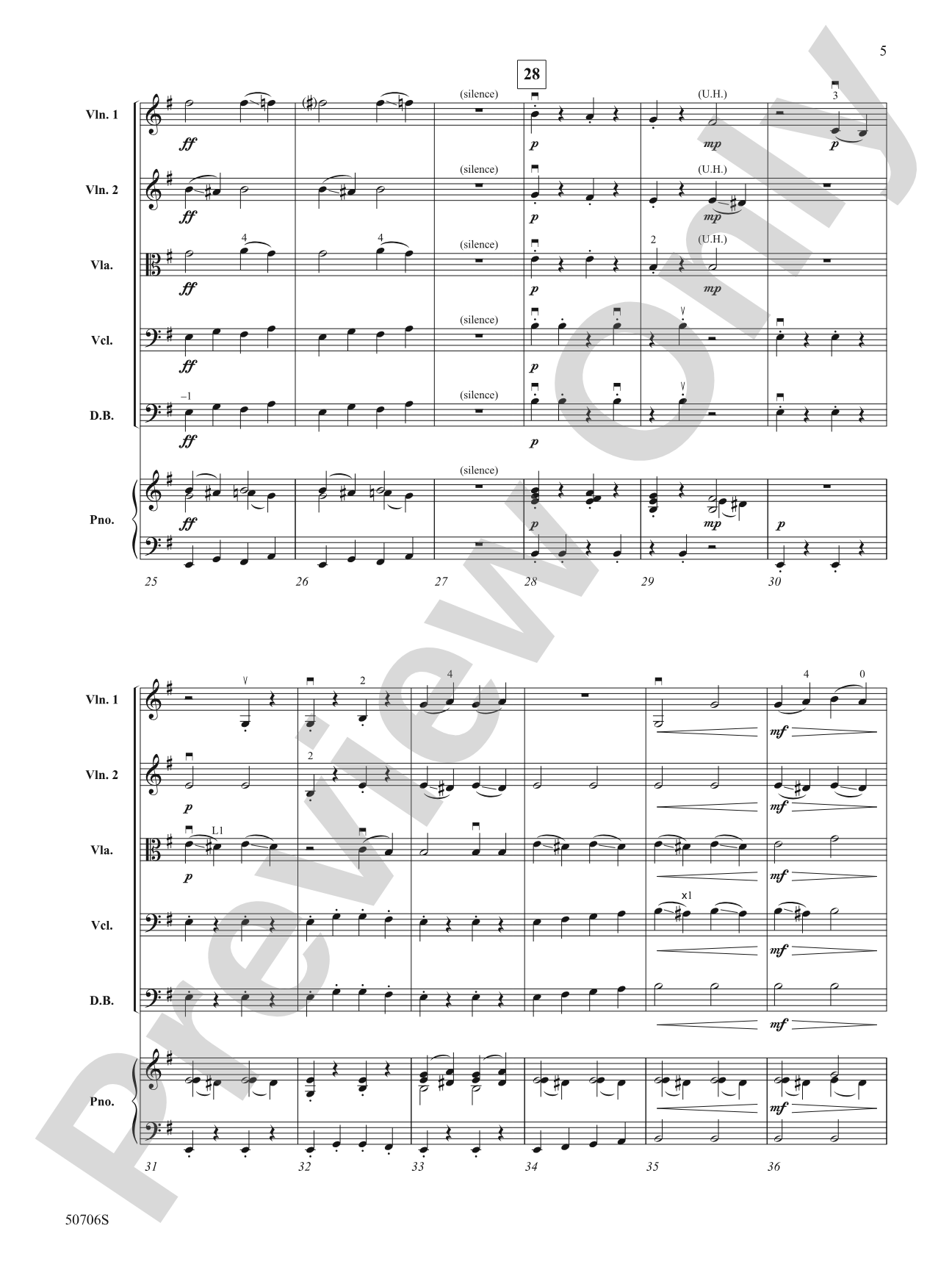
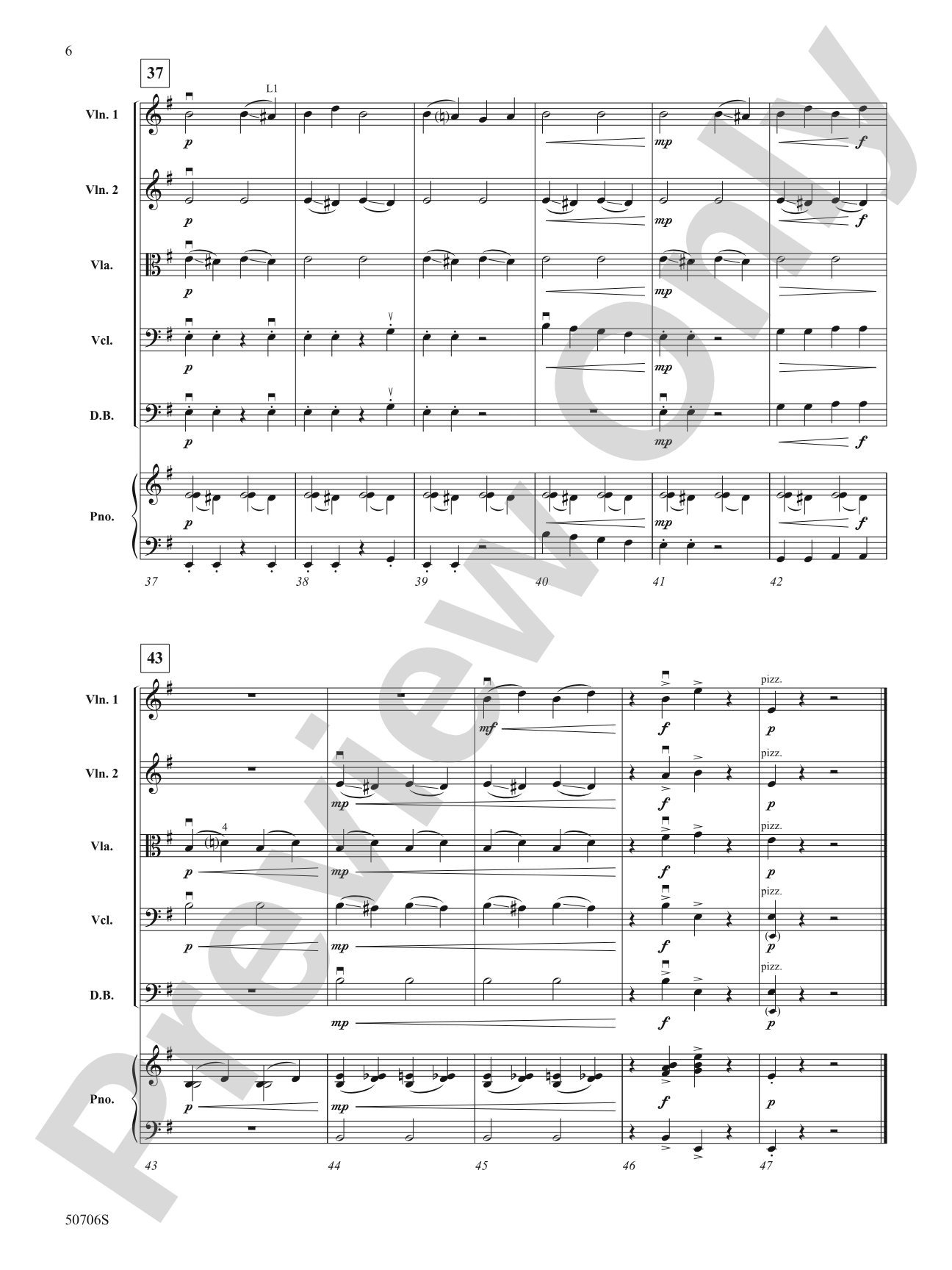
This eerie composition employs colors and harmonies rarely found at this level. Based on harmonic illusions where notes seem to drift out of context, Mind Games introduces low-1 fingerings in a pedagogical way, encouraging students to maintain a relaxed wrist. The Cello section is introduced to easy backward extensions, and bass players see some simple 1st finger shifting. Brian Balmages has written an extremely colorful work full of imagery equally suited as a festival piece or lighter work. (2:15)


Don't just read it, hear it, play along with it, and watch your students grow with it. In MakeMusic Cloud, Mind Games: String Orchestra Conductor Score & Parts comes alive with professional accompaniment, adjustable tempo, and built-in practice tools that turn solo practice into real progress.
Open in the Player
Jump straight in and assign it today.
Start Your Free Trial
Open this title and explore the full library in minutes.
Sample Audio
1
Audio File
--:--
0:00
0:00
Sample Video
Additional Details
Series:
MakeMusic Developing Strings
Publisher:
MakeMusic Publications
SKU:
00-PK-0008716
More about this title
About the Composer: Brian Balmages

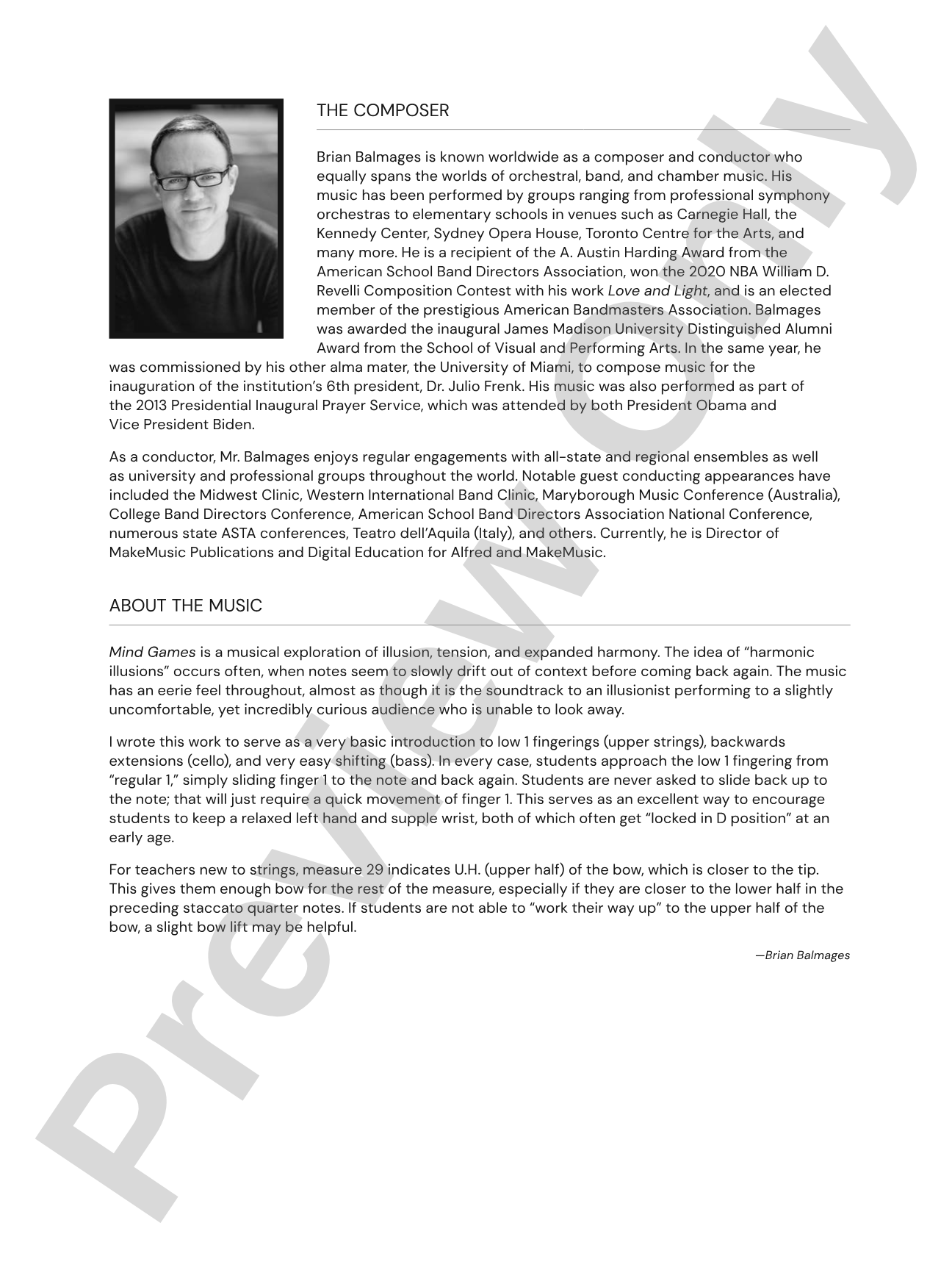
Brian Balmages has built a reputation as a composer and conductor working across orchestral, band, and chamber repertoire. His works have been performed by ensembles ranging from professional orchestras to school groups in prestigious venues including Carnegie Hall, the Kennedy Center, and the Sydney Opera House.
Balmages holds membership in the American Bandmasters Association and has received major recognition including the A. Austin Harding Award from the American School Band Directors Association and the 2020 NBA William D. Revelli Composition Contest. He earned the inaugural James Madison University Distinguished Alumni Award and was commissioned by the University of Miami to compose for the inauguration of its president. His music appeared in the 2013 Presidential Inaugural Prayer Service. As a guest conductor, he regularly works with all-state ensembles, university groups, and professional orchestras internationally. He currently serves as Director of MakeMusic Publications and Digital Education for Alfred and MakeMusic.
Why we love this
Balmages has crafted something rare at Grade 1.5: a piece that sounds genuinely sophisticated without overwhelming young musicians. The harmonic illusions and unusual colors create a memorable listening experience, making it a standout choice for contests or family concerts where you want to impress without sacrificing accessibility. The technical content serves the music rather than dominating it, which keeps students engaged with the artistry.
What to expect
Eerie and introspective, with harmonies that seem to shift beneath you like a room slightly off-kilter. The piece draws listeners in through color and suggestion rather than drama, creating an almost dreamlike quality that keeps the mood light and curious rather than unsettling.
Who it's for
String orchestras at the Grade 1.5 level who are ready for music that challenges their listening skills and introduces light technical extensions. This works for groups that have solid fundamentals and are beginning to explore more sophisticated harmonic language without complex rhythmic or ensemble coordination demands.
How to get the most out of it
- Highlight the harmonic drifting in sectional rehearsals by asking students to listen across parts rather than within their own line; this anchors the sense of unease Balmages intends.
- Introduce low-1 fingerings in violin and viola parts gradually during the early rehearsals so students develop the relaxed wrist position naturally before ensemble work begins.
- Balance the cello backward extensions and bass shifting carefully in exposed passages; take time for students to find comfort in these positions before focusing on blend.
- Use the sustained sections to work on tone quality and intonation, as the unusual harmonies become more striking when the sound is focused and centered.
How to use it
Pair this with a contrasting piece of brighter temperament on a concert to showcase your orchestra's range; the sophistication works equally well in a festival setting where judges appreciate compositional craft. The length (2:15) makes it ideal as a shorter feature work that doesn't demand extended focus from your ensemble.
Skills your students will build
- Low-1 fingerings on violin and viola with relaxed wrist position
- Backward extensions in the cello section
- First-finger shifting in the bass section
- Listening for harmonic motion across ensemble sections
- Tone quality on sustained, exposed passages
- Intonation sensitivity in unusual harmonic contexts