Milord Sheet Music Preview

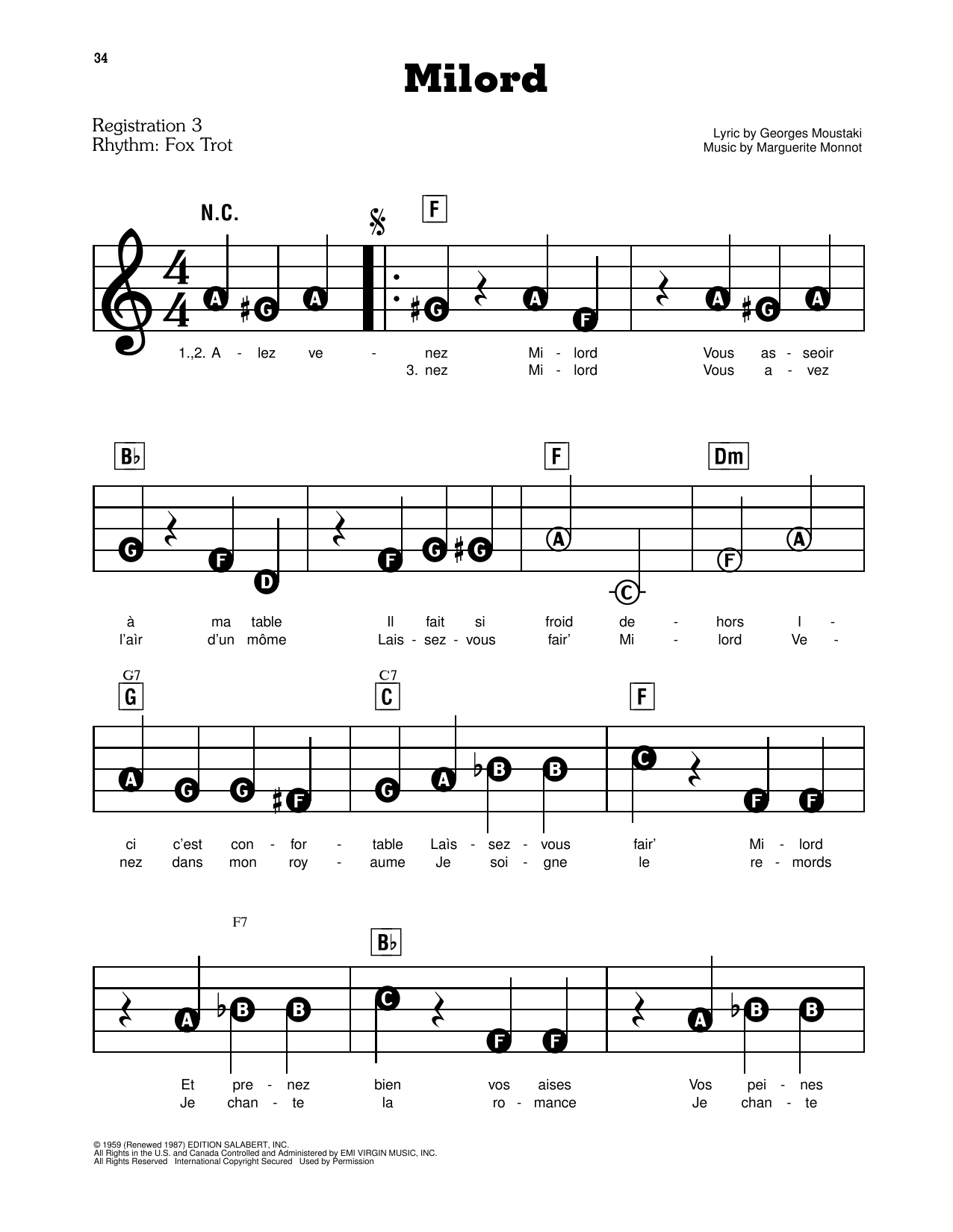
Milord: E-Z Play Today

As performed by Edith Piaf

Item: 35-DS01414922

Digital Download
$4.99
Description

Milord: E-Z Play Today isn't in MakeMusic Cloud just yet...but it could be. Let us know you'd like to see it, and you'll help shape what comes next. In the meantime, start a free trial and dive into thousands of interactive titles your students can play along with today.

Sample Audio
No sample audio found.
Sample Video
Additional Details
Publisher: Hal Leonard
Page Count: 4
SKU: 35-DS01414922

More about this title

About the Artist: Edith Piaf

Edith Piaf (1915-1963) became the voice of post-war France through her raw emotional delivery and intimate interpretations of popular songs. Her influence on vocal performance and popular music remains central to understanding 20th-century music pedagogy, particularly how phrasing, dynamics, and emotional authenticity can transcend technical perfection.

For music students, Piaf's recordings serve as masterclasses in expressive singing and interpretive choices. Teachers often reference her approach when discussing how to breathe life into a melody and connect lyrical content to musical phrasing.

Why we love this

This E-Z Play arrangement opens the door to a genuinely beloved standard that students recognize and respect, not because it's in a movie soundtrack, but because it carries real cultural weight. The simplified voicing preserves the song's emotional core while keeping the technical demands reasonable, so your students can focus entirely on interpretation rather than reading complexity.

What to expect

A moment of quiet sophistication and tenderness. The melody sits comfortably in a conversational register, inviting the player to shape it like spoken text rather than pure instrumental display. There's melancholy here, but also dignity.

Who it's for

Piano students moving into popular standards and those curious about mid-20th-century French music. This works equally well for students seeking accessible arrangements of culturally significant repertoire and pianists building interpretive skills through art song.

How to get the most out of it

  • Honor the song's inherent melancholy by resisting the urge to rush. Piaf's phrasing favors space and deliberate pacing over forward motion.
  • Explore the dynamic range within phrases; small shifts in volume often matter more than dramatic contrasts in this style.
  • Let the accompaniment breathe. This piece rewards a pianist who listens and responds rather than simply keeping time.
  • Consider the narrative arc: each phrase builds emotional weight differently, so shape your interpretations accordingly.

How to use it

Pair this with other French standards or early-20th-century popular music to create a thematic concert section. It also serves as an excellent bridge piece between classical repertoire and contemporary popular song, helping students understand how melody and emotional expression transcend genre boundaries.

Skills your students will build

  • Expressive phrasing based on text and narrative content
  • Rubato and flexible rhythmic interpretation
  • Dynamic shaping within a narrow overall range
  • Voicing balance for intimate, non-virtuosic music

You May Also Like