
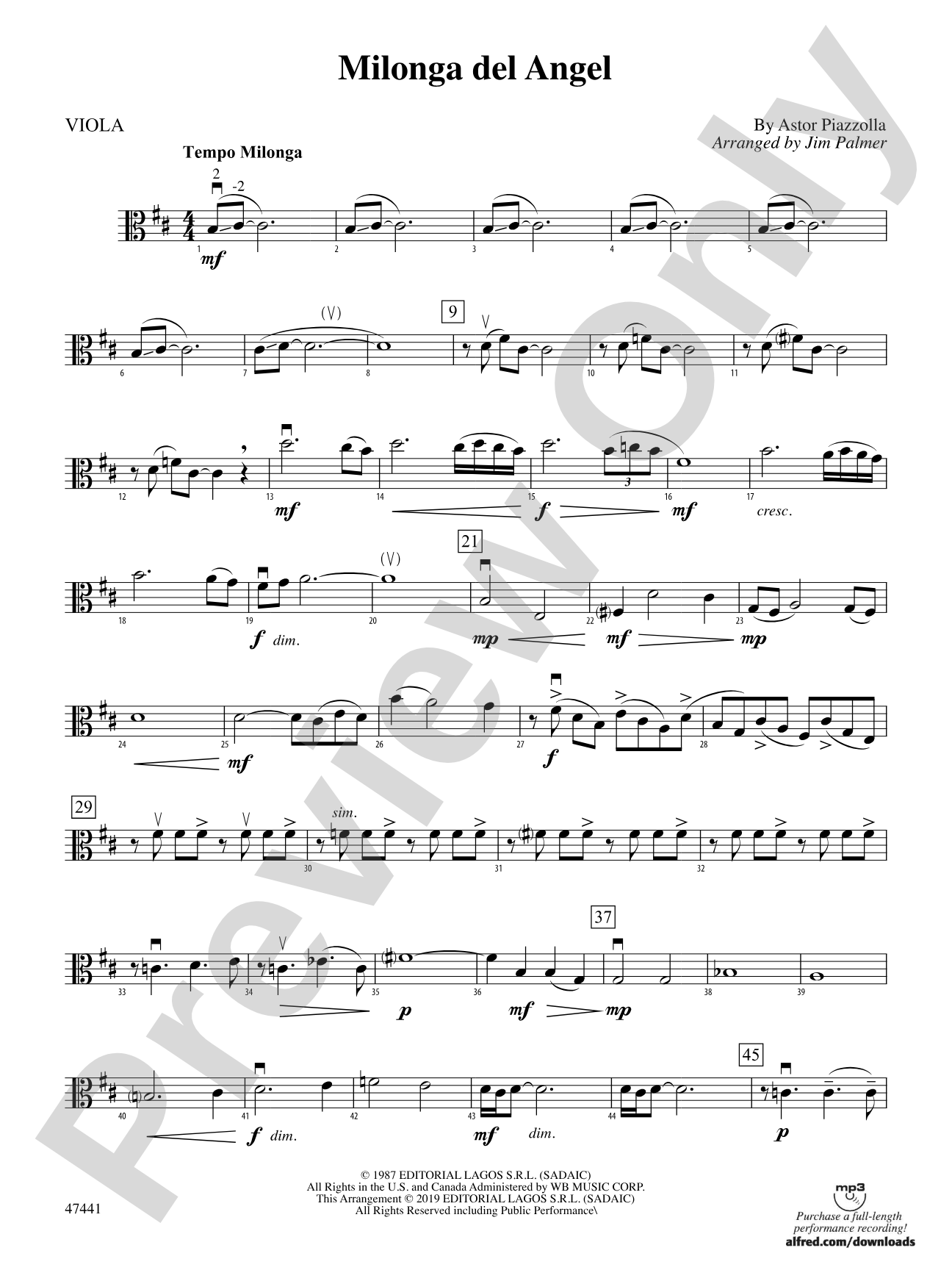

Milonga del Angel: Viola
By Astor Piazzolla / arr. Jim Palmer
Grade: 3
Item: 00-PC-0017971_VA1
$5.99
Pickup currently not available
Description
This lyrical arrangement of an Argentinian tango is a wonderful introduction to the music of Astor Piazzolla. The melody is first introduced by the violas and then passed smoothly to the first violins. Your students will love the beautiful harmonies, interesting rhythms, and the variety of dynamics, and the piece includes many opportunities to teach shifting, glissando, balance, and phrasing. This piece is a perfect choice for a festival or any concert performance. (4:45)


Don't just read it, hear it, play along with it, and watch your students grow with it. In MakeMusic Cloud, Milonga del Angel: Viola comes alive with professional accompaniment, adjustable tempo, and built-in practice tools that turn solo practice into real progress.
Open in the Player
Jump straight in and assign it today.
Start Your Free Trial
Open this title and explore the full library in minutes.
Sample Audio
1
Audio File
--:--
0:00
0:00
Sample Video
Additional Details
Series:
Belwin Concert String Orchestra
Publisher:
Alfred Music
Page Count:
124
SKU:
00-PC-0017971_VA1
More about this title
About the Composer: Astor Piazzolla
Astor Piazzolla (1921-1992) transformed tango from a dance music into a sophisticated concert genre. Born in Argentina but trained in classical composition, he fused traditional tango idioms with modern harmonies and complex rhythmic structures, creating a body of work that demands serious musicianship from performers while remaining emotionally direct and accessible to audiences.
Piazzolla's compositions have become central to string orchestra repertoire at all levels. His music teaches students how expressive phrasing, rubato, and dynamic control can carry a melody, and his harmonic language opens ears to possibilities beyond traditional functional tonality. For young string players, his work represents a bridge between classical tradition and the vivid, rhythmically alive music of Latin America.
Why we love this
This arrangement hits the sweet spot between accessibility and genuine artistry. Jim Palmer has preserved the yearning character of the original while writing string parts that lie comfortably for Grade 3 players, giving them a piece that sounds mature and emotionally compelling from the first rehearsal. The progression from viola to violin creates a natural teaching moment about line and voice leading without feeling contrived.
What to expect
Nostalgic and yearning, with a restless undercurrent. The opening viola melody carries an intimate sadness before the violins brighten the texture, and beneath it all runs the rhythmic pulse of tango. The piece balances melancholy with moments of warmth, never allowing sentiment to tip into sentimentality.
Who it's for
String orchestras at the intermediate level seeking repertoire that develops musicality alongside technique. This works equally well for festival preparation and concert programming, giving conductors a piece that challenges students to play with maturity and color while remaining technically secure.
How to get the most out of it
- Shape the melody with subtle dynamic swells rather than sudden changes. Piazzolla's tangos reward continuous, vocal-like phrasing that breathes with the harmonic rhythm.
- Balance the lower strings carefully when they enter with the countermelody. These voices need presence without overshadowing the primary line.
- Approach glissandos as expressive inflections, not showpieces. A well-timed slide should feel like a natural vocal bent, arriving just before the beat.
- Let the violas sit comfortably in their opening statement. Avoid rushing; this introduction sets the piece's emotional temperature.
How to use it
Use this as a centerpiece for a concert celebrating Latin American music, or pair it with other Grade 3 concert selections to showcase your orchestra's dynamic range and expressive depth. The 4:45 duration makes it substantial enough to stand alone in a program slot without overcommitting rehearsal time to a single piece.
Skills your students will build
- Viola shifting and secure high register playing
- Glissando technique with musical purpose
- Dynamic balance between melody and accompaniment
- Phrasing with rubato and breath
- Intonation in tango rhythm patterns