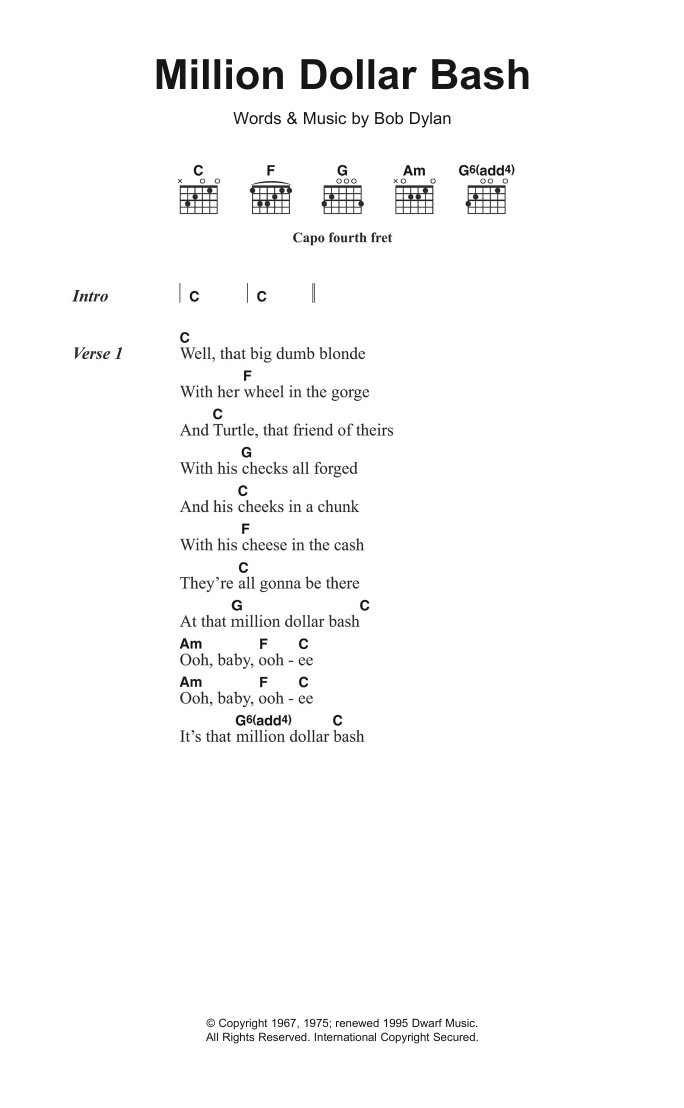
Bob Dylan fundamentally reshaped popular music by fusing folk traditions with contemporary songwriting, earning him the 1965 Nobel Prize in Literature. His work spans decades of evolution, from acoustic protest songs to electric arrangements, establishing him as one of the most influential singer-songwriters in music history. In educational settings, Dylan's catalog serves as a bridge between folk heritage and modern composition, offering rich material for studying lyrical narrative, harmonic sophistication, and the relationship between melody and meaning.
Dylan's influence on guitar education extends beyond technique into songwriting itself. His chord progressions, often built from folk foundations but enriched with unexpected harmonic turns, reward close study. Teachers and students alike find in his songs a powerful entry point for understanding how simple instrumentation can carry profound artistic weight.