
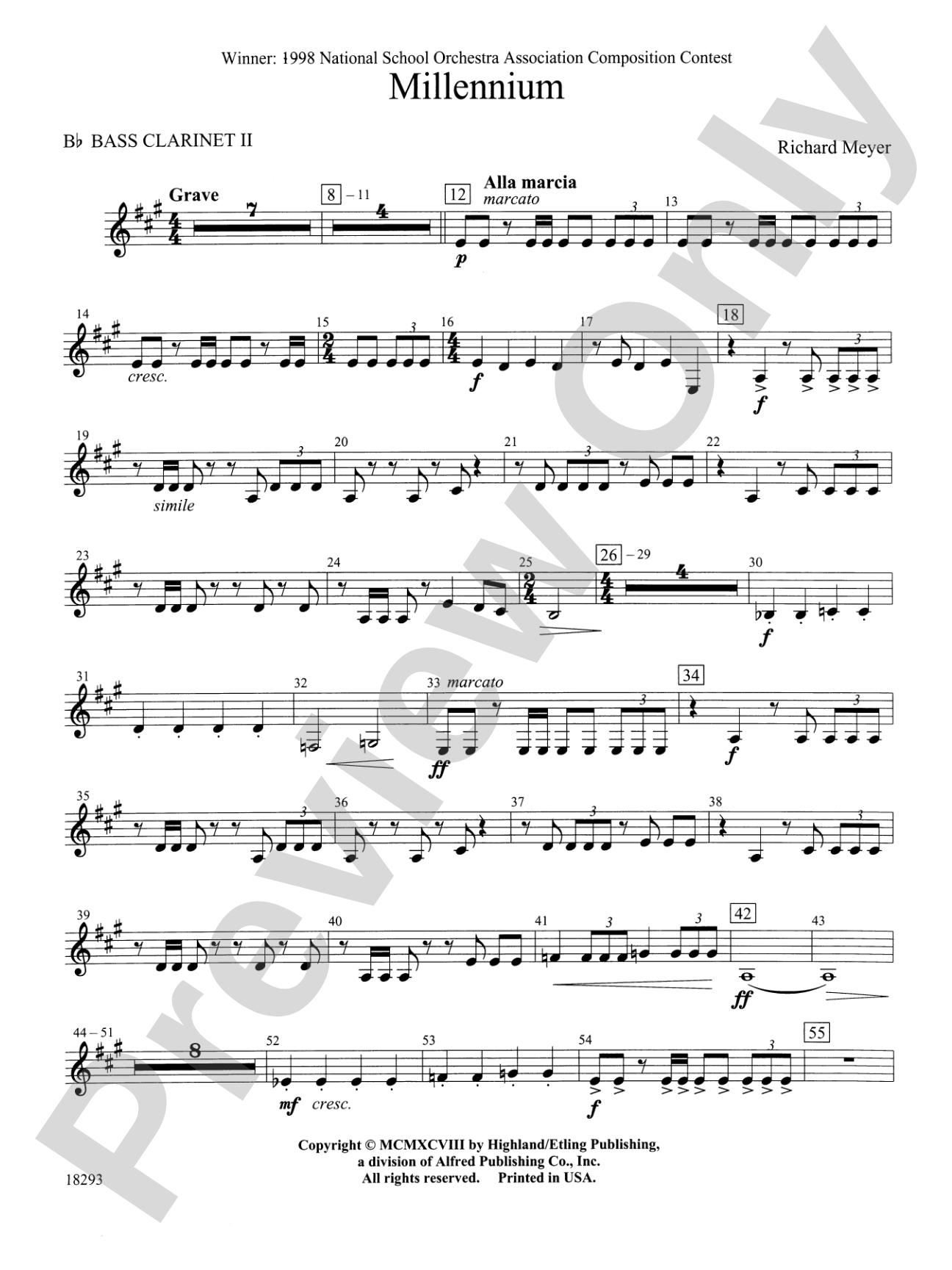

Millennium: Bass Clarinet 2
By Richard Meyer
Grade: 3
Item: 00-PC-0000268_BC2
$3.00
Pickup currently not available
Description
"Millennium," recorded this year by Alfred for the first time, was first released in 1998. Winner of the 1998 N.S.O.A. composition contest, this contemporary-sounding overture is extremely powerful and full of emotion from beginning to end. After a foreboding introduction, the heroic main theme is introduced by the brass section in unison, accompanied by the entire orchestra in a percussive, marcato style. A lyrical subordinate theme of extreme beauty follows, first stated by unison cellos, then picked up by the entire orchestra. The third and final section is a wild and energetic march, pitting brass against woodwinds and strings, leading into a final, majestic restatement of the main theme. Richard Meyer's colorful and imaginative scoring features every section of the symphony orchestra, resulting in a wonderfully mature-sounding, yet playable, 'tour de force' for the student orchestra.


Don't just read it, hear it, play along with it, and watch your students grow with it. In MakeMusic Cloud, Millennium: Bass Clarinet 2 comes alive with professional accompaniment, adjustable tempo, and built-in practice tools that turn solo practice into real progress.
Open in the Player
Jump straight in and assign it today.
Start Your Free Trial
Open this title and explore the full library in minutes.
Sample Audio
1
Audio File
--:--
0:00
0:00
Sample Video
No sample videos found.
Additional Details
Series:
Highland/Etling Full Orchestra
Publisher:
Alfred Music
Page Count:
206
SKU:
00-PC-0000268_BC2
More about this title
About the Composer: Richard Meyer
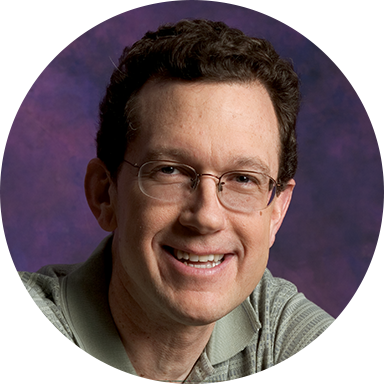
Richard Meyer spent 35 years in the public school classroom, building one of Southern California's most respected orchestra programs. At Oak Avenue Intermediate School in Temple City, he expanded the string cohort from 29 students to 200 and directed the district's elementary string initiative. His work earned him invitations to clinician positions at the A.S.T.A. National Conference, Texas Orchestra Directors' Association Conference, and string workshops across the country, where he has also guest-conducted All-State and Honor Orchestras.
Beyond the podium, Meyer is a prolific composer with over 190 published works and arrangements. He led the Pasadena Youth Symphony Orchestra for 16 years, taking them on tours to New York, Washington D.C., Vienna, Australia, and Canada. His "Giving Bach" program, launched in 2009, pioneered interactive concert models that bring live music to students with special needs and in underserved communities throughout Southern California. Meyer also served as string editor for Alfred Publishing and co-authored several foundational method resources, including the String Explorer Series.
Why we love this
"Millennium" gives Grade 3 orchestras a rare opportunity to sound genuinely mature without demanding virtuosity. Meyer's orchestration is genuinely colorful; every section gets its moment, and the harmonic language feels contemporary without being inaccessible. Conductors appreciate how the three-part architecture (foreboding opening, lyrical second theme, energetic final march) holds student attention and teaches the shape of a substantial concert work.
What to expect
The piece unfolds like a dramatic narrative. You begin in shadowed anticipation, then surge into heroic affirmation as the brass declares the main theme. A moment of serene beauty follows, offering contrast and emotional depth. The finale erupts in celebratory energy, brass and woodwinds trading bright themes while the entire orchestra charges toward a triumphant return of the opening idea.
Who it's for
Grade 3 full orchestras ready to program a substantial, genuinely exciting piece that sounds polished on stage. Directors seeking repertoire that showcases the entire ensemble and builds confidence without overshooting technical ability will find this particularly rewarding.
How to get the most out of it
- Shape the opening introduction with deliberate restraint; the silence and space matter as much as the notes. Let the tension build before the brass enters.
- Balance the marcato accompaniment in the first section so it drives rhythm without burying the heroic main theme. Young orchestras often play too loudly too soon.
- Bring out the cello section's lyrical statement by giving them a slight dynamic push and asking the rest of the orchestra to listen rather than accompany. This moment anchors the emotional arc of the piece.
- In the final march, clarify which instrumental group carries the melody in each phrase so the dialogue between brass, woodwinds, and strings reads clearly to the audience.
How to use it
Program this as the centerpiece of a concert that showcases technical maturity and interpretive range. Its combination of emotional depth and accessible scoring makes it ideal for winter concerts or spring festivals. Pair it with lighter openers or finales to balance the weight of its dramatic arc.
Skills your students will build
- Balancing marcato articulation across multiple sections while maintaining musical line
- Reading and executing dynamic contrast across large formal sections
- Listening to and supporting a solo section (cellos) within the ensemble texture
- Sustaining focus through a multi-movement structure within a single piece
- Responding to melodic independence in different instrumental groups within the same phrase