
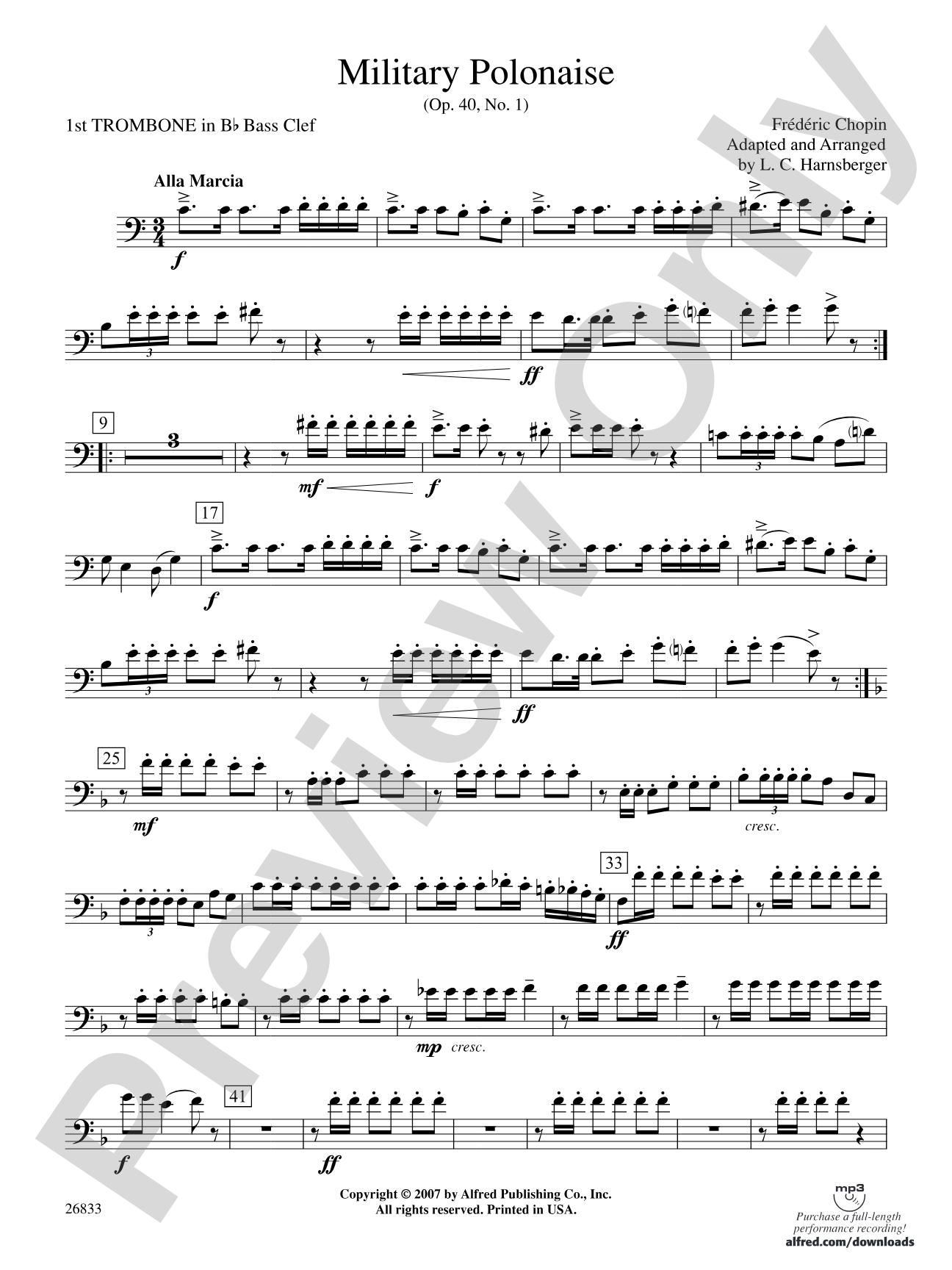
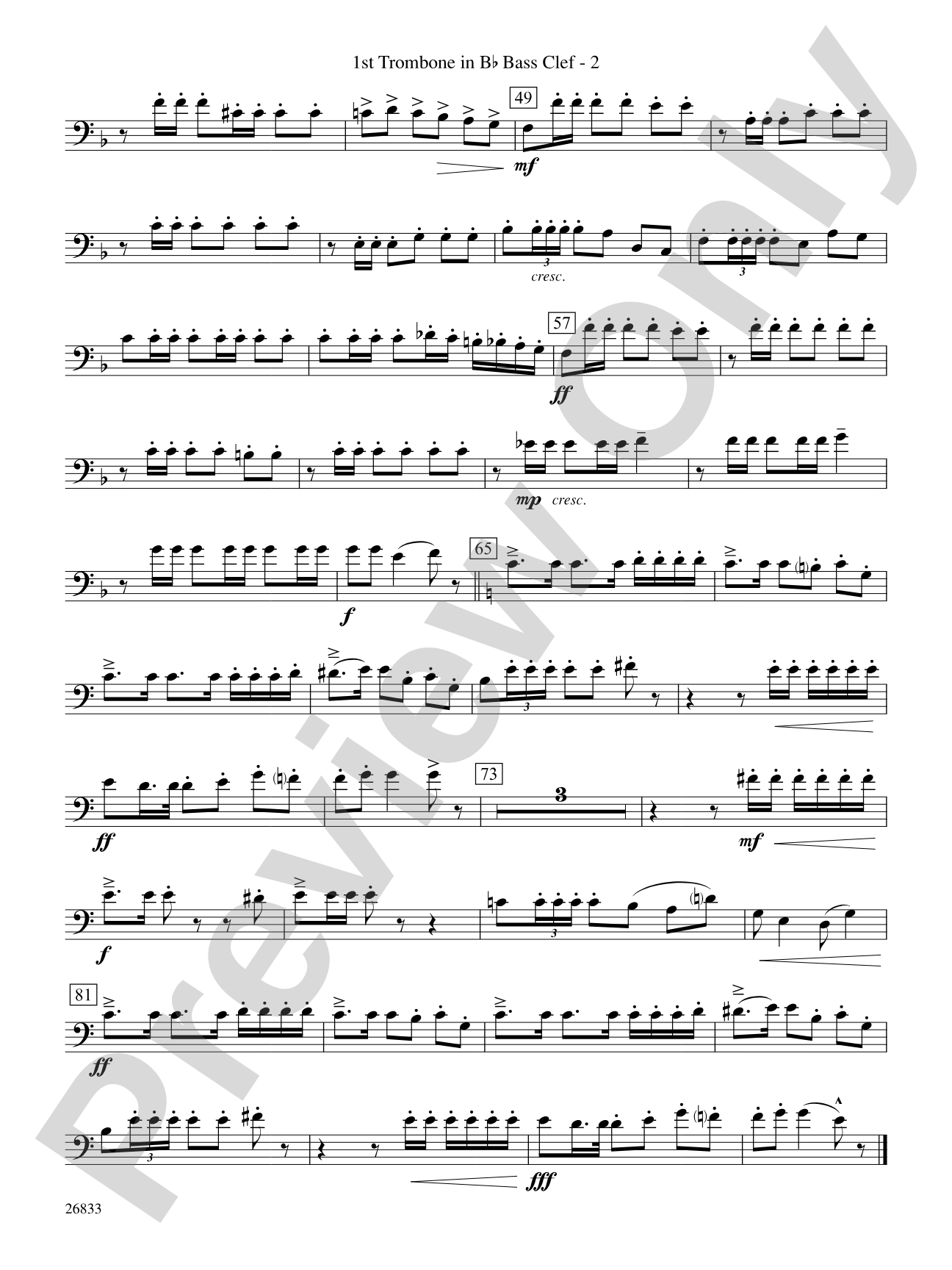

Military Polonaise: (wp) 1st B-flat Trombone B.C.
By Frédéric Chopin / arr. L. C. Harnsberger
Grade: 4 (Medium Difficult)
Item: 00-PC-0001271_wpTN1BC
$3.00
Pickup currently not available
Description
Of the many popular compositions by Frederic Chopin (1810--1849), none are better suited to concert band than his Military Polonaise (Op. 40 No. 1). This skillful transcription brings to life the powerful rhythms and brilliant fanfares of this masterpiece. The entire group shines with interesting parts for winds, brass and percussion alike. This exciting transcription will work equally well as an opener or closer for any concert. This title is available in MakeMusic Cloud.


Don't just read it, hear it, play along with it, and watch your students grow with it. In MakeMusic Cloud, Military Polonaise: (wp) 1st B-flat Trombone B.C. comes alive with professional accompaniment, adjustable tempo, and built-in practice tools that turn solo practice into real progress.
Open in the Player
Jump straight in and assign it today.
Start Your Free Trial
Open this title and explore the full library in minutes.
Sample Audio
1
Audio File
--:--
0:00
0:00
Sample Video
No sample videos found.
Additional Details
Series:
Alfred Concert Band
Publisher:
Alfred Music
Page Count:
134
SKU:
00-PC-0001271_wpTN1BC
More about this title
About the Composer: Frédéric Chopin
Frédéric Chopin (1810–1849) stands as one of the most influential composers of the Romantic era, known for his profound reshaping of keyboard music and his nationalist voice in 19th-century composition. A virtuoso pianist and prolific composer, Chopin created works that balanced technical brilliance with emotional depth, establishing the modern piano recital as an art form.
His polonaises occupy a distinctive place in his output. Rooted in the Polish court dance tradition, Chopin transformed these works into grand ceremonial statements that reflect both patriotic fervor and compositional sophistication. The Military Polonaise in particular showcases his gift for combining folk idioms with virtuosic brilliance, making it enduringly popular across musical settings.
Why we love this
L. C. Harnsberger has captured the essential character of Chopin's original without diluting its impact. The arrangement distributes the musical interest across the full ensemble, so every section plays material that matters, not filler lines. For a Grade 4 group, this delivers genuine brilliance and concert presence while remaining achievable in preparation.
What to expect
The Military Polonaise radiates ceremonial splendor and martial dignity. Brilliant fanfares punctuate a dance rhythm that marches forward with aristocratic bearing, creating an atmosphere of pageantry and power. The orchestration shimmers with color, moving between sections in ways that keep the ensemble engaged and the audience captivated from first note to last.
Who it's for
This arrangement serves Grade 4 concert bands that are ready for substantial repertoire with real musical content. Directors programming festival or contest events will find a piece that impresses without requiring a specialized ensemble or years of preparation. It works equally well for groups building confidence with recognized masterworks and those seeking a strong, recognizable opener or closer.
How to get the most out of it
- Balance the opening fanfare between brass and winds so that the melodic gestures read clearly over the accompaniment; excessive volume in either section will bury the harmonic foundation.
- Shape the rhythmic figures in the polonaise pattern itself. These are not mechanically even; they propel forward with the character of a processional march, requiring slight emphasis on the characteristic triple pulse.
- Monitor woodwind intonation closely during sustained passages supporting brass soloists. Chopin's harmonic language rewards precision, and tuning lapses become audible quickly.
- Use the percussion judiciously in outer sections; the timpani and percussion writing should enhance momentum without overwhelming the wind textures.
How to use it
Program this as an opener to establish an energetic, confident tone for your concert, or place it as a closer to send the audience out on a wave of triumphant sound. It pairs well alongside other Romantic-era transcriptions or contrasts effectively with contemporary band works. The piece also makes an excellent choice for festival and contest contexts where judges respond to stylistic clarity and ensemble discipline.
Skills your students will build
- Sustaining energy across a full-length concert work without loss of focus
- Balancing independent line writing across winds, brass, and percussion sections
- Interpreting the rhythmic character of historical dance forms in modern ensemble context
- Responding to sectional leadership and maintaining ensemble cohesion in a multi-faceted arrangement
- Executing rapid articulation and technical passage work at medium-fast tempos