Milde: Twenty-five Studies, Op. 24 Sheet Music Preview

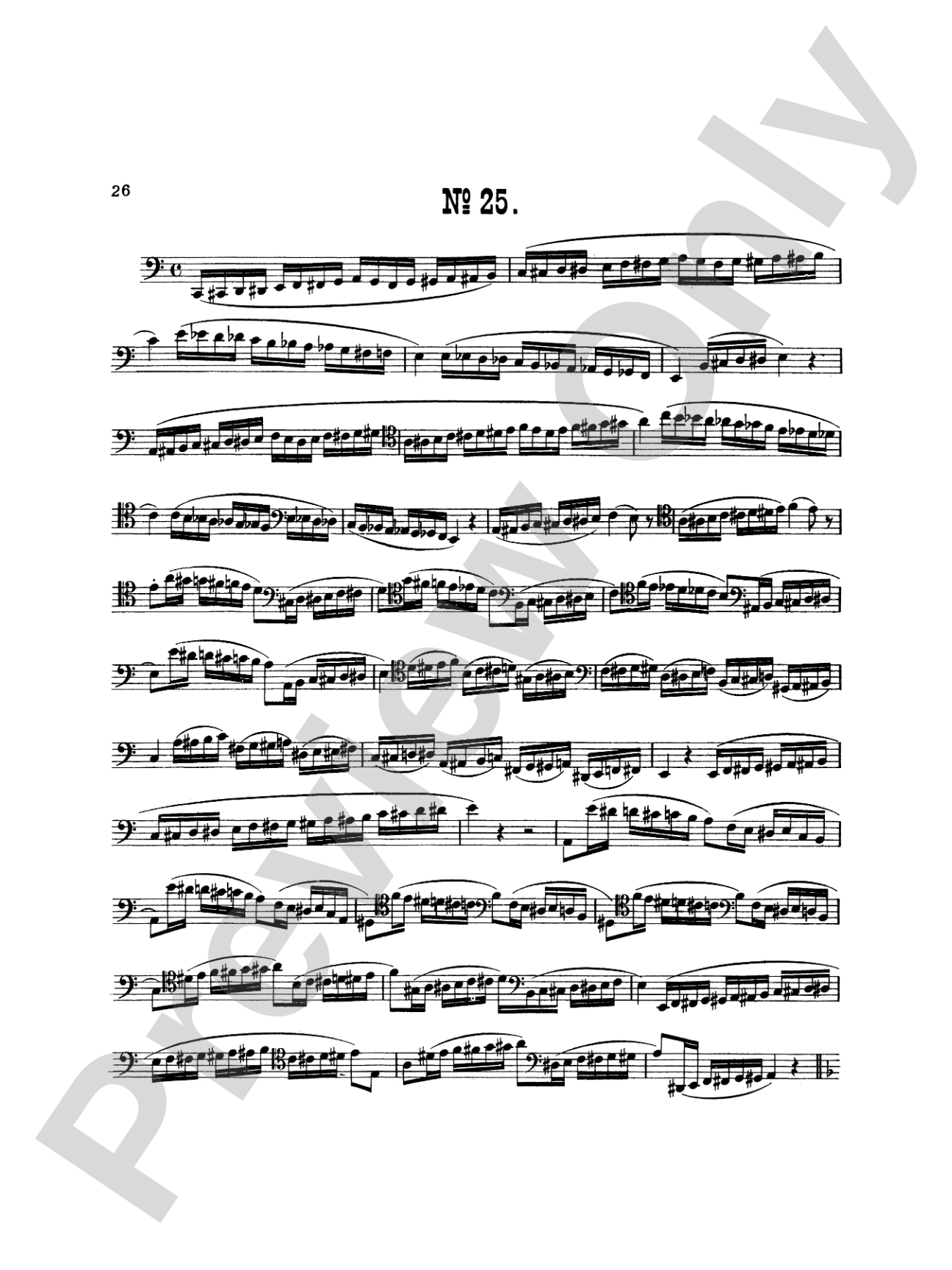
Milde: Twenty-five Studies, Op. 24

By Ludwig Milde

Item: 00-PC-0009915

Digital Download
$0.99
Description
A collection of exercises, for Bassoon, composed by Ludwig Milde.

Don't just read it, hear it, play along with it, and watch your students grow with it. In MakeMusic Cloud, Milde: Twenty-five Studies, Op. 24 comes alive with professional accompaniment, adjustable tempo, and built-in practice tools that turn solo practice into real progress.

Sample Audio
No sample audio found.
Sample Video
Additional Details
Series: Kalmus Edition
Publisher: Alfred Music
Page Count: 28
SKU: 00-PC-0009915

More about this title

About the Composer: Ludwig Milde

Ludwig Milde (1820-1899) was a German bassoonist and composer whose studies and pedagogical works became foundational to bassoon technique in the 19th century. A virtuoso performer of his era, Milde wrote extensively for his instrument with an understanding of its capabilities and limitations that only a master player could bring to composition.

Why we love this

These twenty-five studies strike a rare balance between musical substance and technical purpose. Rather than abstract finger drills, Milde crafts each exercise as a small composition that develops idiomatic bassoon writing while targeting specific challenges of intonation, articulation, and passage work. Advanced students stop thinking of these as exercises and start performing them as genuine musical statements.

What to expect

Lyrical and purposeful. Milde writes with elegance and harmonic sensibility; even the most technically demanding passages breathe like actual music rather than scales or broken arpeggios. There is an old-world quality to the writing, with clear roots in Romantic-era compositional values.

Who it's for

Advanced high school bassoonists preparing for college auditions and young professional players refining their technique. These studies assume solid fundamentals and reward the kind of focused, thoughtful practice that distinguishes serious students from casual ones.

How to get the most out of it

  • Approach each study as a complete musical phrase rather than a technical gauntlet; attend to the shape, phrasing, and dynamic arc from opening to close.
  • Use the variety of articulation patterns throughout the collection to build flexibility between legato and tongued passages without sacrificing tone quality.
  • Take time to establish a secure sense of pitch in the more sustained passages; Milde's writing exposes intonation challenges that reward patient, deliberate practice.
  • Treat the collection as a progression; earlier studies establish foundational control before later ones layer in greater technical demands and range extension.

How to use it

These are best used as a private studio resource or ensemble preparation tool rather than as concert material. Assign individual studies based on a student's technical needs, cycling through the collection over the course of a year or season to ensure comprehensive skill development.

Skills your students will build

  • Sustained tone production across the full range of the instrument
  • Articulation clarity in scalar and arpeggio passages
  • Intonation control in second register work
  • Legato phrasing and bow control (for expressive lines)
  • Quick finger passage work and coordination
  • Dynamic control and phrase shaping within a single-voice context

You May Also Like