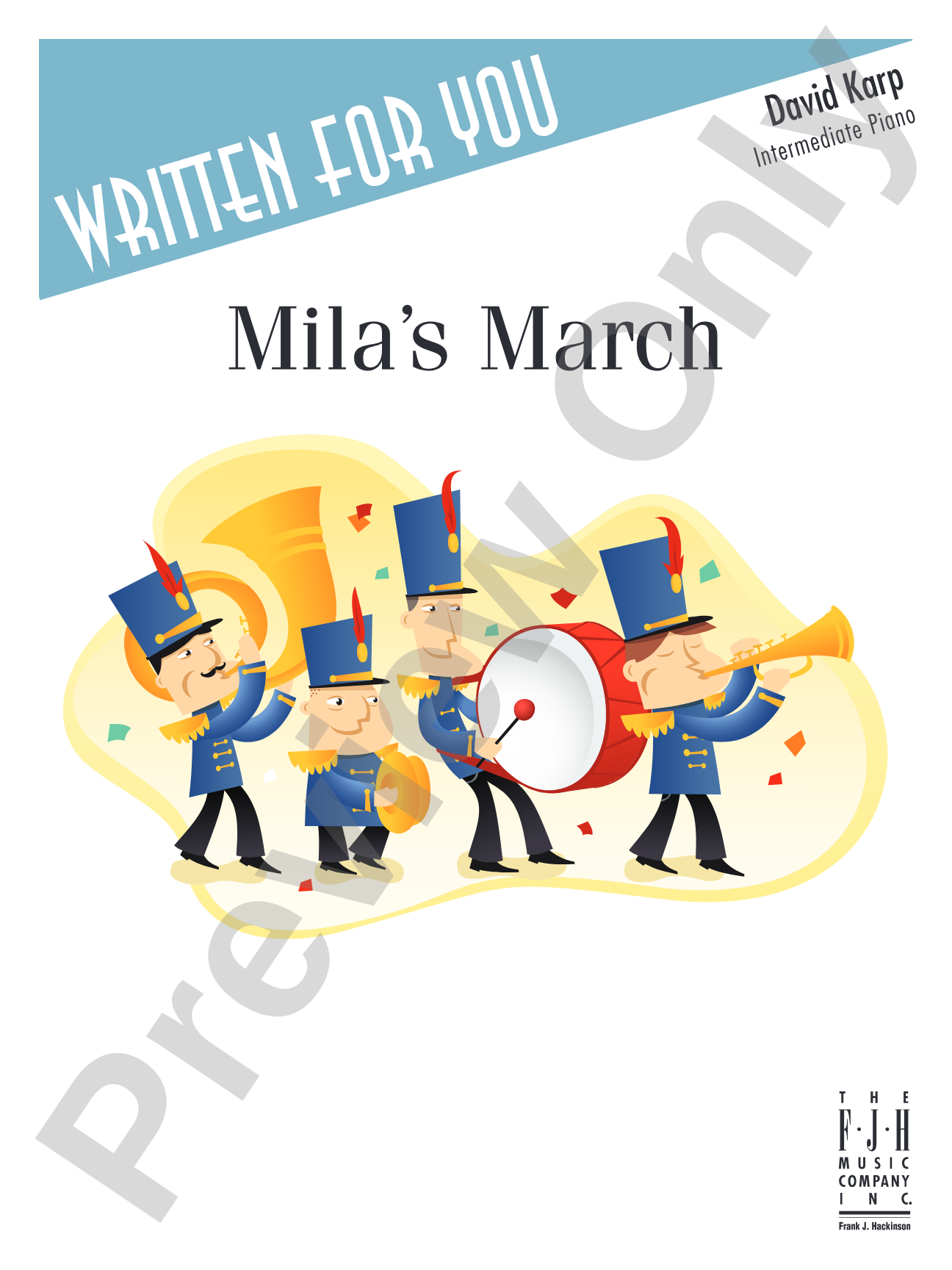
Add a touch of modernism to your next student recital with this easy-to-play march in a neoclassical style. Featuring alternating staccato 3rds in the L.H., polytonal chords, and a cheerful melody.
Discover MakeMusic Cloud: thousands of interactive titles your students can play along with today.
Karp writes for student pianists with a sharp ear for what actually works in a recital setting. This march demonstrates how contemporary compositional techniques (polytonal harmony, varied textures) can feel accessible and fun rather than academic. It's the kind of piece that lets intermediate students sound more sophisticated than their technical level might suggest.
What to expect
Bright and purposeful, with the structured confidence of a traditional march softened by modern harmonic colors. The staccato thirds create a bouncy, almost playful undercurrent while the neoclassical polytonal writing gives it sophistication and character that feels fresh rather than nostalgic.
Who it's for
Intermediate pianists ready to explore twentieth-century compositional language without venturing into technical extremes. This piece suits students who've mastered solid technique and want repertoire that feels contemporary and musically interesting for a public performance.
How to get the most out of it
Shape the alternating staccato thirds in the left hand with clarity and rhythmic precision; they're the rhythmic heartbeat of the piece and deserve as much attention as the melody.
Balance the polytonal chords so listeners hear the individual layers rather than thick, muddied harmony; think of it as layering distinct colors rather than blending them.
Keep the tempo steady and energetic throughout; a march lives and dies by its forward momentum, so resist the urge to slow down in softer sections.
Let the cheerful melody shine in the upper register without overshadowing the textural interplay below; both elements matter equally.
How to use it
Pair it with a Romantic-era piece to frame a program that demonstrates how pianists approach different historical voices. Its moderate length and high energy make it an excellent opener or encore that energizes an audience without demanding extensive recital time.
Skills your students will build
Reading and executing polytonal harmonies
Maintaining rhythmic independence between hands (melody versus accompaniment pattern)
Articulating staccato figures clearly while controlling tone
Interpreting contemporary compositional techniques with musical intention rather than mechanical precision
Building confidence in twentieth-century piano repertoire
You May Also Like
Scan to Complete Your Purchase
Use your phone's camera to scan the code below
You'll log in on your phone and the order will be added to your account