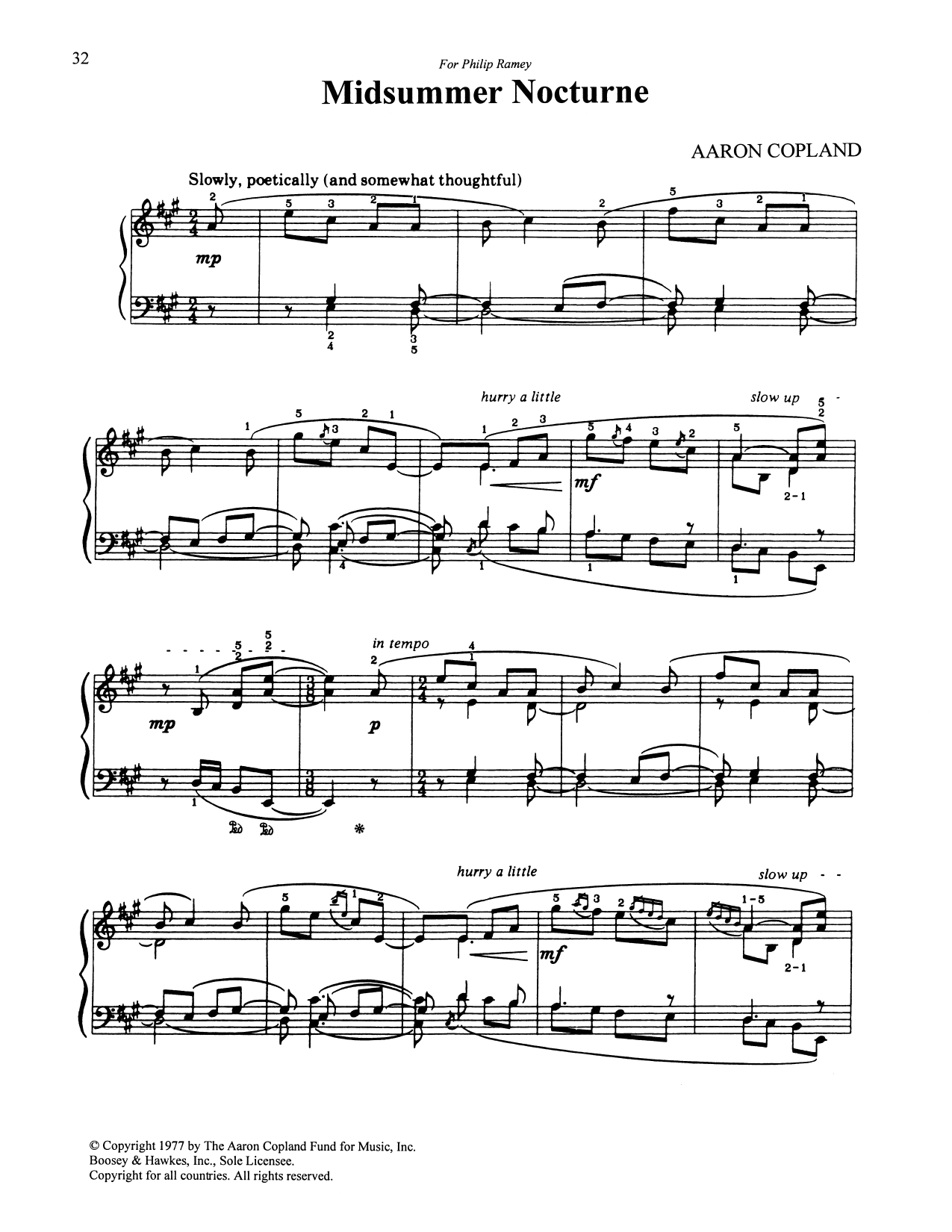
Aaron Copland (1900-1990) shaped American classical music by drawing directly from folk idioms, hymns, and popular song. His ability to weave vernacular materials into sophisticated concert works made him one of the most performed composers in the United States, and his influence on music education remains profound. Copland's piano writing balances technical accessibility with genuine artistic depth, making his solo works invaluable for developing pianists seeking authenticity beyond European Romanticism.
Why we love this
Copland's piano voice is direct and unsentimental yet deeply lyrical. This work sits at the sweet spot where intermediate pianists can access genuine artistry without the technical excess that often obscures musical intent in the late Romantic repertoire.
What to expect
Quiet reflection under open sky. The piece moves with the unhurried quality of a night landscape, spare in texture but rich in harmonic color, creating an intimate conversation between pianist and listener.
Who it's for
Intermediate to advanced pianists looking for American repertoire with substance and character. This piece rewards players who have developed secure technique and can focus on interpretive nuance without fighting the notes.
How to get the most out of it
Resist the temptation to over-pedal during sustained passages; let harmonic shifts come through clearly by changing the pedal precisely at voice changes rather than holding atmospheric blurs
Shape the melodic line with freedom in rubato rather than forcing rigid tempo, as Copland's folk-influenced phrasing often calls for the flexibility of speech
Distinguish texture between foreground melody and accompaniment through dynamic control and voicing rather than tempo shifts; this clarity keeps the piece emotionally grounded
How to use it
Pair this with other American solo works for a concert celebrating Copland's intimate side, or use it as a contrast program piece alongside more virtuosic Romantic repertoire. It works particularly well as a recital opener that establishes a thoughtful, introspective mood.
Skills your students will build
Pedal technique in sparse textures
Voicing and balance in two-voice counterpoint
Rubato phrasing informed by folk melody
Dynamic control without excessive tempo variation
You May Also Like
Scan to Complete Your Purchase
Use your phone's camera to scan the code below
You'll log in on your phone and the order will be added to your account