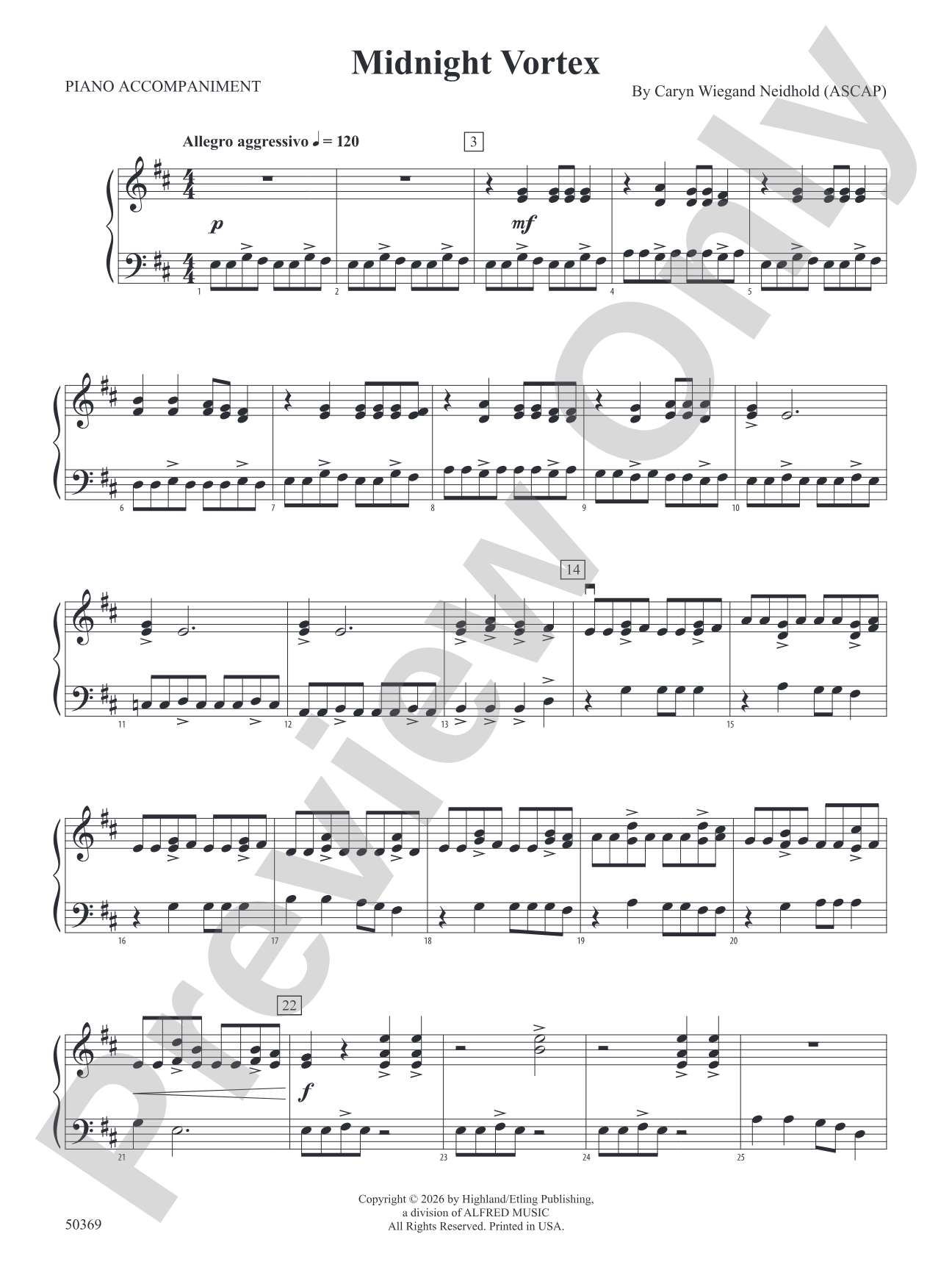
MIDNIGHT VORTEX/HSO: Piano Accompaniment Sheet Music Preview

MIDNIGHT VORTEX/HSO: Piano Accompaniment

By Caryn Wiegand Neidhold

Grade: 1.5

Item: 00-PC-0019668_K

Digital Download
$3.00
Description
Cool col legno, an intense beat, and dark minor tonalities beckon students into the Midnight Vortex, by Caryn Wiegand Neidhold. With violin 2 and viola parts doubled and a bass part that is an accessible version of the cello part, students will feel supported and successful. The optional ride cymbal and tambourine parts are attainable for a student musician.

Don't just read it, hear it, play along with it, and watch your students grow with it. In MakeMusic Cloud, MIDNIGHT VORTEX/HSO: Piano Accompaniment comes alive with professional accompaniment, adjustable tempo, and built-in practice tools that turn solo practice into real progress.

Sample Audio
0:00
0:00
Sample Video
Additional Details
Series: Highland String Orchestra
Publisher: Alfred Music
SKU: 00-PC-0019668_K

More about this title

About the Composer: Caryn Wiegand Neidhold

Caryn Wiegand Neidhold

Caryn Wiegand Neidhold is a composer and educator known for writing accessible, engaging music for young ensembles. Her work balances contemporary sound with pedagogical clarity, creating pieces that challenge students musically while remaining within their technical reach. Neidhold's compositions appear regularly in festival and contest settings, where they've earned recognition for their craft and inventive orchestration.

Her approach to string orchestra writing prioritizes student success through thoughtful doublings and optional parts, allowing directors to scale performances to their ensemble's needs without sacrificing musical integrity.

Why we love this

Midnight Vortex proves that exciting, modern sonorities don't require advanced technique. The col legno writing and syncopated rhythmic energy create genuine textural interest, while the doubled violin 2 and viola parts plus simplified bass line give students real support without sounding patronizing. This is a piece your ensemble will want to play again after the first rehearsal.

What to expect

Midnight Vortex pulls you into its title's atmosphere immediately: col legno violin scratches create an unsettling texture while a driving, syncopated beat propels the ensemble forward. The dark minor harmonic world feels contemporary and slightly edgy, like walking through shadow with intention rather than fear.

Who it's for

This piece fits Grade 1.5 orchestras with mixed ability levels, especially ensembles that need accessible material without sacrificing contemporary appeal. Directors seeking contest or festival repertoire at this level will find a strong choice here. The optional percussion parts also make this work flexible for groups that blend string players with developing percussionists.

How to get the most out of it

  • Shape the col legno passages with clear articulation; the scratchy, percussive quality works best when students attack each stroke intentionally rather than letting it blur.
  • Lock the ride cymbal and tambourine parts into the pulse early, since these optional percussion lines anchor the rhythmic intensity of the piece.
  • Balance the viola and violin 2 doublings so they reinforce harmonic weight without drowning out the violin 1 line; these parts carry crucial support but shouldn't dominate.
  • Emphasize the dark minor tonality by keeping the overall sound focused and slightly restrained; the piece's drama comes from density and texture, not volume alone.

How to use it

Program this as an opener or centerpiece for a contemporary-focused concert; its distinctive sound creates a memorable impression and sets an energetic tone. It also works well on festival or contest programs where you want to showcase your orchestra's versatility and rhythmic precision without requiring virtuosic technical demands.

Skills your students will build

  • Playing col legno technique with clear articulation and control
  • Maintaining syncopated rhythmic precision in an ensemble context
  • Balancing part independence while supporting harmonic structure in doubled voicings
  • Reading and responding to modern, non-traditional notation
  • Ensemble blend and textural awareness with optional percussion integration

You May Also Like