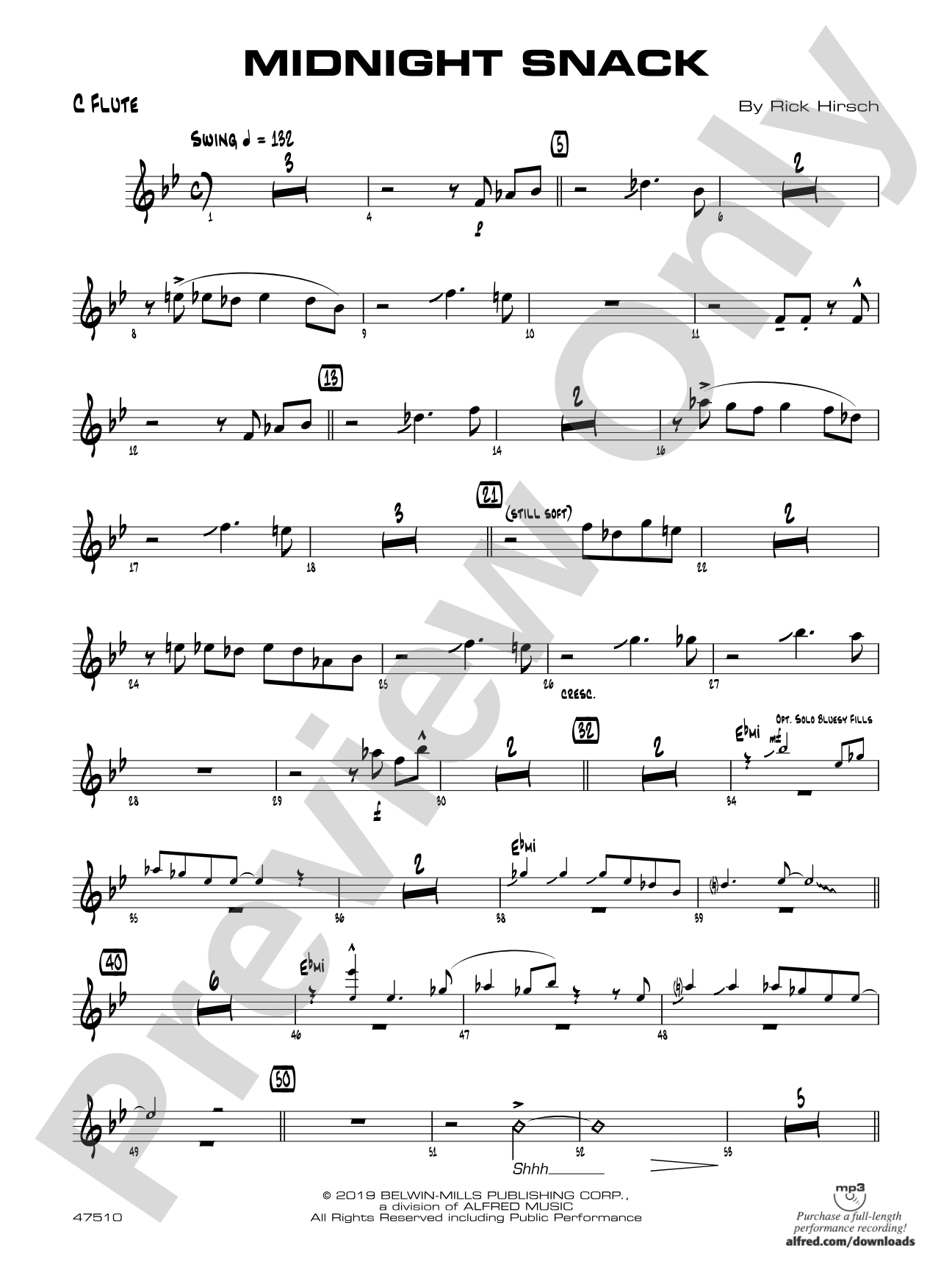
Midnight Snack: Flute Sheet Music Preview

Midnight Snack: Flute

By Rick Hirsch

Grade: 1 (Easy)

Item: 00-PC-0018019_F1

Digital Download
$3.00
Description
A very clever chart for a younger band featuring a few sound effects. An easy swing played around 132 BPM with written solos cued for all saxes and trumpets. Trumpet 1 range is to written E-flat top space, optional flute, clarinet, and vibes parts too. This title is available in MakeMusic Cloud.

Don't just read it, hear it, play along with it, and watch your students grow with it. In MakeMusic Cloud, Midnight Snack: Flute comes alive with professional accompaniment, adjustable tempo, and built-in practice tools that turn solo practice into real progress.

Sample Audio
0:00
0:00
Sample Video
Additional Details
Series: First Year Charts for Jazz Ensemble
Publisher: Alfred Music
Page Count: 86
SKU: 00-PC-0018019_F1

More about this title

About the Composer: Rick Hirsch

Rick Hirsch

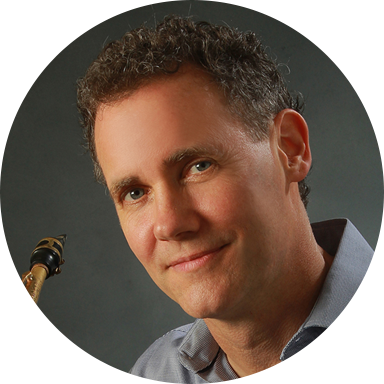
Rick Hirsch brings decades of professional jazz experience to his writing for young ensembles. A graduate of UMass-Amherst and Northern Illinois University, he spent formative years as a music copyist for legendary arrangers Bob Mintzer and Toshiko Akiyoshi, then went on to compose and arrange for jazz luminaries including Yusef Lateef and Eddie Henderson. His work has been performed by ensembles ranging from the Penn State Blue Band to All-State and District Jazz Bands across the country.

Hirsch spent time on Penn State's music faculty and continues to guest conduct at regional jazz festivals and competitions. In 2017, his own ensemble BIG OL' BAND released their debut album, Pocono Git-Down, showcasing the thriving jazz communities in smaller American cities. His arrangements for student groups reflect his deep understanding of what young players need to develop genuine jazz vocabulary.

Why we love this

Hirsch understands that clever doesn't have to mean complicated. The sound effects keep players engaged without becoming a distraction, and the swing feel at 132 BPM sits in a sweet spot where younger ensembles can actually groove without fighting the tempo. What really stands out is the solo cueing for both saxes and trumpets; every player gets a moment to shine, which builds confidence and keeps the whole band locked in.

What to expect

The title itself sets the tone: quirky, lighthearted, and unpretentious. This is swing that grooves without pretense, the kind of tune that makes young players remember why they wanted to play jazz in the first place. The sound effects add a playful theatrical element that keeps the room's energy up.

Who it's for

First-year jazz ensembles and younger groups ready to explore swing idioms with real soloing opportunities. The optional flute, clarinet, and vibes parts give you flexibility depending on what instruments your students play, so it works for bands of varying configurations.

How to get the most out of it

  • Keep the written solos conversational rather than flashy. The point isn't virtuosity; it's letting young soloists find their voice within a supportive ensemble texture.
  • The sound effects should land as musical punctuation, not gimmickry. Rehearse the timing so they feel like part of the chart's personality, not an interruption.
  • Lock the hi-hat and kick drum early in rehearsal so the rhythm section establishes the groove pocket before soloists come in; a solid rhythm foundation makes solo passages feel secure.

How to use it

Slip this into a concert when you want to show a younger audience what a real jazz ensemble sounds like without demanding serious concentration. It's equally at home on a jazz festival clinic performance or as the opener for an evening that includes more ambitious work; its accessibility draws listeners in and builds goodwill for what comes next.

Skills your students will build

  • Swinging eighth-note subdivision and feel (132 BPM reference tempo)
  • Reading and executing written solo sections with ensemble accompaniment
  • Responding to section-specific cues while maintaining ensemble cohesion
  • Managing extended trumpet range through written E-flat top space
  • Balancing written rhythm section parts to establish and maintain groove

You May Also Like