
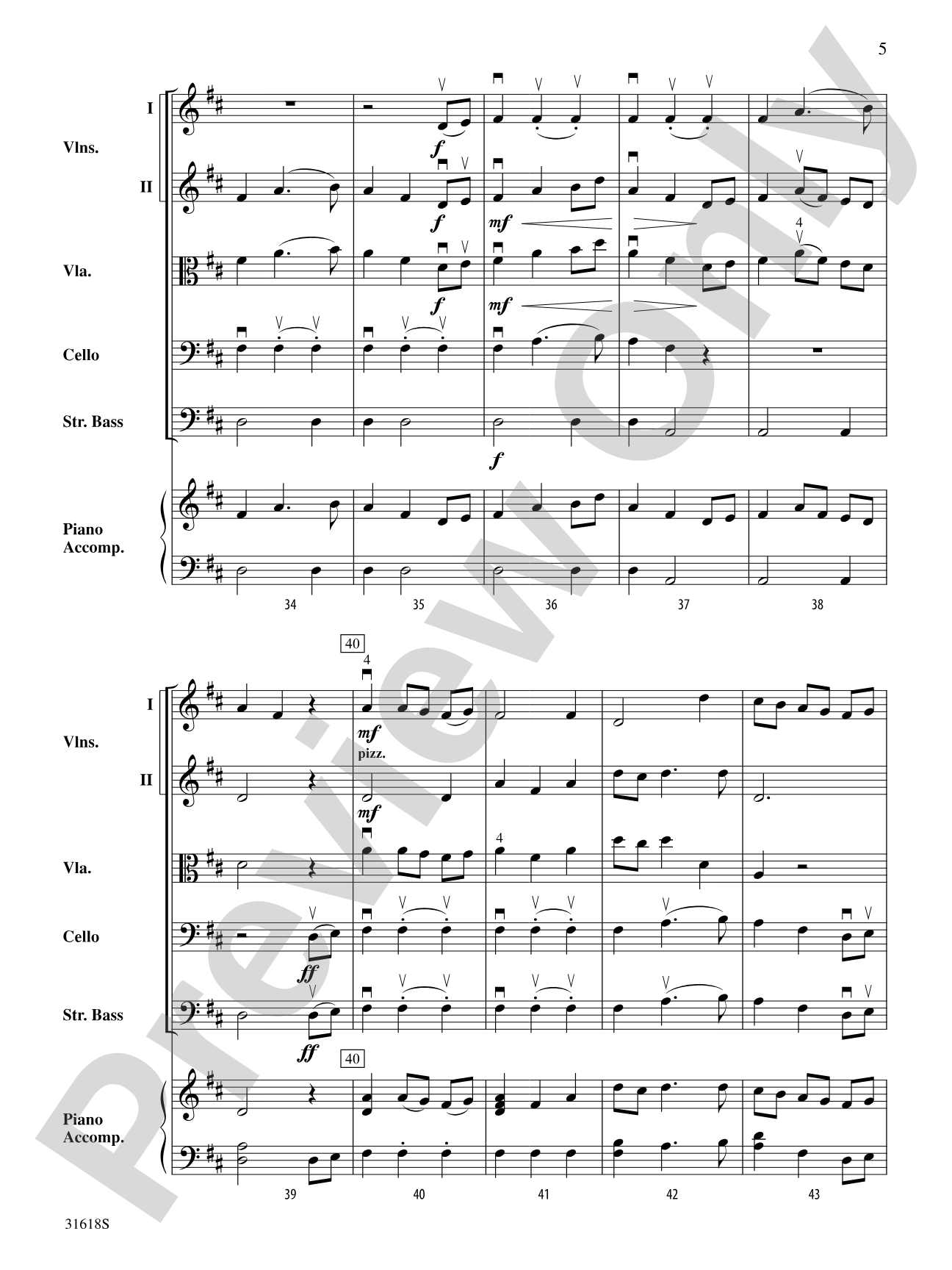
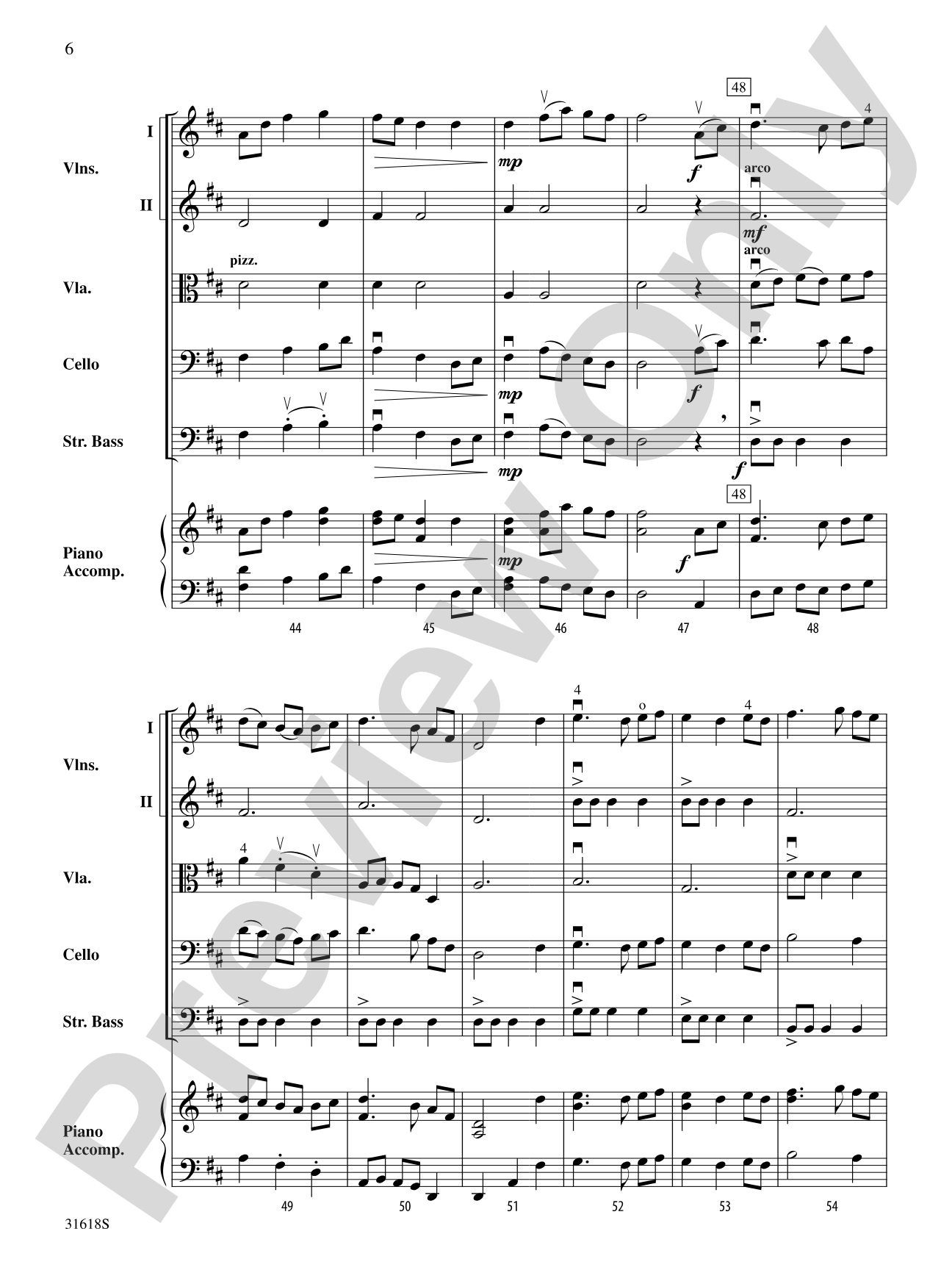
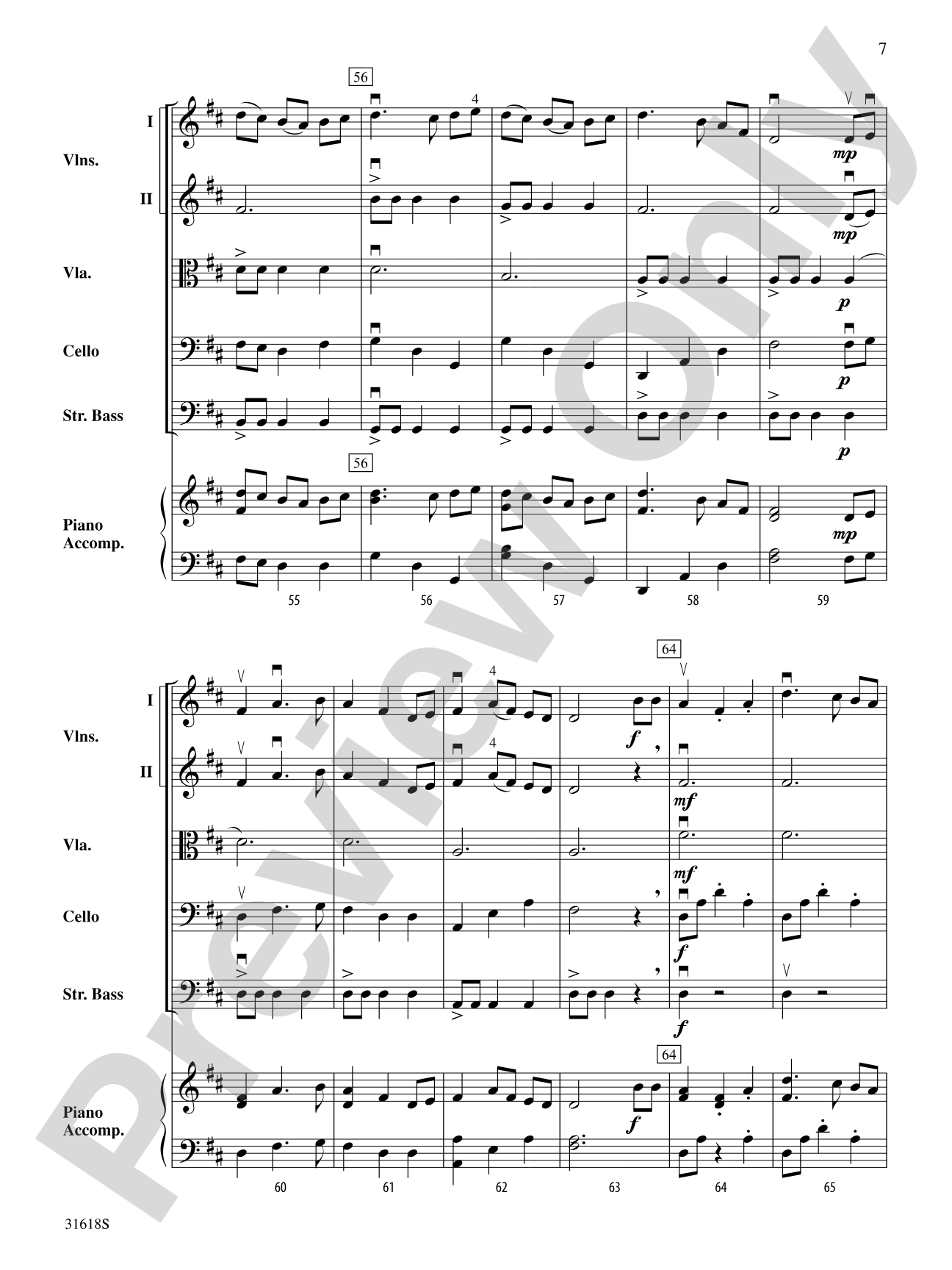
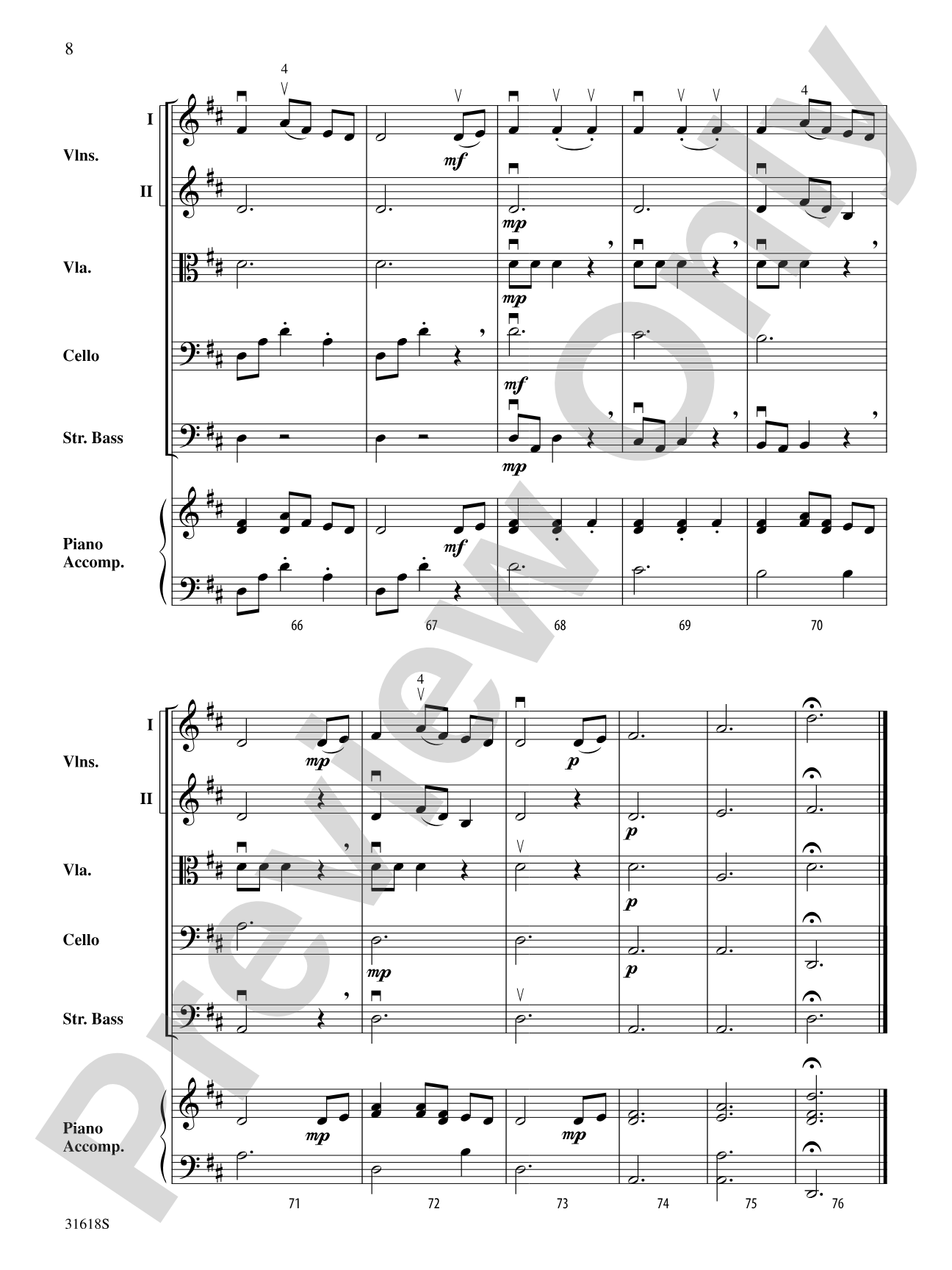

Midnight on the Water: String Orchestra Conductor Score & Parts
By Benny Thomasson / arr. Renata Bratt
Grade: 2
Item: 00-PK-0005936

$45.00
Pickup currently not available
Buy Extra Parts (Digital PDF Download)
| Product | Price | Quantity |
|---|---|---|
| Midnight on the Water: Score | $7.00 | |
| Midnight on the Water: 1st Violin | $5.99 | |
| Midnight on the Water: 2nd Violin | $5.99 | |
| Midnight on the Water: Viola | $5.99 | |
| Midnight on the Water: Cello | $5.99 | |
| Midnight on the Water: String Bass | $5.99 | |
| Midnight on the Water: Piano Accompaniment | $5.99 |
Parts Added to Cart!
Description
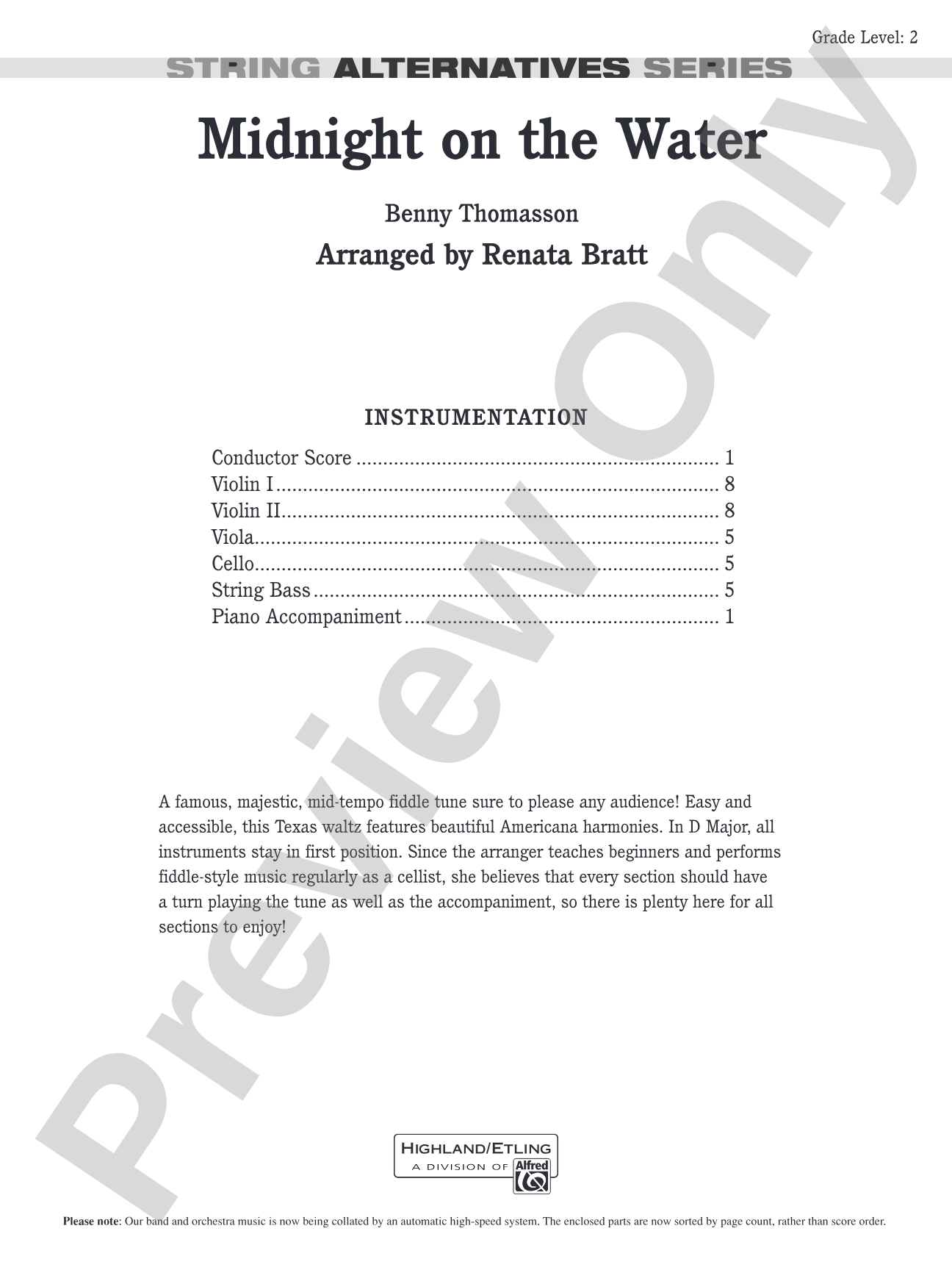
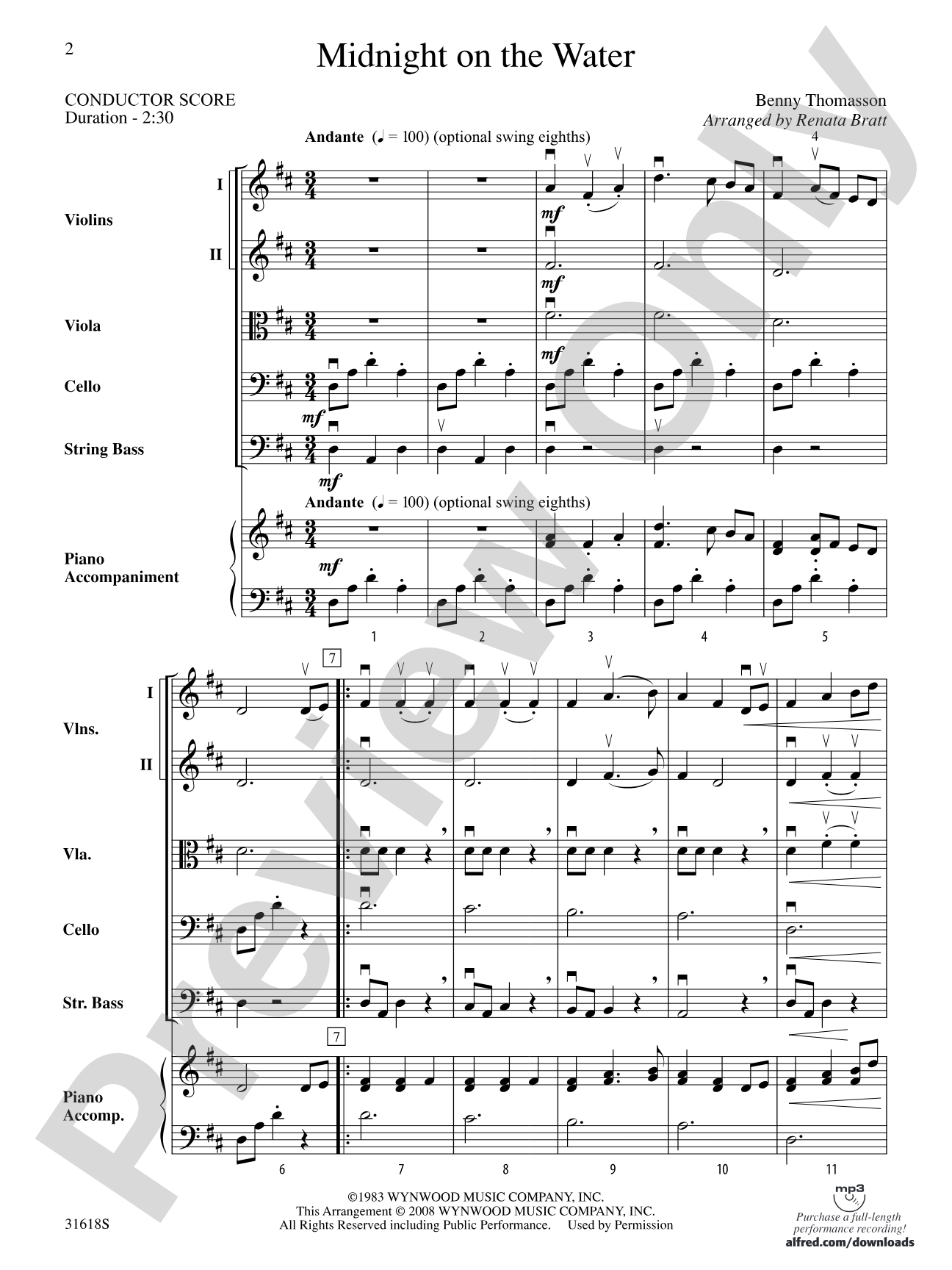
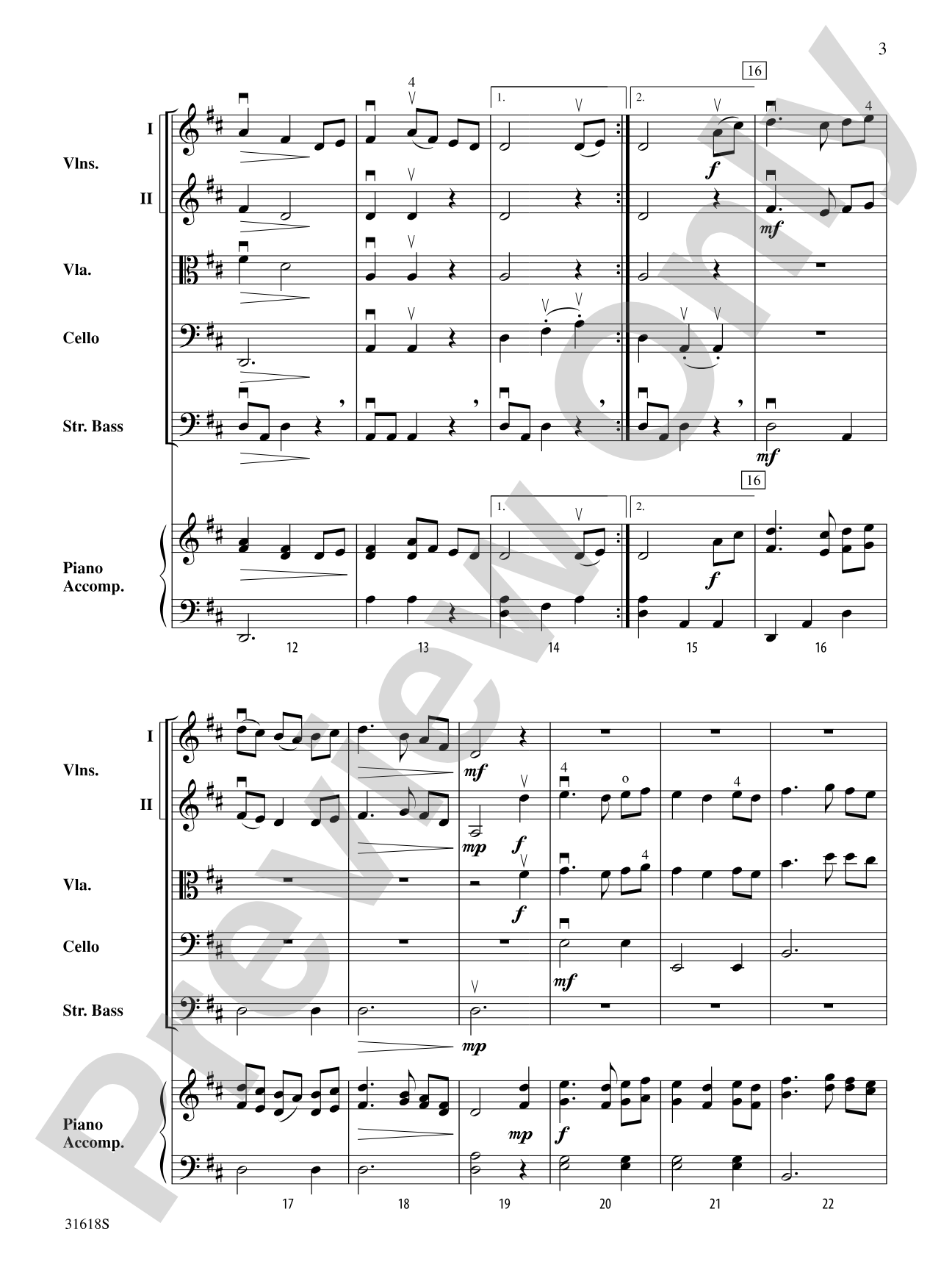
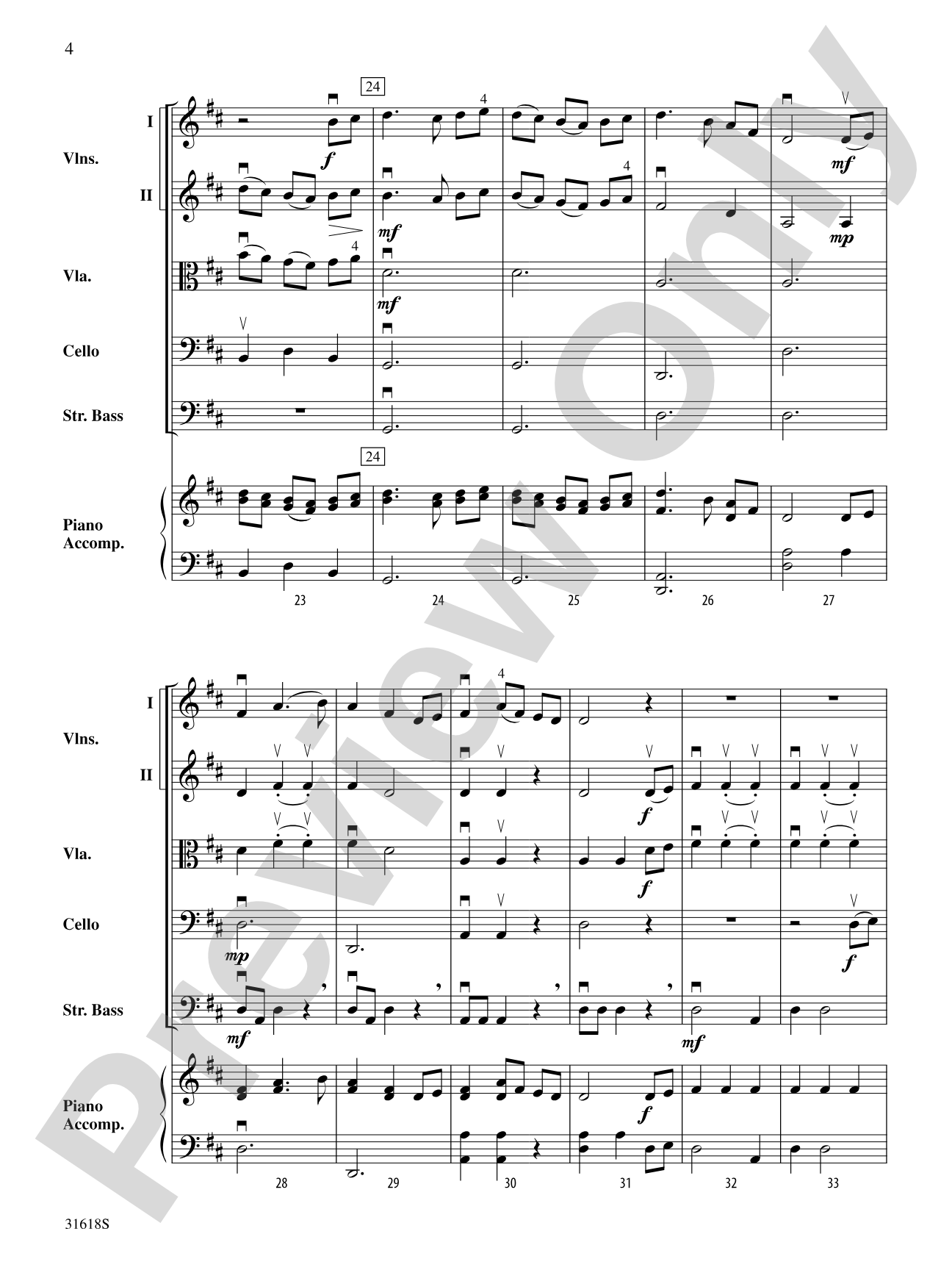
A famous, majestic, mid-tempo fiddle tune sure to please any audience! Easy and accessible, this Texas waltz features beautiful Americana harmonies. In D Major, all instruments stay in first position. Since the arranger teaches beginners and performs fiddle-style music regularly as a cellist, she believes that every section should have a turn playing the tune as well as the accompaniment, so there is plenty here for all sections to enjoy!


Don't just read it, hear it, play along with it, and watch your students grow with it. In MakeMusic Cloud, Midnight on the Water: String Orchestra Conductor Score & Parts comes alive with professional accompaniment, adjustable tempo, and built-in practice tools that turn solo practice into real progress.
Open in the Player
Jump straight in and assign it today.
Start Your Free Trial
Open this title and explore the full library in minutes.
Sample Audio
1
Audio File
--:--
0:00
0:00
Sample Video
No sample videos found.
Additional Details
Series:
Highland/Etling String Alternatives
Publisher:
Alfred Music
Page Count:
128
SKU:
00-PK-0005936
More about this title
About the Composer: Benny Thomasson
Benny Thomasson (1923-2012) was a legendary Texas fiddler and composer whose fiddle tunes became cornerstones of Western swing and Texas dance music. His compositions capture the spirit of American frontier music with memorable melodies and accessible harmonic structures that translate beautifully to teaching settings.
Thomasson's influence on string education extends far beyond his performing career. His tunes have inspired arrangers to create repertoire that honors fiddle traditions while remaining pedagogically sound for developing musicians, making his work a bridge between folk heritage and classroom ensemble learning.
Why we love this
Renata Bratt's arrangement honors the fiddle tradition while solving a real curricular need: a Grade 2 piece that distributes musical interest across all sections. Every part player gets to carry the melody and support others, which builds ensemble awareness and keeps young musicians engaged throughout rehearsal and performance.
What to expect
Majestic yet approachable, this Texas waltz flows with the unhurried grace of open-country music. The D Major tonality and Americana harmonies evoke wide horizons and steady rhythms, creating a performance moment that feels both dignified and warmly familiar to any audience.
Who it's for
String orchestras at the Grade 2 level, including beginning high school ensembles and intermediate middle school groups. This arrangement works equally well for youth orchestras and community ensembles where players are solidifying first-position reading and developing collaborative listening skills.
How to get the most out of it
- Emphasize the lilt of the waltz by keeping a relaxed pulse in three; resist rushing the tempo, which will flatten the Americana character.
- Balance the melody holder with the accompaniment parts through careful dynamic shaping. When passing the tune between sections, ensure smooth handoffs by having the incoming section enter at full voice while the outgoing section releases cleanly.
- Maintain first-position integrity in all parts, which means intonation clarity comes from consistent finger placement and bow control rather than thumb position adjustments.
- Bring out the beauty of the harmonies by encouraging sections to listen for chord resonance; this Texas waltz rewards players who hear how their part supports the larger harmonic landscape.
How to use it
Program this as a bridge between lighter concert openers and more demanding contemporary or classical repertoire. Its accessibility and infectious charm make it ideal for family concerts, community performances, or end-of-semester showcases where you want to celebrate student progress without technical strain.
Skills your students will build
- Reading and performing in D Major with confidence in first position
- Balancing melody and accompaniment roles within an ensemble texture
- Playing with stylistic awareness of fiddle-tune phrasing and Americana idiom
- Listening for harmonic color and resonance while supporting ensemble sound
- Sustaining moderate tempo with steady rhythmic pulse across a waltz form