
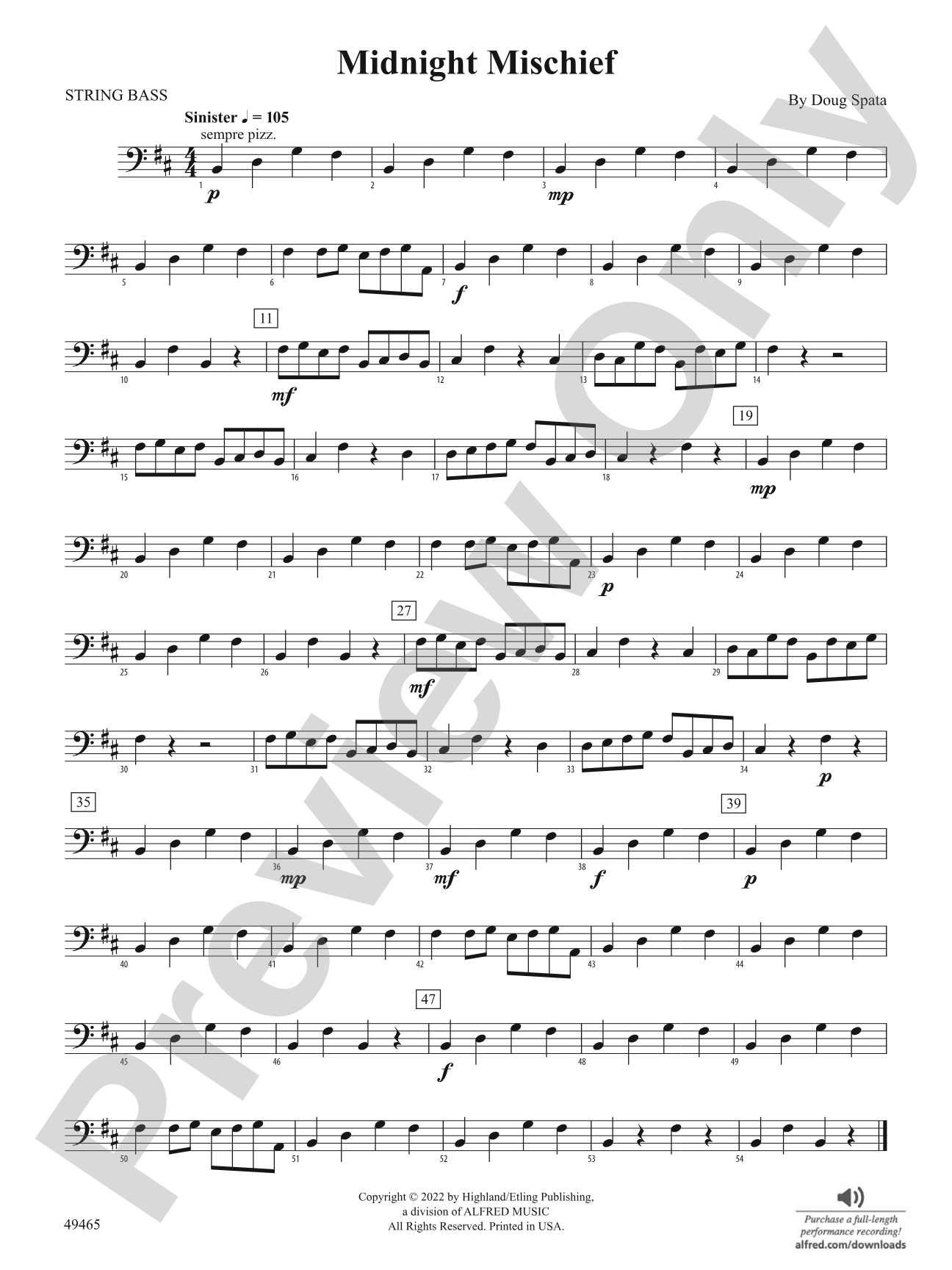

Midnight Mischief: String Bass
By Doug Spata
Grade: 1
Item: 00-PC-0018783_SB
$3.00
Pickup currently not available
Description
Beginning string students will have a diabolically good time with this all-pizzicato selection. Gleefully sinister melodies pass between all sections and simple quarter and half note accompaniment parts help keep everyone together. The optional piano accompaniment sets the pace with even 8th notes, helping young players subdivide their rhythms. Part independence and note range are minimized while doubling and repetition are emphasized, making this an easy piece for kids to master. Midnight Mischief by Doug Spata is a fun piece that kids will love to play while supporting essential ensemble playing and listening skills. (2:05) This title is available in MakeMusic Cloud.


Don't just read it, hear it, play along with it, and watch your students grow with it. In MakeMusic Cloud, Midnight Mischief: String Bass comes alive with professional accompaniment, adjustable tempo, and built-in practice tools that turn solo practice into real progress.
Open in the Player
Jump straight in and assign it today.
Start Your Free Trial
Open this title and explore the full library in minutes.
Sample Audio
1
Audio File
--:--
0:00
0:00
Sample Video
Additional Details
Series:
Highland String Orchestra (HSO)
Publisher:
Alfred Music
SKU:
00-PC-0018783_SB
More about this title
About the Composer: Doug Spata

Doug Spata began his musical training as a clarinetist but found his calling as a composer through years of teaching orchestra. His deep understanding of how student musicians learn has shaped a distinctive voice in educational music, one that teachers across the country have embraced for its balance of engagement and musicality. Beyond pieces for young ensembles, Spata has composed extensively for the concert hall: operas, ballets, symphonies, and chamber works that have earned recognition and performances at venues nationwide and internationally.
Why we love this
Spata nails the art of the all-pizzicato piece for young strings. The gleefully sinister character gives students genuine fun to play while the writing stays firmly within Grade 1 reach, with doubling and repetition doing the heavy lifting so every student can execute confidently. The optional piano part becomes a rhythm lifeline that helps young players feel the subdivision without demanding maturity they don't yet have.
What to expect
Midnight Mischief swings between playfully spooky and mischievously delightful, with gleefully sinister melodies that bounce from violins to violas to cellos. The pizzicato texture and simple rhythms create a jaunty, almost comedic atmosphere that students find irresistible to perform.
Who it's for
This piece belongs with your Grade 1 string orchestra and young students making their first adventures into ensemble playing. Beginners will thrive on music that makes them feel accomplished and entertained simultaneously, and this all-pizzicato selection delivers exactly that.
How to get the most out of it
- Treat the optional piano as essential for your first rehearsals. Its steady 8th-note pulse gives your pizzicato players an anchor for subdividing quarter notes, especially helpful for younger students still building internal pulse.
- Shape the melodic line even within pizzicato. Encourage slight dynamic swells as melodies pass between sections so the 'diabolical' character comes through rather than sounding mechanical.
- Lock in your doubling sections before working on part independence. Since doubling is a feature of the score, not a limitation, use it to build confidence and precision in ensemble rhythm.
How to use it
Program this early in the year when you want to build ensemble confidence and rhythmic precision without intellectual demand. It also shines in concert programming where you need a title that showcases young players' abilities while keeping audience energy high, or as a festival selection that judges will appreciate for its age-appropriate sophistication and student engagement.
Skills your students will build
- Pizzicato technique and control across all string parts
- Ensemble rhythm and listening to maintain cohesion without a strong melodic anchor
- Subdividing and maintaining pulse with support from piano accompaniment
- Passing melodic responsibility between sections while sustaining the ensemble sound
- Reading simple rhythmic notation (quarter notes, half notes) in first position