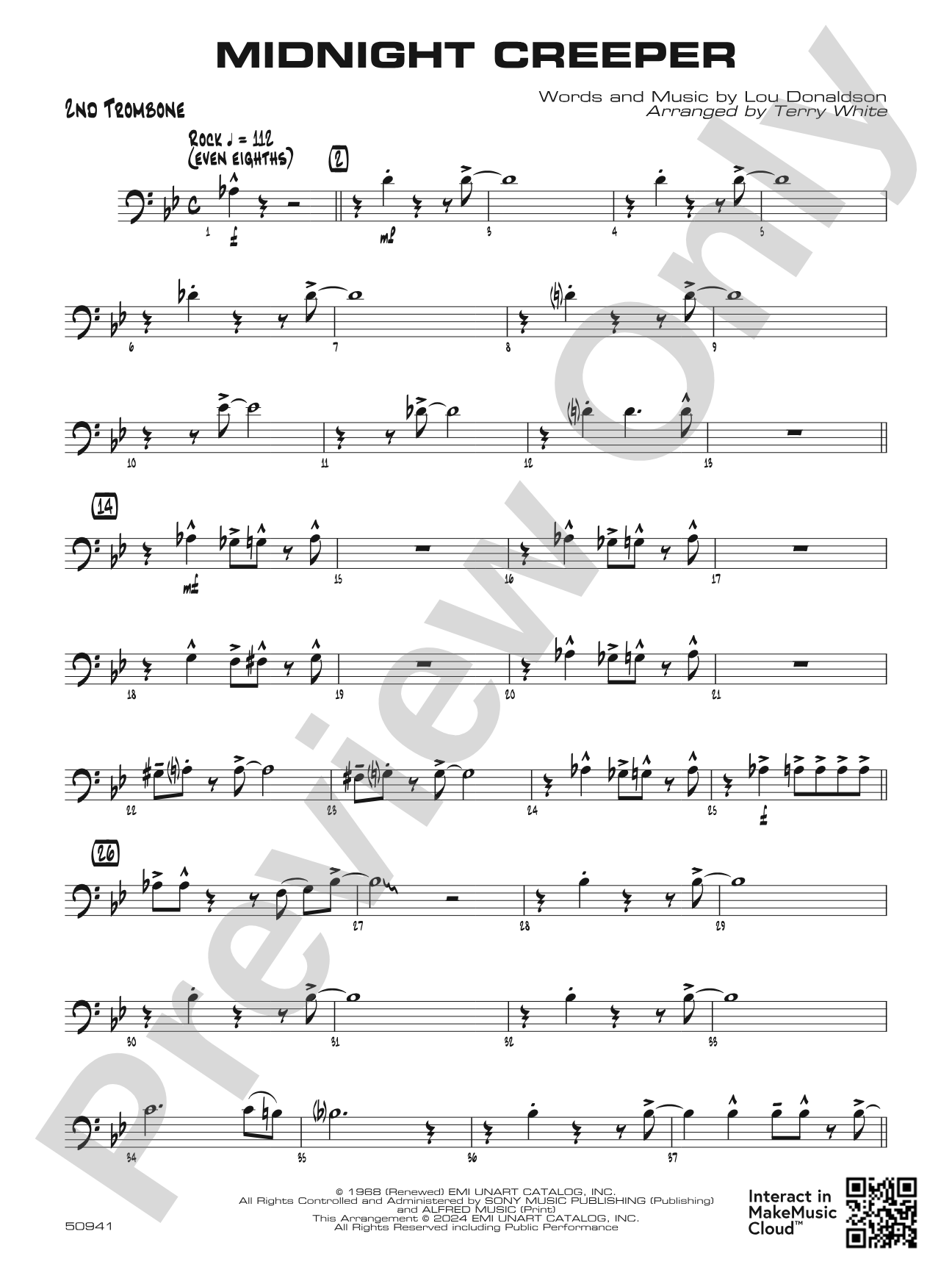
Midnight Creeper: 2nd Trombone Sheet Music Preview

Midnight Creeper: 2nd Trombone

Words and music by Lou Donaldson / arr. Terry White

Grade: 1.5

Item: 00-PC-0019350_TN2

Digital Download
$3.00
Description
A funky-rock groove on a great jazz tune played around 112 BPM. Suggested solos provided for trumpets 1 and alto 1 with trumpet 1 range to written top line F. An excellent blues chart that is fun to play and easy to assemble. (3:20)

Don't just read it, hear it, play along with it, and watch your students grow with it. In MakeMusic Cloud, Midnight Creeper: 2nd Trombone comes alive with professional accompaniment, adjustable tempo, and built-in practice tools that turn solo practice into real progress.

Sample Audio
0:00
0:00
Sample Video
Additional Details
Series: First Year Charts for Jazz Ensemble
Publisher: Alfred Music
SKU: 00-PC-0019350_TN2

More about this title

About the Composer: Lou Donaldson

Lou Donaldson is a saxophonist and composer who helped define the soul-jazz sound of the 1950s and 1960s. His work bridges hard bop and funk, making his compositions natural fits for ensembles seeking material that swings hard while staying rooted in blues vocabulary.

Donaldson's ability to write memorable melodies over driving rhythmic grooves has made his compositions enduring favorites in jazz education. His charts reward both ensemble precision and individual voices, offering students access to genuine jazz repertoire that sounds and feels authentic.

Why we love this

This arrangement strikes a rare balance between accessibility and authenticity. Terry White has crafted a chart that sounds genuinely soulful while remaining playable by first-year jazz ensembles, and the built-in solo sections for trumpet and alto give your soloists a real improvisation platform without requiring advanced harmonic navigation.

What to expect

Midnight Creeper grooves with the kind of funky swagger that makes people want to move. The tune balances contemporary rock-influenced rhythms with unmistakable jazz DNA, creating a sound that feels both modern and rooted in tradition. The solo sections provide space for individual voices to shine without losing the infectious ensemble pocket.

Who it's for

First-year and developing jazz ensembles with at least one capable trumpet soloist and one alto soloist ready to improvise. The chart works equally well for standard instrumentation and can fill program spots where you need material that balances educational value with genuine musical character.

How to get the most out of it

  • Lock the eighth-note pocket between bass and drums before adding horns. The 112 BPM groove sits on a fine line between laid-back and driving, so rhythm section clarity makes everything else land.
  • Keep the funky-rock feel grounded. Resist the urge to swing these eighth notes too heavily; the chart's character depends on that contemporary groove feel.
  • Let soloists know the blues form first. Provide them with lead sheet basics and encourage listening to the original so they absorb the tune's phrasing before they improvise over it.
  • Balance the horn section texture against the rhythm section groove. The parts should sit comfortably behind the beat to support that laid-back funk vibe.

How to use it

This arrangement works beautifully as an opener that energizes an audience or as a mid-set crowd-pleaser during a jazz concert. Its length and accessibility also make it suitable for jazz festival showcases or community outreach events where you want to present young musicians performing genuine, swinging material.

Skills your students will build

  • Playing locked eighth-note grooves in a funky-rock context
  • Blues form navigation and jazz improvisation over standard changes
  • Ensemble rhythmic precision in a laid-back pocket
  • Reading and executing jazz notation conventions in ensemble parts
  • Solo preparation and interactive listening with accompaniment

You May Also Like