Midnight Chase Sheet Music Preview

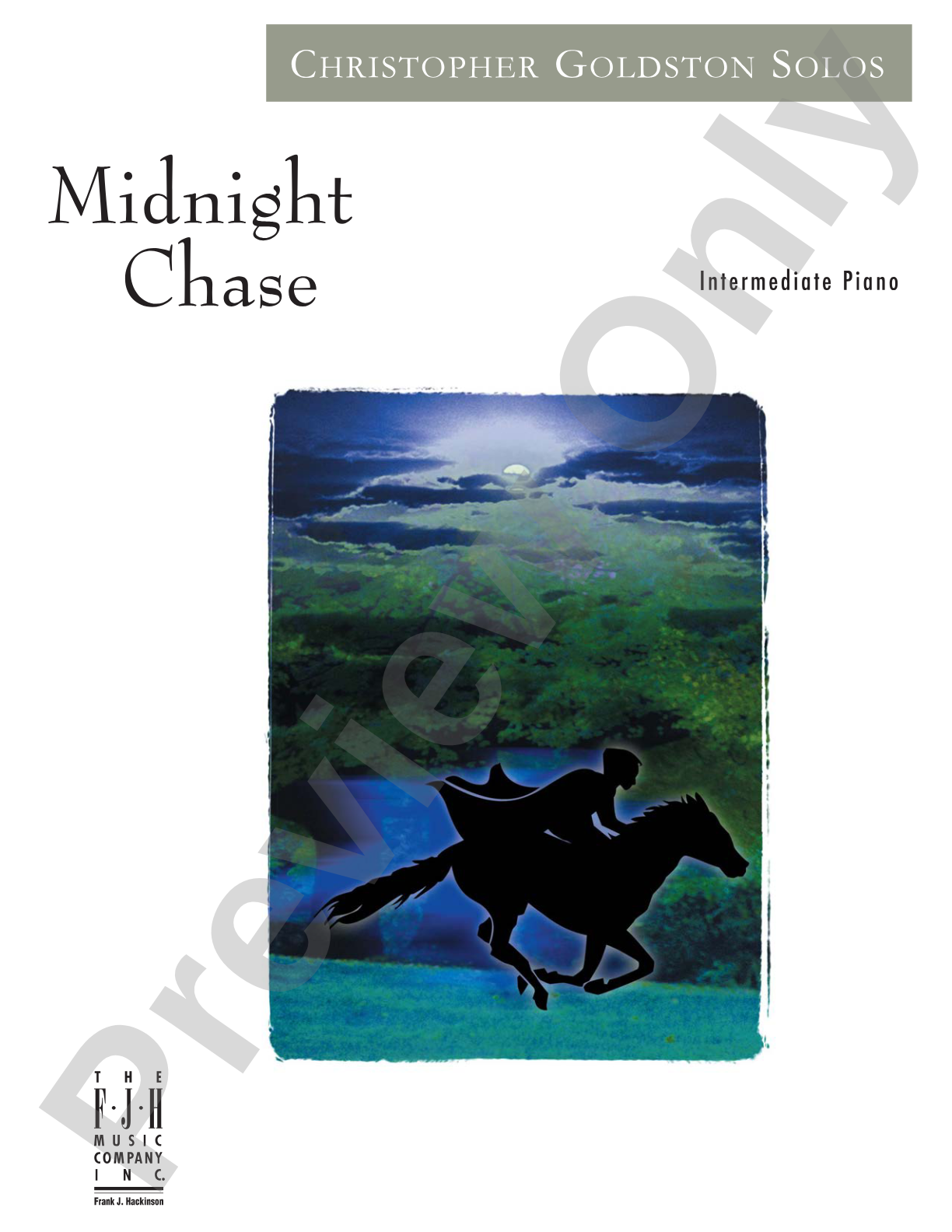
Midnight Chase: Piano

By Christopher Goldston

Item: 98-DW9051

Digital Download
$5.50
Description
An exciting, dynamic piece for performance! This up-tempo solo is to be played "with energy and intrigue." Features 6/8 time.

Midnight Chase: Piano isn't in MakeMusic Cloud just yet...but it could be. Let us know you'd like to see it, and you'll help shape what comes next. In the meantime, start a free trial and dive into thousands of interactive titles your students can play along with today.

Sample Audio
No sample audio found.
Sample Video
Additional Details
Series: Written For You
Publisher: The FJH Music Company, Inc.
SKU: 98-DW9051

More about this title

About the Composer: Christopher Goldston

Christopher Goldston

Christopher Goldston earned his Master of Music in piano performance and pedagogy from Northwestern University and his Bachelor of Music in piano performance from the University of North Carolina-Greensboro. He teaches piano at multiple Chicago institutions including Columbia College Chicago, Roosevelt University, and Sherwood Conservatory of Music, while also maintaining a private studio and offering virtual lessons.

Goldston's compositional voice gained national recognition early; in 1991 he received the Lynn Freeman Olson Composition Award from the National Federation of Music Clubs for his first work, Night Train. Since 2010, he has served as national coordinator for the MTNA Composition Competition. His leadership in music education extends to his roles as president of both the Illinois State Music Teachers Association and the Chicago Area Music Teachers Association. The MTNA Foundation named him a Fellow in 2020, and he served as National Secretary-Treasurer from 2021 to 2023. His commissioned work Four Virtues for oboe, violin, and piano premiered at the 2022 MTNA National Conference.

Why we love this

Goldston writes for the 6/8 time signature with genuine flair here, letting the compound meter drive the piece rather than merely containing it. The "with energy and intrigue" marking gives students permission to be bold and theatrical without losing control, which is refreshing at the intermediate level where restraint often wins out over personality.

What to expect

Midnight Chase delivers exactly what its title promises: a sense of forward momentum and slight danger, with the 6/8 meter propelling you forward in two-beat patterns. The combination of excitement and intrigue suggests a deliberate, almost cinematic unfolding, not mere virtuosity for its own sake.

Who it's for

Intermediate pianists ready to tackle a solo that demands technical fluency and interpretive maturity. This works especially well for students who thrive on contemporary pieces with character and clear narrative drive rather than traditional romantic or classical forms.

How to get the most out of it

  • Feel the piece in two per measure rather than six; this helps the tempo stay buoyant and prevents the piece from dragging into a sluggish sixteenth-note texture.
  • Mark exactly where the energy peaks and valleys live on your score before performing. Intrigue requires intentional dynamic sculpting, not just playing all the notes at performance volume.
  • Work the rhythmic figures that define the "chase" element separately from the surrounding material so they land with precision and propel the narrative forward.
  • Pay attention to your left hand's role in either anchoring the pulse or adding to the sense of chase; treating it as purely accompaniment will flatten the entire piece.

How to use it

Perfect as a contemporary solo on a student recital where you want to showcase pianists who have technical command and interpretive range. It also works as a mid-program piece to shift energy on a mixed concert, or as a competition selection for students seeking a modern work with genuine stylistic identity.

Skills your students will build

  • Executing 6/8 meter with forward-moving pulse in two rather than six
  • Building and releasing tension through dynamic and textural layering
  • Maintaining rhythmic precision while sustaining interpretive expression
  • Balancing left-hand accompaniment figures with right-hand melodic priority

You May Also Like