

Midnight Adventure: Score
By Michael Kamuf
Grade: 2
Item: 00-PR-0005907
$8.00
Pickup currently not available
Description
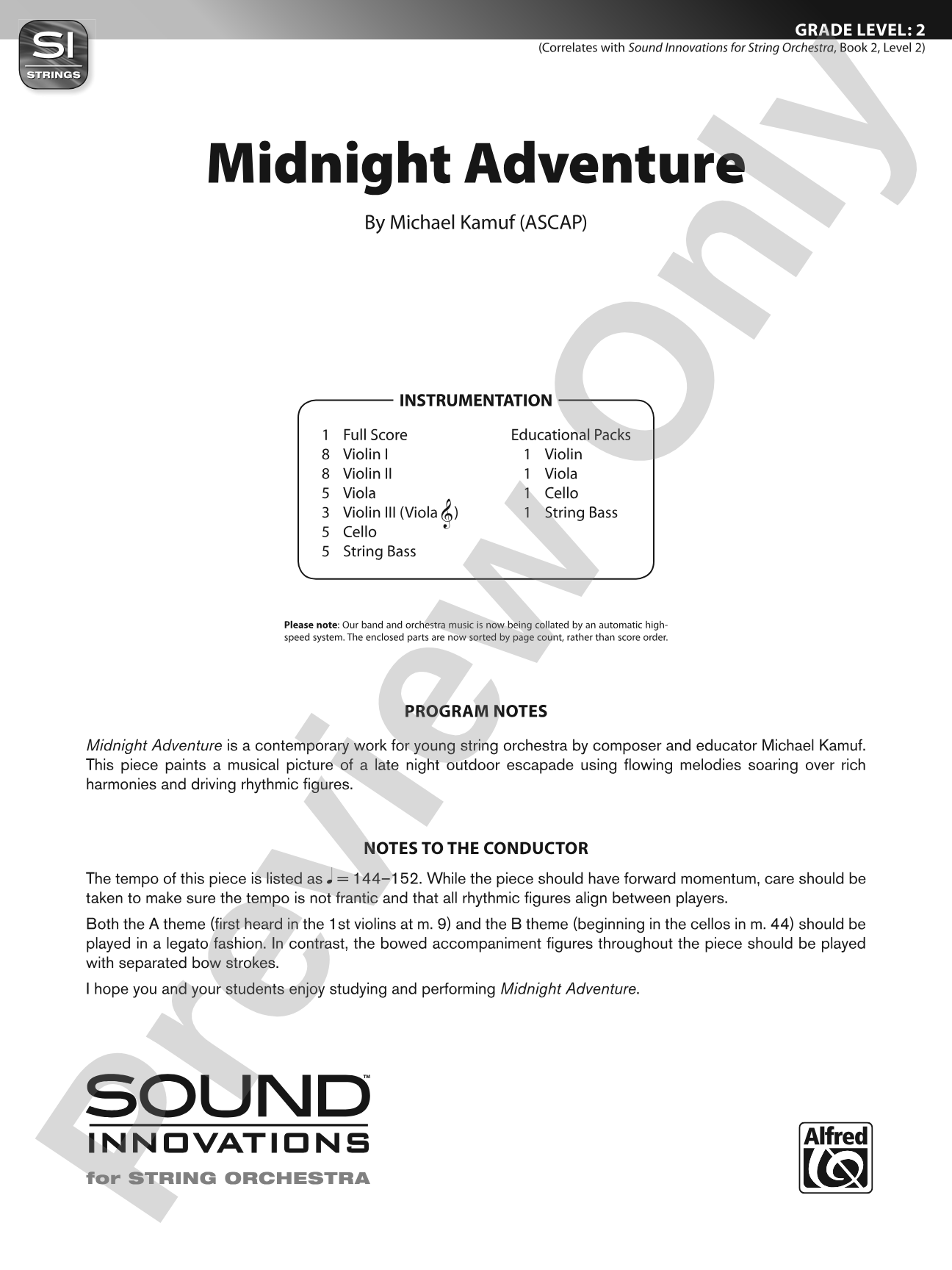
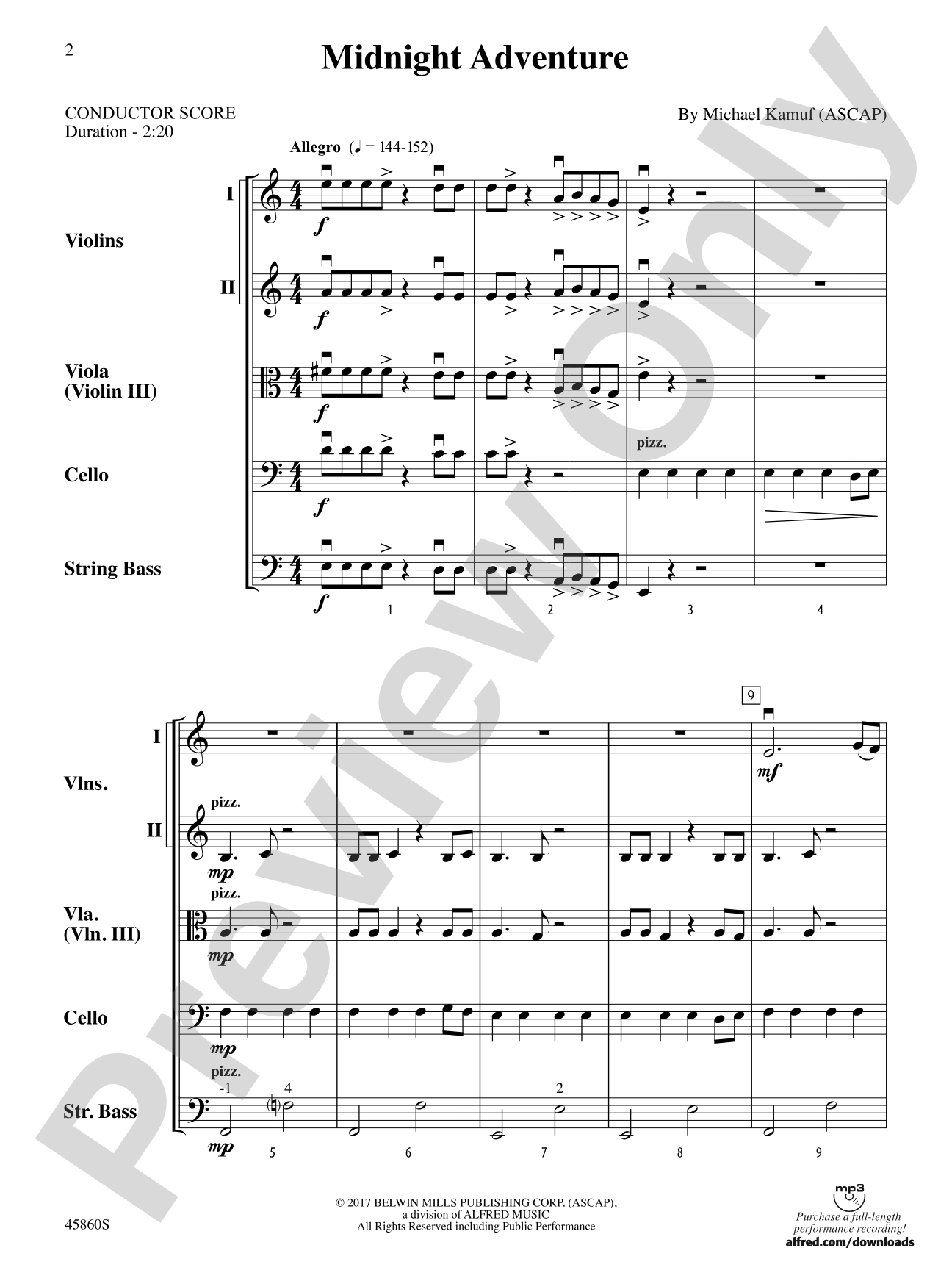
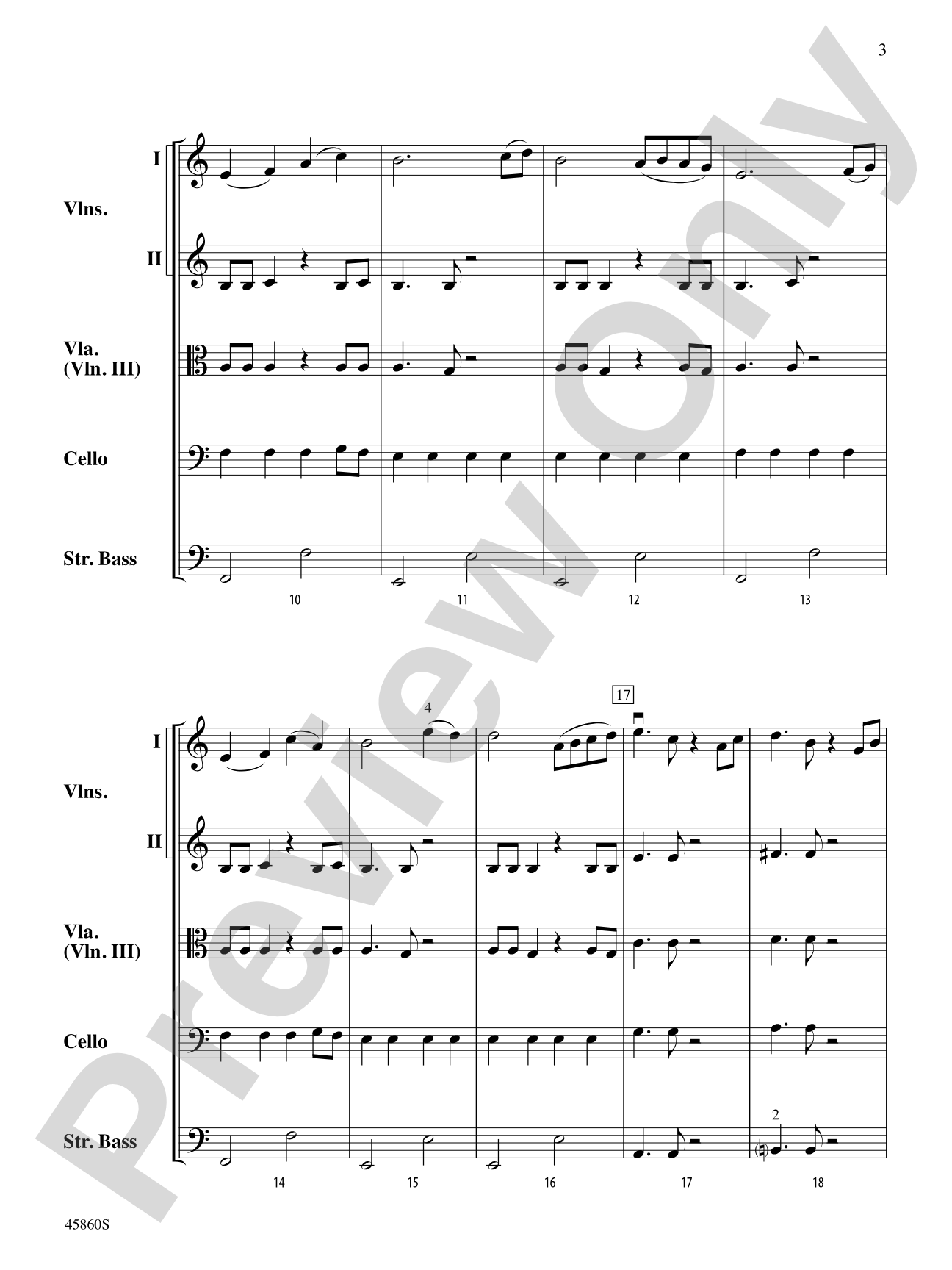
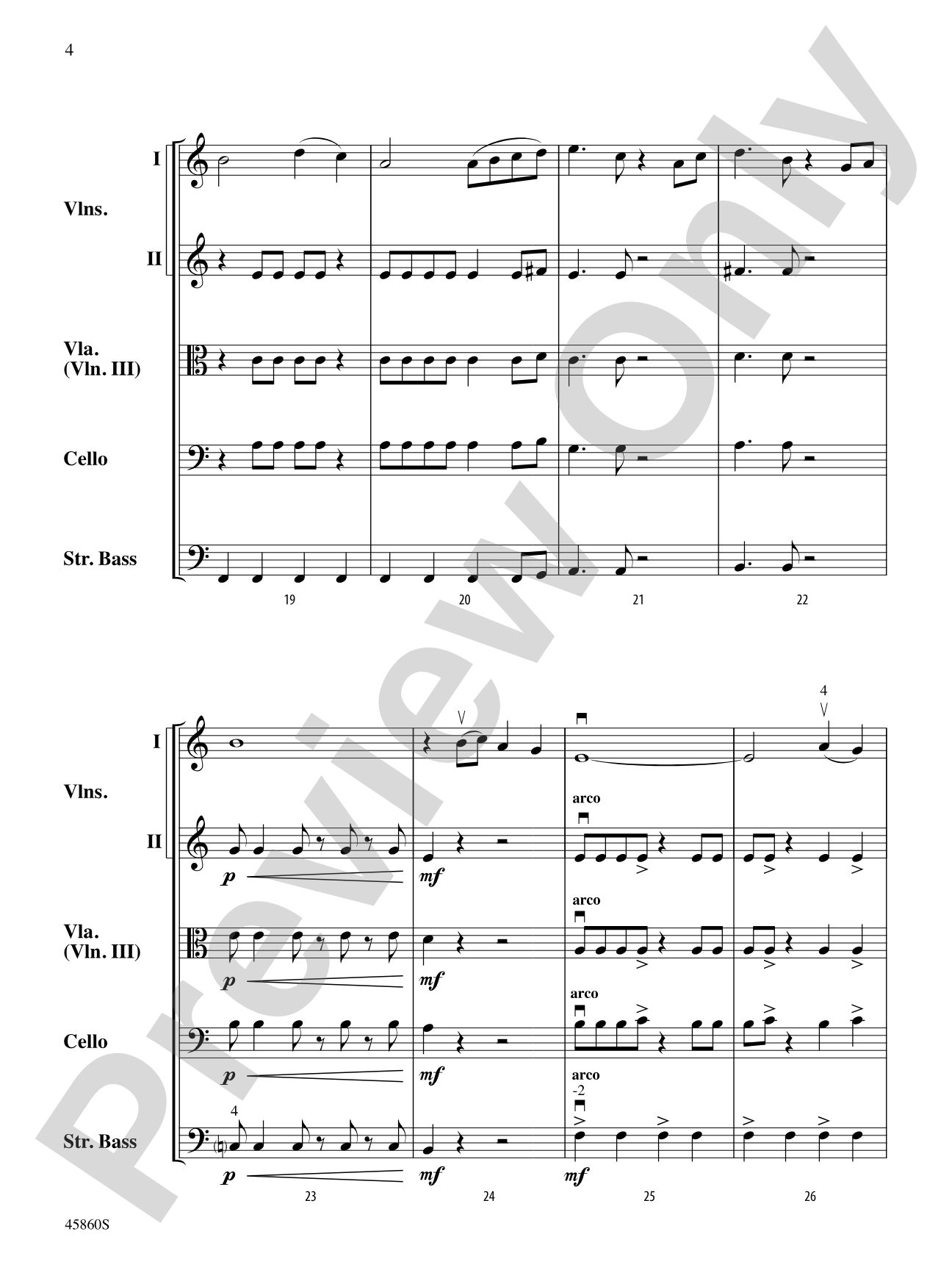
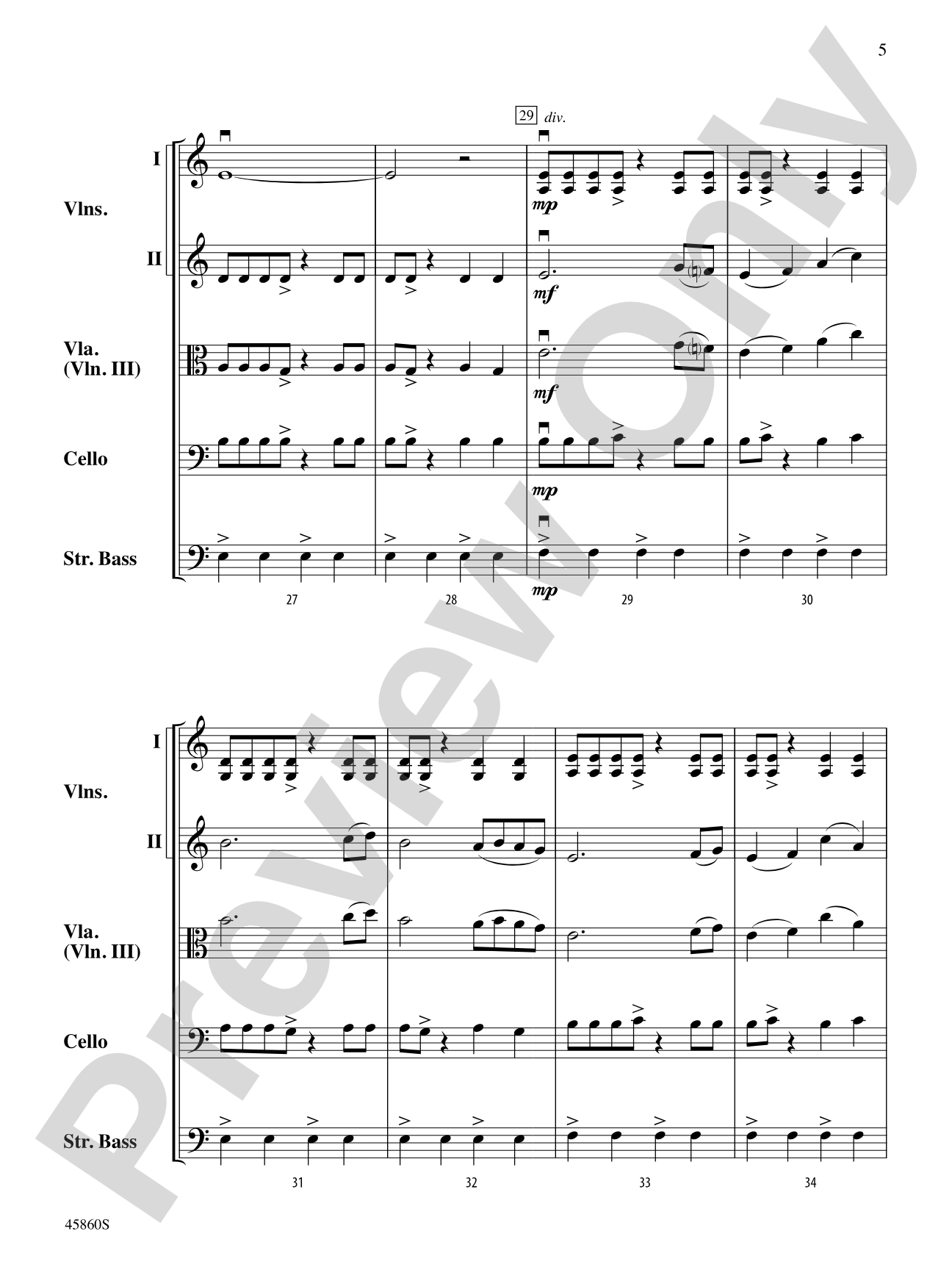
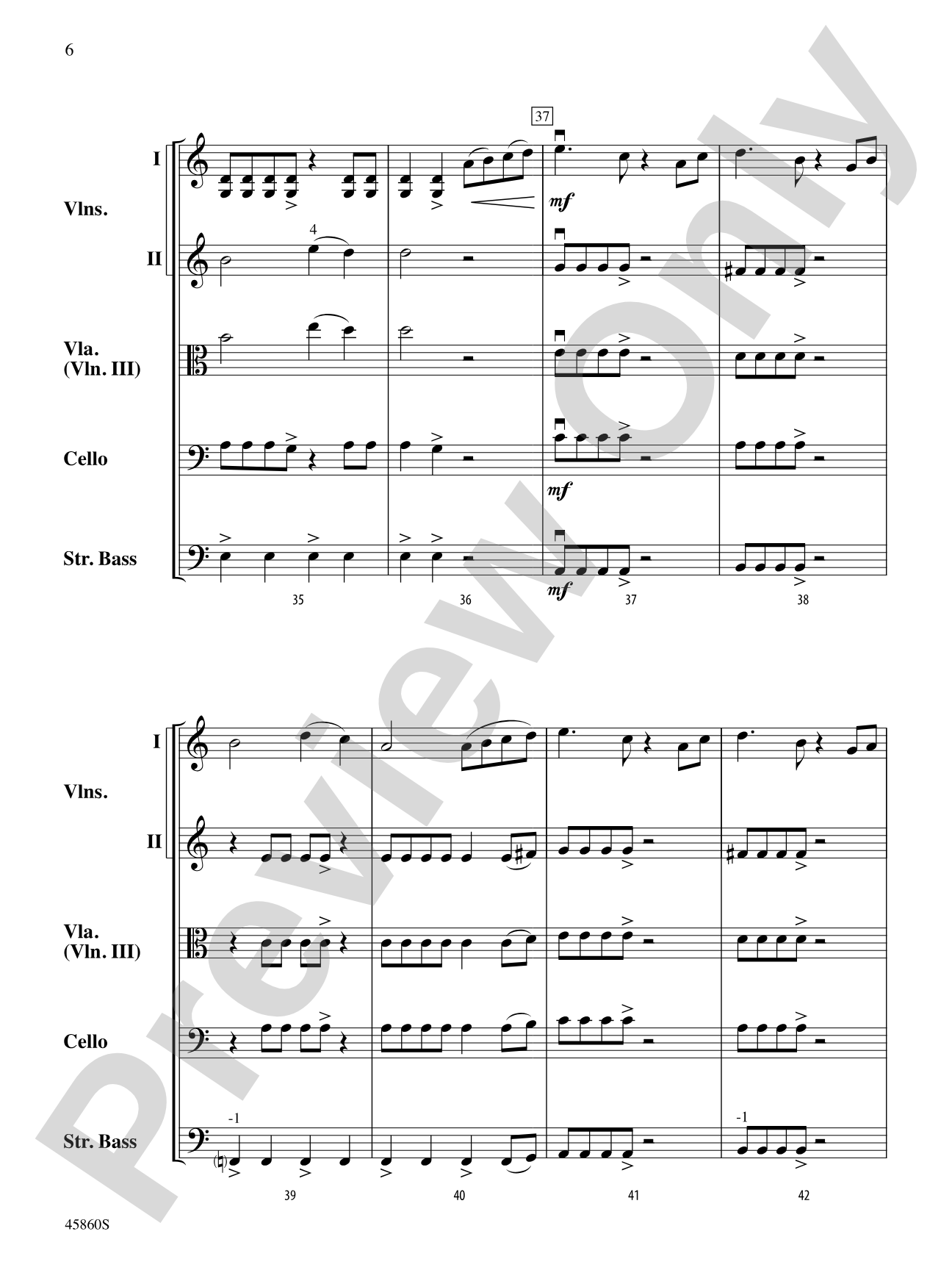
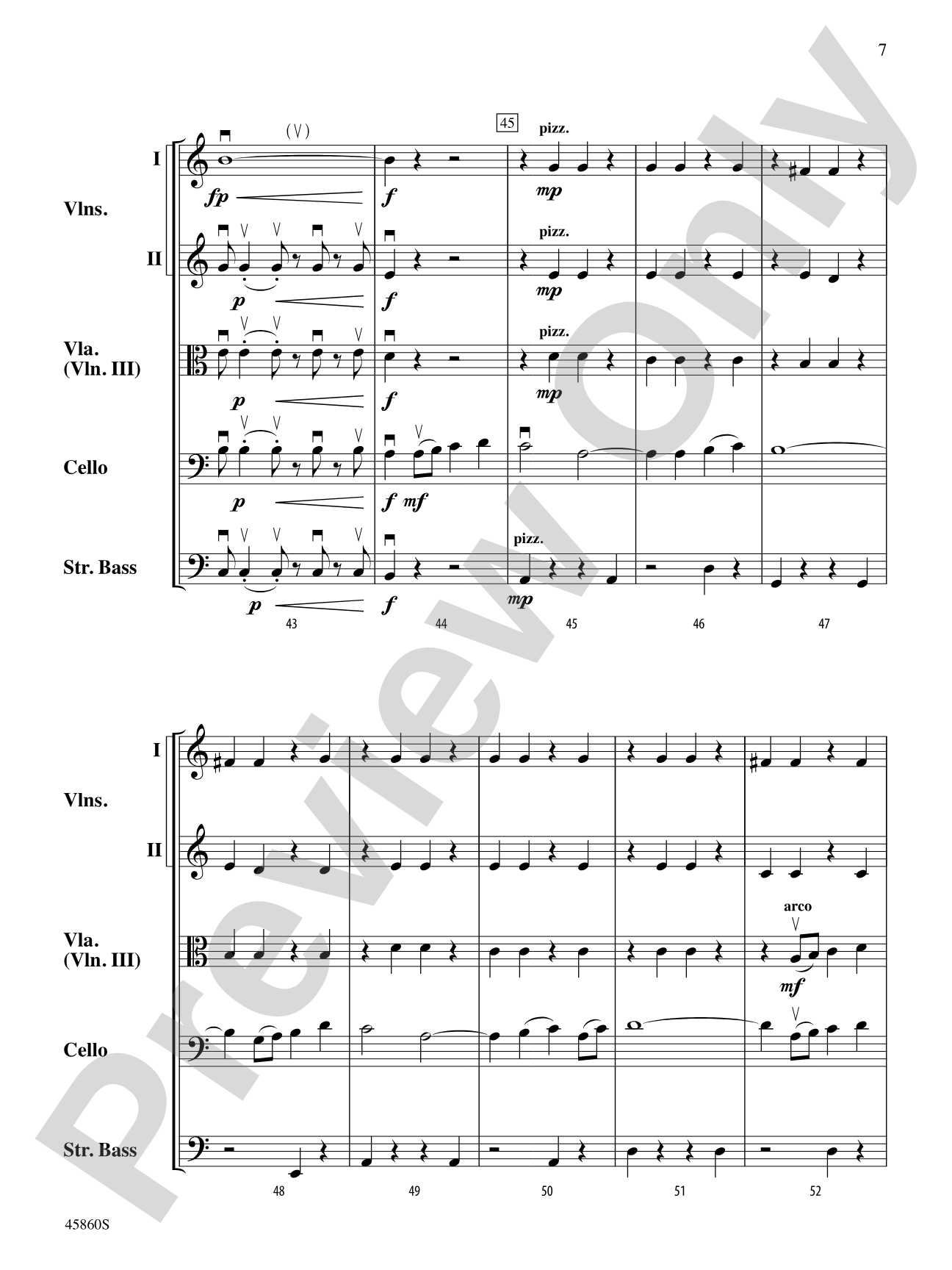
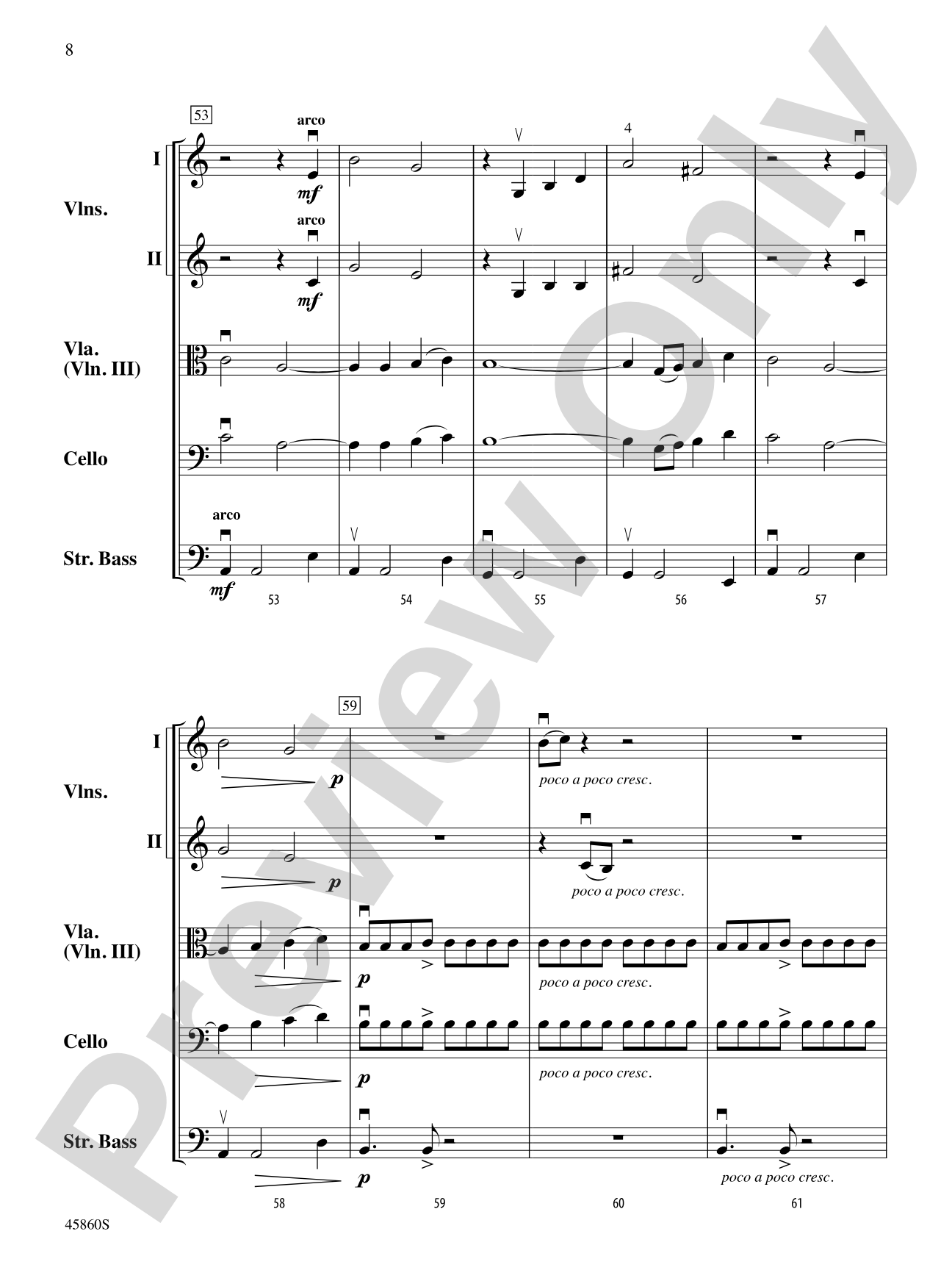
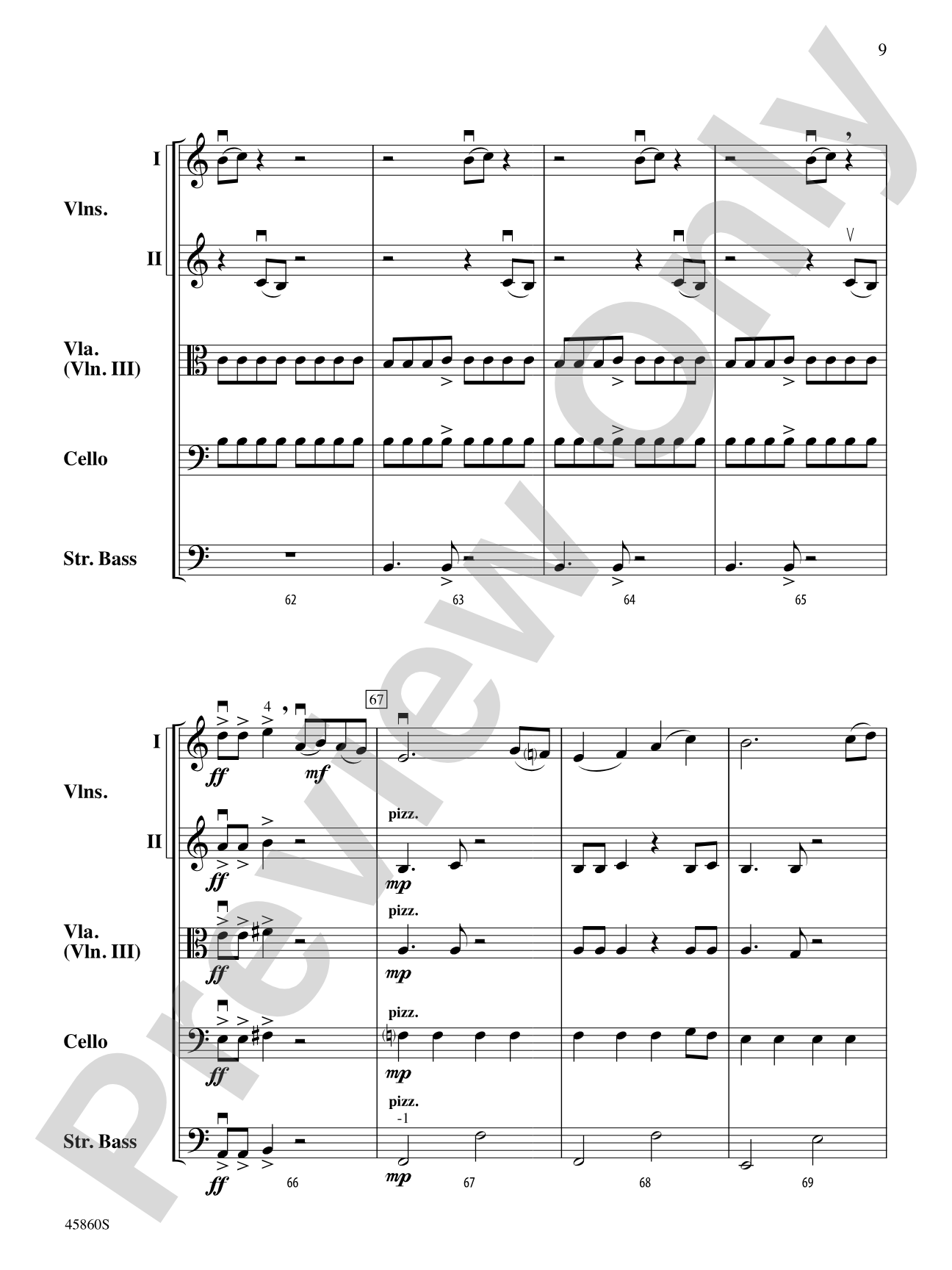
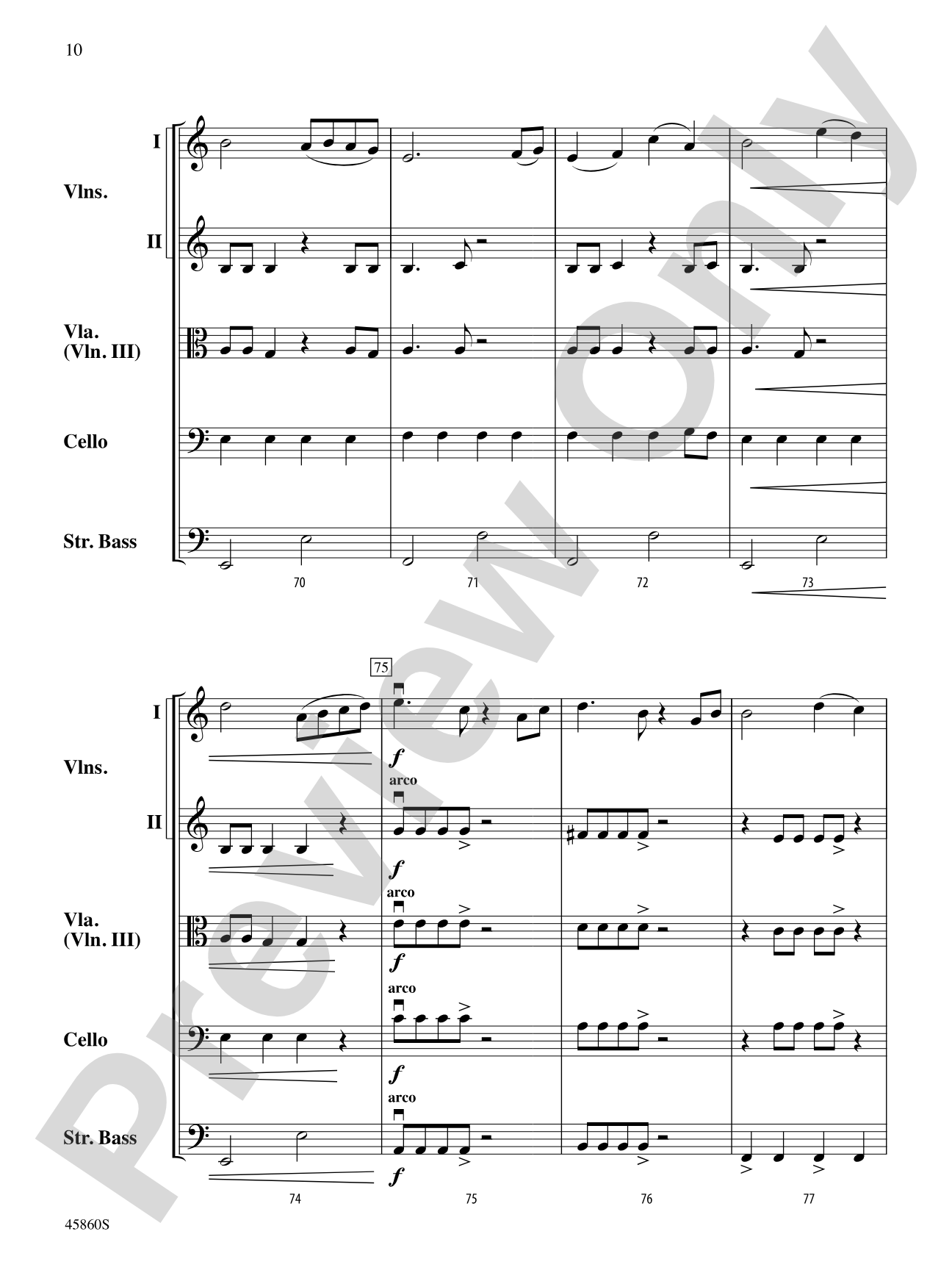
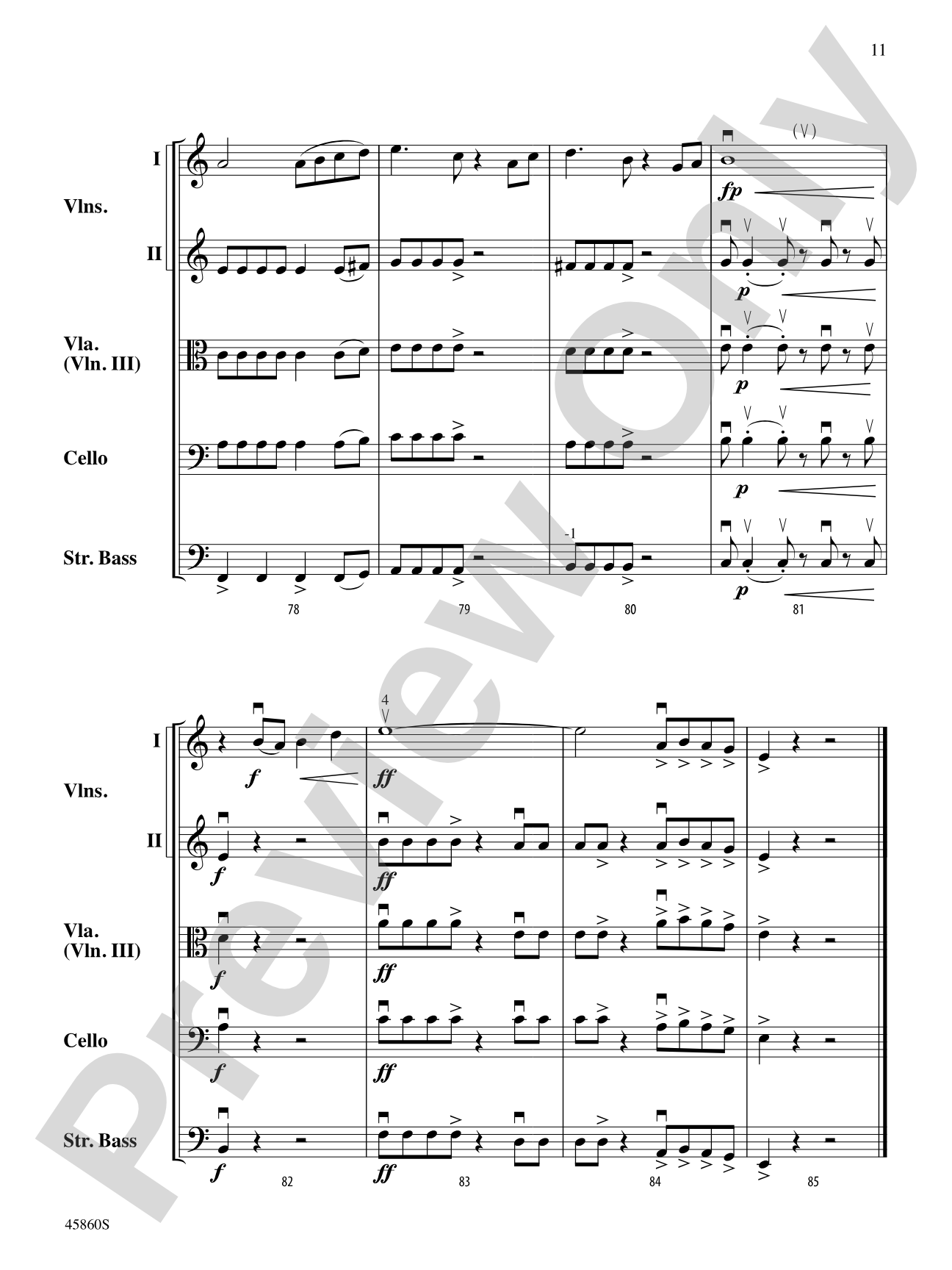
"Midnight Adventure" by Michael Kamuf is contemporary work that paints a musical picture of a late night outdoor escapade, using flowing melodies soaring over rich harmonies and driving rhythmic figures. Perfect as an opening or closing selection and an ideal choice for festivals! Correlates to Sound Innovations Book 1. (2:20)


Don't just read it, hear it, play along with it, and watch your students grow with it. In MakeMusic Cloud, Midnight Adventure: Score comes alive with professional accompaniment, adjustable tempo, and built-in practice tools that turn solo practice into real progress.
Open in the Player
Jump straight in and assign it today.
Start Your Free Trial
Open this title and explore the full library in minutes.
Sample Audio
1
Audio File
--:--
0:00
0:00
Sample Video
Additional Details
Series:
Sound Innovations for String Orchestra
Publisher:
Alfred Music
Page Count:
144
SKU:
00-PR-0005907
More about this title
About the Composer: Michael Kamuf

Michael Kamuf earned Bachelor of Music degrees in Jazz Performance and Music Education from the Dana School of Music at Youngstown State University, followed by a Master of Arts in Instrumental Conducting from George Mason University. His compositions and arrangements have been performed by prestigious ensembles including the Woody Herman and Glenn Miller Orchestras, the USAF Airmen of Note, and the US Navy Commodores, as well as by acclaimed soloists such as James Moody, Eddie Daniels, and Sean Jones.
Kamuf's publishing presence spans multiple catalogs including Belwin (Alfred Music), UNC Jazz Press, Neil A. Kjos Music, and FJH Music Company, with over 100 publications in print. His standard jazz ensemble arrangements have become essential repertoire for young ensembles nationwide. For three decades, Kamuf taught instrumental music in Maryland public schools, spending twenty-seven years as Director of Bands and Orchestras and Music Department Chair at John T. Baker Middle School in Damascus, where his ensembles consistently earned festival recognition and commissioned new works. He currently leads the Mike Kamuf Little Big Band, a jazz octet featuring musicians from the Baltimore and Washington, DC region.
Why we love this
Kamuf writes with a genuine gift for engaging young string players without condescending to their level. The programmatic approach transforms what could be routine Grade 2 repertoire into something genuinely theatrical: students aren't just reading notes, they're narrating a story. The piece works equally well as a concert opener that captures attention immediately or as a closer that sends the audience out energized.
What to expect
Midnight Adventure captures that exhilarating feeling of stepping outside after dark with a sense of discovery and mischief. Flowing melodies drift over lush harmonies while underneath, a driving rhythm pushes the narrative forward, creating an immersive soundscape that's both accessible and genuinely musical.
Who it's for
String orchestra conductors working with developing ensembles at the Grade 2 level who want repertoire that sounds mature and engaging without excessive technical demands. Students benefit from material that rewards musical storytelling and ensemble cohesion alongside note-reading skills.
How to get the most out of it
- Shape the flowing melody lines with clear phrase arcs; these passages need air and space to breathe over the harmonies beneath them.
- Balance the driving rhythmic figures in the accompaniment voices so they propel the piece without overwhelming the primary melodic line.
- Use the programmatic title as a rehearsal touchstone: discuss what "midnight" sounds like in the opening, how the tension builds, and where the adventure peaks.
- Lock the tempo with a steady pulse in the rhythm section; the piece's momentum depends on rhythmic confidence in the lower strings.
How to use it
Program this as your opening number at a concert or festival to immediately establish energy and capture attention, or close a program with it to leave the audience with momentum and excitement. Its storytelling approach pairs well with other programmatic works or creates a compelling solo feature for your string ensemble within a mixed concert.
Skills your students will build
- Sustaining flowing melodic lines over accompaniment figures
- Maintaining rhythmic precision within driving accompaniment patterns
- Balancing individual voice independence with ensemble blend
- Phrasing and shaping within Grade 2 technical parameters
- Responding to programmatic intent through musical interpretation