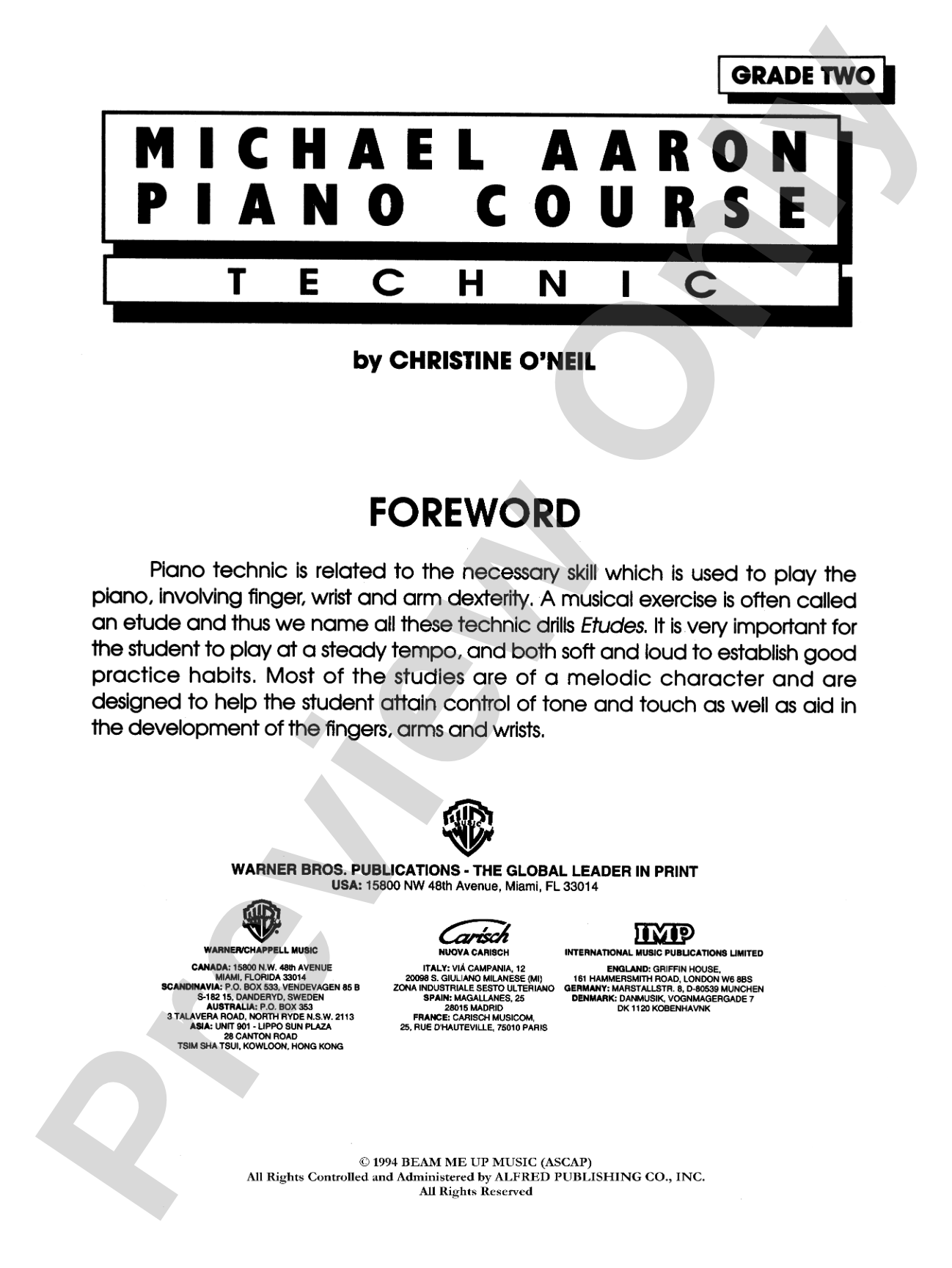
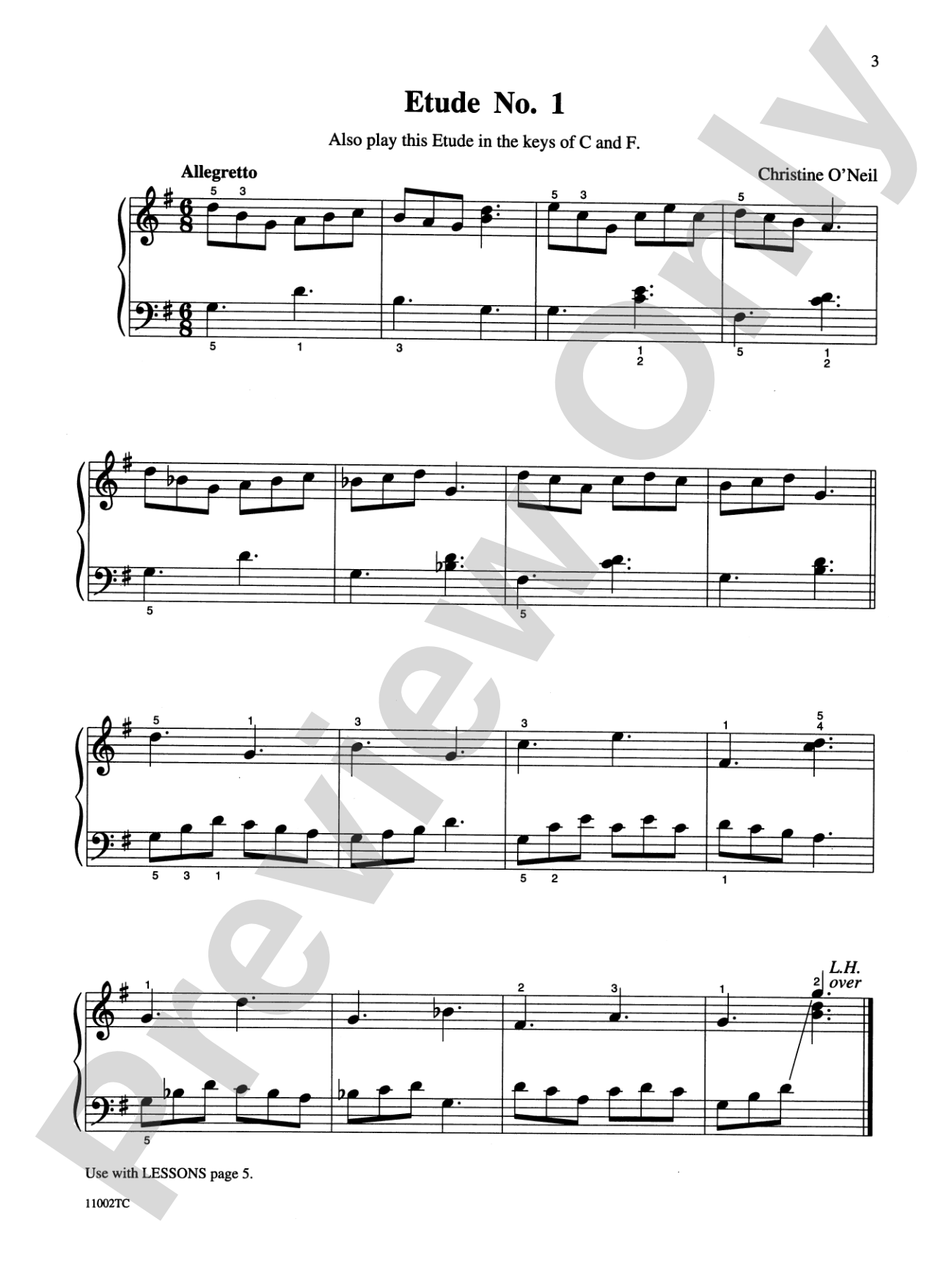
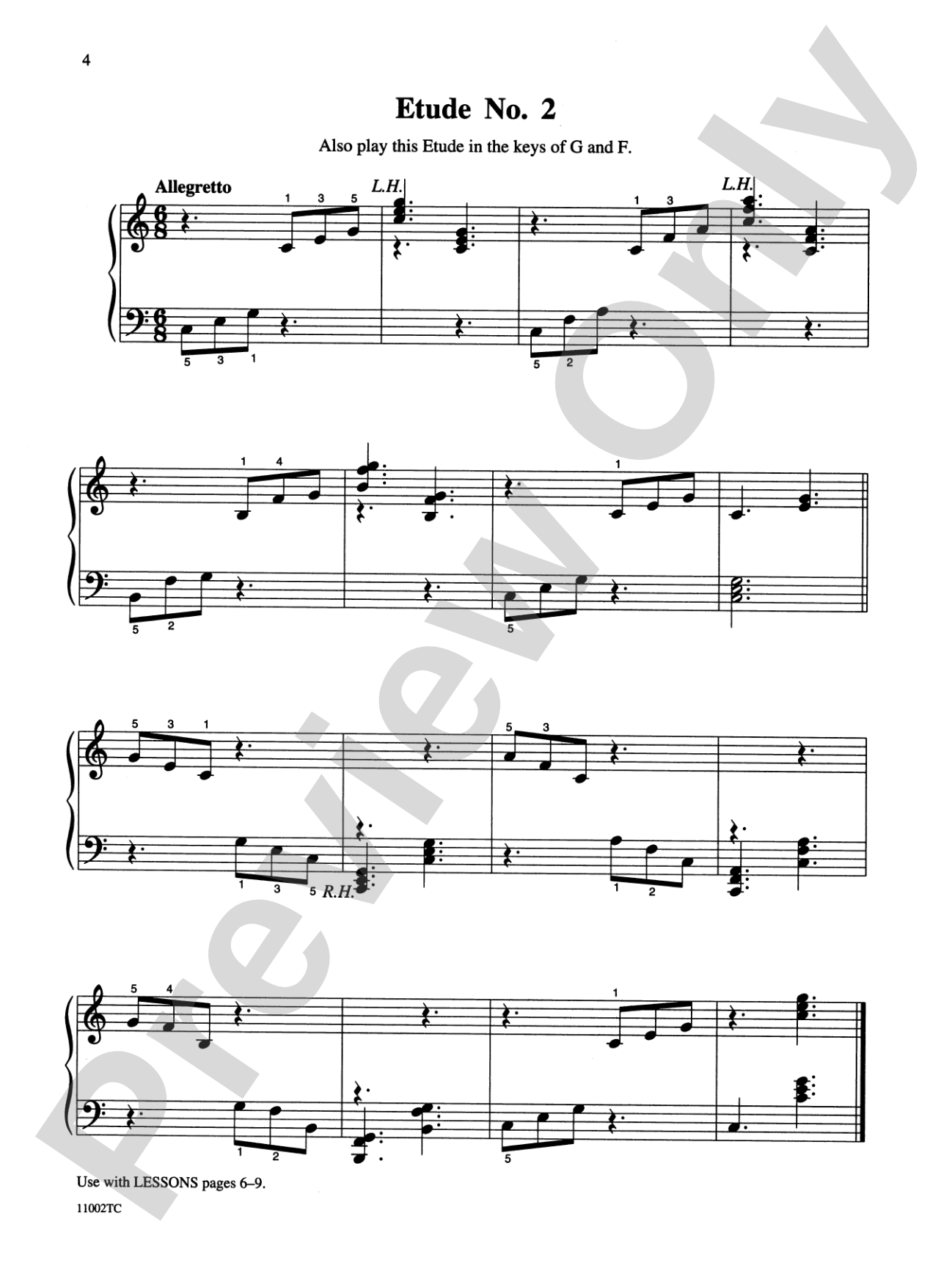
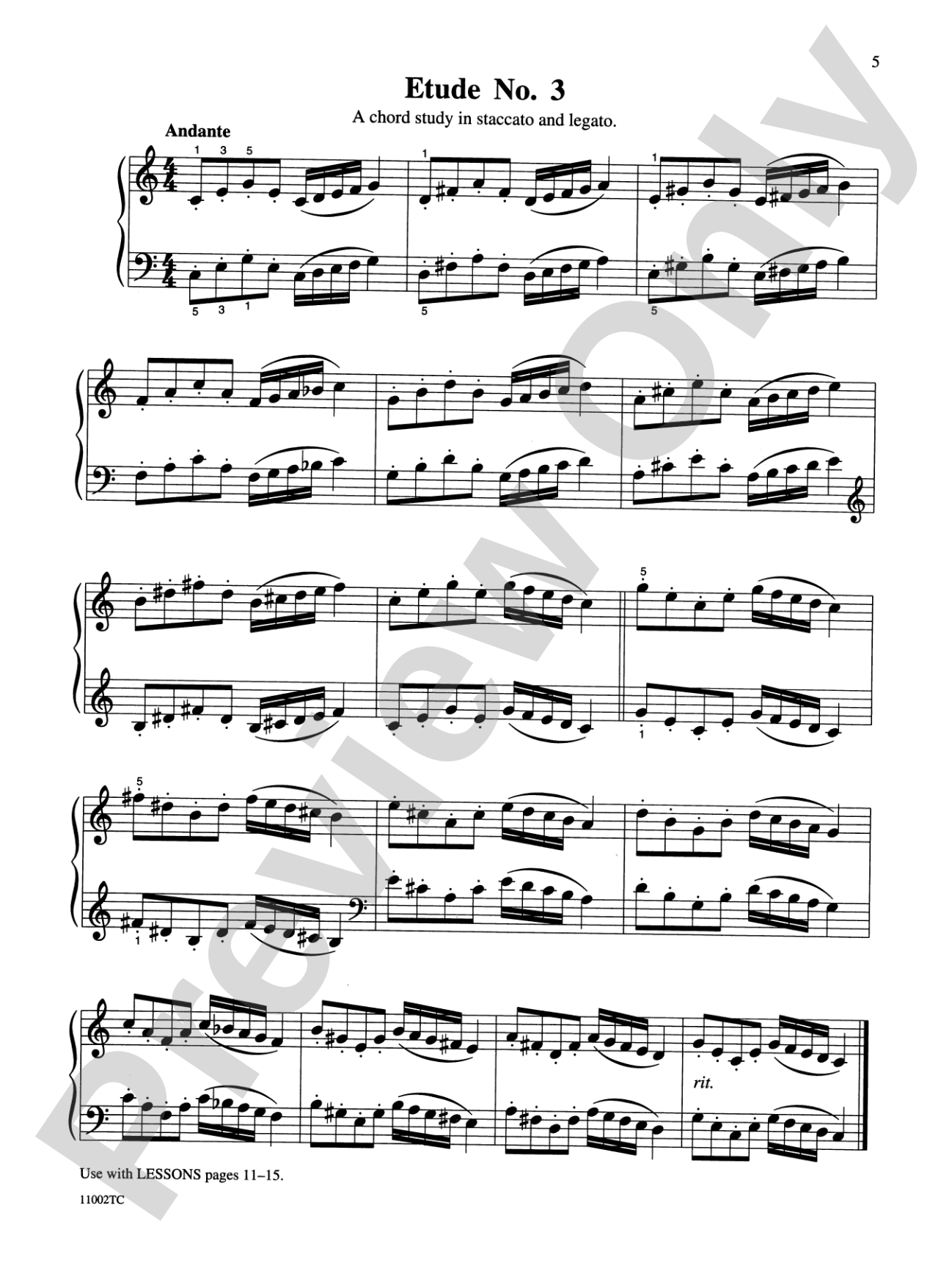
A new addition to the successful Michael Aaron Piano Course lesson books. These new Technic books are centered around Michael Aaron's original Lesson books and are focused on his original teaching concepts.
Discover MakeMusic Cloud: thousands of interactive titles your students can play along with today.
Michael Aaron developed his piano method during the mid-20th century with a clear pedagogical mission: to build technique through logical, sequential steps that students could apply immediately to their repertoire. His approach balanced fundamental skill development with engaging musical content, making it accessible to young pianists while maintaining artistic integrity. Aaron's influence on American piano pedagogy remains substantial, with teachers continuing to value his systematic progression and practical exercises.
Why we love this
Aaron's Technic books isolate the specific hand positions, finger patterns, and coordination challenges that students encounter in the corresponding lesson material, making abstract technique concrete and purposeful. Rather than disconnected finger gymnastics, these exercises embed themselves in the student's musical memory because they're built directly from the lesson book's DNA. Students see immediate results when they apply these targeted studies to their pieces.
What to expect
Purposeful and efficient. These exercises feel like natural extensions of the repertoire rather than interruptions from it. Students encounter familiar musical shapes applied to specific technical goals, creating an intuitive sense of how technique serves music-making.
Who it's for
Grade 2 piano students working through the Michael Aaron lesson books who need focused technical preparation for the pieces they're learning. Teachers who appreciate a method that reinforces lesson book concepts without requiring supplementary materials from different authors or pedagogical systems.
How to get the most out of it
Start each technical exercise slowly enough that the student can feel the hand position, not just execute the notes. Speed develops naturally once the movement becomes automatic.
Anchor the wrist before beginning an exercise; this stability prevents tension from radiating up the arm and allows fingers to work independently.
Practice hands separately first, even when the exercise appears simple. This clarifies the technical objective for each hand before combining them.
Return to completed exercises periodically rather than moving forward linearly. Revisiting earlier material at a faster tempo solidifies the foundation for new patterns.
How to use it
Assign these studies as homework that corresponds directly to current lesson book assignments; a student working through Grade 2 lessons gets parallel technical preparation that accelerates progress and prevents frustration from technique gaps. Many teachers integrate one or two exercises into each lesson as a warm-up bridge between the previous week's repertoire and new material, establishing a ritual that organizes practice time efficiently.
Skills your students will build
Five-finger position and hand shape consistency
Legato and staccato articulation control
Scale-based finger patterns in treble and bass
Interval recognition and accurate hand positioning
Wrist rotation and flexibility for extending hand position
Rhythmic coordination between hands at Grade 2 tempos
Sight-reading fluency with Grade 2 notation and key signatures
You May Also Like
Scan to Complete Your Purchase
Use your phone's camera to scan the code below
You'll log in on your phone and the order will be added to your account