
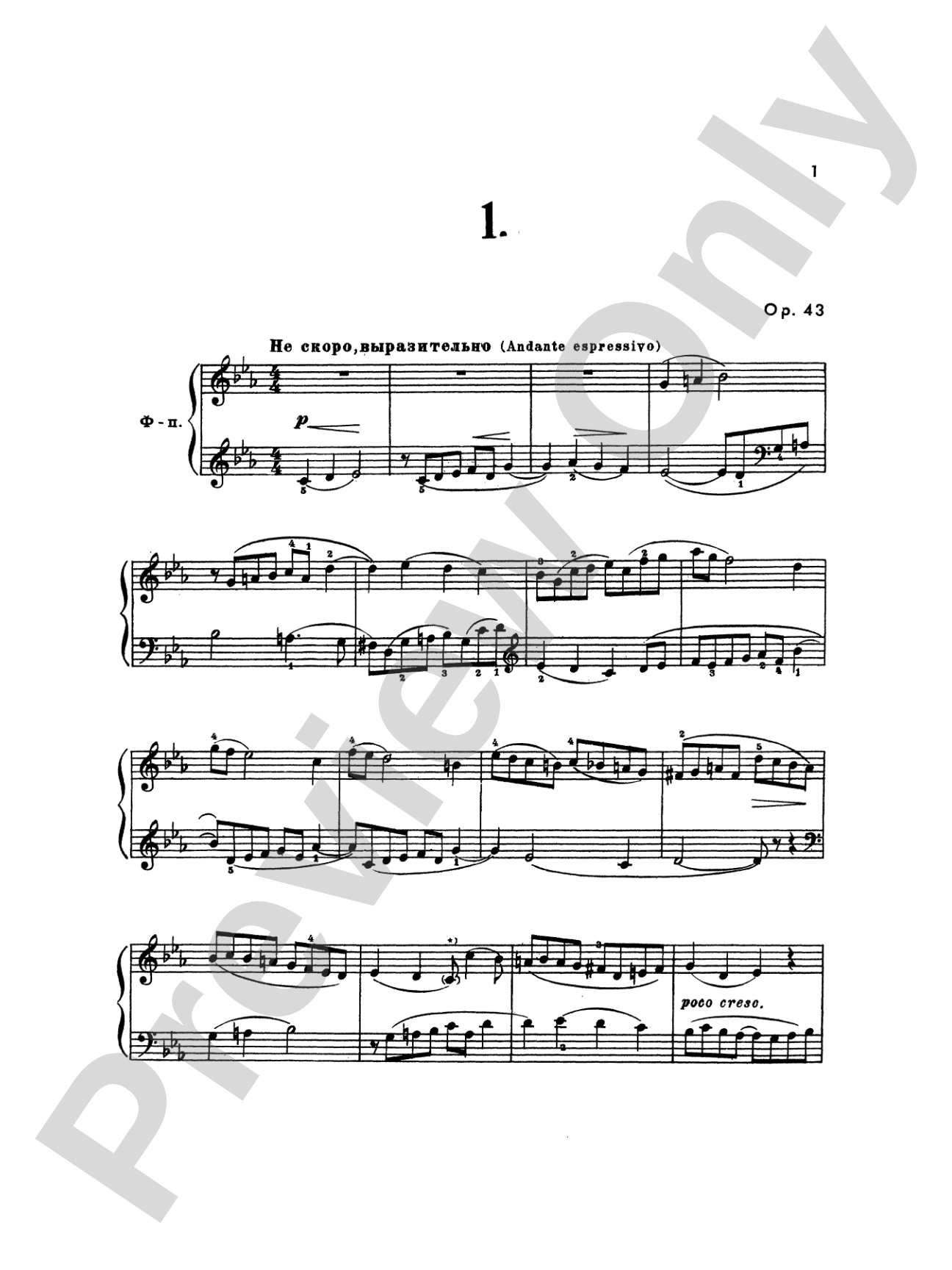
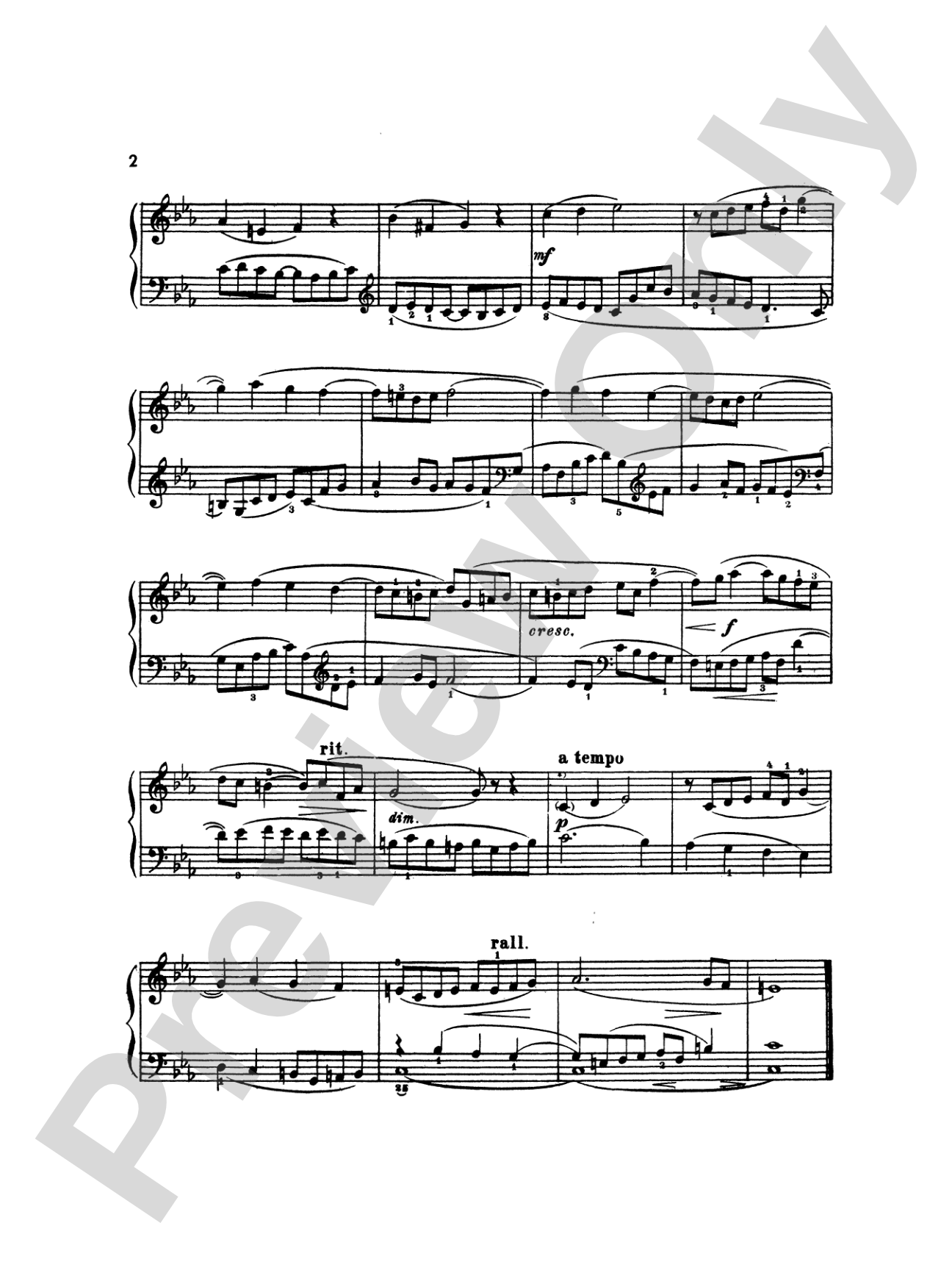

Miaskowsky: Four Little Fugues, Op. 43, 78: Piano Book
By Nicolai Miaskowsky
Level: Intermediate / Advanced
Item: 00-PK-0003225

$5.99
Pickup currently not available
Buy Extra Parts (Digital PDF Download)
| Product | Price | Quantity |
|---|---|---|
| Miaskowsky: Four Little Fugues, Op. 43, 78 | $0.99 | |
| Miaskowsky: Four Little Fugues, Op. 43, 78 | $0.99 | |
| Miaskowsky: Four Little Fugues, Op. 43, 78 | $0.99 | |
| Miaskowsky: Four Little Fugues, Op. 43, 78 | $0.99 |
Parts Added to Cart!
Related Items
Four Little Fugues, Opus 43, 78: Piano Book |
$5.95
|
View |
Description
A collection of Intermediate / Advanced piano solos composed by Nicolai Miaskowsky.


Don't just read it, hear it, play along with it, and watch your students grow with it. In MakeMusic Cloud, Miaskowsky: Four Little Fugues, Op. 43, 78: Piano Book comes alive with professional accompaniment, adjustable tempo, and built-in practice tools that turn solo practice into real progress.
Open in the Player
Jump straight in and assign it today.
Start Your Free Trial
Open this title and explore the full library in minutes.
Sample Audio
No sample audio found.
Sample Video
No sample videos found.
Additional Details
Series:
Kalmus Edition
Publisher:
Alfred Music
Page Count:
12
SKU:
00-PK-0003225
More about this title
About the Composer: Nicolai Miaskowsky
Nicolai Miaskowsky (1881-1951) was a Russian composer whose prolific output includes 27 symphonies, concertos, chamber works, and piano pieces that often blend late Romantic harmonic language with modernist textures. A respected teacher and composer in the Soviet era, he maintained an individual voice that resisted easy categorization, creating works of intellectual substance and emotional depth.
His piano writing spans from accessible pedagogical pieces to sophisticated concert works. The Four Little Fugues represent his engagement with contrapuntal forms, demonstrating that twentieth-century composers could reinvigorate traditional structures with contemporary harmonic and textural thinking.
Why we love this
These fugues offer pianists a genuine encounter with twentieth-century contrapuntal thinking without requiring virtuosic athleticism. Miaskowsky's approach to fugal writing feels organic rather than academic; the forms serve the music rather than constraining it, making these pieces rewarding to both learn and perform at the intermediate-advanced level.
What to expect
Structured yet introspective, these fugues move through carefully organized voices with a contemplative rather than showy character. The harmonic language feels modern but not austere; you sense tradition reinvented from within rather than rejected outright.
Who it's for
Intermediate to advanced pianists seeking substantial repertoire beyond the standard canon. These pieces suit recital programming, examination preparation, or students ready to deepen their understanding of twentieth-century keyboard music and contrapuntal technique.
How to get the most out of it
- Bring out each voice in the exposition with clarity of touch. The independence of lines defines the piece; let the listener track each voice's entrance and development.
- Attend to harmonic movement underneath the counterpoint. Miaskowsky's voice-leading often creates unexpected chord progressions; follow these shifts to shape longer musical phrases.
- Balance stile con moto passages with contemplative sections. These fugues contain dynamic and textural variety; resist playing them at a single tempo or dynamic level throughout.
- Practice hands separately to secure the contrapuntal architecture before combining them. This foundation lets you focus on color and phrasing once the mechanics are solid.
How to use it
Include one or more of these fugues in a recital exploring twentieth-century approaches to inherited forms. They pair well with other modern pedagogical masterworks or standalone piano pieces, and they work particularly effectively in concert sets that trace contrapuntal evolution from Bach through the present.
Skills your students will build
- Tracking and balancing independent melodic lines simultaneously
- Understanding fugal architecture and voice-leading in twentieth-century harmonic language
- Interpreting twentieth-century counterpoint with expressive intent rather than mechanical clarity
- Sustaining textural control across multiple voices without excessive pedal dependency
- Reading and performing compact, concentrated forms requiring intellectual engagement