Mi Shebeyrach Sheet Music Preview

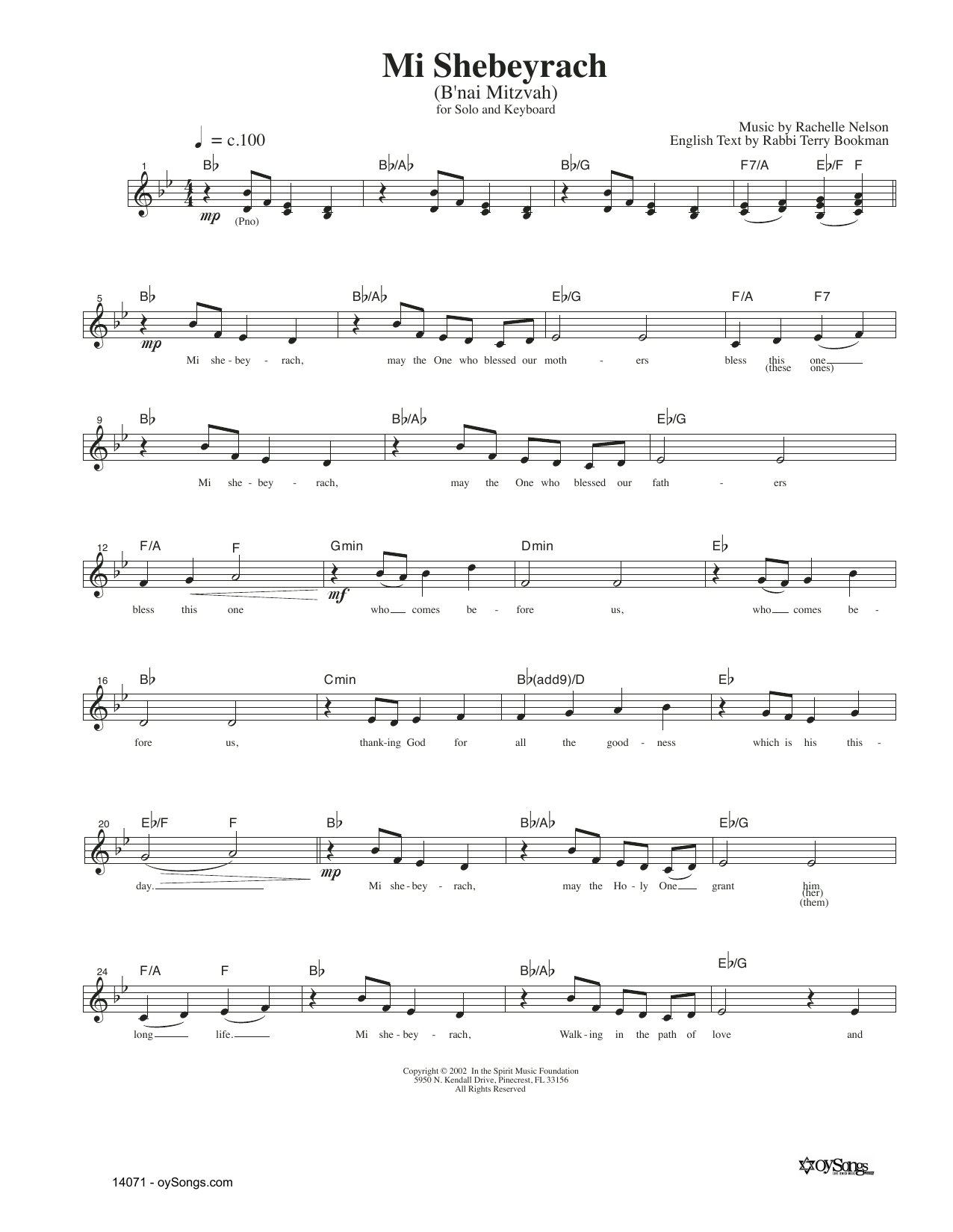
Mi Shebeyrach: Lead Sheet / Fake Book

By Rachelle Nelson

Item: 35-DS00482944

Digital Download
$3.99
Description

Mi Shebeyrach: Lead Sheet / Fake Book isn't in MakeMusic Cloud just yet...but it could be. Let us know you'd like to see it, and you'll help shape what comes next. In the meantime, start a free trial and dive into thousands of interactive titles your students can play along with today.

Sample Audio
No sample audio found.
Sample Video
Additional Details
Publisher: Hal Leonard
Page Count: 3
SKU: 35-DS00482944

More about this title

Why we love this

Rachelle Nelson's lead sheet arrangement of Mi Shebeyrach captures the spiritual warmth of this blessing prayer in a form that invites collaboration between vocalist and accompanist. The fake book format gives pianists the harmonic framework and flexibility to support singers authentically while maintaining the piece's meditative character.

What to expect

Mi Shebeyrach carries a contemplative, earnest quality. Nelson's arrangement honors the text's role as a blessing for healing and wholeness while remaining accessible enough for pianists and singers at varying levels to connect with its spiritual message.

Who it's for

Singers preparing liturgical or concert performances, pianists seeking Jewish repertoire that works in both sacred and secular settings, and accompanists who want a trusted harmonic roadmap for this beloved prayer.

How to get the most out of it

  • Let the vocal line breathe naturally rather than adhering rigidly to metronomic time; lead sheet notation permits the rubato that this prayer text deserves.
  • Support the vocalist's phrasing by listening closely to their breath points and emotional intentions, adjusting harmonic rhythm as needed.
  • Explore color through voicing choices in the accompaniment; these chords can be voiced simply or enriched depending on your venue and the intimacy you want to create.

How to use it

This works beautifully in interfaith concert settings, educational programs about Jewish music traditions, or as a meaningful solo piece during a thematic concert exploring prayer and meditation across cultures. Its three pages make it practical for singers who want a substantial standalone work without overwhelming length.

Skills your students will build

  • Accompanying from lead sheet notation with harmonic independence
  • Responding to vocal phrasing and supporting lyrical expression
  • Interpreting and voicing jazz chord symbols in a spiritual context
  • Understanding Hebrew text pronunciation and its relationship to melodic shaping

You May Also Like