
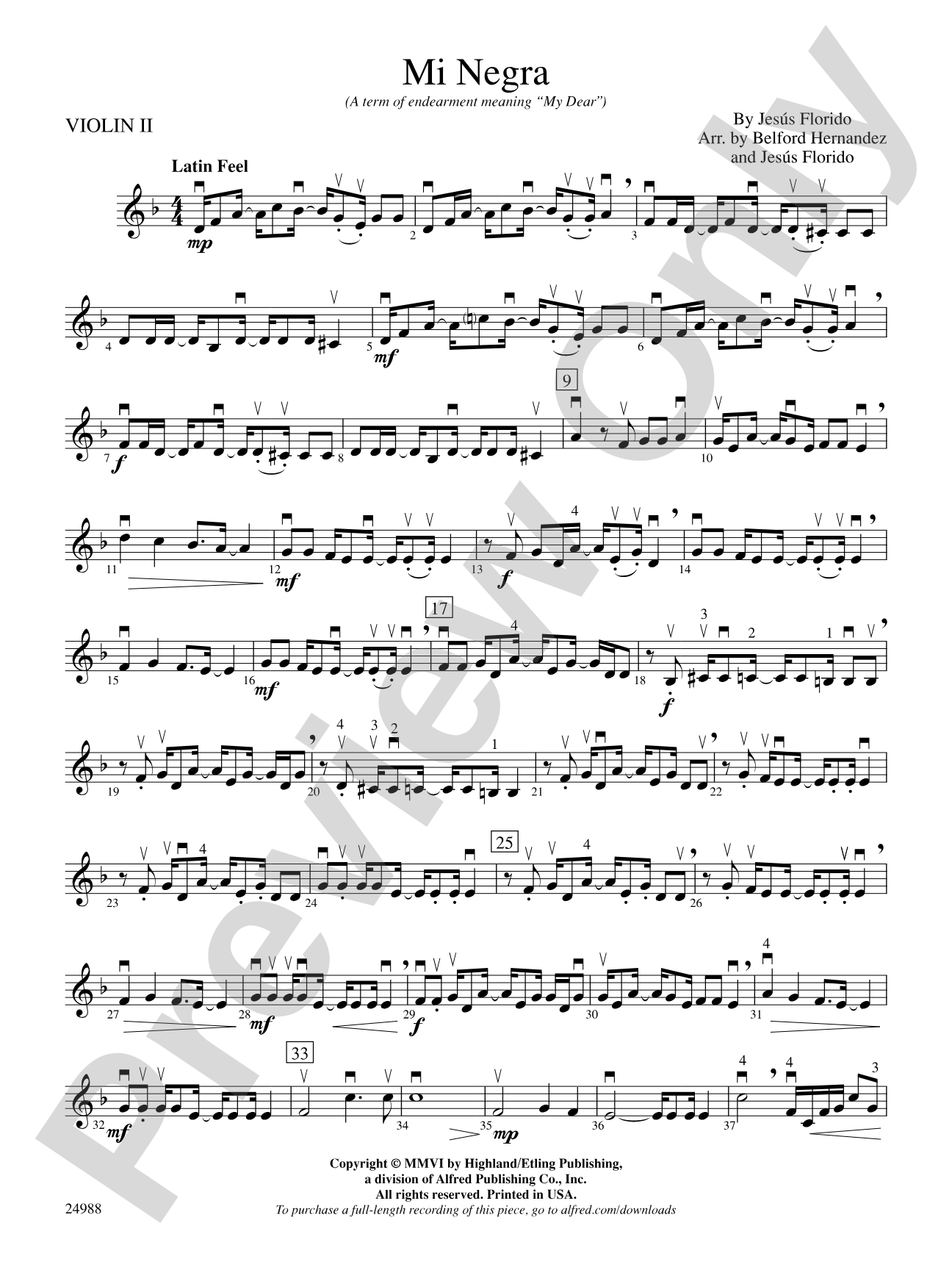

Mi Negra (My Dear): 2nd Violin
By Jesus Florido / arr. Jesus Florido and Belford Hernandez
Grade: 3.5
Item: 00-PC-0000970_VN2
$5.99
Pickup currently not available
Description
Mi Negra, a term of endearment meaning 'my dear.' is a song for a girl who is a great dancer, so put on your dancing shoes and a big smile because this is a fun tune for all. Violinist, composer and educator Jesús Florido has been working for years to bring Latin music to string players. Derived from the rich tradition of string playing in Latin America "Mi Negra" is a dance groove tune based on the traditions of Florido's homeland of Venezuela. He has taken on the task of writing these traditions down since they are mostly aural. This original tune was written for his students so that they could learn some Latin fiddle tunes, but also as a tune that professionals can enjoy playing.


Don't just read it, hear it, play along with it, and watch your students grow with it. In MakeMusic Cloud, Mi Negra (My Dear): 2nd Violin comes alive with professional accompaniment, adjustable tempo, and built-in practice tools that turn solo practice into real progress.
Open in the Player
Jump straight in and assign it today.
Start Your Free Trial
Open this title and explore the full library in minutes.
Sample Audio
1
Audio File
--:--
0:00
0:00
Sample Video
No sample videos found.
Additional Details
Series:
Highland/Etling String Alternatives
Publisher:
Alfred Music
Page Count:
148
SKU:
00-PC-0000970_VN2
More about this title
About the Composer: Jesus Florido
Jesús Florido is a violinist, composer, and educator who has dedicated his career to preserving and sharing the rich string traditions of Latin America. With roots in Venezuela, he has spent years transcribing and documenting the aural traditions of Latin fiddle playing, converting centuries of improvisational knowledge into written music that string players can learn and perform.
Florido's work bridges the gap between authentic folk practice and formal music education, creating accessible arrangements and original compositions that honor Latin American string culture while serving students at all levels. His commitment to expanding the repertoire available to young string musicians has resulted in works that are both pedagogically sound and musically rewarding for professional ensembles.
Why we love this
This is one of the few string orchestra pieces that authentically represents Latin American fiddle traditions rather than borrowing superficial rhythmic elements. Florido's deep knowledge of Venezuelan string playing means the idioms are genuine, the groove sits naturally under the fingers, and students encounter real musical practices from another culture. Directors looking to expand beyond European repertoire will find a piece that teaches as much as it entertains.
What to expect
Joyful and propulsive, with the infectious energy of a Venezuelan dance celebration. The melody sparkles over a steady groove that makes you want to move, while the orchestration keeps the texture light and the focus on the violin lines that define the style.
Who it's for
String orchestra directors seeking authentic Latin music that engages students musically and culturally without oversimplifying the tradition. It works equally well for young ensembles building rhythmic confidence and for experienced orchestras that can dig deeper into the nuanced phrasing and stylistic elements.
How to get the most out of it
- Establish the clave rhythm early in sectional rehearsals; the Latin groove will feel natural once violinists internalize the underlying pulse that drives the melody.
- Encourage rhythmic independence in the accompaniment parts. String players accustomed to linear phrasing may need to think like ensemble rhythm players here, requiring flexibility in how they listen and lock together.
- Shape the melody with a slight swing feel that honors the dance tradition. This isn't straight rhythm; let the phrases breathe and lean into the characteristic phrasing of Venezuelan string music.
- Use the recorded accompaniment if available to reinforce the groove during rehearsals, especially in early stages when players are adjusting to unfamiliar rhythmic language.
How to use it
Program this alongside other pieces that showcase global string traditions to create a concert program that reflects the full breadth of string music. It's particularly effective as a closing number or a bridge piece between classical and contemporary sections, bringing immediate warmth and accessibility to an audience while showing your ensemble's stylistic range.
Skills your students will build
- Latin rhythmic patterns and groove-based accompaniment
- Stylistic phrasing in non-European traditions
- Ensemble rhythmic independence and locking in an unfamiliar metric context
- Melodic ornamentation and embellishment typical of Venezuelan fiddle style
- Listening across the ensemble to maintain groove while reading notation