

Mi Gallo: 2-Part Choral Octavo
(My Rooster)
Traditional Spanish Folk Song / arr., with additional music, by Andy Beck
Item: 00-PO-0007205
$2.30
Minimum order quantity: 10 copies
Please note: Under U.S. copyright law, you must purchase the exact number of copies needed for your ensemble. Printing, duplicating or sharing additional copies is strictly prohibited.
Pickup currently not available
Description
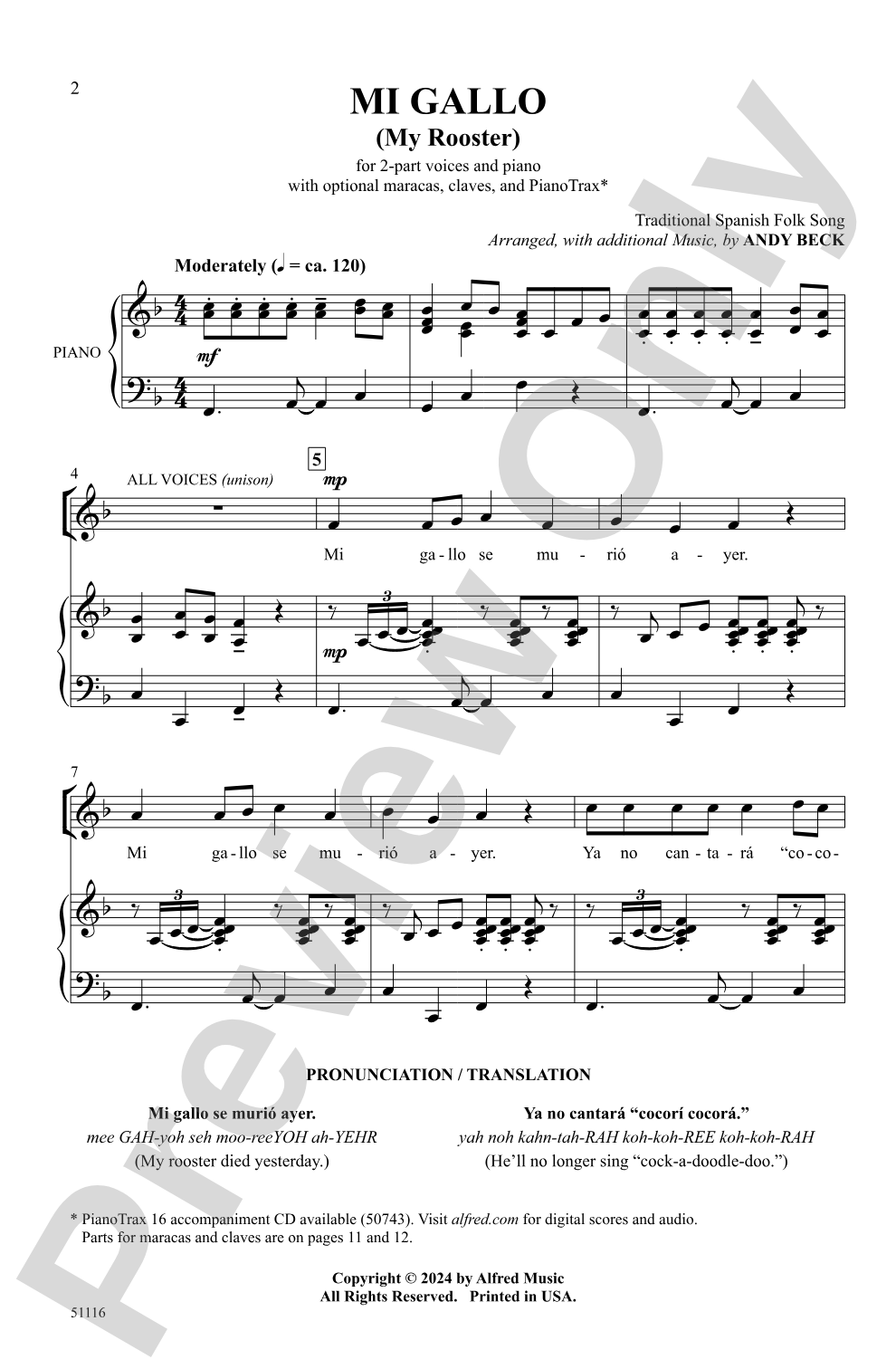
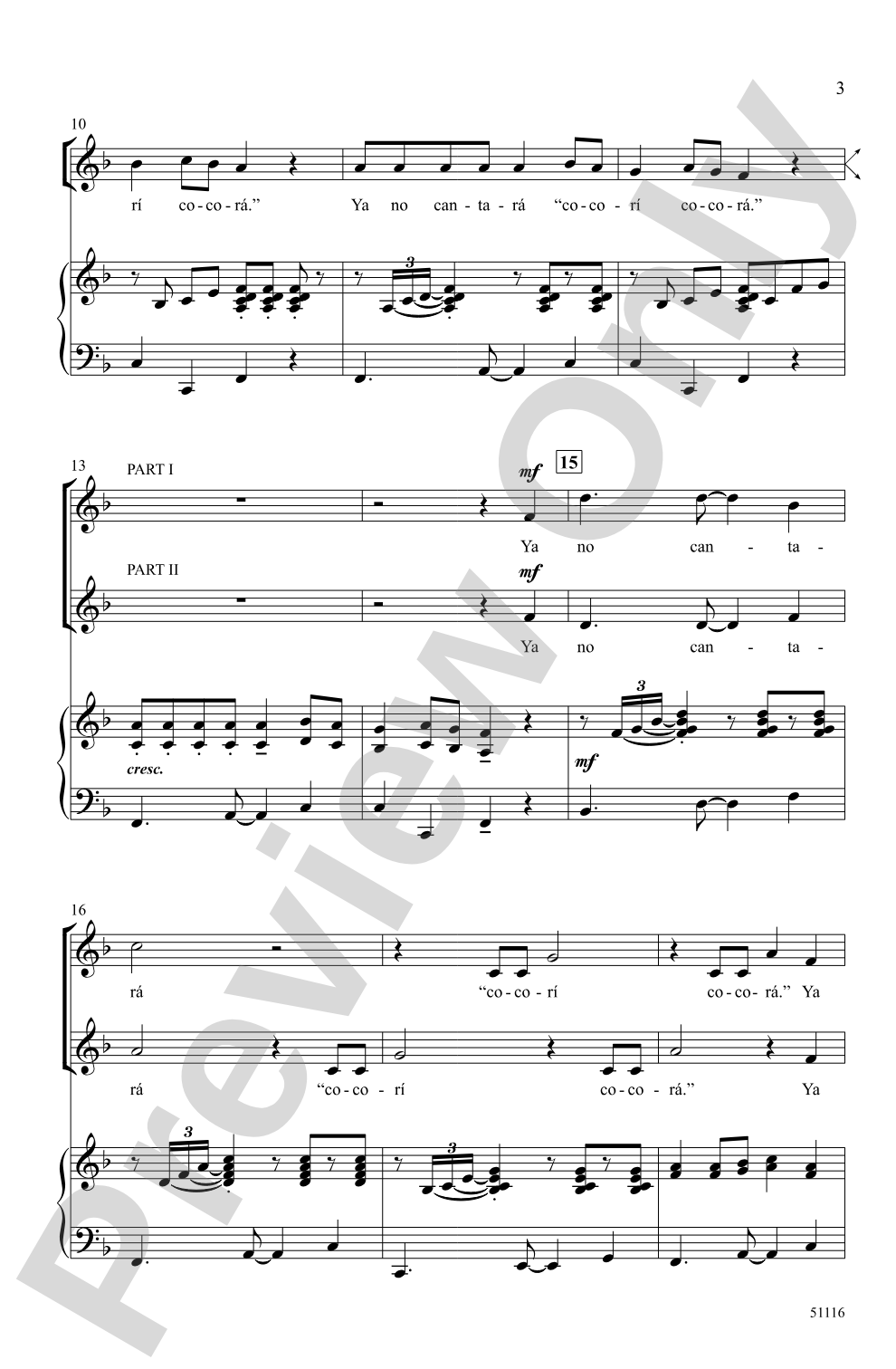
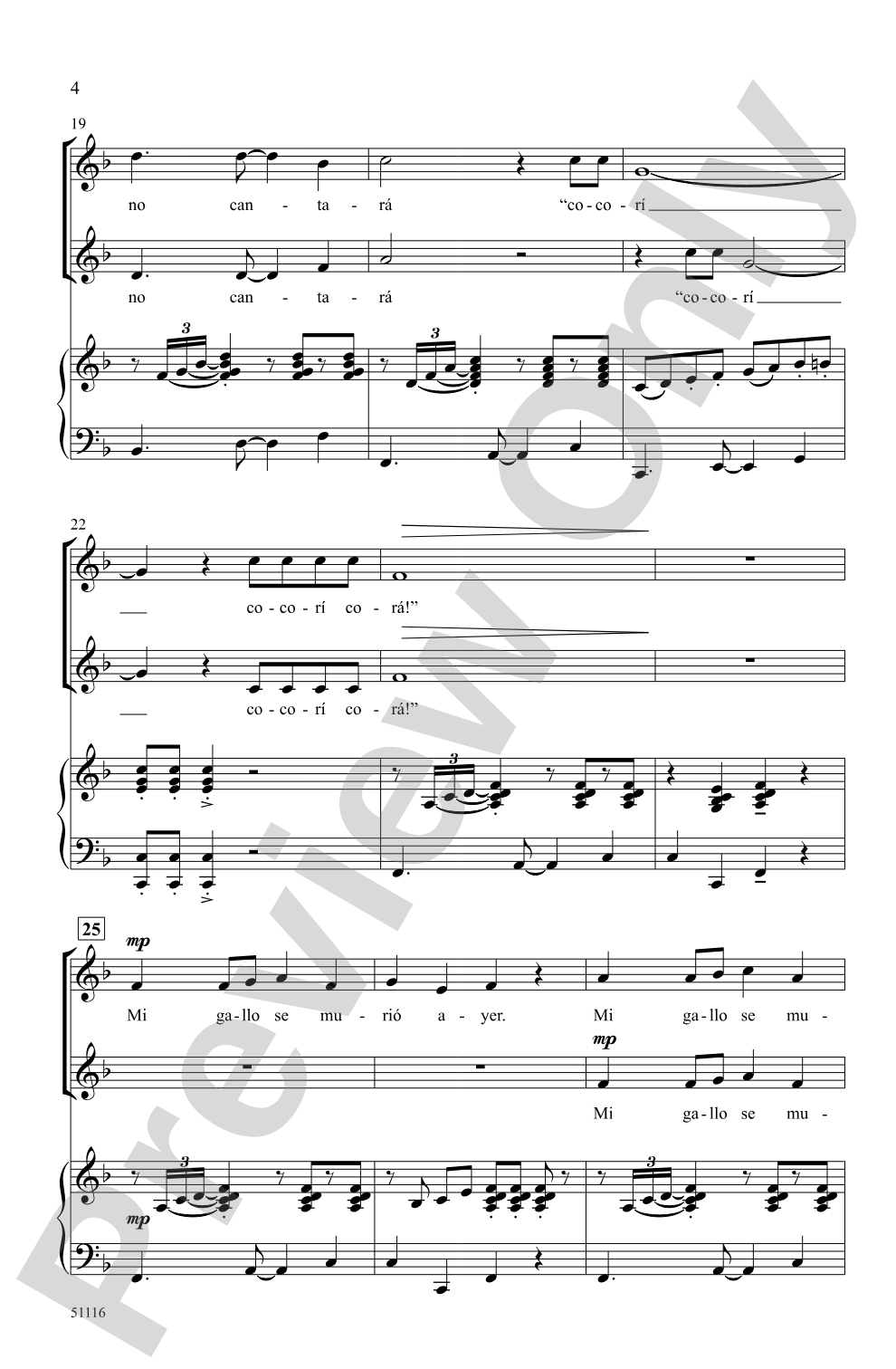
Here's a lighthearted folk song from Spain that's a breeze to learn and a pleasure to sing! The small-range melody is presented first in unison and then in canon. A simple ostinato adds another layer to the third verse before closing with echoing rooster calls---"Cocorí, cocorá!" Maracas and claves parts are included, or improvise your own percussion. There are only ten Spanish words in all, but if you need it, a pronunciation/translation guide is included.


Discover MakeMusic Cloud: thousands of interactive titles your students can play along with today.
Sample Audio
1
Audio File
--:--
0:00
0:00
Sample Video
Additional Details
Series:
Alfred Choral Designs
Publisher:
Alfred Music
Page Count:
12
SKU:
00-PO-0007205
More about this title
About the Arranger: Andy Beck

Andy Beck leads the choral publications program at Alfred Music, bringing two decades of experience as both a composer and arranger. His catalog spans over 450 works for choir, vocal ensembles, and musical theatre, alongside foundational resources like Sing at First Sight and Vocalize! 45 Vocal Warm-Ups That Teach Technique. His arrangements and original compositions are performed by singers across the globe, a testament to his gift for writing music that resonates with young voices and experienced ensembles alike.
Beyond the page, Beck is an active presence in American music education. He serves as guest conductor, adjudicator, and clinician for honor choirs and all-state groups, particularly throughout the Southeast. A trained tenor and longtime member of the North Carolina Master Chorale Chamber Choir, he brings performer's instincts to every arrangement. With degrees from Ithaca College and Northwest Missouri State University, Beck approaches choral writing as both an educator and an artist committed to building musical literacy and vocal artistry.
Why we love this
This arrangement captures everything that makes folk songs perfect for young choirs: a melody that sits comfortably in the voice, a structure that builds organically, and enough cultural texture to keep singers engaged. Beck's choice to introduce the melody in unison before moving to canon gives every voice a secure entry point, while the ostinato and optional percussion transform a simple song into a multi-layered ensemble experience. The rooster calls at the end guarantee a smile from singers and audience alike.
What to expect
There's an infectious, rural joy to this Spanish folk melody. The unison opening feels communal and grounded, then the canon introduces gentle competition and playfulness. By the third verse, when the ostinato weaves underneath, the texture becomes almost celebratory, building toward those final rooster calls that tip the whole piece into delighted humor. It's the musical equivalent of a warm, sun-filled afternoon.
Who it's for
This piece belongs in any 2-part choir looking for upbeat, accessible repertoire that introduces ensemble concepts like canon without overwhelming singers. It works equally well for middle school choirs building foundational skills and community groups seeking multicultural variety. The modest range and straightforward rhythm make it manageable for singers with limited experience, while the arrangement's construction keeps accomplished ensembles musically satisfied.
How to get the most out of it
- Establish the unison melody cleanly in the first verse so singers feel ownership of the tune before dividing for canon. A strong unison foundation makes the canon feel playful rather than chaotic.
- Bring the Spanish pronunciation guide into early rehearsals and have singers hear it aloud before reading. Ten words is manageable, and authentic pronunciation adds character and cultural respect to the performance.
- If your singers haven't worked with canon before, isolate the canonic section in separate rehearsals. Practice Part 1 alone, then Part 2 alone, then layer them slowly to build confidence before combining with the full arrangement.
- Keep the percussion parts light and energetic. Maracas and claves should shimmer around the voices, not compete with them. If you improvise instead of using the written parts, encourage rhythm patterns that breathe with the phrase structure.
How to use it
Program this in a concert segment celebrating world music or folk traditions. Its brevity and accessibility make it a perfect opener that settles a younger or less experienced audience while building ensemble confidence. It also pairs well with other Latin or Spanish-language pieces, or use it to add lightness and contrast between more serious selections.
Skills your students will build
- Singing in canon with independent voice parts
- Maintaining accuracy while layered with an ostinato
- Authentic Spanish pronunciation and cultural awareness
- Coordination with optional percussion accompaniment
- Transitioning from unison to harmony